Two places we loved; and two that were just a little…meh.
Friday 10 July
Our Uber driver arrived in Ottawa from India twenty years ago. We arrived from Mexico a few minutes ago. Immediately it feels good to be back in North America. I chat with the driver all the way to our Airbnb, then with Norma, our host, who’s still busy with a mop preparing her basement flat for us. After eight months of barely getting by in faltering Spanish, ordinary conversations with strangers feel like a novelty.
It’s almost one. We leave our luggage with Norma and head off to find lunch. Five minutes up the road we walk into a no-frills diner run by a dapper Arab gent and tuck in. In Devon, Ann Widdecombe has been murdered. In Taipei, Mike and Meco are bracing for the biggest typhoon to approach Taiwan in forty years. There’s a lot going on today.
Norma’s finished readying the basement. We move in and head for the supermarket before last night’s red-eye flight catches up with us. More chat: the checkout assistant is in no rush — before long he’s reminiscing about his holidays in Mexico. He pauses scanning our groceries to write the name of a resort town he recommends on a slip of paper in case we ever go back that way.
We’re back in the basement in time for the second half of the quarter-final between Spain and Belgium. We missed both first-half goals; now we miss Spain’s winner because we’ve both dozed off on the sofa. Last night’s red eye flight has given chase and zapped us.
We’re whacked. K heroically rustles up a simple meal, we watch the highlights of the two quarter-finals we’ve missed (the first semi-final will be France vs Spain), then doze off again watching a reel of highlights from The Office, currently celebrating its twenty-fifth anniversary.
Saturday 11 July
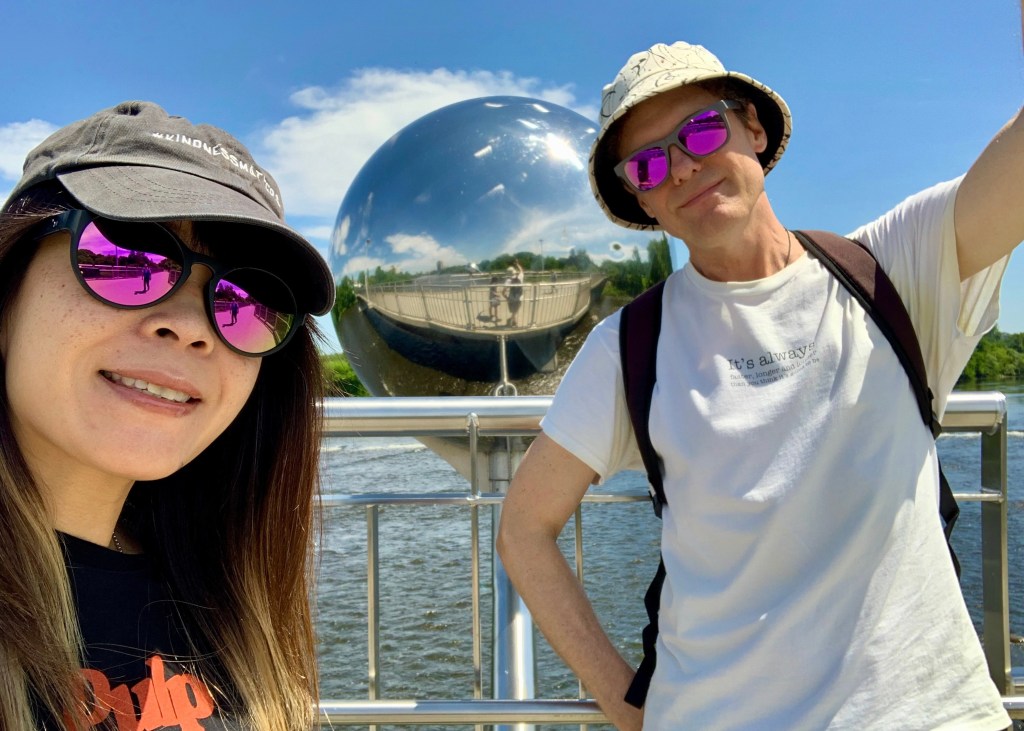
Walking towards downtown Ottawa on a bright summer afternoon, what strikes me first is the greenness. Granted, we’re in a riverside park — but rivers and parks are two small pleasures we haven’t seen for months.
And it’s quiet. Cyclists amble by. A gaggle of Canada geese graze on the lush grass. An elderly man sits on a folding chair reading, looking up to raise a hand in greeting as we pass.
It’s good to be back in the comfortably well-off world.
Or is it? A few blocks on we spot what looks like a small community event in progress. A yard sale? A charity event? Neither. As we approach, we encounter the neighbourhood junkies. We step into the road to avoid a man in his twenties passed out on his back across the pavement. Across the street, a dozen shabby bodies shuffle like zombies. They’re harmless — too spaced out to notice us passing.
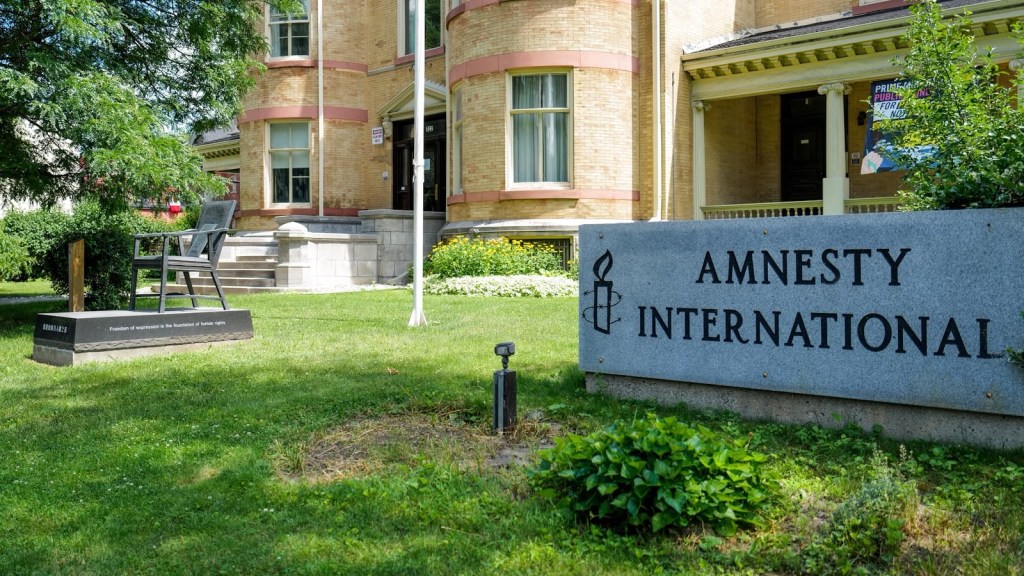
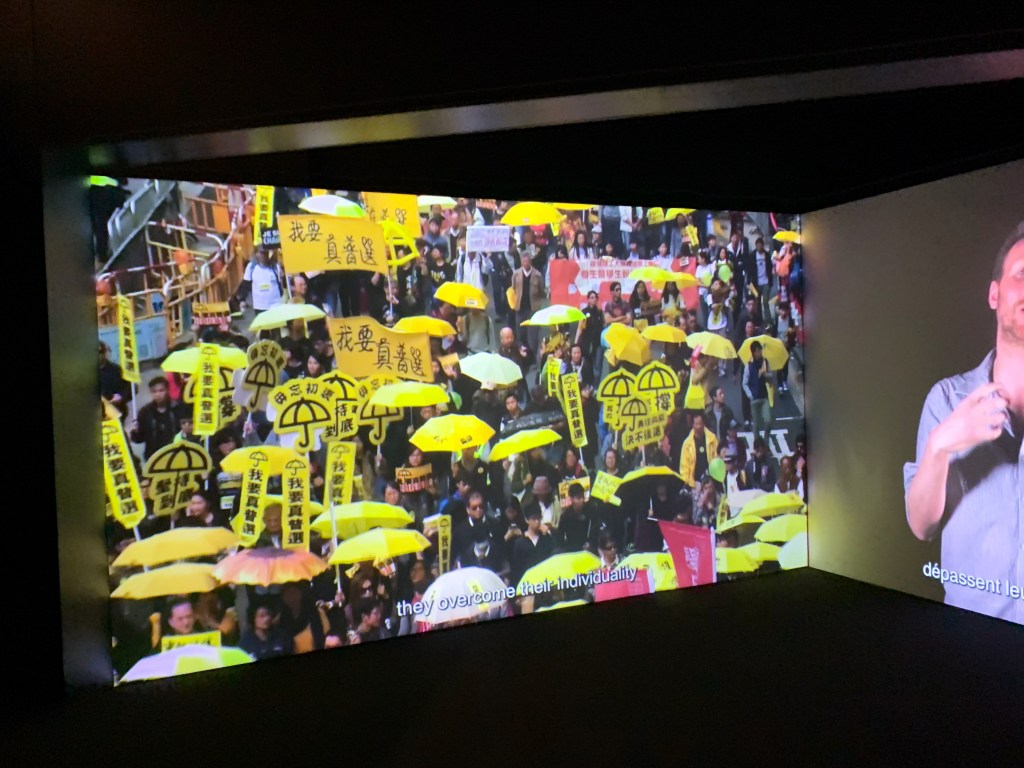
We’ve walked this way because we’d forgotten about Canada’s strict limits on the sale of spirits. We could have bought a bottle of local whiskey at the airport. Instead, we now have to walk a mile out of our way to a designated liquor store. The route takes us past Amnesty’s Canadian headquarters, where a memorial to Liu Xiaobo stands outside:
I slip the whiskey into my backpack and we continue downtown. Soon we drift into another block blighted by addicts, this one on a busy street. A skeletal, dazed young woman weaves along the pavement clutching her gear, stealing paranoid glances all around. A furtive man sits in a doorway, back to the street, appearing to light a crack pipe. Inevitable signs of homelessness abound.
I’m aware good people can slip through the cracks. I’m aware the causes of addiction can be complicated. But after nearly a year travelling through Morocco, Spain, Costa Rica, Guatemala and Mexico without encountering a single soul in this state, the contrast is stark. Addiction exists in those places, of course — but not like this, on a busy city block. It would be ugly in any circumstances, but having just arrived from Mexico, a country suffering appallingly from the violence associated with feeding the demand for drugs further north, part of me wants to scream at these addicts to get their shit together because people die, disappear, or live in terror as a direct result of their addictions.
Rant over.
We skirt downtown Ottawa, cross the Rideau Canal (Jim King later recalls ice skating on it as a kid in the seventies), then head back to reach the flat in time for England’s quarter-final against Norway.
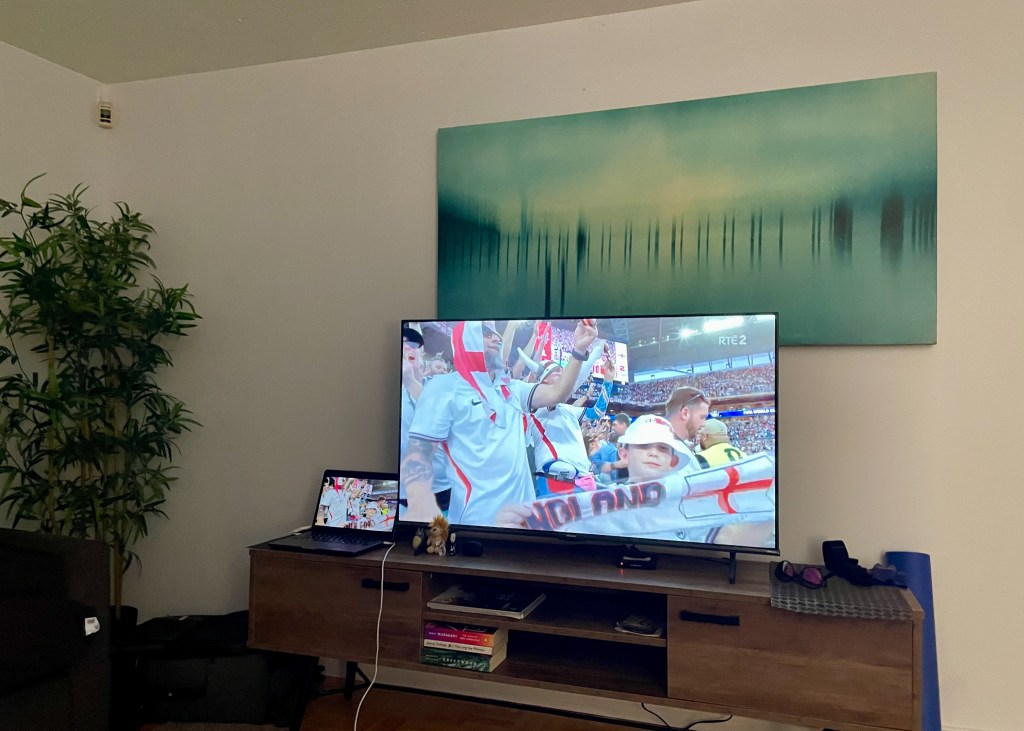
It’s another England performance well short of greatness, but they do enough to pip Norway 2–1 in extra time, having earlier fallen behind. Jude Bellingham scores both goals while Erling Haaland is curiously pedestrian — eventually substituted despite Norway needing to find a late equaliser.
For just the third time in my life, England are in a World Cup semi-final. But there will be no surprises as we scrape into the business end of the tournament: later, in the remaining quarter-final, Argentina do Argentina and Switzerland bow out. It’s England vs Argentina on Wednesday.
Sunday 12 July
It’s six months since we said goodbye to Mum, Ian and Rose in Madeira. A family day is long overdue.
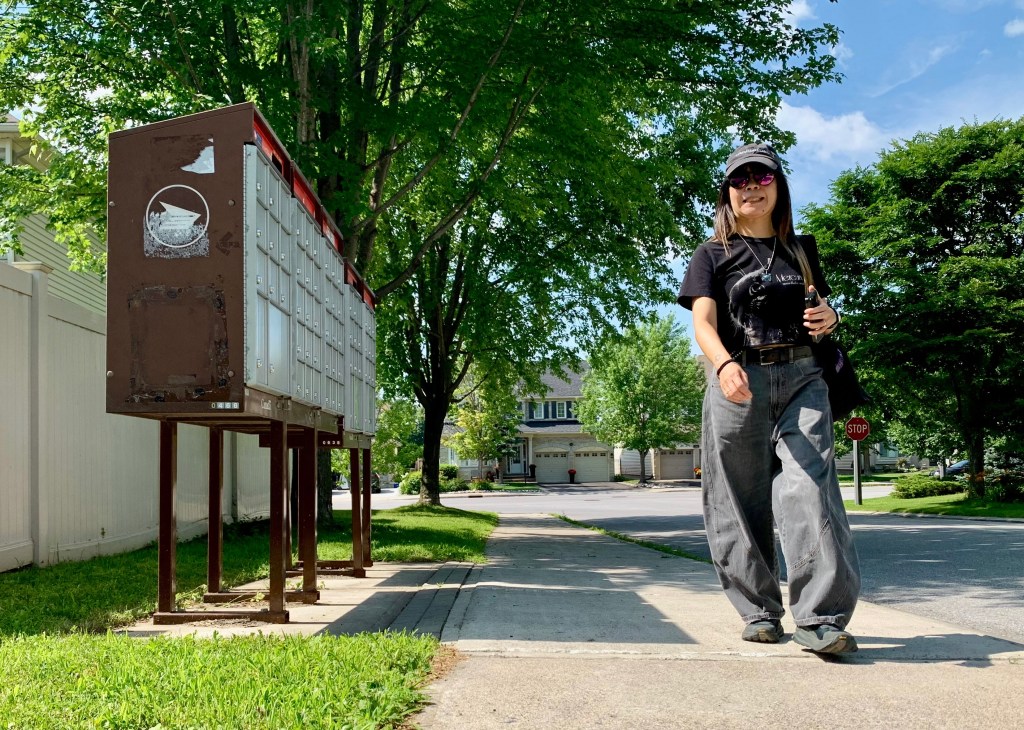
K’s cousin Karen and her family live in deepest suburban Ottawa — Barrhaven is so far from downtown, it’s known as ‘Farhaven’. When we step off the bus opposite the local golf course, the only sound is the wind. Silent McMansions stretch in every direction, so spread out that mail goes to a bank of boxes on the corner:
We ring the doorbell. No one answers. Maybe they’re out? Just as I’m joking it must take ages to get from sofa to door, it opens and I meet Karen for the first time. (We soon establish why I missed her last visit to Hong Kong: I was in the UK for Dad’s funeral.) We also meet 13-year-old Kyle and, a few minutes later when they arrive home from a badminton competition, Karen’s husband Christopher and their daughter Kristin, 15. Kyle and Kristin soon disappear, leaving the four of us to chat over coffee and cake in the kitchen.
They’re forthcoming and easy to talk to. They tell us about the bleak Ottawa winters — they’d rather be in Vancouver, but they both work for the government — and the otherwise free time swallowed up by cleaning and maintaining such a large house. Before long we’re talking Hong Kong. They both emigrated to Canada as teenagers and, like us, lament how unrecognisable their hometown has become from the place we all once knew.
Kristin and Kyle rejoin us to drive to the local gastro pub. It’s 25% off all dishes from the British favourites section — an invitation as good as any to tuck into familiar comfort food after months of tacos and enchiladas. Chicken pie for me; chicken with Yorkshire pudding (?!?!) for K. We chat to Kristin and Kyle about school during Covid and how AI’s affecting their education now. They’re bright, polite kids — a pleasure to talk to.
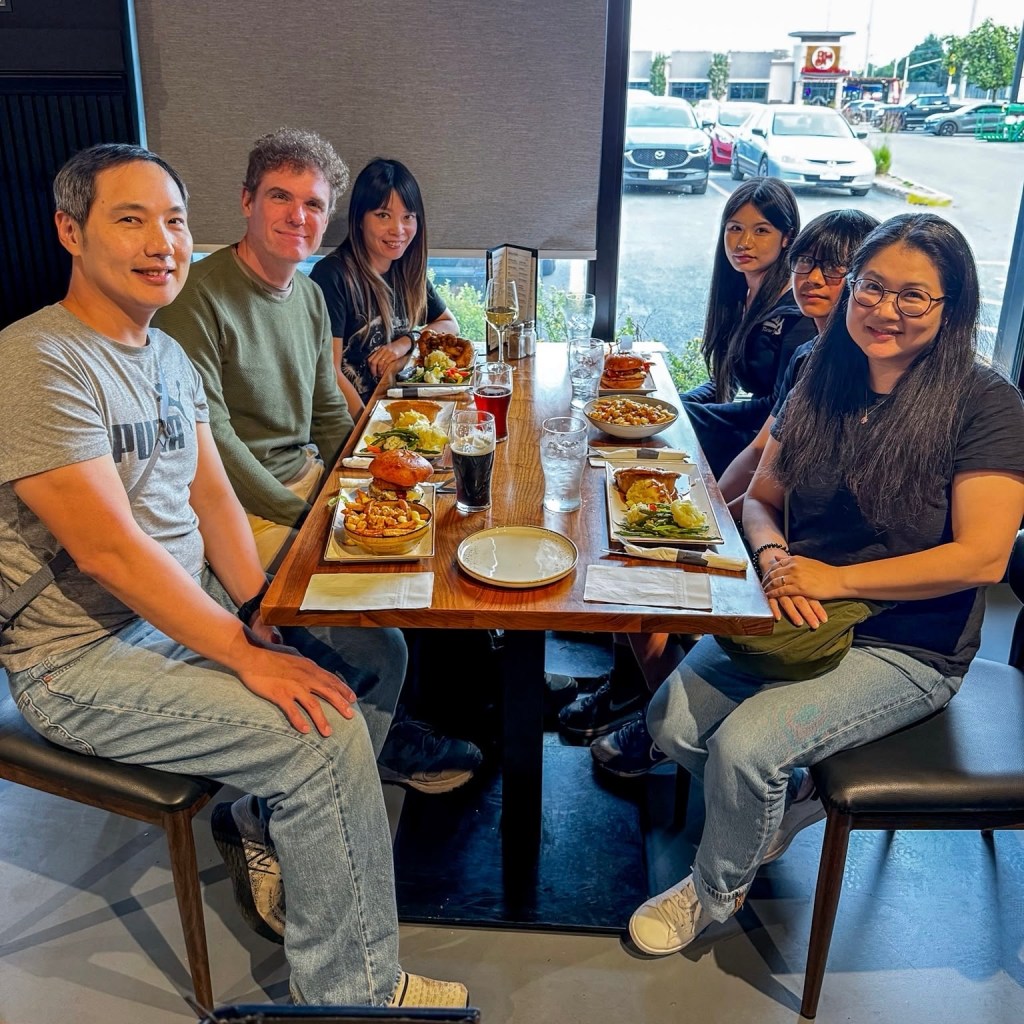
They drive us back to our Airbnb. Christopher recounts a familiar story: a recent wave of migration has been too big and too fast to enable everyone to integrate and become Canadians. Behind us, K and Karen chat in Cantonese. They leave us with a jar of their freshly ground coffee, and everyone agrees we’ve all had a fantastic evening together.
Monday 13 July
A day — well, an afternoon — to roll up our sleeves and plunge into downtown Ottawa. It’s hot, and walking thirty minutes to the nearest metro station may not be as wise as we’d assumed.
In the mostly empty metro carriage, a distraught young woman, almost certainly with a mental health condition, is wailing inconsolably. The young man with her tries to keep her calm, with limited success.
We get off at Parliament Hill, overlooking the Ottawa River, and potter around the historic site. The main parliament building is midway through a full renovation. Unsightly cranes clutter the symmetry, but at least Canada has pushed on with refurbishment. The British Houses of Parliament are screaming out for something similar, but whatever’s been done so far has been piecemeal.
We descend several flights of wooden steps to the river and follow a path around the bluff to the mouth of the Rideau Canal, with its seven locks rising to the city centre. A couple in a small motor boat have just entered the first lock; it looks like they’ll spend most of the afternoon climbing through all seven.
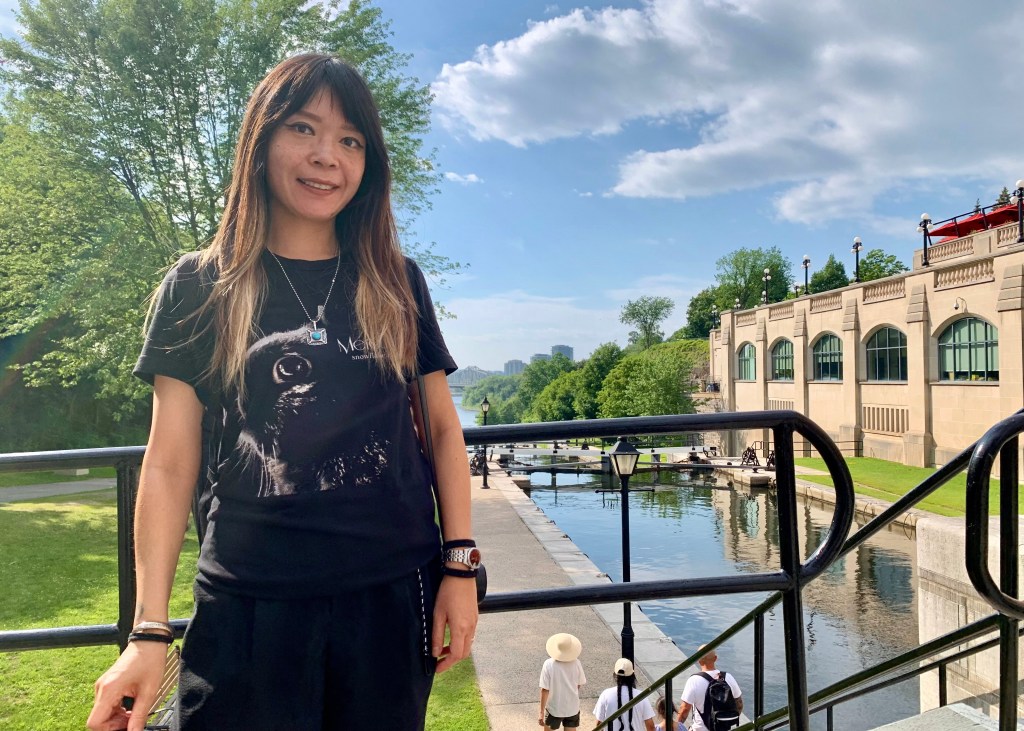
I thought this would be a pleasant spot, and it is. What I hadn’t realised until reaching it is that this is the original site of European settlement in what’s now Ottawa. Beside the locks, a modest museum in a nineteenth-century customs house plots Ottawa’s development from little more than a lumber yard called Bytown, through the construction of the Rideau Canal (which runs all the way to Kingston 200km away), through independence in 1867, to the rise of the modern capital. For a tiny museum, it’s excellent. It even serves freshly-squeezed lemonade.
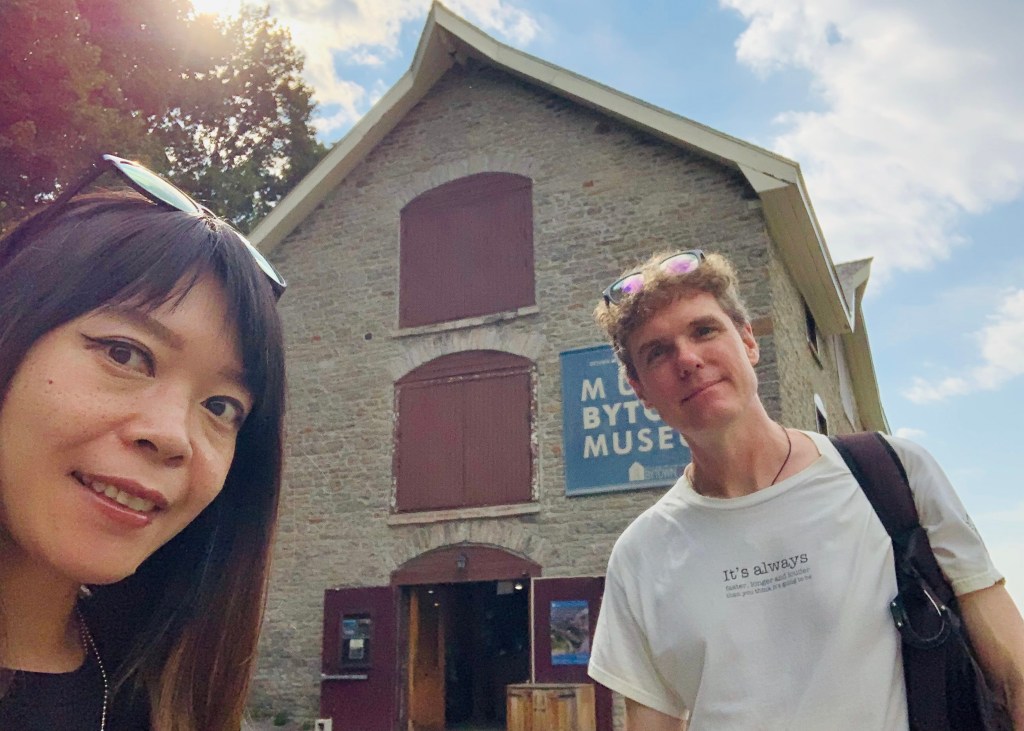
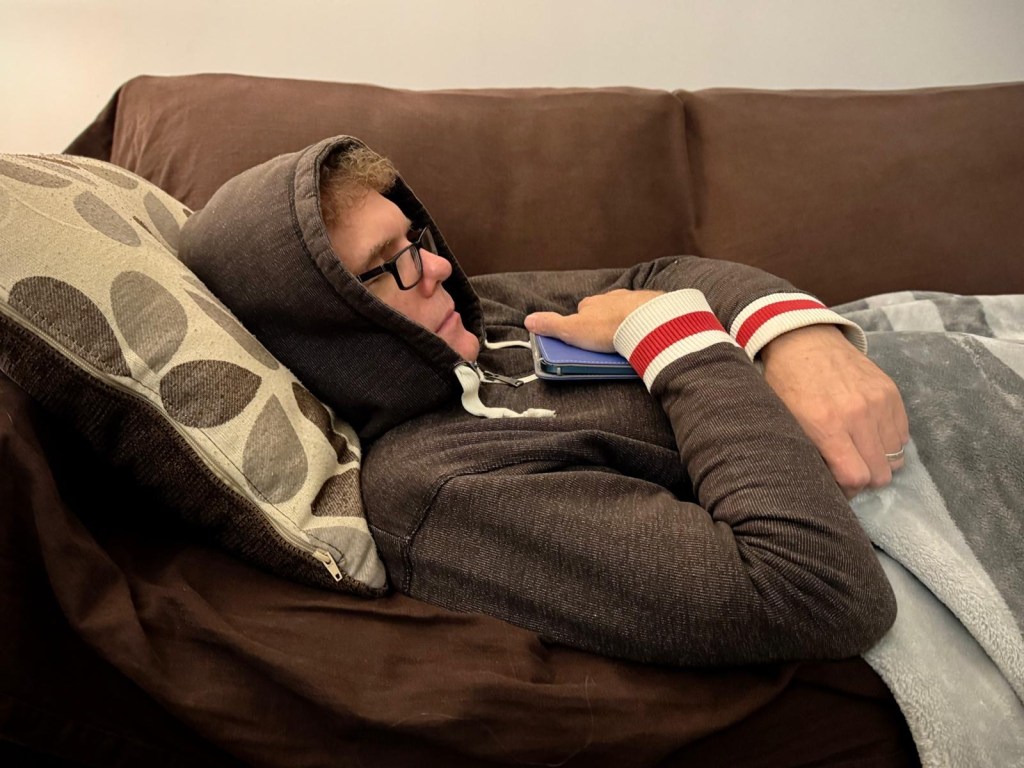
By the time we arrive home, having detoured to the supermarket, we’ve done 15,000 steps. We’re shattered. Despite a hat and plenty of water, I seem to have mild heatstroke. I spend the evening on the sofa under a blanket with my hoodie pulled up watching gripping new British thriller series, Legends — highly recommended in the January to June best-of lists.
Tuesday 14 July / Wednesday 15 July
Two days I’d rather forget. What felt like mild heatstroke on Monday afternoon develops into a gastro infection that completely wipes me out. Cue two days dozing on the sofa, waking only to watch the two semi-finals.
Writing now on Thursday morning, neither of us have left the flat since returning here on late Monday afternoon. I know we have to watch our budget in Canada, but this wasn’t part of the plan. I’ve eaten almost nothing, although I’ve finally managed some toast this morning to no apparent ill effect.
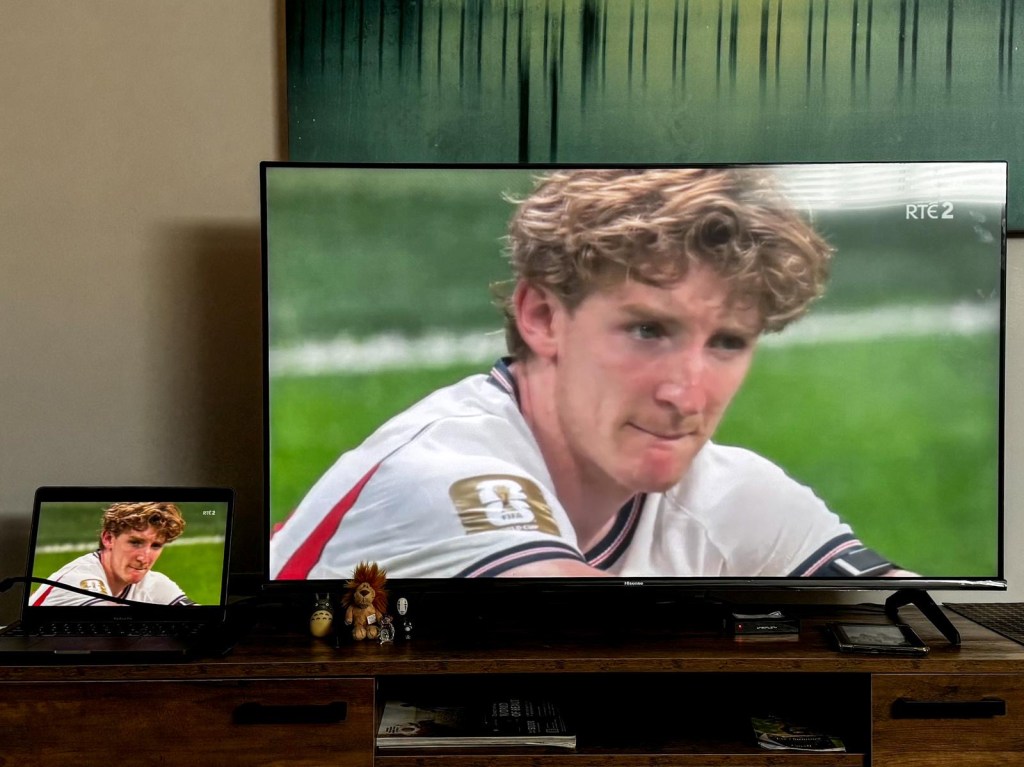
On Tuesday, Spain surprised the world by brushing effortlessly past France to reach the World Cup final. On Wednesday, England were five minutes of normal time away from joining them. Then the perils of sitting deep to defend a 1–0 lead became all too obvious. Argentina won 2–1. Of course they did.
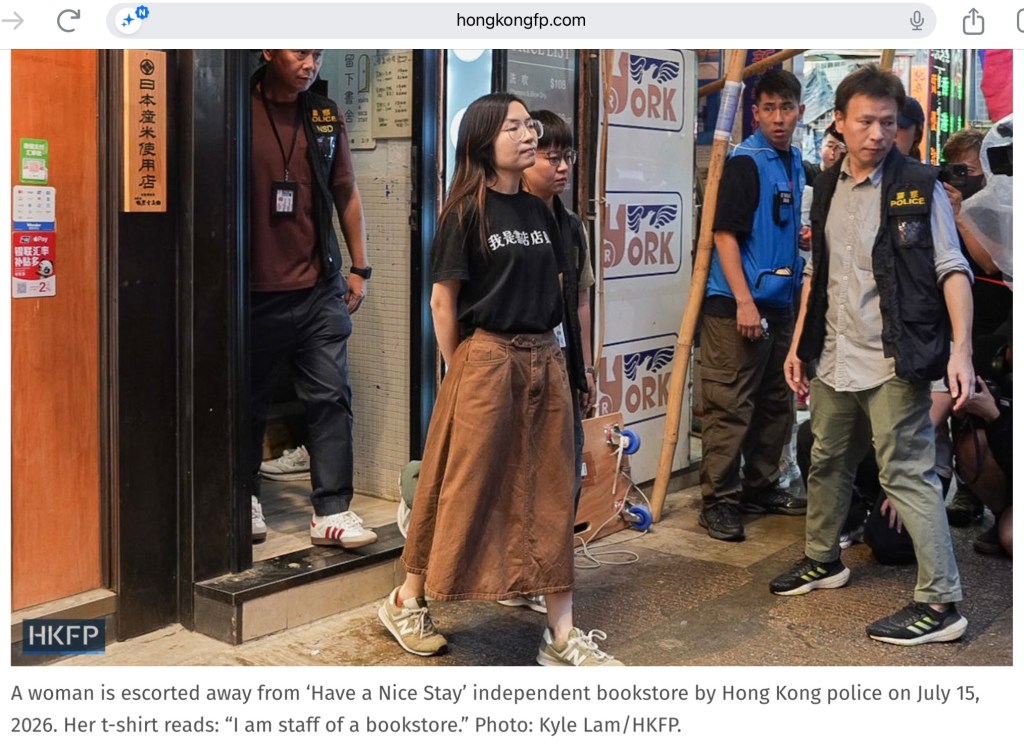
Meanwhile in Hong Kong, brave National Security cops raid a bookshop and arrest the staff:
Thursday 16 July
My insides are on the mend, but I have all the energy of an electrical brownout. Cue a third day largely spent dozing on the sofa in our basement flat. Toast and butter for breakfast. Toast and butter for lunch. By late afternoon I’m gaining energy — which is just as well as there’s no food left in the flat. Plan A was to eat out tonight. Plan A holds.
The Bistro, an easy 15-minute walk, turns out to be a hotel restaurant. Food and service are fine — I can at least enjoy a proper meal for the first time in three days — but the restaurant inevitably has all the ambience of eating at a Premier Inn. We’ve had more exotic meals.
And that’s it for Ottawa. Saturday, Sunday and Monday were memorable. Parks. Junkies. Family. History. Everything since then is a vague haze of dozing on the sofa. Never mind. We’ll be back for one more day before flying to Vancouver. We’ll try to make the most of it.
Friday 16 July
When we return the keys to our host Norma, we learn her brother passed away this week. What I’d taken for old friends quietly enjoying each other’s company in the yard a few days ago was clearly old friends paying their respects. I ask if he’d been ill for long. “He was simply a very old man”, she answers softly.
Before we part, we also learn the Arabic-speaking community in the neighbourhood are Lebanese. In different circumstances, I’d have asked Norma more. But it’s hardly the occasion.
The bus to Montreal is already close to full when it pulls into Ottawa. For the first time since Estepona–Malaga, we have to split up — K ends up in the row behind me. Green fields of ripening crops stretch into the distance. Forest takes over where the fields end. A wide grass verge runs down the middle of the highway. The sky is brilliant blue. Although Quebec’s just over the Ottawa river, our route sticks to the Ontario side until we eventually pass into Quebec just short of Montreal.
Montreal’s unprepossessing suburbs start early and go on forever: derelict warehouses, graffiti, parking lots — all the usual flotsam. Eventually we plunge into a long tunnel that seems to run under most of downtown. When we emerge, we’re almost at the bus station. It’s well short of an impressive introduction to Canada’s second city.
A quick lunch at the bus station. We’re in Quebec now, so I do the polite thing and order in halting French. The chap looks at me as if I’ve crash-landed from planet Zog and replies in English. Fine with me.
Emanual, our Uber driver, is from Haiti. “Parlez-vous français?” he asks. “Désolé, je parle pas très bien français”, I lament. “No problem! We can speak English — mais pas trop!” He laughs heartily. He came to Montreal to study: first a bachelor’s, then a master’s in public administration. Now he works for the local government and drives an Uber on the side — he has a young family to raise. He’s still in a junior role and hasn’t yet regained the responsibility he had as an auditor in Haiti. He bemoans Haiti’s early exit at the World Cup, and the lack of interest in football in Montreal. He reveals there’s a sizable Haitian community in the north of the city. They all loathe the long bleak Quebec winters.
Soon we’re crossing the massive century-old cantilever bridge to Longueil across the St Lawrence River. From this height, I can see Montreal is a port. I had no idea.
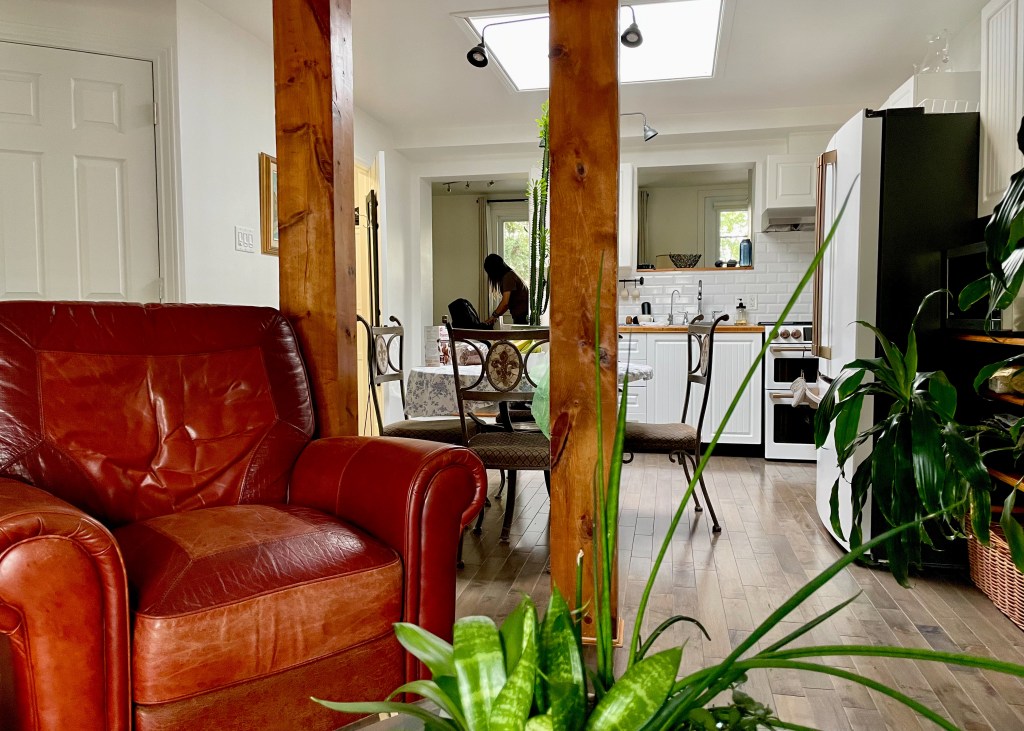
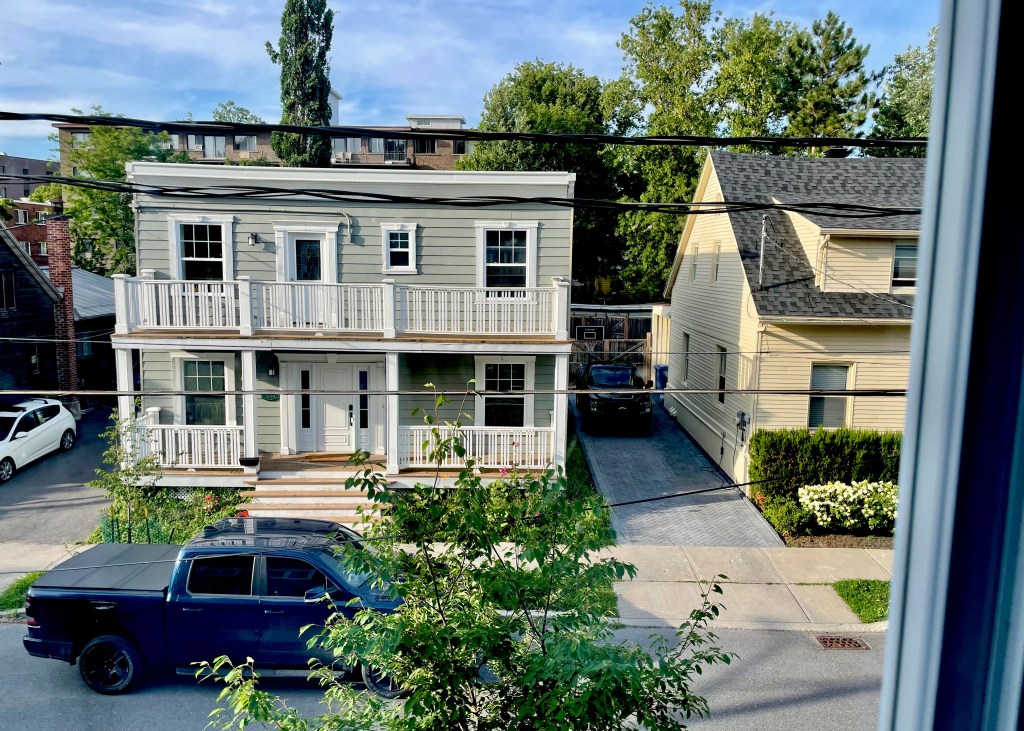
Our Airbnb is a smart maisonette overlooking a quiet street. A little cramped — in the sense of too much furniture rather than too little space — but more satisfying than our basement in Ottawa, and for the same price give or take a dime.
Longueil centre is at the end of the street: a handsome, pedestrianised zone with an ivy-clad town hall, an old stone church, and a bandstand. Outdoor cafés and restaurants are already doing brisk Friday-evening business. I’m immediately glad we chose to stay out here rather than closer to downtown Montreal.
It would be a pleasure to join the locals for a sundowner, but we’re laden with bags of groceries. We disappear back inside, put down a deposit on an Antarctic cruise in January 2028, and pass the evening watching the second Enola Holmes film. (I’d completely forgotten we’d watched the first — it’s that much fluff.)
Saturday 18 July
I couldn’t really give a hoot, but K’s keen to catch the ‘bronze final’ between England and France at five. Armed with a trio of pubs and sports bars on Google Maps, we set off mid-afternoon to identify which one looks the best shot.
The metro into downtown Montreal is drab and functional but drops us close to our first choice: an English pub. It’s only three, but already busy, and most of the remaining space is already reserved. We don’t fancy grabbing the last seats and waiting two hours for kick-off, so we move on.
An uninspiring thirty-minute walk brings us to an almost empty, industrial-sized sports bar. What it lacks in charm it makes up for in seating. We ditch plans to check out the third option and instead head off to explore the neighbourhood before the game.
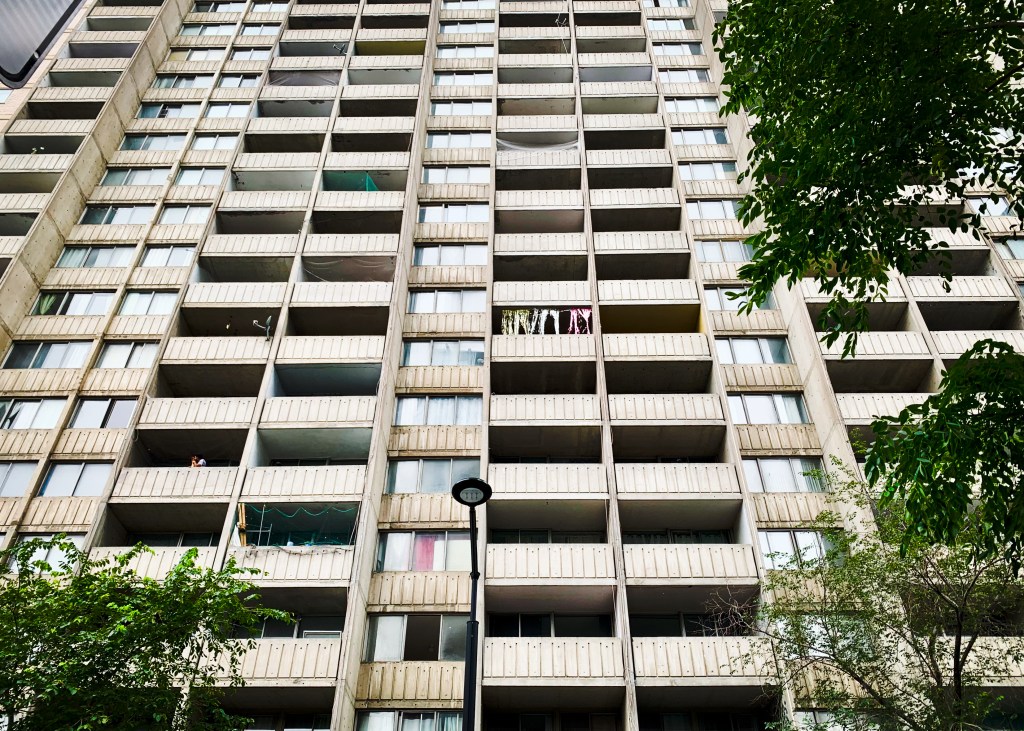
No doubt we’ll discover the finer parts of downtown Montreal in due course. What we see in the hour we have to kill veers from brutalist seventies housing blocks to bland pedestrianised redevelopment, the latter given a bit of life by a comedy festival taking place this afternoon.
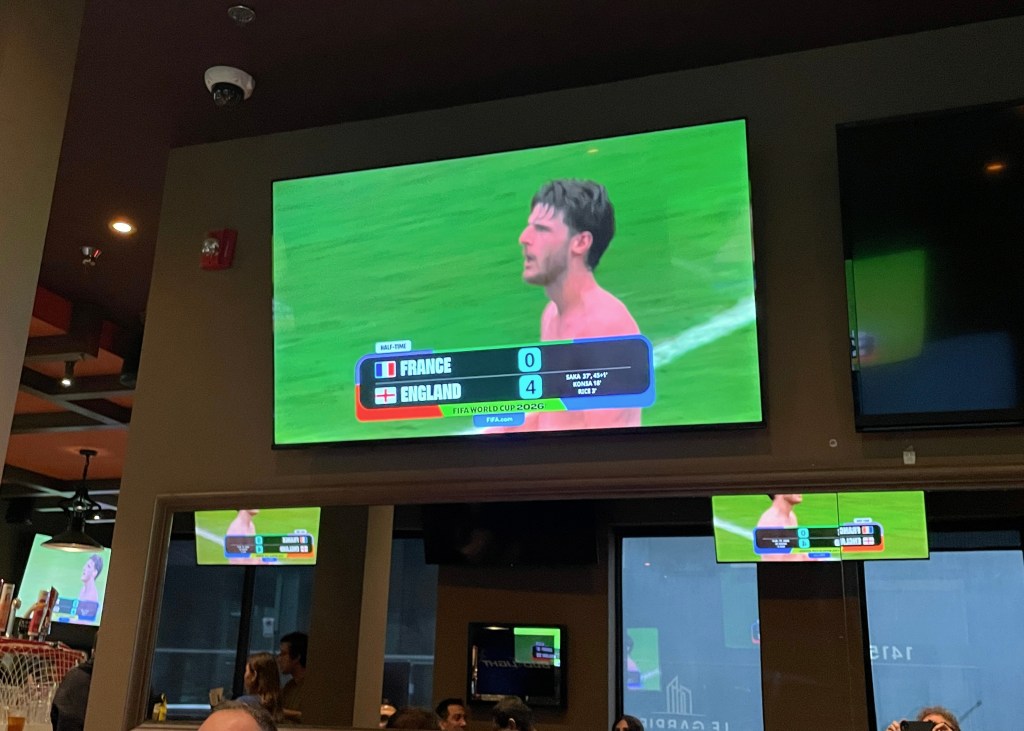
By the time we return, the sports bar is steadily filling. We’re glad to have a crowd, because what follows over the next 90 minutes is magnificently ludicrous. England are a goal up within three minutes. There’s no wild on-pitch celebration — this is the booby prize after all — but there’s considerable backslapping camaraderie. Soon, it’s 2–0. Then three. And then four. Commotion ripples through the bar. It’s hard to tell if England have a following among the customers (not what I’d expect in a Francophone city) or if, like us, everyone’s simply gasping in amazement and struggling to understand what just happened. Even Mbappé is grinning. After all, England 4 France 0 at half-time is beyond silly.
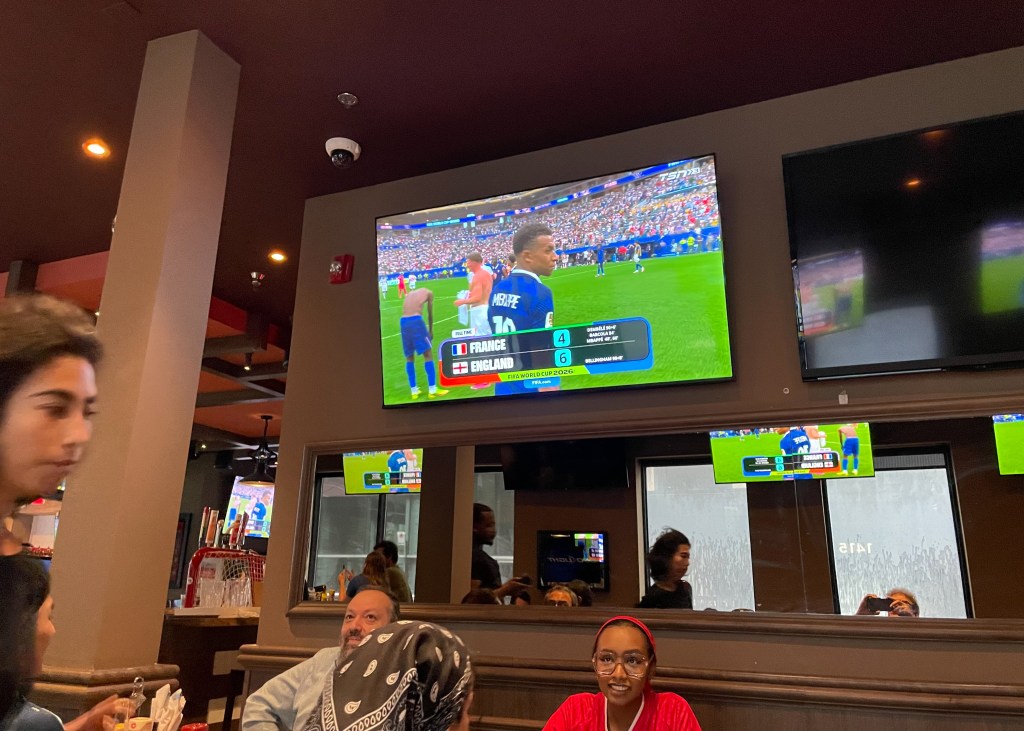
It can’t last. And it doesn’t. Twenty minutes into the second half France have pulled three goals back. Chat groups buzz with gallows humour: surely France are going to win this 5–4? But no. England get a penalty. Saka becomes the first Englishman to score a World Cup hat-trick since Geoff Hurst. France pull one more back in added time before Jude Bellingham scores a magnificent solo effort with the last kick of the game. England 6 France 4.
Absolutely hatstand. I’m glad K gave a hoot.
Sunday 19 July
My BLT chicken burger and two pints of IPA during the England vs France game yesterday were ambitious for a recovering intestine. My guts churn up again like a tempest and keep me within a quick dash of the bathroom for much of today. I keep forgetting I’m 57 and not 17.
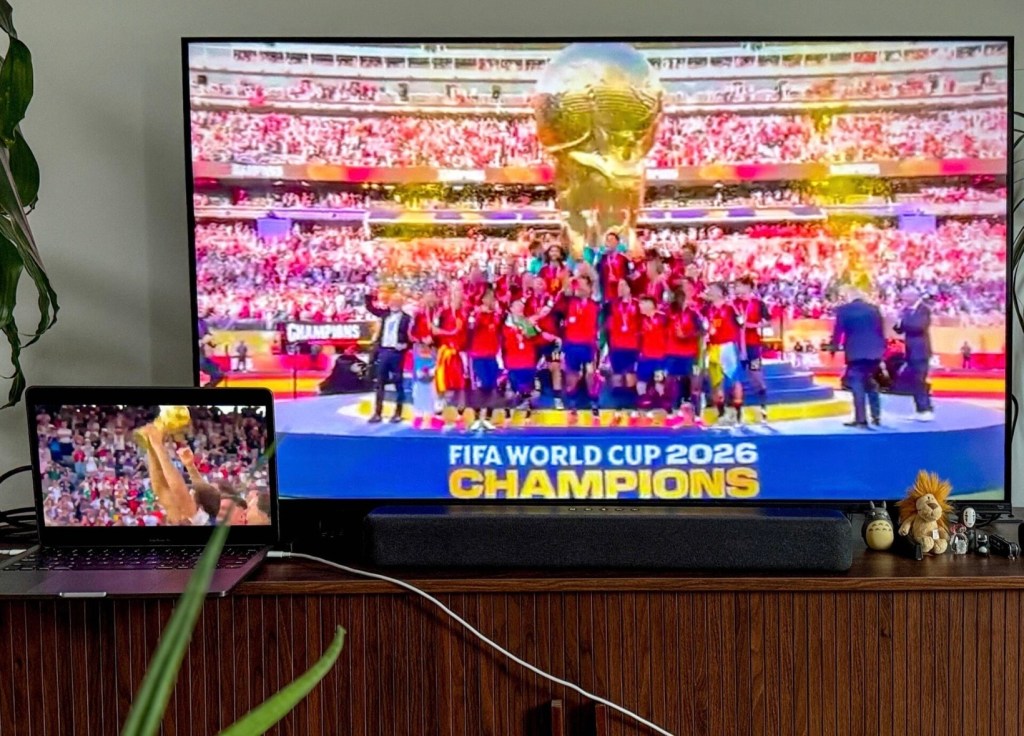
Spain win the World Cup, beating pantomime villains Argentina 1–0 after extra time. The world beyond Argentina breathes a sigh of relief. At 90 minutes, Argentina haven’t registered a single shot, let alone one on target, and have an xG of 0.0. At the whistle, half the team go on a rampage, grabbing Spanish players by the throat and shoving others to the floor. Classy.
Monday 20 July
It’s time to get serious about recovering from my stomach bug. No more relapses. Plain pasta. Chicken broth. Toast. Weak tea. A few nuts. It ain’t fun, but I’m getting there.
Feeling more settled, we strike out to visit Lenoard Cohen’s grave on Mont Royal. First, there’s a steep climb up a wide wooden staircase to a busy viewpoint over downtown Montreal. The skyline is non-descript: all engineering feats, no doubt; but it lacks an architectural marvel — a Bank of China or a Gherkin. We ask someone to take a photo, but the results suggest she’s never taken one in her life. I delete it. Here’s a functional selfie instead. The missing skyline isn’t that memorable anyway.
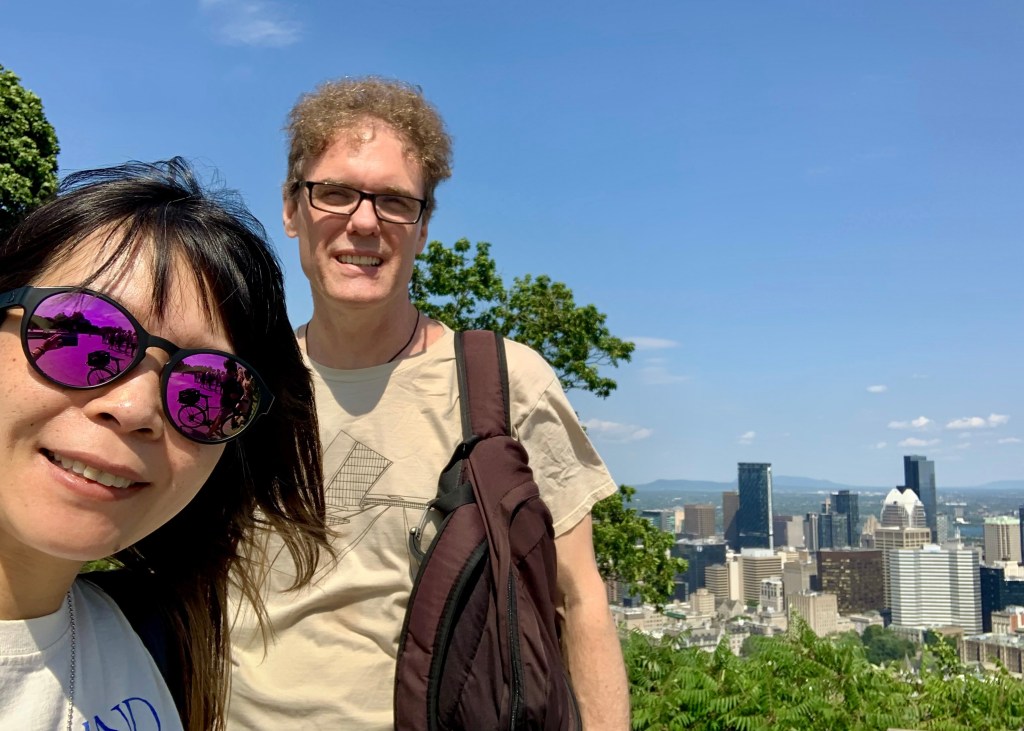
We push on through landscaped parkland and slip into the vast cemetery covering the back of Mont Royal. The gravestones confirm Montreal has always been much more multicultural than I imagined: plenty of Anglo names, but also Polish, Russian, Greek. And Jewish.
Leonard Cohen’s grave is almost the furthest point from where we entered. It’s a modest grave, shaded under a tree, surrounded by family. Lipstick marks cover half his gravestone. I quietly hum a few lines of Famous Blue Raincoat.
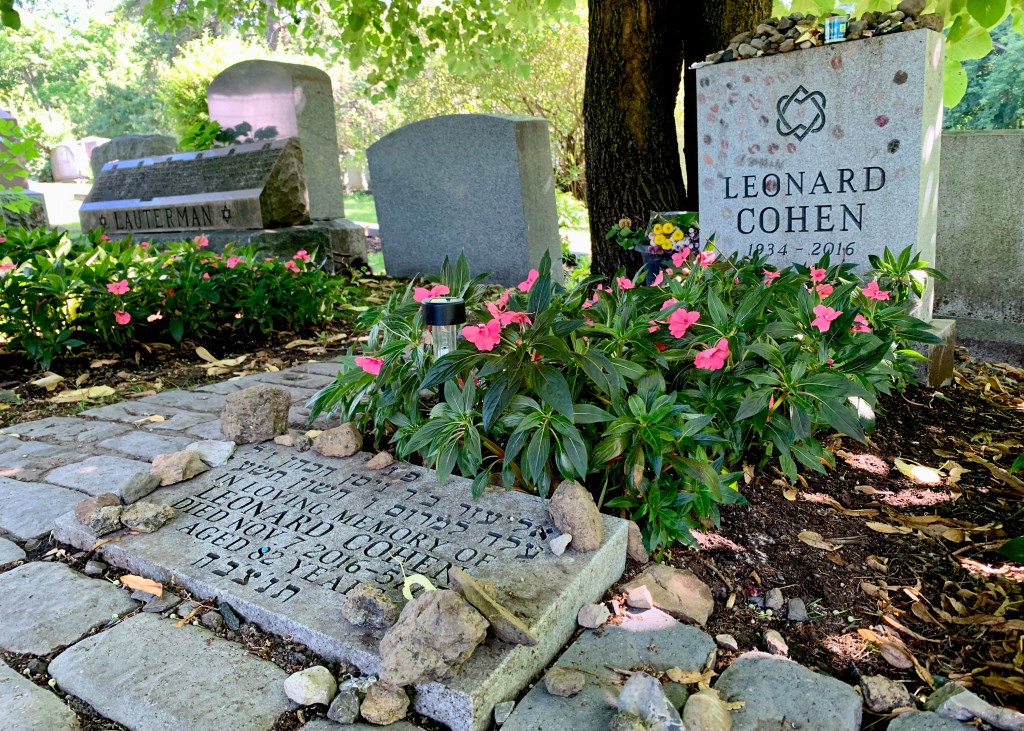
I could happily spend an hour alone with Len in this beautiful spot. But he’s more my bag than K’s, and the afternoon is waning. I reluctantly say goodbye and we follow a leafy avenue of monied piles down to the city. By the time we get home we’ve done 17,000 steps. I’m whacked.
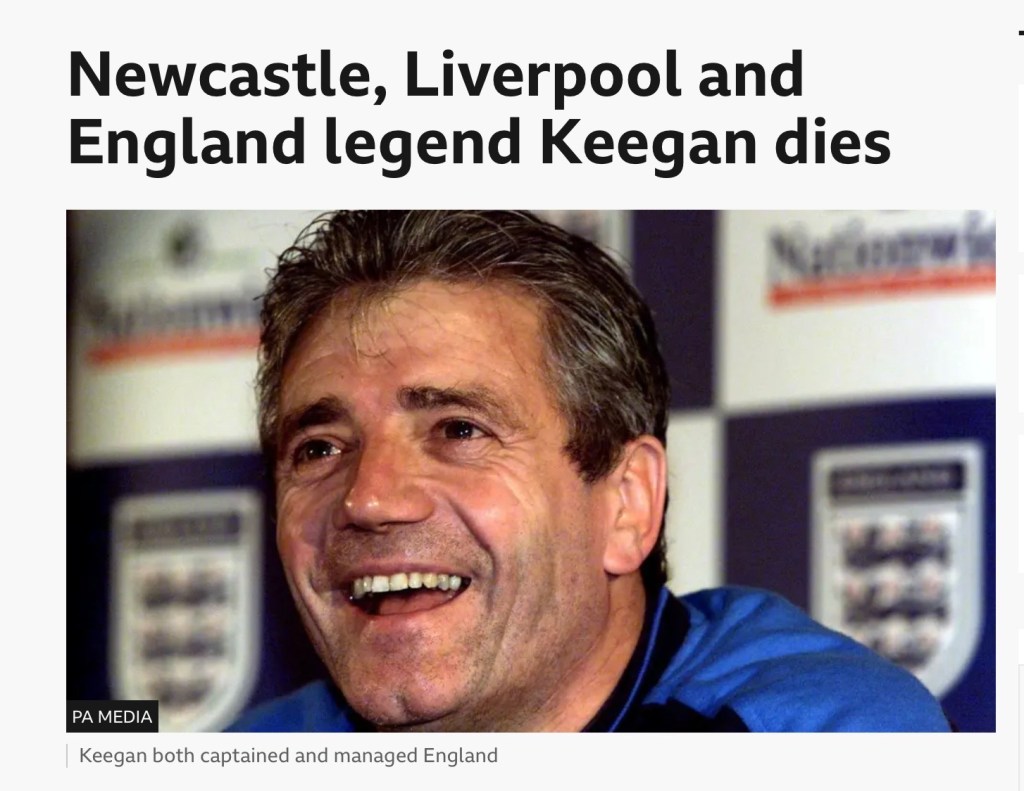
Leonard Cohen isn’t the only superstar on my mind today: Kevin Keegan, my first football hero, dies at 75. It’s not just that he was a football idol; from middle age Keegan and Dad had hair so interchangeable you could photoshop their haircuts and not spot the difference. They had identical smiles too. Losing Keegan feels almost like losing family. Very sad.
Tuesday 21 July
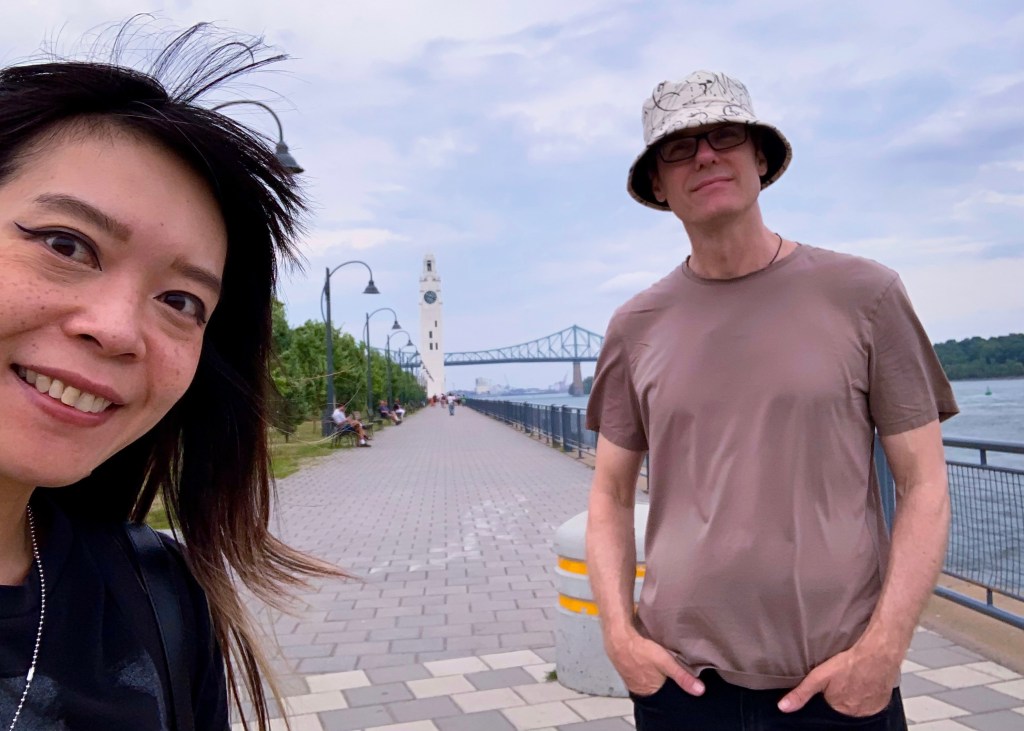
Montreal’s never going to win either of our hearts, but today we at least go in search of the Montreal’s own heart, the Old Port. The original eighteenth-century settlement by the St Lawrence River is far removed from the tedious office blocks of the modern centre. It’s hardly riveting — we’ve been spoiled in recent months — but it’s a good spot to pootle around. Curiously, Montreal has its own Nelson’s Column — rather incongruous in an overwhelmingly French-speaking city. Or perhaps the Quebecois were never big Napolean fans? I don’t know. History’s complicated.
The old port now hosts a Ferris wheel, a landscaped lake, and a promenade overlooking the mighty St Lawrence. Further upriver, a small bulk carrier reverses out of the new port, straightens, and rumbles past us.
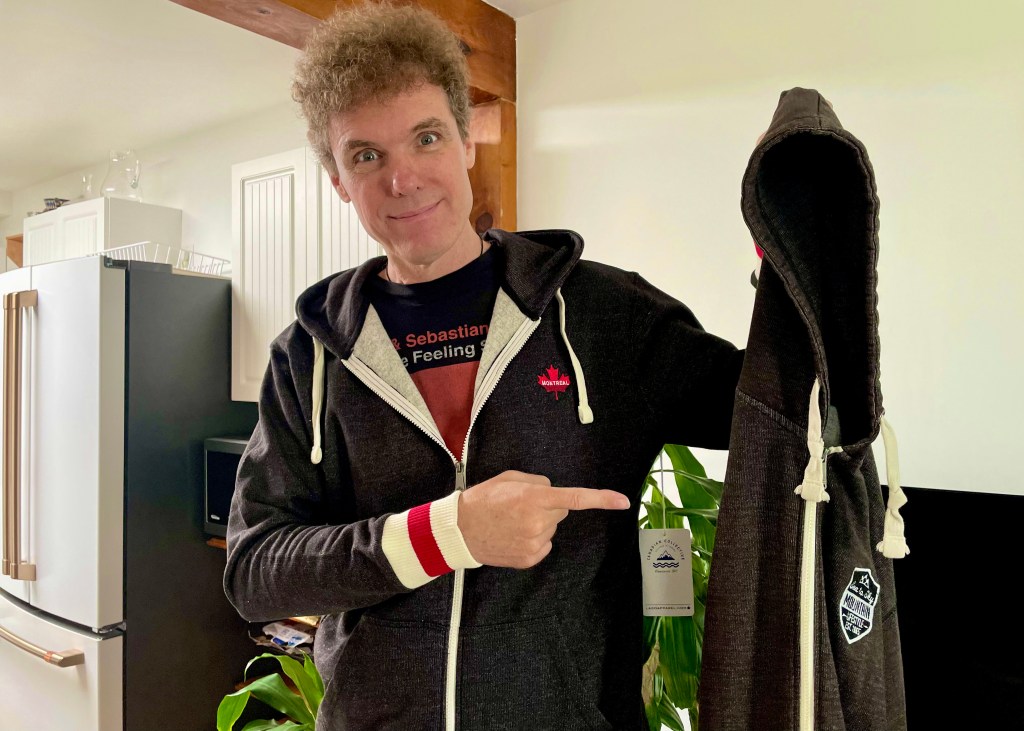
Venerable Bonsecours Market is nearby. We wander in. What was once Montreal’s main public market is now squarely aimed at tourists. We don’t disappoint the traders, soon amassing a haul of maple tea, maple cream cookies, ice wine chocolate, plus a t-shirt and hoodie for me (both desperately needed). The hoodie is identical to the one I bought near Vancouver seven years ago — my favourite item of clothing. It’s been falling apart in recent months, so I’m thrilled to find an exact replacement. End-of-line stock at a decent price too.
Without prompting, the assistant starts telling us how ice wine chocolate is made. Something about centrifuges. I’m sure it’s fascinating, but I’m more taken by her Glaswegian accent. She turns out to be from Burnside. “But I’ve been in Montreal a long time”, she adds, keen to be taken for a local.
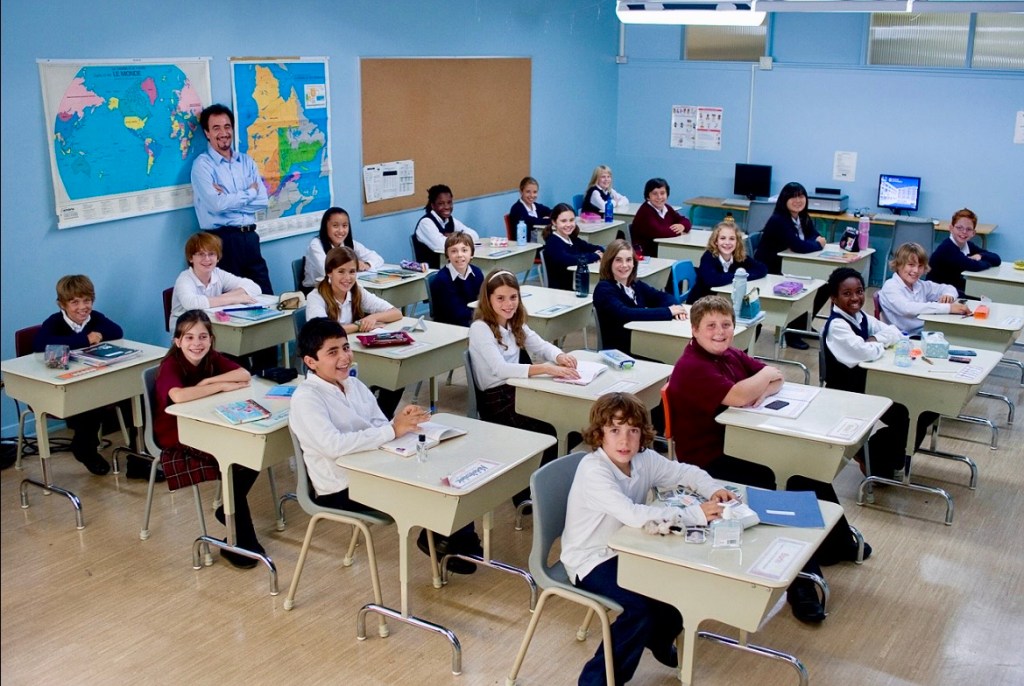
I’m looking for a film set in Montreal to pass the evening. On Netflix I stumble across Monsieur Lazhar: “At a Montréal public grade school, an Algerian immigrant is hired to replace a popular teacher who committed suicide in her classroom. While helping his students deal with their grief, his own recent loss is revealed.” We watched it many years ago, back when I’d buy DVDs of well-regarded indie films that never saw a release in Hong Kong, but I remember nothing of it. It turns out to be absolute gem. Roger Ebert: “One of the qualities of Monsieur Lazhar is that it has no simple questions and simple answers. Its purpose is to present us with a situation, explore the people involved and show us a man who is dealing with his own deep hurts.”
Wednesday 22 July
I didn’t even notice yesterday was the third anniversary of quitting full-time work. It feels a long time ago.
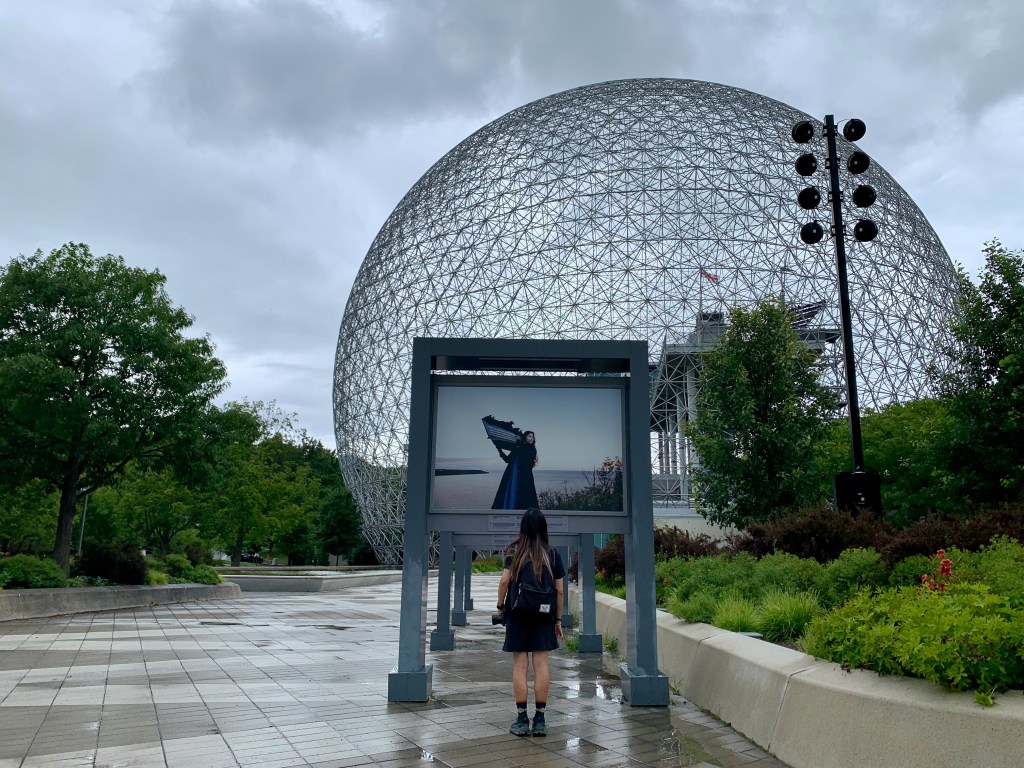
Today, a short trip today to Jean-Drapeau island in the middle of the St Lawrence. The north half is a fun park full of rollercoasters; we stick to the wilder southern part. Unforecast rain detains us in the shelter of the metro station when we arrive, but it clears soon enough. There’s a decent open-air photo exhibition on indigenous culture. The blurb is occasionally pretentious, but the photos are superb and keep us diverted.
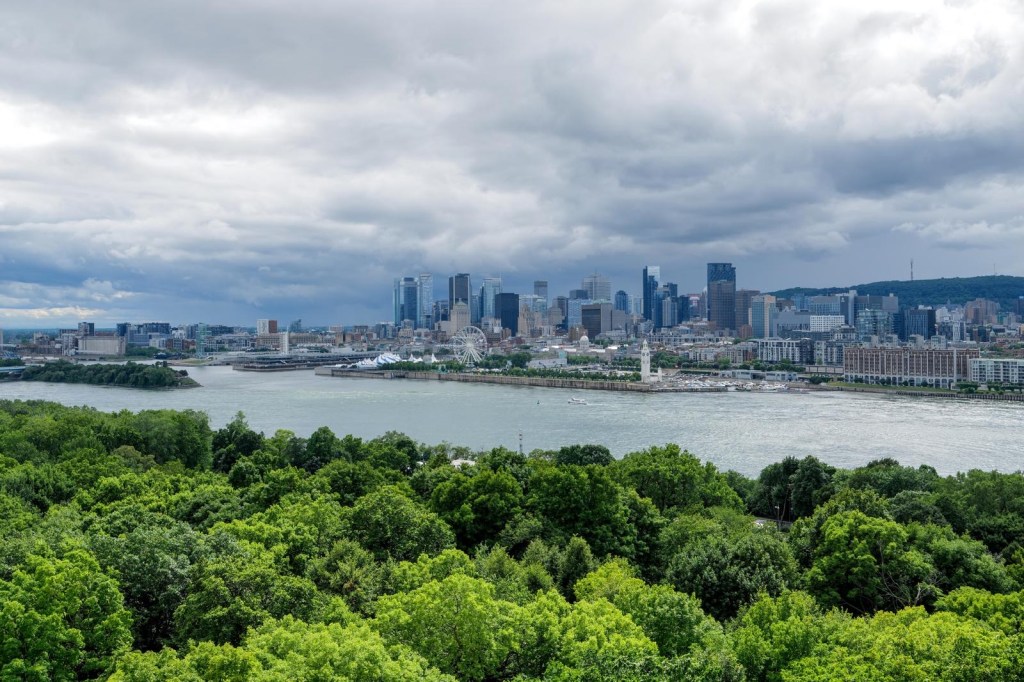
Then a short climb to the island’s modest summit, topped by a stone tower. It’s free to climb to the viewing platform, with a 360-degree view of the Montreal skyline and the river. It’s blustery and I’m glad I have my hoodie.
More rain catches up with us we descend through the forest. We nip into a café to sit out the weather. And that’s it. Simple pleasures. Back to downtown Montreal tomorrow for our last day here.
Thursday 23 July
Work arrives. Lots of work. I step back from our plans to go museuming this afternoon and buckle up. K spends the afternoon at the Montreal Museum of Fine Art:
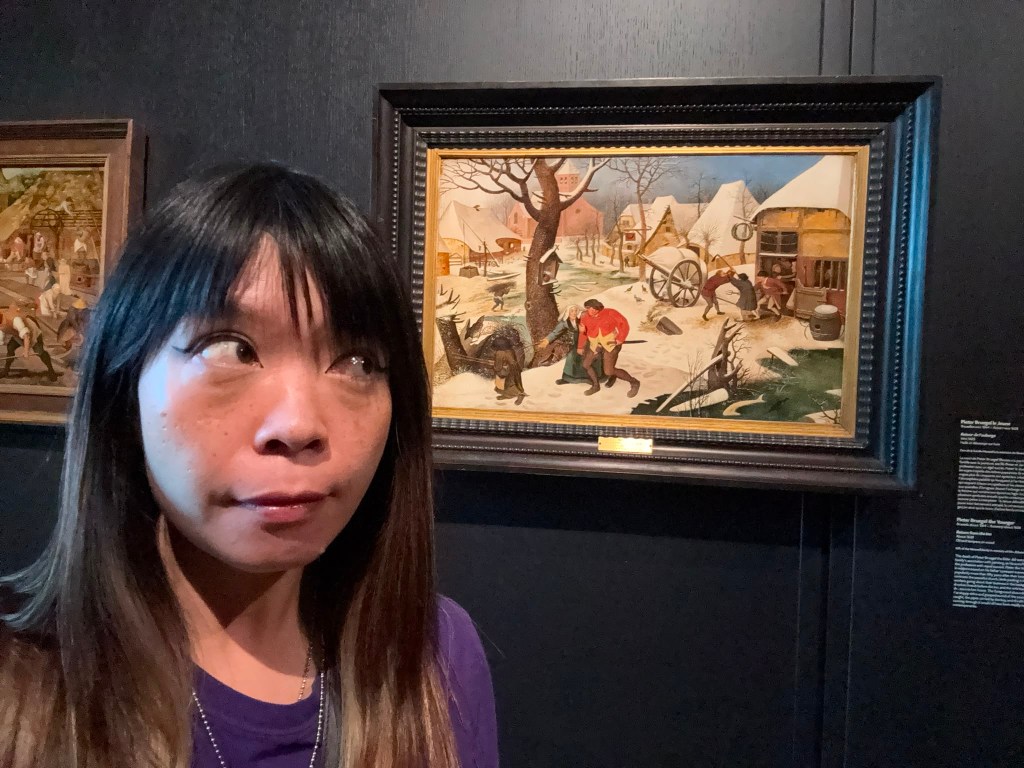
We meet up for dinner at the local Thai restaurant, where I enjoy my first beer since my gastro relapse last Saturday.
And that’s it for Montreal. The city’s been on my mental map of the world since the 1976 Olympics. Now I’ve seen it, it’s not somewhere I’d come back to. It’s…okay.
Friday 24 July
Montreal to Quebec is flat farmland. For miles the only sights from the dead-straight road are pylons, silos, the occasional farmhouse, and the even more occasional church.
The first town we pass through, Saint-Jean-sur-Richelieu, has graceful mansions overlooking the river, but it’s choked with traffic — so choked we fall 45 minutes behind schedule. The second, Drummondville, appears little more than a hideous sprawl of malls, petrol stations and drive-thru Wendy’s.
Far more interesting is that we’re now deep into Francophone Quebec, beyond bilingual Montreal. It looks disarmingly ordinary, but there’s something distinctly odd about this linguistic and cultural pocket of Canada. How must it feel when your compatriots beyond your corner of the country speak a foreign language? Wales and Catalonia come to mind, but few in Wales don’t speak English, and few in Catalonia don’t speak Spanish.
As we draw towards Quebec City, the farmland gives way to forest, but set well back from the road — perhaps as a firebreak should the need arise.
Quebec City arrives abruptly. All of a sudden, we’re on a suspension bridge crossing the St Lawrence River. Mere metres downstream, sits a venerable old cantilever bridge, still in use, almost identical to the Forth Rail Bridge.
Our Uber driver already has two suitcases in her boot. Rearranging everything to squeeze ours in is sufficient for her to twig we speak very little French, and for us to twig she speaks almost no English. Perfect for setting up a painful conversation in broken French as we ride into town. Kathryn has a cousin in Ottawa, so we’re using the opportunity to explore the St Lawrence valley. No, Hong Kong’s not in Japan; it’s reluctantly part of China. It’s complicated. (I should have thought to add, “A bit like Quebec and the rest of Canada, perhaps.”)
The hotel room isn’t much for what we’re paying — we’ve chosen to arrive on a weekend in late July after all — but it does at least have hot water on demand for tea and coffee.
We step out to explore. North America has rarely looked so European. The street outside leading downtown is pleasantly narrow. A large stretch of landscaped parkland lies between us and the river: the Plains of Abraham — site of the pivotal battle in the Seven Years War that sealed Quebec’s fate as part of Great Britain rather than New France. It’s a perfect summer evening, approaching golden hour. Families unpack picnics. Laughing kids roll down grassy slopes. I wish I were still young enough to do that without looking ridiculous.
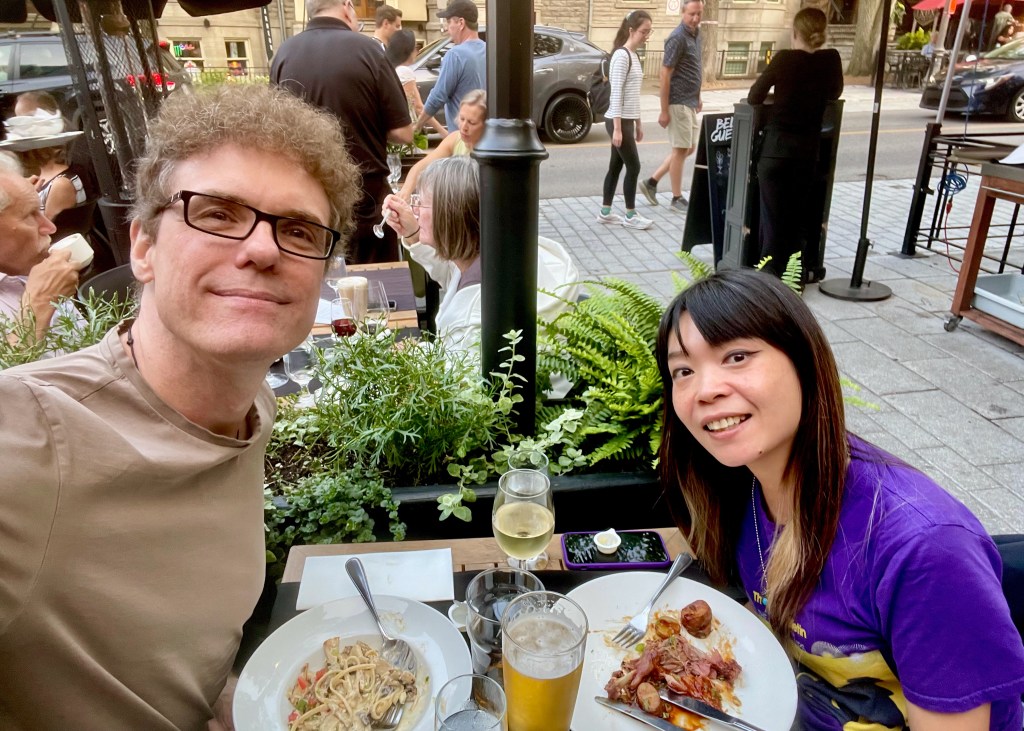
We rejoin the road where al fresco restaurants line both sides of the street. A cheerful Friday night buzz drifts through the early-evening air. After inspecting nearly every menu, we settle on one and settle down to enjoy the ambience. The staff immediately sniff us out as non-French speakers and slip effortlessly into fluent English. Perhaps we won’t be using much French here after all.
Saturday 25 July
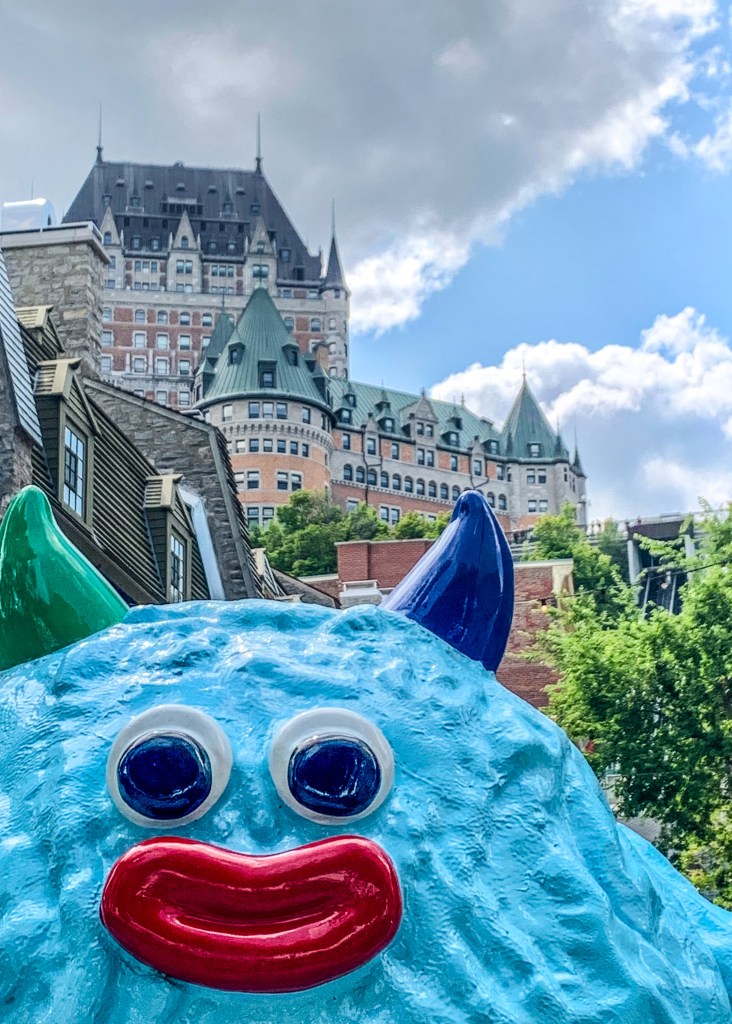
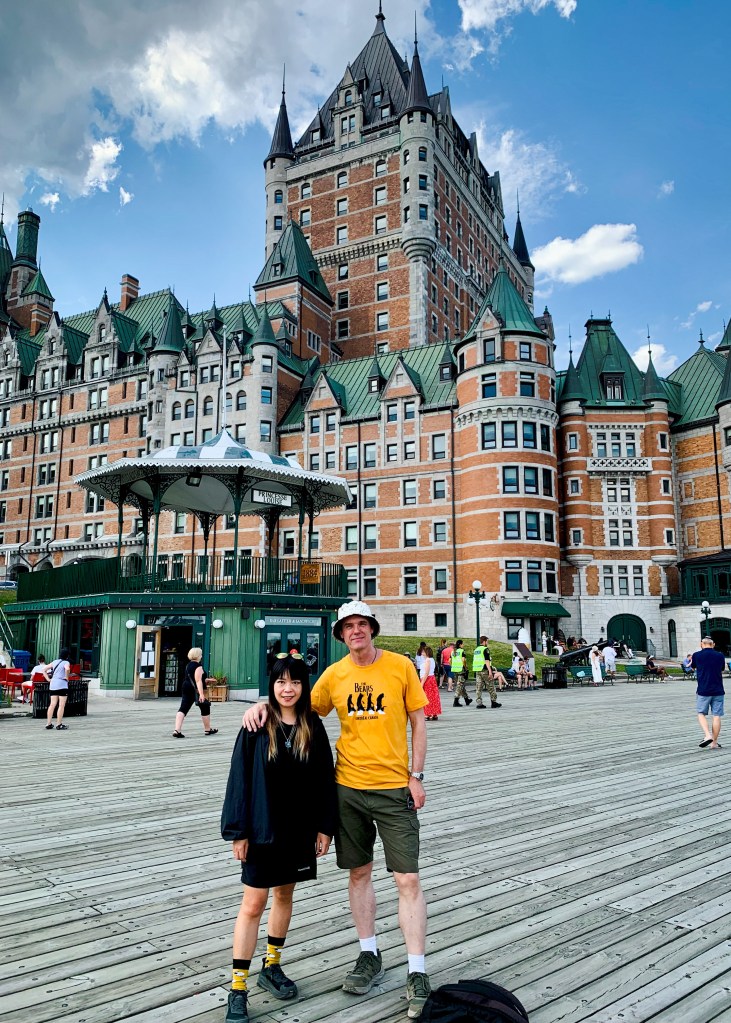
Quebec City is a little piece of Europe that’s floated across the Atlantic. Take the Château Frontenac — apparently the most-photographed hotel in the world — with its steep pitched roofs and fortress-like central tower, straight out of the Loire Valley. Below it, the old town — one of North America’s oldest European settlements — is a jumble of narrow lanes and cobbled squares.
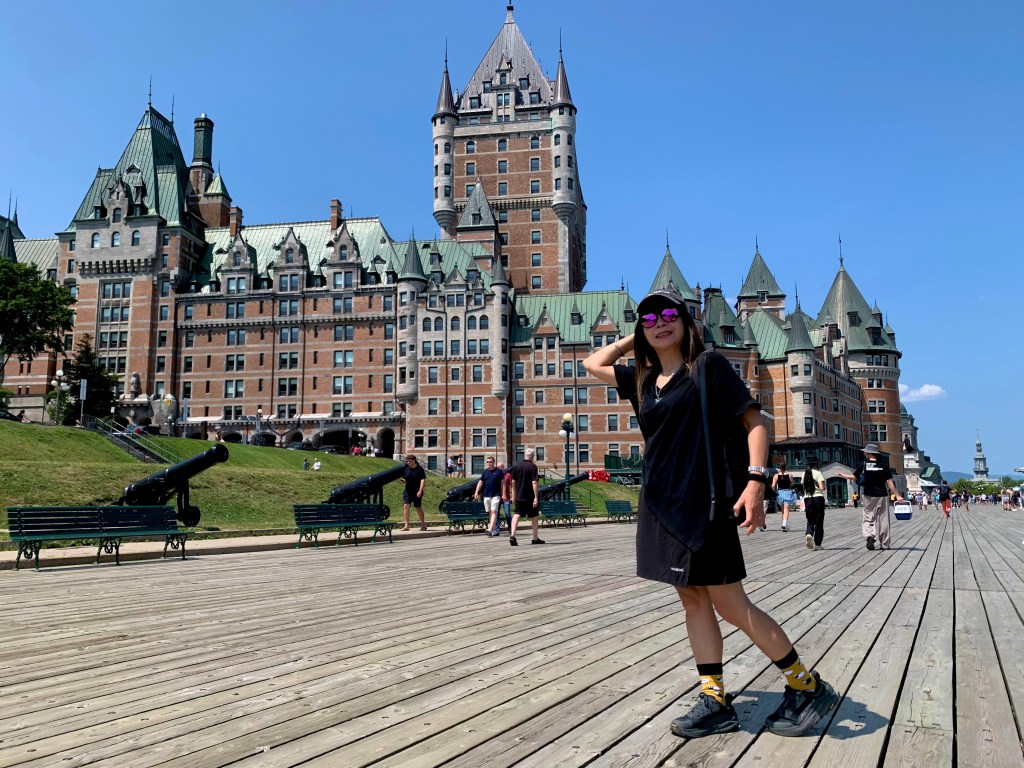
With attractions like that, it’s no surprise we’re not the only visitors in town. It’s jammed, but in a good-natured, aren’t-we-all-fortunate-to-be-here way. Quebec City may have sounded like a distant outpost when we first thought to come here, but it’s firmly on the tourist trail — especially for the French and the Americans, according to the young woman at the Tourist Information Office.
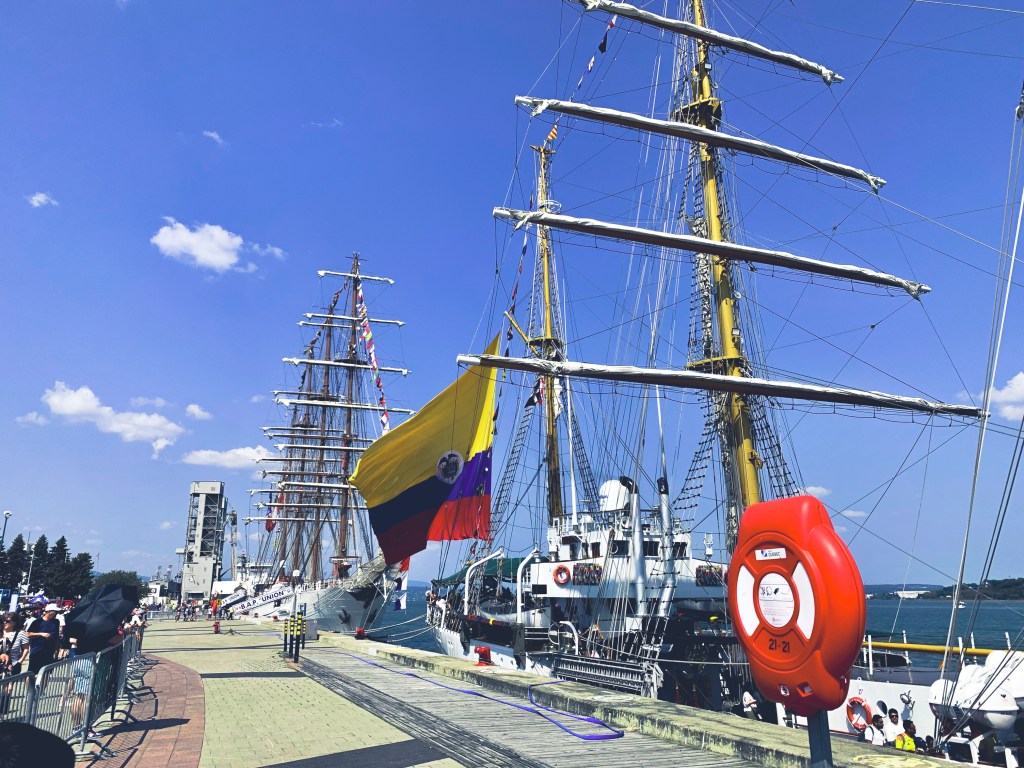
We’ve even unwittingly timed our arrival to coincide with four tall ships from South America, part of an annual naval festival. Apparently, this is the first time tall ships have appeared at the wharf in nearly a decade. “More than 100,000 visitors are expected for this year’s event”, gushes the official website. No wonder it’s busy today.
We wander about in a happy daze, simply taking everything in. We could continue like this all day, but eventually the hot afternoon drives us towards the Museum of Civilization — “exhibits on ancient & current world societies, including First Nations, New France & modern Quebec” — to cool off. What we see is excellent; it’s a shame only that we don’t have sufficient time to do it justice. A section on group behaviour detains us with exhibits on dynamics, fake news, and tipping points. By the time we finish, there’s only half an hour to dash around the First Nations section before the museum closes. We leave having seen only a fraction of it.
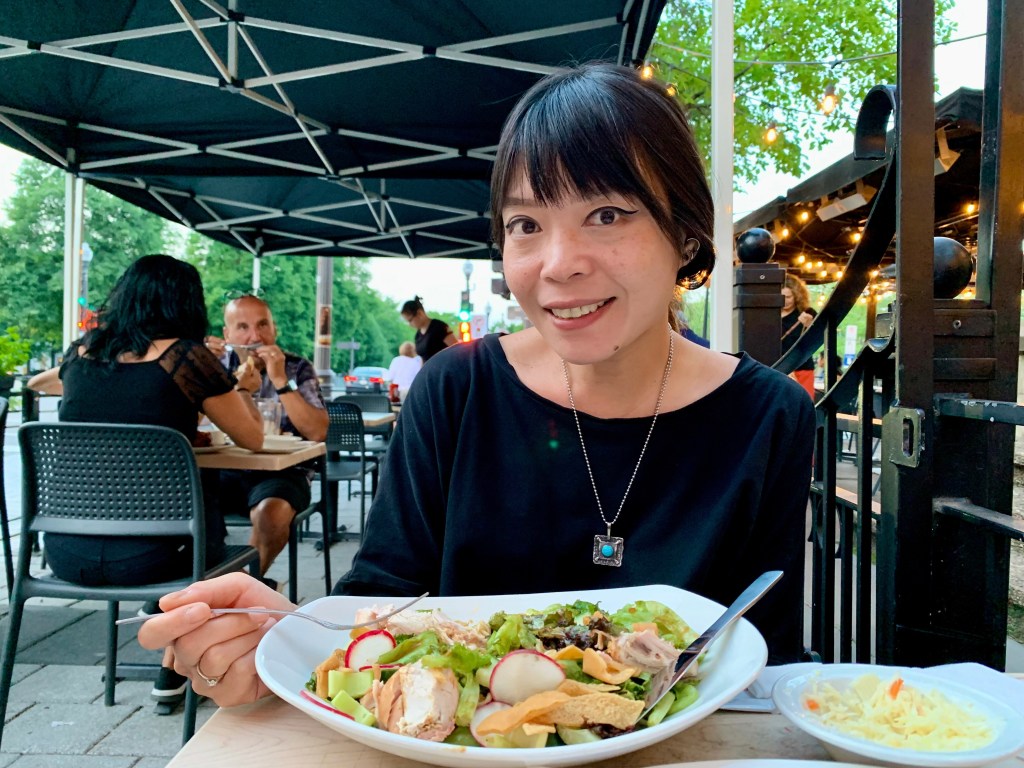
We’ve had no fresh food for two days, so for dinner we settle for one of the cheaper restaurants on the same strip as last night, order chicken salads, and happily watch the world go by until well after dark.
Sunday 26 July
I spend the morning finishing an editing job so that we can get out and enjoy the day. After all, Quebec has far more to offer than a cramped hotel room overlooking a car park. It works out fine.
A late lunch of ‘homemade’ onion soup in the Old Town, with enough melted cheese to snare a small mammal; a new t-shirt (farewell to my Wedding Present t-shirt — a year of sweat stains and a white t-shirt don’t mix well); a stroll along the promenade high above the St Lawrence; and a brief visit to the Plains of Abraham Museum to learn how Britain pinched this corner of North America from the French. We wander over the Plains of Abraham towards our hotel satisfied we’ve packed all we reasonably can into two days.
We wrap up Quebec City at a quiet Irish pub around the corner, away from the hordes on the Grand Allée. A week from now we’ll be arriving in Hong Kong. It feels a long way from here.
Monday 27 July
Introducing the first of several travel days as we begin our relocation across half the planet towards distant Bangkok.
The return leg to Montreal takes us north of the St Lawrence via Trois-Rivières, a town we’d once planned to stop in. Approaching Montreal from this side does nothing to lift it in my already limited estimation — one side of the bus looks onto austere port facilities; the other onto an extended tent city stretched along a wide grass verge. Montreal seems to have a serious homelessness issue.
We change buses, but before escaping Montreal, we spend half an hour wedged in traffic trying to enter the airport (the bus has a scheduled stop). What kind of first-world city infrastructure is so overwhelmed that it takes half an hour to enter the airport?
I’m glad I’ve seen a bit of Montreal, but — Mount-Royal Cemetery and Leonard Cohen’s grave aside — it’s left few positive impressions. I’m glad to see the back of it. That’s something I’ve said vanishingly rarely in three years of travel.
The driver hits the gas and we step off in Ottawa only a few minutes behind schedule. The metro whisks us straight to our new neighbourhood, Centretown, but it’s surprisingly empty for six on a weekday evening. Most seats remain unoccupied.
Our Airbnb for the next two nights is on a leafy street currently being dug up to lay new pipes. It’s a big old Edwardian house, subdivided into the main home and two Airbnbs, with a third on the way in the basement. We know this as the owner happens to be on the front porch as we arrive and shows us round the back to our unit. It’s fine for two nights. More comfortable than expected, in fact.
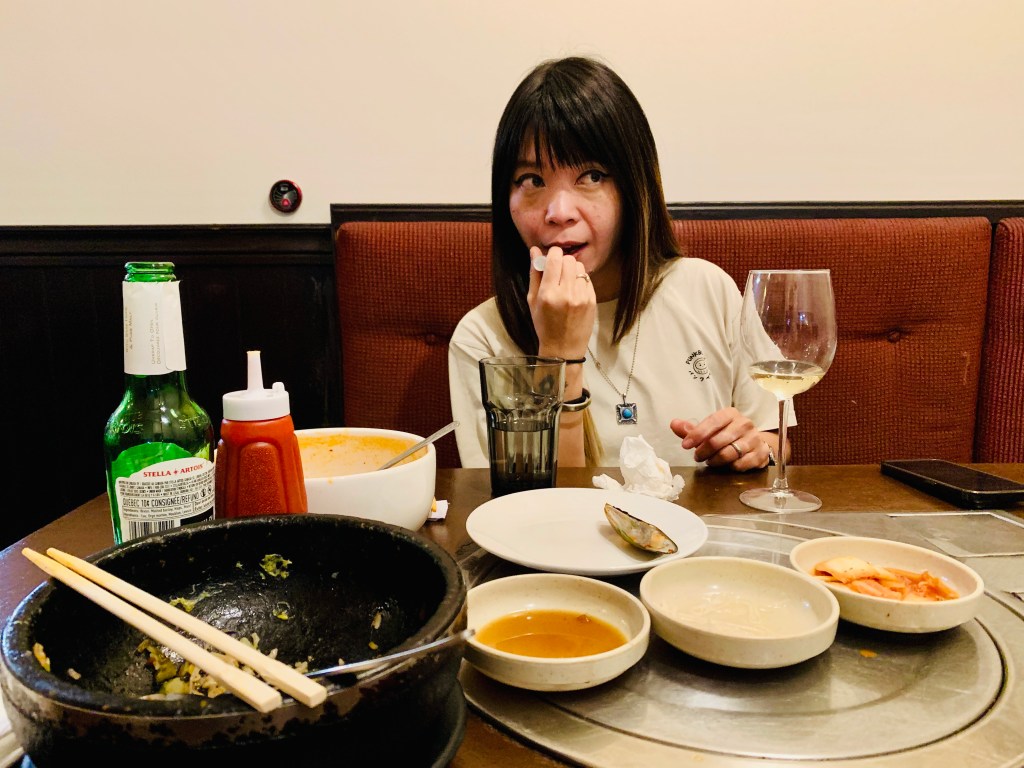
We’re not far from Chinatown, so we head out to hunt for dinner. What passes for Ottawa’s Chinatown is a shabby block of vape shops, men’s hairdressers and occasional restaurants, all of which seem to close on Mondays. We’re about to give up and buy pot noodles from the Kowloon supermarket when we spot one open place — Korean. It’s as shabby as the neighbourhood, but the staff are pleasant, if slow. Solved.
Tuesday 28 July
A mini-supermarket around the corner sells flaky spinach and feta börek. Breakfast sorted.
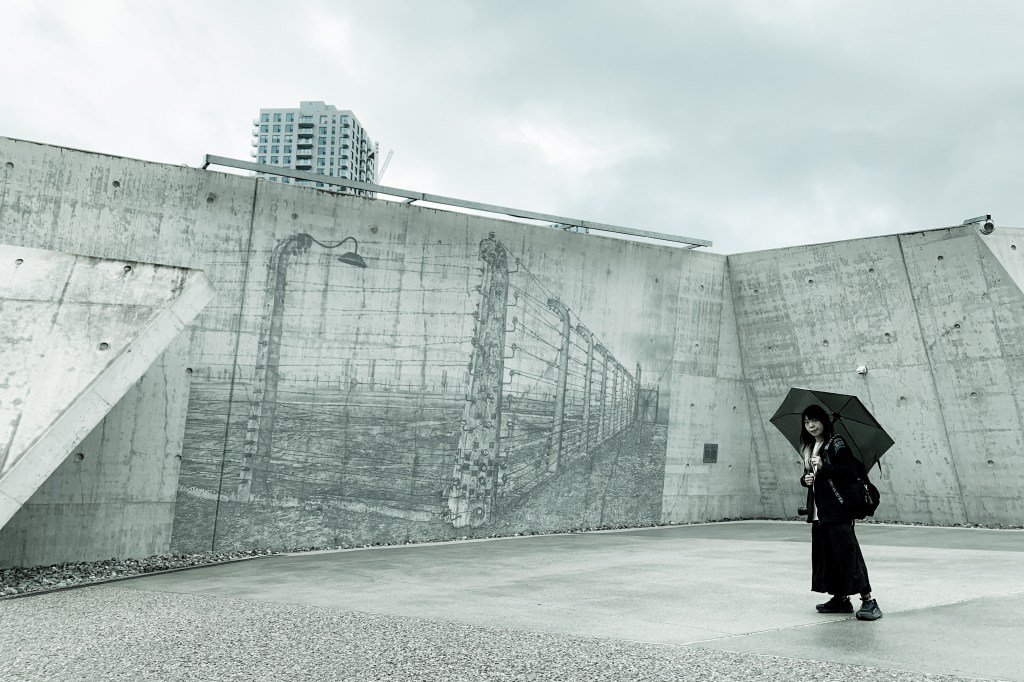
It’s cool and overcast in Ottawa. Half-hearted patches of rain peter out whenever we open our umbrellas. The bleak weather feels appropriate to visit the Holocaust memorial —underwhelming at first, but powerful once I realise the brutalist design is entirely intentional:
The Canadian War Museum — K’s choice — turns out to be a good way to spend the afternoon. For the third time in little over a week, we arrive too late in the day to give ourselves time to do a museum the justice it deserves. Despite two and a half hours to explore, we linger too long on the colonial era — the expulsion of the Arcadians is something I knew next to nothing about — and by closing time we’ve only just reached the World War II hall. We’ve covered less than half the museum. There’s just enough time to learn a little about the trans-Atlantic convoys that sailed from Halifax, Nova Scotia to keep Europe supplied with food before we’re gently ushered out.
A half-hour walk, the first half along the banks of the Ottawa River, brings us to a Vietnamese restaurant where we’re meeting cousin Karen and family for an early dinner. Christopher and I continue to find plenty to talk about while the two cousins natter in Cantonese. The kids, Kristin and Kyle, bear the adults talking adult crap with good grace.
Kristin and Kyle disappear to a badminton lesson nearby. We adults drive a few blocks, park, and line up for ice-cream, just like kids. I’ve never seen a queue for ice-cream like it. I opt for a large scoop of something called ‘Tiger Tail’, which turns out to be mango and liquorice.
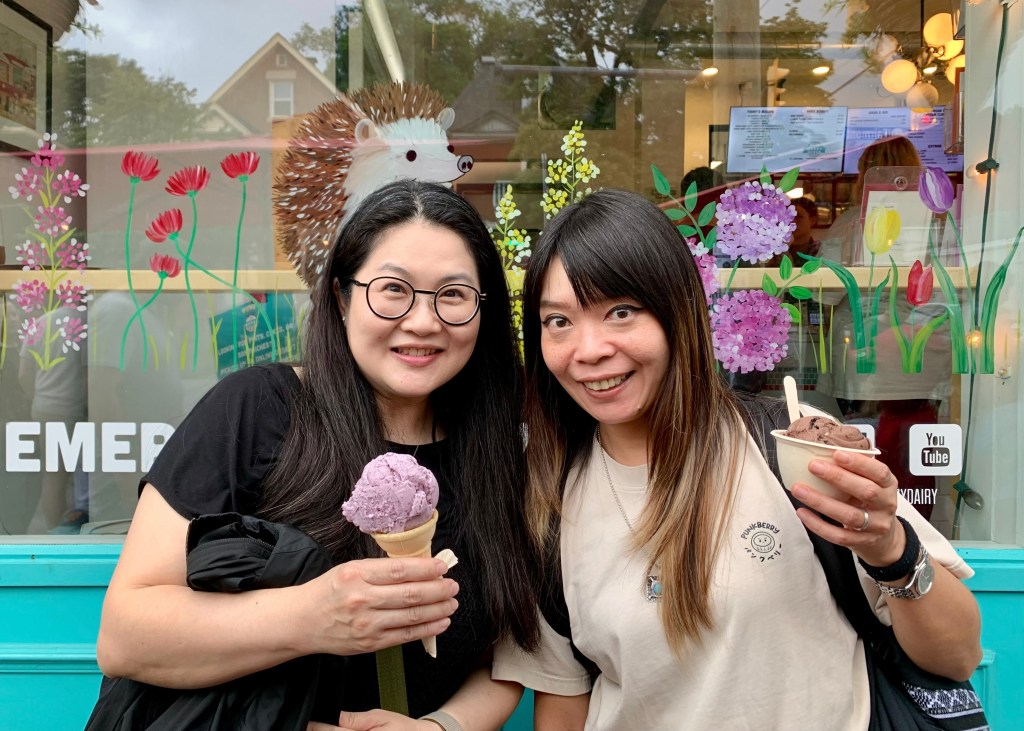
Kristin and Kyle are great kids, but it’s good to have some time away from them so I can ask Karen and Christopher about their hopes and fears of raising children in the third decade of the 21st century — and about their own sense of identity as immigrants who arrived in their teens, compared with their kids’ sense of identity, born and raised in Canada to Hong Kong Chinese parents. (That sounds like heavy shit, but the conversation shifts naturally in that direction.) Their answers are typically measured and thoughtful. It’s been a pleasure meeting them — twice! — here in Ottawa. I hope to see them again one day.
Wednesday 29 July
Another transit day. A nearly empty metro to Ottawa Airport, where we have the whole afternoon to kill. I wander off to locate the ATM in the arrivals hall that charged my bank account despite my cancelling the transaction. I’m in luck: the company that runs the ATM also runs the exchange booths. Humans! I explain what happened to Anser — he turns out to be from South London — who gives me the identification number of the ATM.
I spend the next hour on the HSBC app reporting the incident again, this time with that key piece of information. HSBC give me a case number. We’ll see what happens.
I’m almost certain I cancelled that transaction the day we arrived without withdrawing any cash, but I don’t have a receipt to prove it. I’ll be annoyed if HSBC don’t refund it, but let’s be philosophical: our HSBC shares have hit records highs this week. That alone compensates for the ATM incident several times over.
It’s a five-hour flight to Vancouver. (I reckon it would take three more from St John’s — this country is vast.) Something new to me: the cabin windows tint themselves to the light outside. No need for pull-down shutters. The windows are a deep shade of blue for most of the flight. Neat. I’m still struggling through One Hundred Years of Solitude, determined to finish it, but spend more time dozing and listening to Sonic Youth albums I’ve under-appreciated for decades.
We’re picked up in a Tesla, the planet’s ugliest car. I ask the driver, diplomatically, how he finds driving a car so devoid of character. He doesn’t comment on the aesthetics, but insists it saves him thousands for its reliability and low-cost charging. Hard to argue.
We’re at our Airbnb within an hour of landing. (All hail domestic flights!) Knowing the owner is away, we’re expecting the place to be empty. So we’re surprised to find Chris from Germany closing the fridge door while balancing his dinner in his other hand as we turn the key. Chris is the ‘helper’. The owner mentioned him, but we had no idea he was staying — I’d imagined an on-call handyman. Despite the initial surprise, it’s fine. We originally expected to share the space with the owner anyway. Chris only arrived in Canada himself two weeks ago himself after completing his PhD in Melbourne. A Trusted Housesitter? Not sure yet.
We leave Chris to his dinner. I head out to the nearest liquor store for beer, and we settle down to our own dinner of the pot noodles we’ve personally flown in from Ottawa.
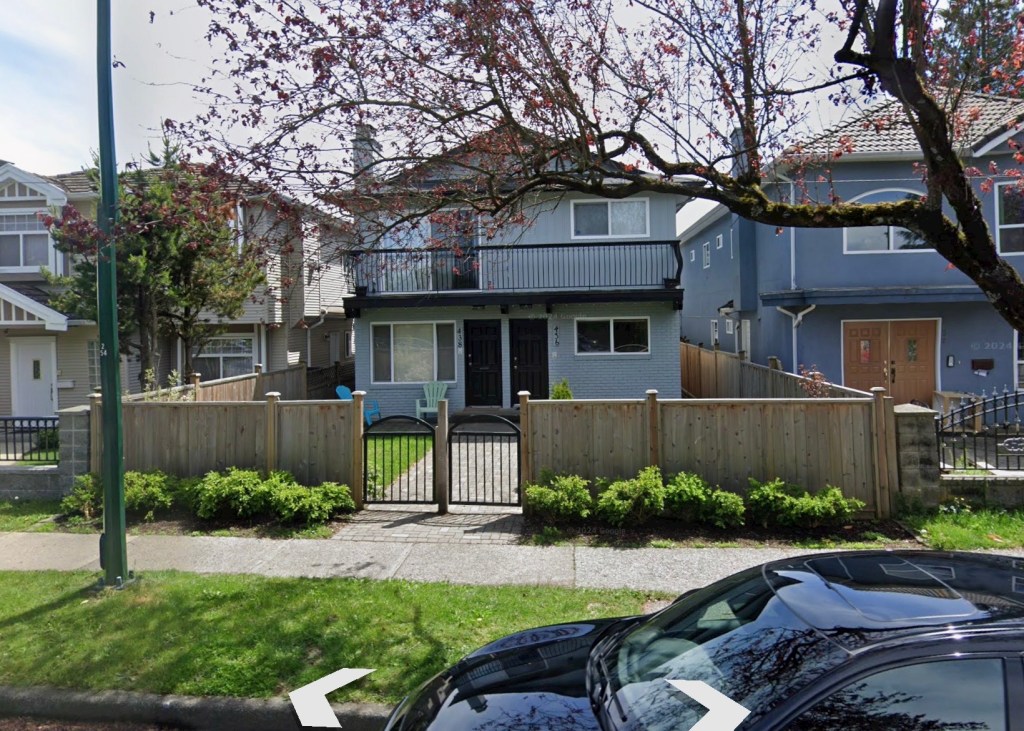
No photos today, so here’s the Google street view of our Airbnb:
Thursday 30 July
Vancouver. The only city in Canada where the mountains meet the sea. Looking north from the downtown waterfront must be one of the loveliest urban views on Earth. And if the mountains rising beyond the tidy north-shore houses aren’t enough, there’s the sight of seaplanes lumbering into the sky every few minutes, escorting the well-heeled to even better views.
I loved Vancouver when we were here in 2019. Since then, we’ve seen a lot of places, but no sizeable city comes close. In The Hitchhikers Guide to the Galaxy, Slartibartfast had won an award for designing Norway’s coastline. Whoever founded a city here deserves one too.
Beyond Hong Kong and Blighty, Vancouver’s the only city besides Istanbul we’ve returned to. Ten and a half months after leaving England, it’s good to be somewhere familiar. (Madeira sort of counts for me, but after quarter of a century it felt almost new.)
After a cheap-and-cheerful Subway lunch opposite the cruise terminal, we head towards Stanley Park to meet K’s former Impact HK colleague Ira — now a local resident. She’s as energetic, garrulous, and slightly chaotic as when we climbed Lo Fu Tau together in the middle of Covid. She wastes no time in announcing she feels more comfortable, more herself, in Vancouver than in Hong Kong. (I later learn she lived with her mother until leaving Hong Kong two years ago at 39.)
In Stanley Park, K and Ira grapple with a bike hire app while I wander off to sit under a tree and watch the world go by. Ira never learned how to ride, so we agree to meet at the Leslie Cheung Memorial Bench a kilometre away. K immediately realises her adult bike is too big: not just the height of the saddle — we’ve adjusted that — it’s the size of the bike itself. She even struggles to reach the brake levers; her handspan simply isn’t large enough. We proceed cautiously along a track through surprisingly wild forest right in the middle of Vancouver.
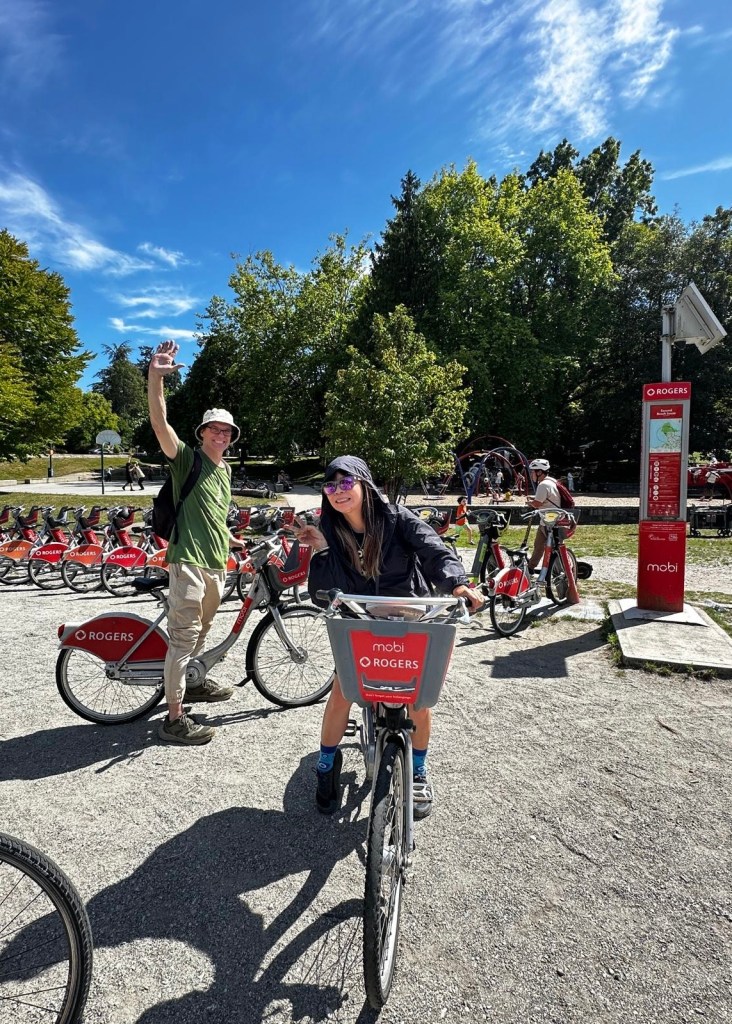
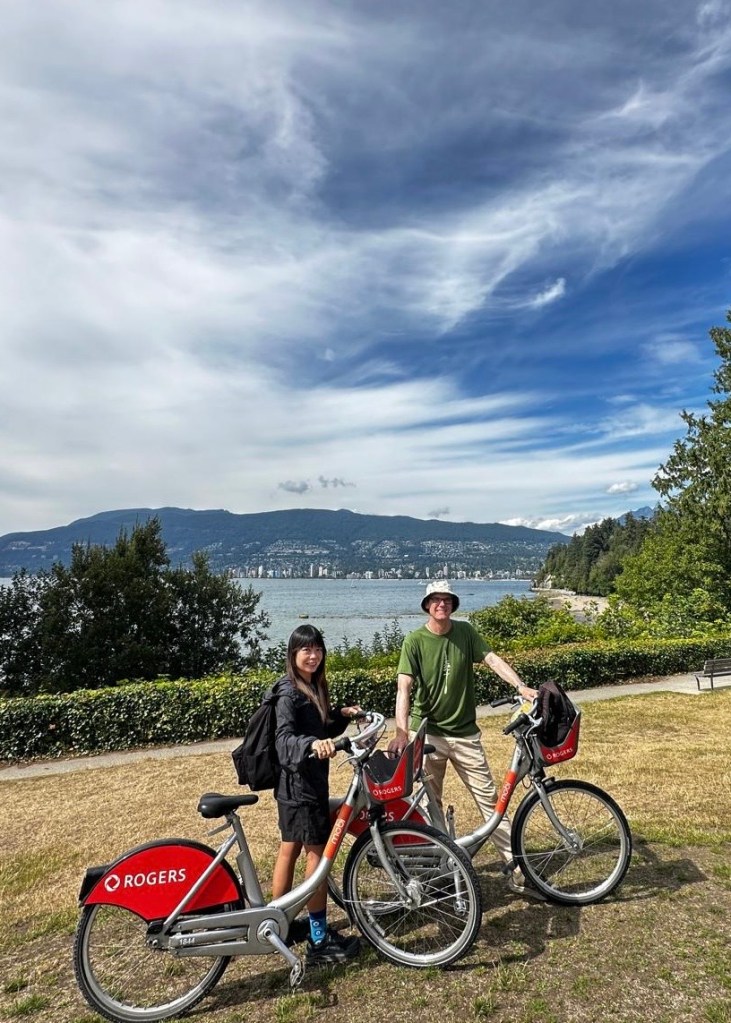
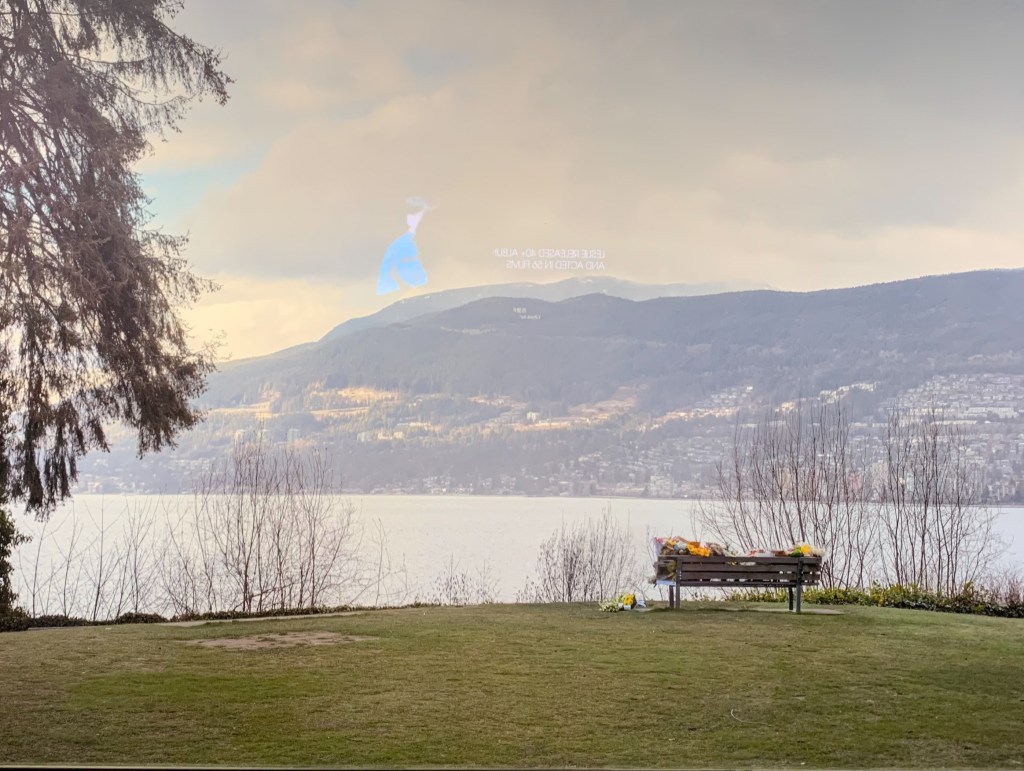
Leslie Cheung’s bench receives a steady stream of Chinese visitors. After waiting longer than reasonable, Ira asks a Mainland couple ever-so politely if they wouldn’t mind shifting their arses so that we can also take a photo. The bench sits in a beautiful spot overlooking the sea towards the mountains. I never cared much for Leslie Cheung’s music, but I’m still struck by a deep sadness at his tragic end in that distant gloomy April of 2003 amid SARS, the Gulf War, and endless, endless rain.
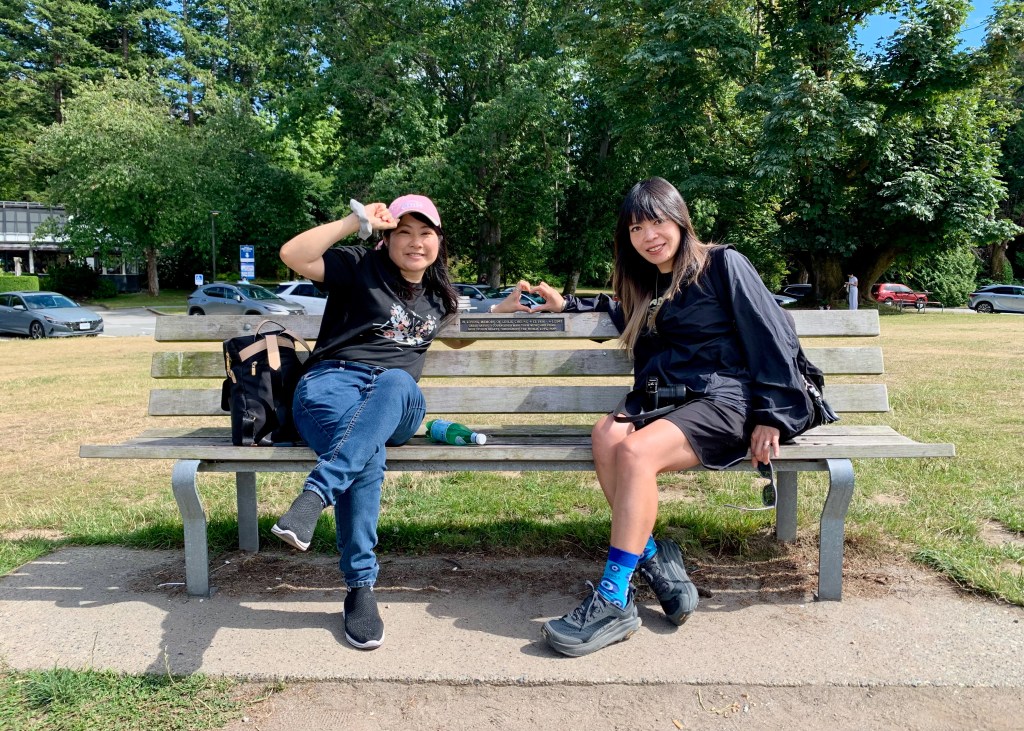
We drop the hire bikes at the next opportunity and continue ambling around the coast path — me discreetly drifting ahead so K and Ira can natter in Cantonese. A steady stream of cyclists fills the one-way cycle lane while the pedestrian lane is almost empty. It’s a long walk, after all — by the time we return to our Airbnb, we’ll have clocked 26,000 steps.
After cutting through the forest and skirting a wild lake that feels more Yukon than Vancouver, we emerge back into the city and catch a bus to a spotless Korean restaurant on the edge of squalid Gastown. Ira talks of finding her tribe in Vancouver — she recently completed an interdisciplinary MA covering women’s studies, gender and feminism — and the challenges of having only one close relative: her mother.
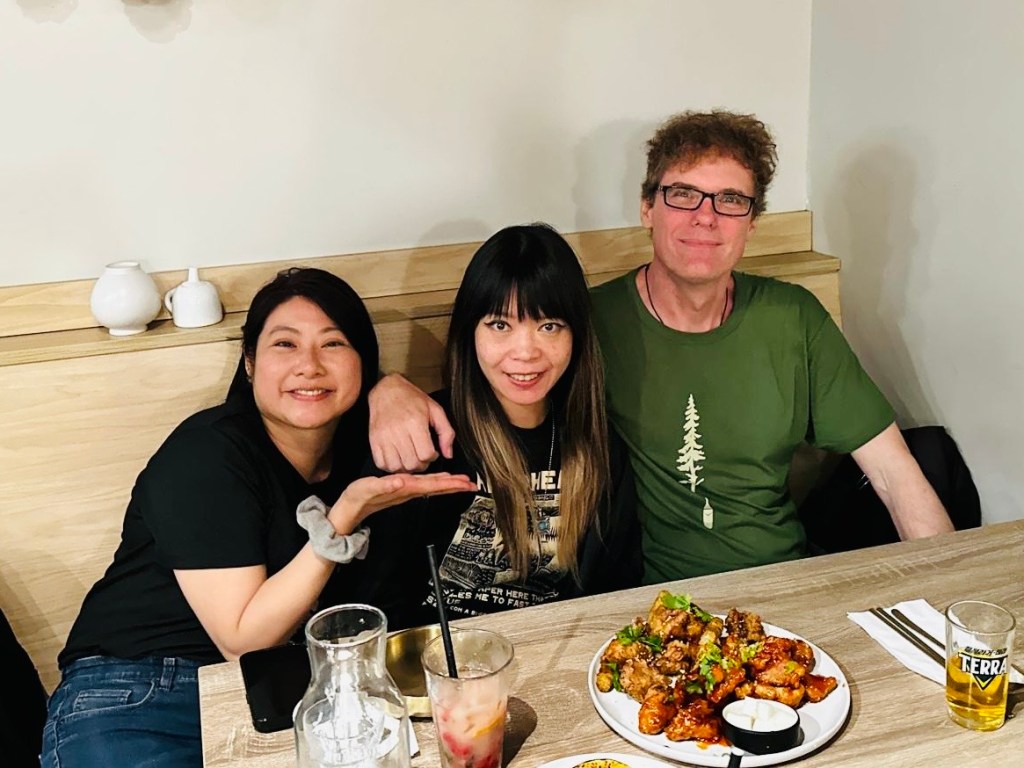
Ira has a brain far bigger than ours combined, but still almost manages to put us on the wrong metro line to reach Oakridge–41st Avenue. I spot her slip just in time and we retrace our steps to the correct line.
It’s been a fine day.
Friday 31 July
It’s the end of July: the final day of our six-month adventure in the Americas.
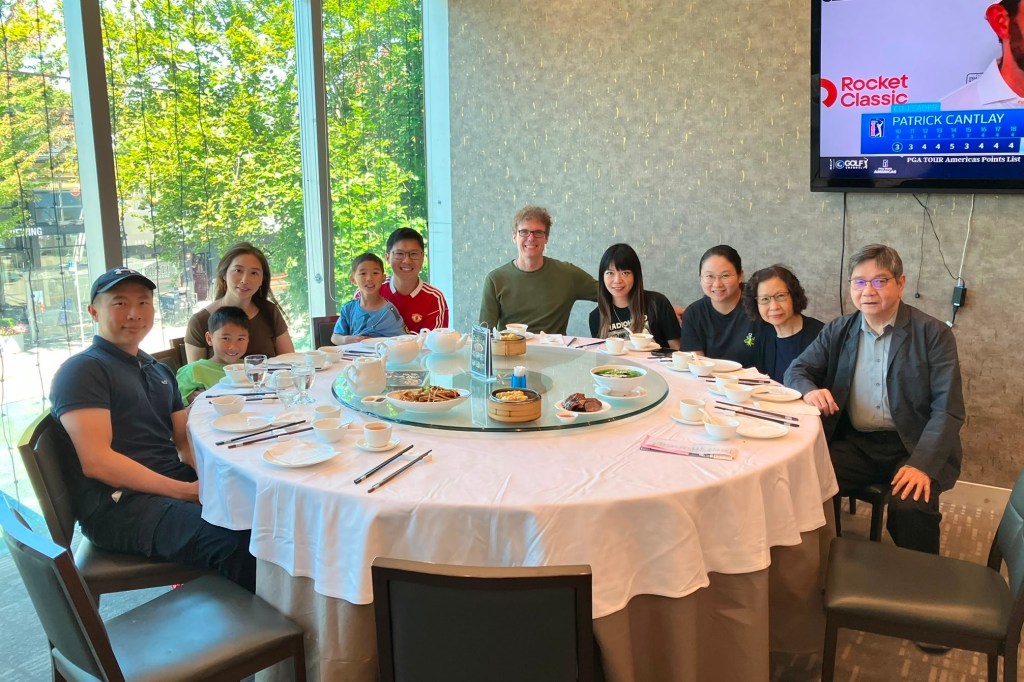
I feel almost back in Hong Kong already as we meet Dai Bat, Lung Lung, cousins Karry and Kelvin, partners Victor and Noel, and Kelvin and Noel’s young kids Kian and one whose name we can’t remember (but it surely begins with a ‘K’; it’s family tradition) for yum cha. The restaurant is straight out of Hong Kong, right down to the icy air con. There’s an occasional white face, but almost everyone is Chinese. The only clue we’re not somewhere in Yau Ma Tei or Sai Wan Ho is the golf on the gigantic TVs.
I’m next to Kelvin, freshly arrived from his home of the past four years in Västerås, an hour from Stockholm. He shows me photos and video of the Northern Lights up in the Arctic Circle earlier this year. Spectacular. Dai Bat is his usual droll self, asking after our adventures across the table when I’m not chatting with Kelvin. K chats with Karry and Lung Lung, clearly enjoying a second day of letting loose in Cantonese.
We’re stuffed as we shuffle out. There’s a slightly awkward parting in the lift: we exit on the ground floor; everyone else continues down to the car park. What to do with the rest of the day?
Google Maps turns up the Chinese Canadian Museum. We step off the bus in squalid Gastown, where hundreds of human wrecks whose lives have ploughed off the tracks congregate. Some shoot up or smoke ice on the pavement. Others lie slumped, twisted into contorted shapes. Everywhere stinks of piss. It’s not Vancouver’s finest neighbourhood.
The museum is a block away from the wreckage. We were expecting a straightforward history of the Chinese community in Canada; instead the largest section traces Cantopop and Mandopop from their origins in the middle of the last century to their 80s–00s heyday before K-Pop tore the playhouse down. We get extravagant costumes and a wall of cheesy album covers, but most touching is a short film about Leslie Cheung, his connection with Vancouver — he was educated here — and his lasting impact on Chinese popular culture despite his early exit 23 years ago.
Leslie Cheung’s memorial bench on the anniversary of his death:
Back outside, we weave through the junkies to the nearest bus stop and head back. Our final evening on the American continent passes in the unglamorous papaerwork of everyday life.
And that’s a wrap — not only for Canada, but for the Americas. We’ve been here exactly six months. A long time. Tomorrow we fly back to Asia and all this will feel a long way away. We’ll be back on this side of the world in a little less than 18 months to hop on a cuise ship to the Antarctic. But for now it’s goodbye to dollars and pesos, and hello to baht and dong.


Leave a Reply