Football. Football. Football. And the occasional sight.
Friday 26 June
And so into the second half of our month in Guanajuato — the final two weeks of our 23 weeks in Central America. Ottawa awaits two Fridays from now. It will be our biggest change of scene in months, although it still feels distant.
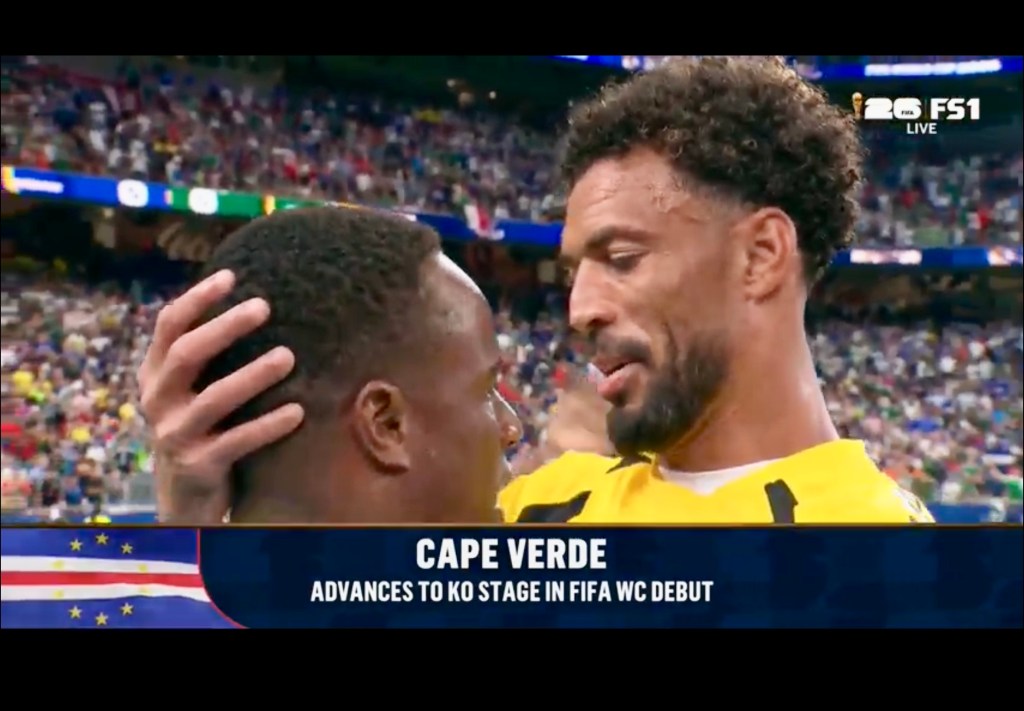
Today passes like so many others: football, groceries, nothing more. Cape Verde reach the knockouts by bagging a point against a confoundingly passive Saudi side seemingly oblivious they’ll be on a plane back to Riyadh if they fail to win. Cape Verde miss a sitter with the last kick of the game, but jubilation follows anyway.
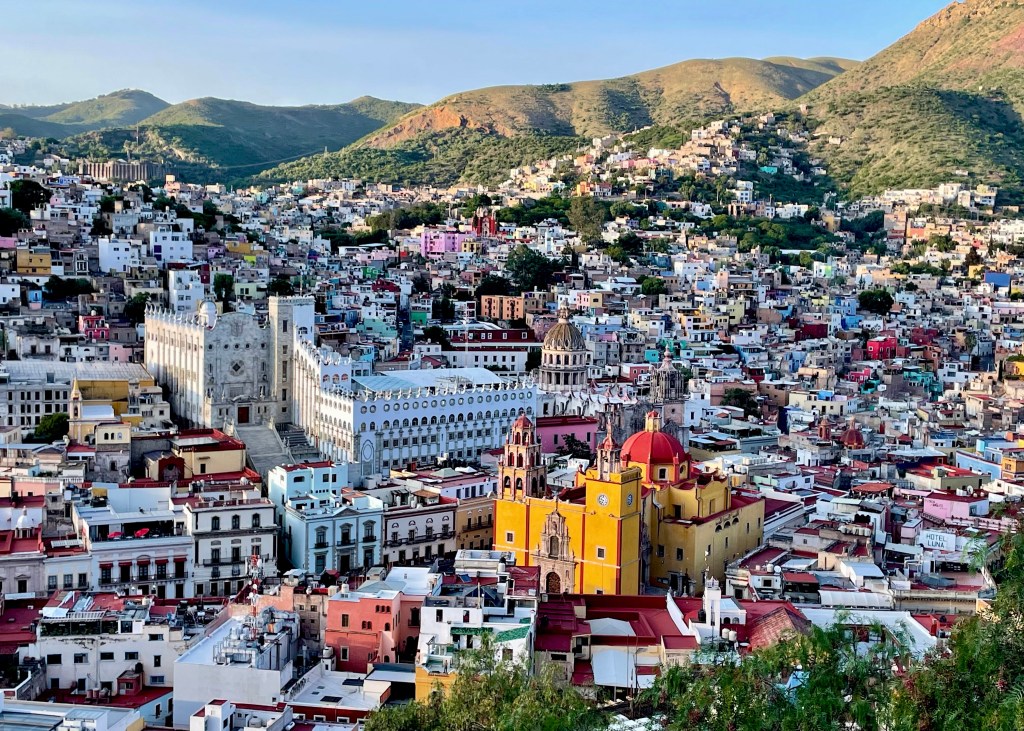
Big picture: we’re both very content here. I suspect Guanajuato, like Sarajevo, will be a destination that truly sticks with us. Asked where to go in Mexico, I’ll tell anyone “Guanajuato”.
For now, we’re looking forward to twelve more days alternating between football and admiring the town before shifting up a gear to dash around Canada.
Saturday 27 June
The group stage wraps up. England labour to a typically unconvincing 2–0 win over Panama to top their group. DR Congo await in the Round of 32.
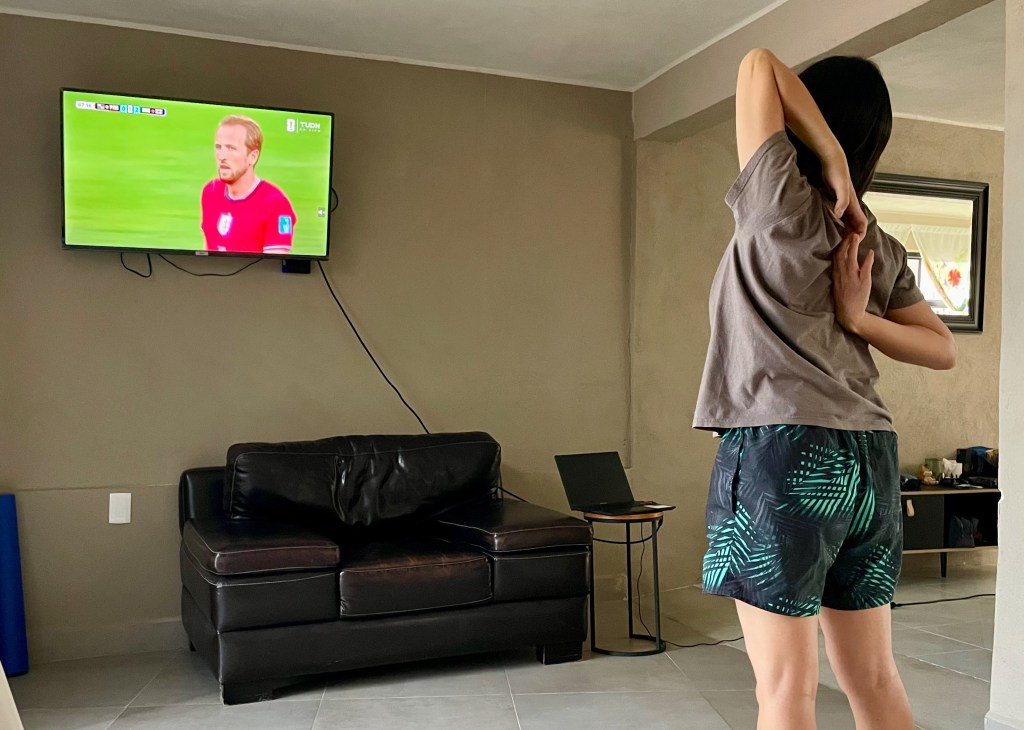
We’re not finished with football for today. Later, we slip out at half-time during the Colombia vs Portugal match and make a beeline for a bar we spotted earlier this week near the Diego Rivera Musuem to watch the second half. The waitress speaks some English — unusual in Guanajuato. The match ends a highly entertaining 0–0 draw. Everyone but us immediately pays and leaves and we’re left alone with half-finished drinks in the now-empty bar.
Sunday 28 June
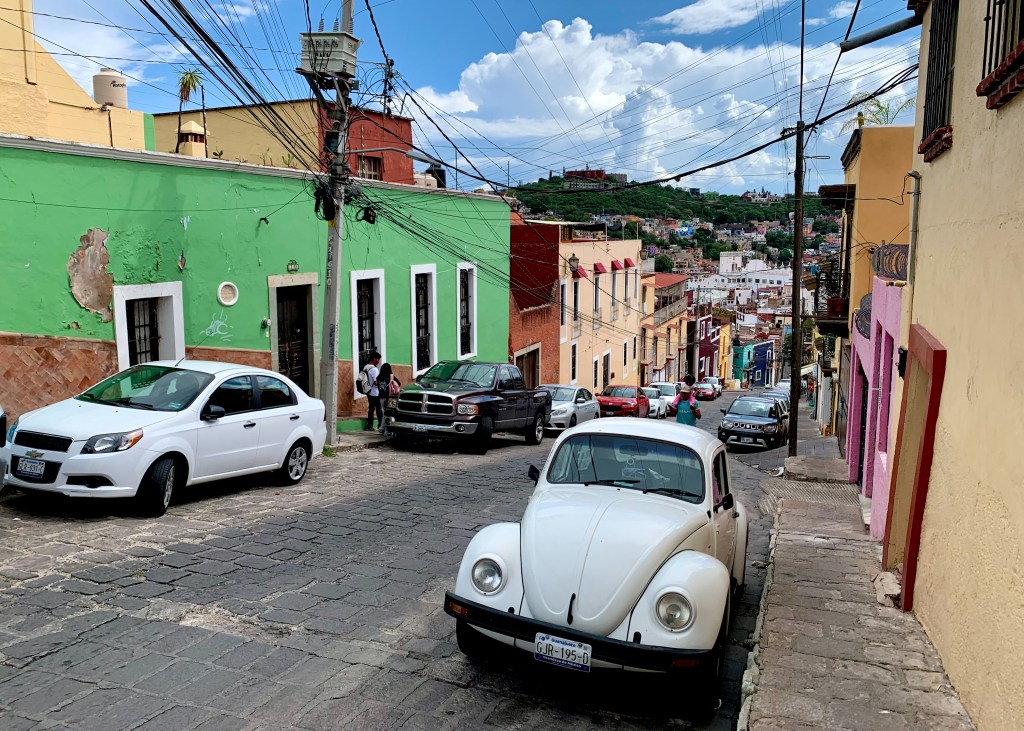
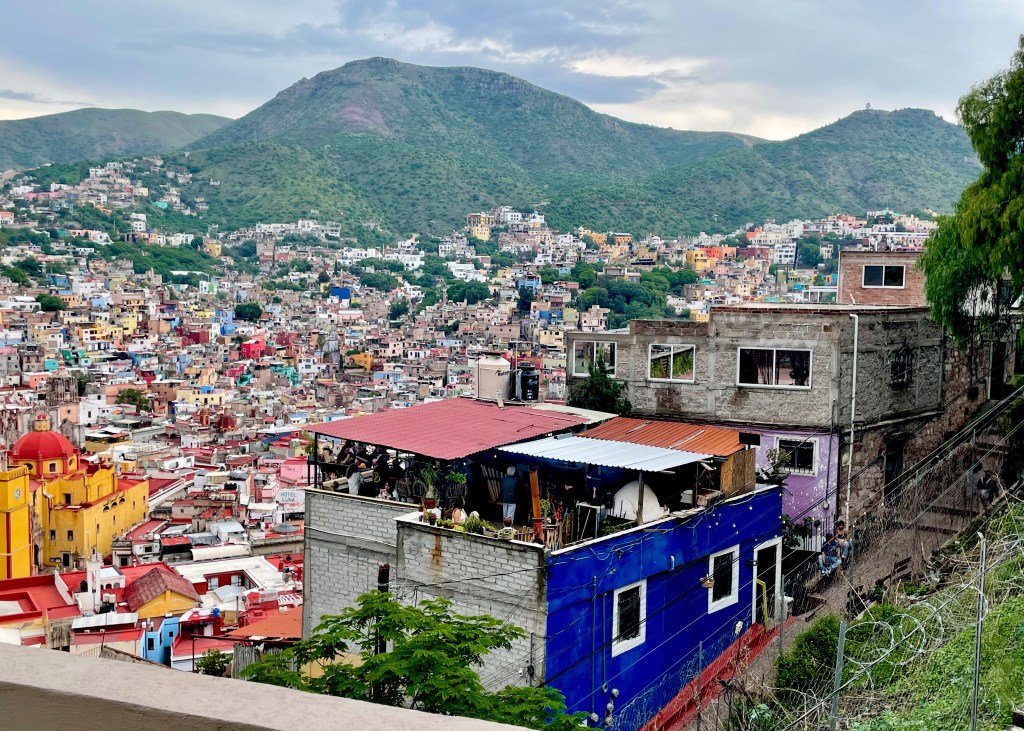
A typically quiet Sunday. My solitary afternoon stroll takes me as far as the crimson church on the opposite side of the valley: an easy landmark to aim for. The church is closed, so I sit on the steps and take in the neighbourhood. Nearby, a young couple try in vain to start their decrepit 1990s jalopy. The starting mechanism labours and howls in protest. They switch seats. Unsurprisingly, this doesn’t help. They’re still at it when I leave to retrace my steps.
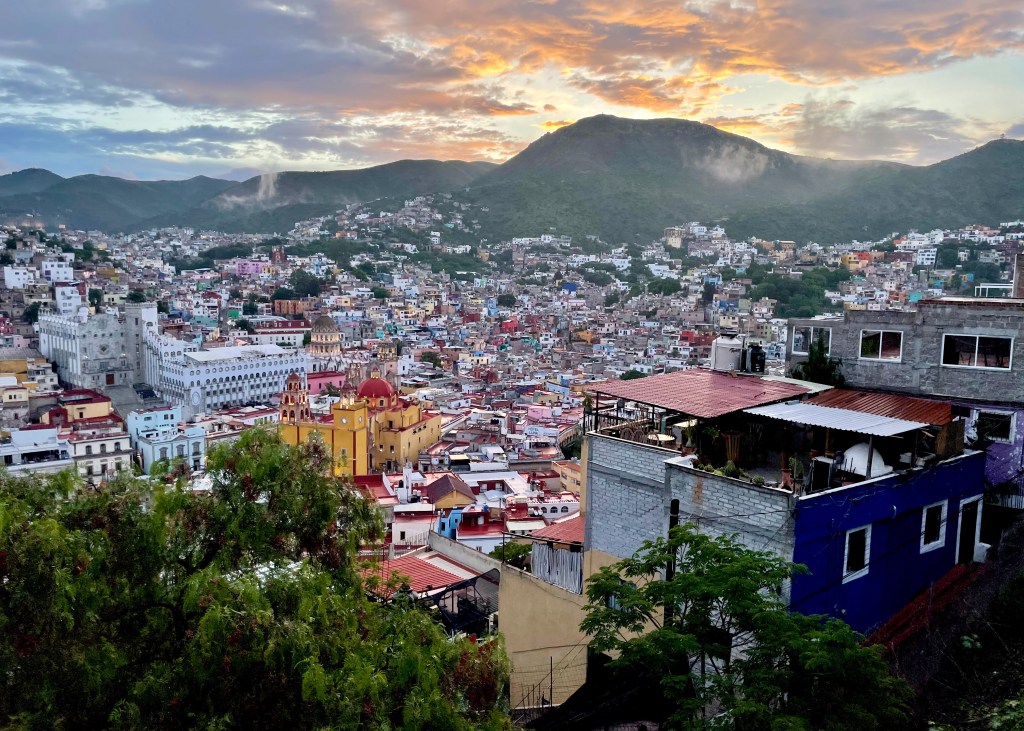
The view back to our side of the valley from near the church:
Canada reach the Round of 16 — the only match today. We use our cache of football-free time to dig into Ottawa, Montreal and Quebec City on YouTube. For the first time, the next leg feels within reach.
Since we arrived my laptop has struggled to stay connected to the Airbnb Wi-Fi. Our iOS devices are fine but K maintains Windows is notoriously less stable than iOS. Today I reach breaking point and resort to the burner phone for a hotspot. It burns through half a gig of data, but it’s worth it. It also confirms my laptop isn’t the underlying problem.
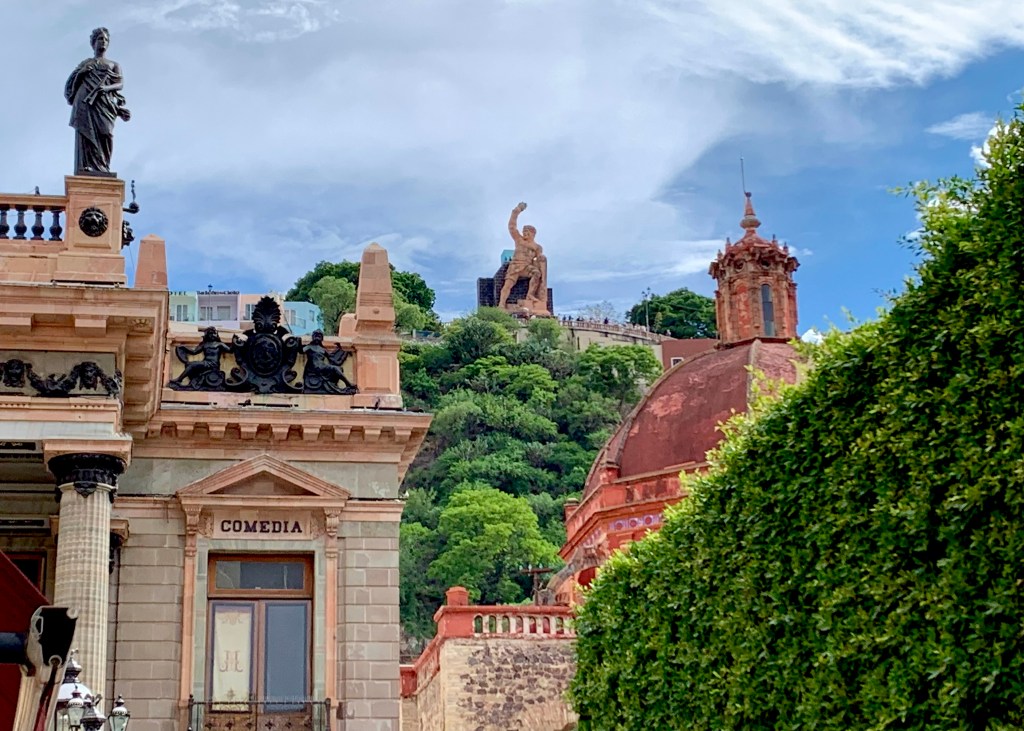
Monday 29 June
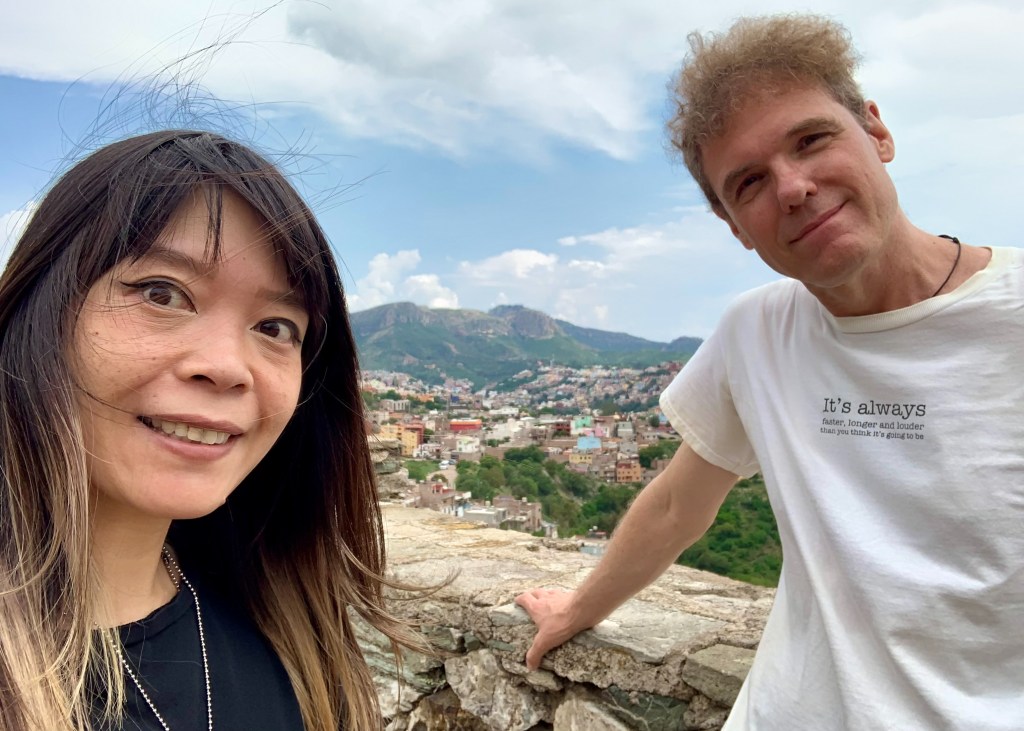
Since we arrived, we’ve been looking across the valley at the old fortification built to protect the 500-year old San Juan de Rayas mine — once the biggest source of silver on the planet. Today, we set out to reach it.
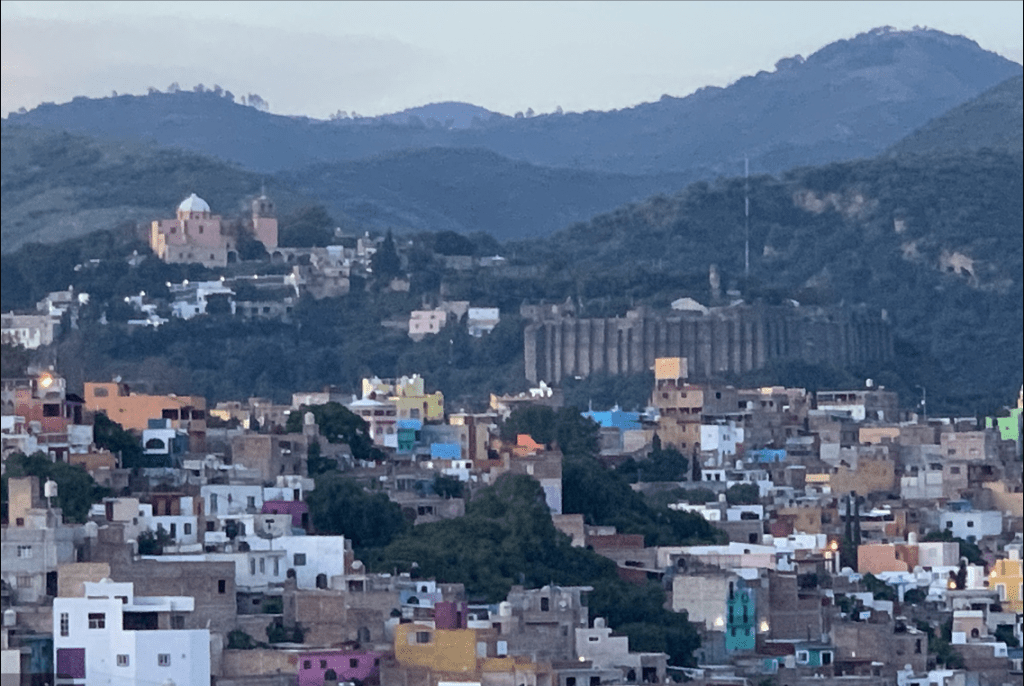
Between us and the mine we’re surprised to find a hidden valley. We climb out of the old town only to descend minutes later to the floor of a valley invisible from our Airbnb. The neighbourhood is scruffier and a sense of caution kicks in. A steep cobbled street we climb on the other side of the valley looks uncommonly down-at-heel, some homes little more than breeze blocks. I tell K to put her bulky camera in her backpack. Kids play harmlessly in the quiet street, but I’m alert to the occasional adult we pass. One loiters at a lamppost, but turns as we pass to reveal he’s at least my age and not a threat. A young chico with brooding features heads towards us, then nods politely as we pass.
We pass through the neighbourhood without incident. Soon we’re beyond the town tramping the final stretch along the Carretera Panorámica — the Panaromic Highway — to the fortification. As we arrive, two elderly gents sitting under a tree smile and return our greeting. Ore carts, pumps and winches lie scattered across what now functions as a viewing platform, high walls dropping off to steep slopes below.
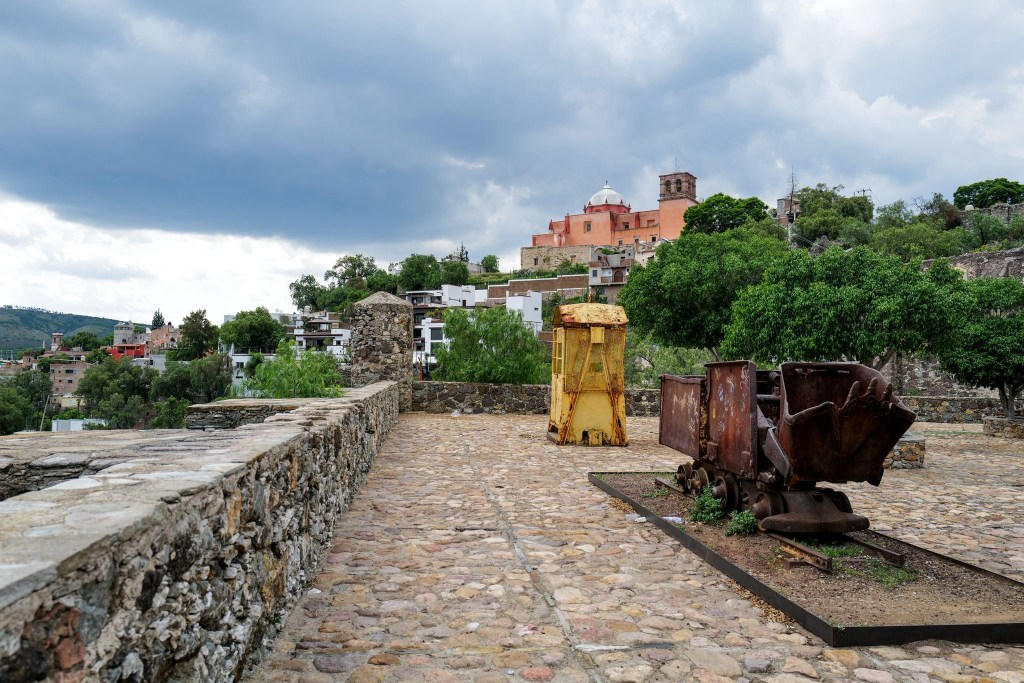
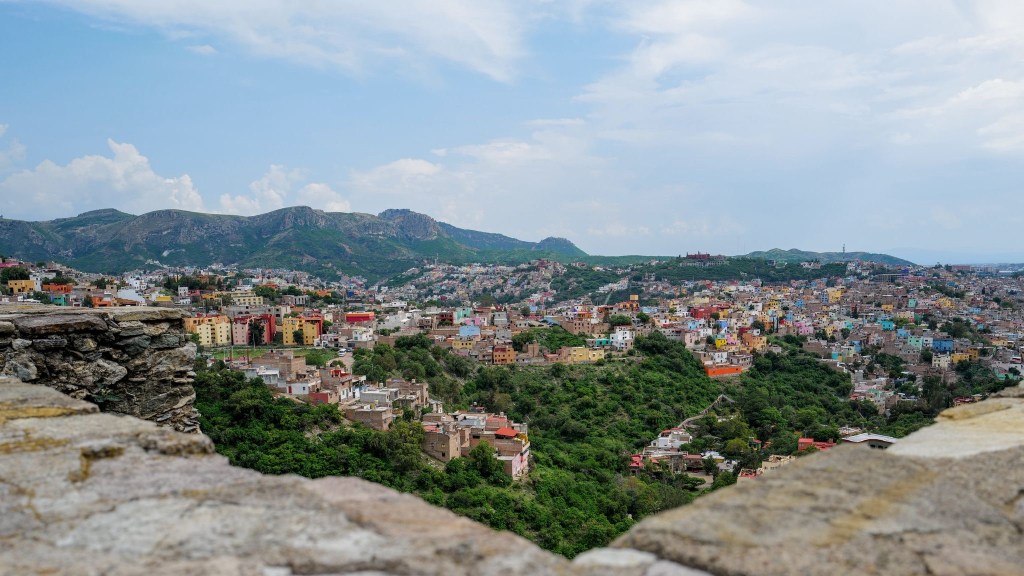
We take in the panoramic views we’ve come for, but dark clouds are gathering and I’m sure I hear a distant rumble of thunder. Ten minutes later, we’re retracing our steps, exchanging a buenas tardes with three giggling ladies waiting for a bus. By the time we pass back through the shabby neighbourhood, we’re deep in football talk and less self-conscious. No one blinks.
I don’t fancy climbing out of one valley only to descend into another. One of Guanajuato’s repurposed mining tunnels emerges onto a small roundabout decorated by an old mining cart. Google Maps confirms it leads straight to the town centre. I assure K all tunnels have pavements and we plunge in.
Once our eyes adjust, we can see the tunnel sides and ceiling are the bare rock of the original mine. And we’re not alone — the tunnel is a perfect pedestrian short cut: cool, flat and direct. It’s popular. Meanwhile, speed bumps keep what little traffic there is moving slowly.
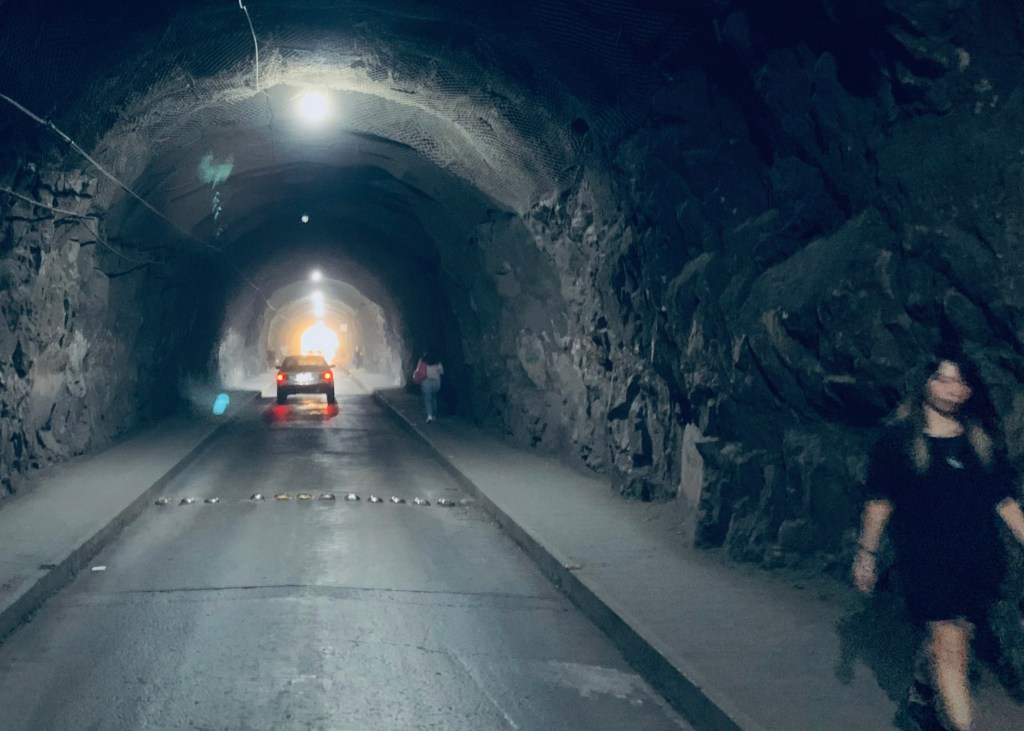
Half a kilometre later we pop out in the town centre and head for groceries. The Soriana Hiper is cheap-n-cheerful Wellcome compared with our usual La Comer, the town’s City Super. No aubergines — the horror! Like Soriana in Puebla, the chocolate is in a locked cabinet. I ring the bell twice before a glum employee arrives with a key. She’s too short to reach the brand we want. I grab it myself.
I drift ahead of K as we labour up to the flat. Pausing to let her catch up, I check my phone: Germany vs Paraguay has gone to penalties. As we climb higher, I hear locals alternatively cheering and cursing as Paraguay first score, then miss. At the top, I check again: it’s all square after five penalties. Sudden death awaits. “That’s it”, I tell K when she catches up, “Germany will go through now. Mark my words. That’s how the world works”. Two minutes later, we arrive home. I check my phone again. Paraguay have won. I’ve rarely been so pleased to be wrong.
Elsewhere, Japan — the final Asian team — go out 2–1 to Brazil after leading at half-time. And Morocco beat The Netherlands on penalties. We watch both. The better team prevailed in both games.
Tuesday 30 June
Admin is the only rival to football today. I keep one eye on Norway and France reaching the Round of 16 while clearing the usual life clutter. I’m not alone in observing that we could perhaps just award the World Cup to France now and wrap up the tournament early.
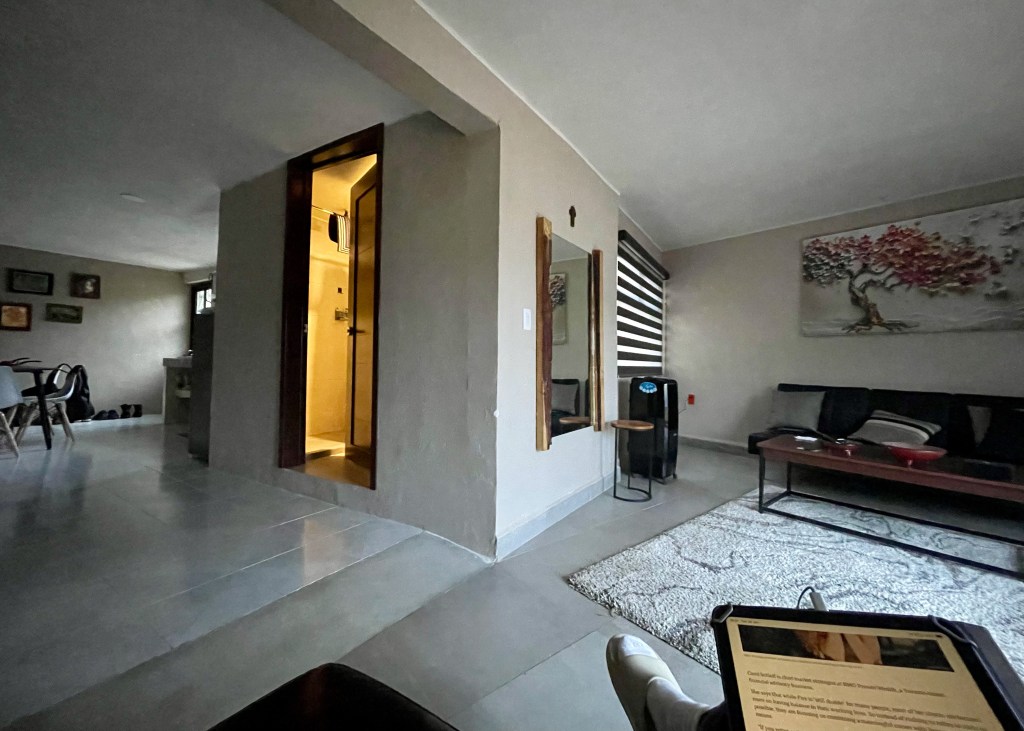
The wet season is back — it’s the first morning in Mexico I can recall waking up to rain. The patched-up spare room ceiling can’t cope: the towels we’ve laid overnight on the unoccupied bed are soggy by morning. But it’s a minor distraction compared with the bucketful of rain that found a way inside earlier this month.
We leave the flat only to walk two minutes to our local terrace bar La flor de limón for Mexico’s first knockout match against Ecuador. A storm in Mexico City delays kick-off by an hour — something we only cotton on to when we notice the game should have started twenty minutes ago. This explains why we’re finishing our meals and wondering whether it isn’t too early to order another drink before any customers besides us show up.
By kick-off, the pocket-sized rooftop is pleasantly full. A mixed party of thirty-somethings have drifted in to watch the match and make very short work of the beer supply, settling in a row between us and the screen. Otherwise, it’s just the family who run the place, the daughter’s boyfriend, and us:
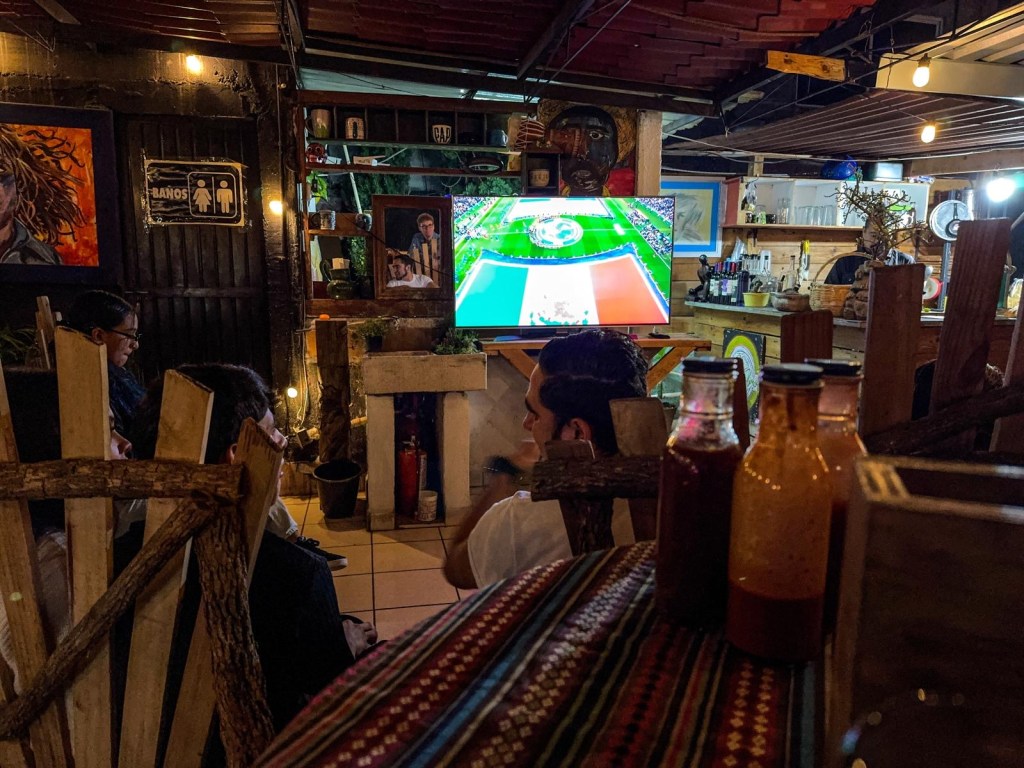
Mexico fire off a steady stream of shots, each one causing consternation in front of us. Lightning flickers behind the hills to the north and the evening turns a shade chilly. At the second-half hydration break, the friendly owner passes out blankets. I gratefully accept one. Who would think it’s July tomorrow?
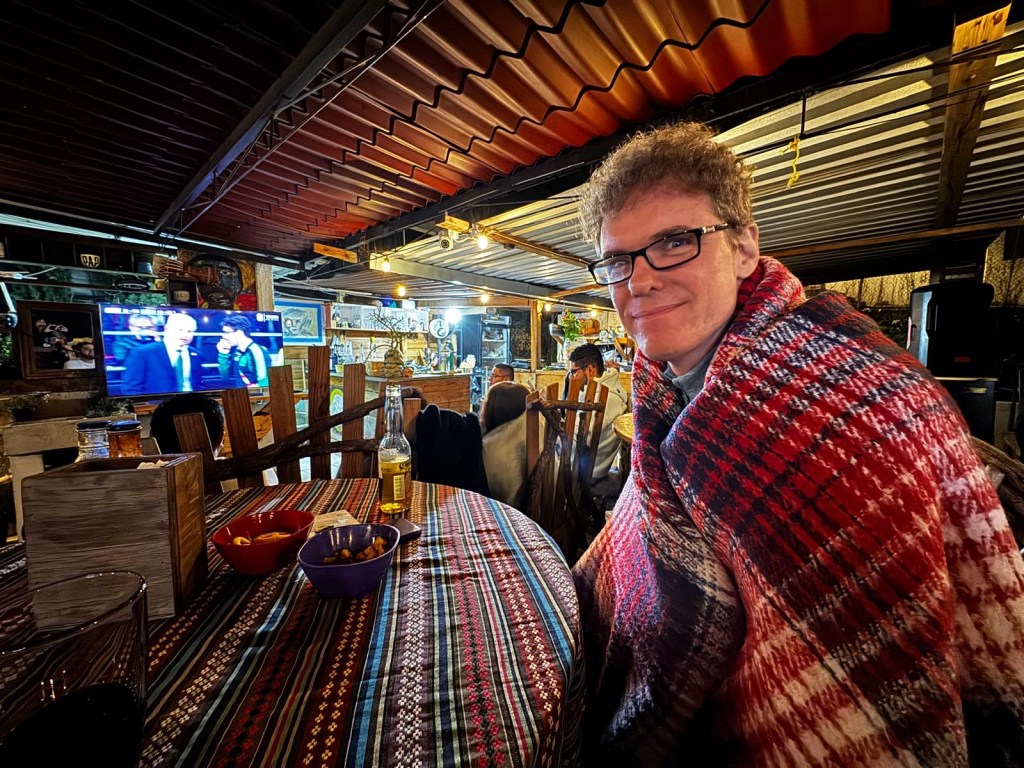
Two Mexican shots find the net. If England squeeze past Doctor Congo tomorrow, we’ll be back here Sunday night for a Mexico vs England showdown in the Round of 16.
Wednesday 1 July
It’s July. We last left England on September 16. It’s been a long stretch without touching base in either England or Hong Kong.
Since arriving in Mexico, we’ve kept the pace mostly slow. That’s going to change this month. After nearly three years on the road, we’re used to moving on regularly — and yet the month ahead looks like a whirlwind. Ottawa. Montreal. Quebec City. Vancouver. A month today we’ll be on a flight to Hong Kong. That’s a heck of a lot of ground to cover.
It’s a pity our most expensive month of 2026 comes straight after the wincing cost of renovating our Portsmouth flat. My rational brain knows our finances are fine, while my chatterbox brain is pumping out all sorts of foolish nonsense.
In a 10am kick-off in Mexico, England squeeze past DR Congo, but make typically hard work of it. Catastrophic defending leaves us 1–0 down after seven minutes. With barely quarter of an hour left we’re still trailing. Then, in two moments of individual brilliance, Harry Kane rescues us and we’re through to the Round of 16 by the skin of our teeth.
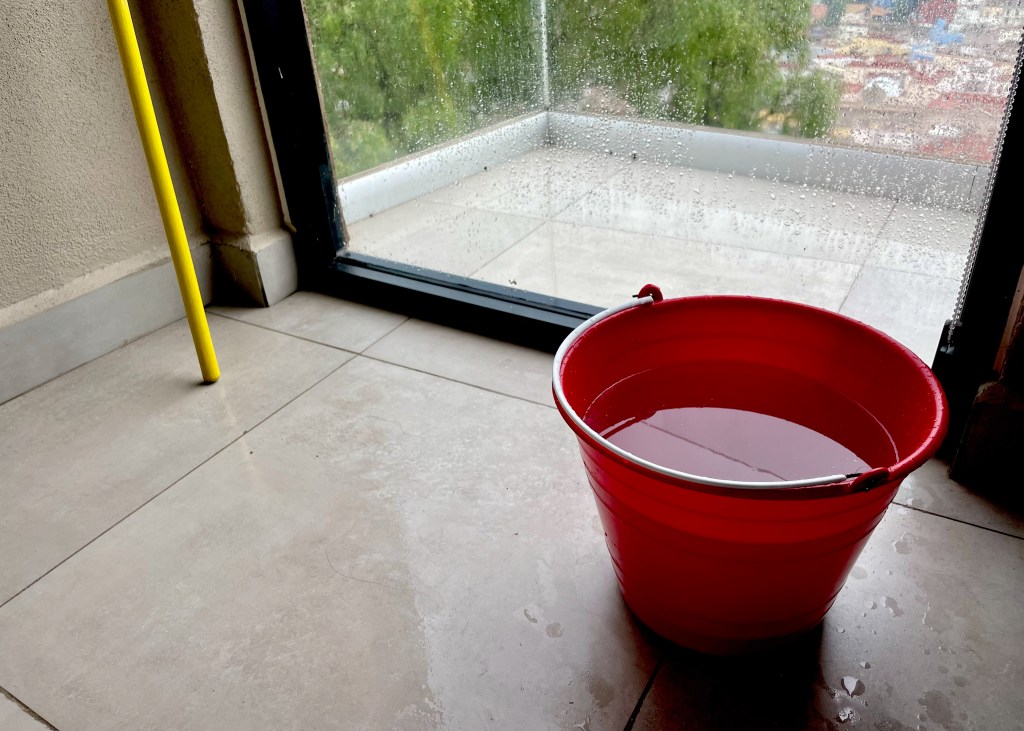
We’re about to tuck into lunch when another torrential downpour inundates the narrow balcony and rainwater gushes into the spare room. By the time we finish mopping, we’ve collected a full bucket. Outside, we sweep the water towards where it can drain naturally. The culprit: tiny drainage holes in the corner of the balcony completely insufficient to cope with the volume of rain. I send photos and video to Naye. I’m hardly a competent handyman, but on this occasion even I can explain how to fix their flooding problem.
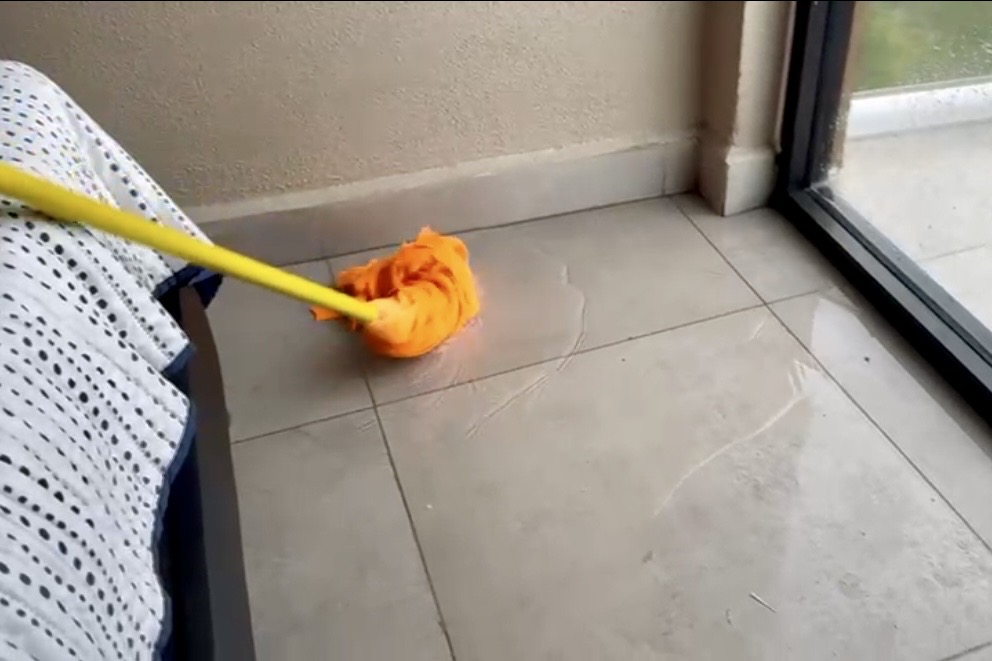
Enough thrills for one day. The beginning of the month is always admin heavy, so despite the rain clearing we opt for a quiet afternoon at home. It’s the only day in over a thousand on the road when I haven’t left our accommodation.
Later, Belgium pull off an even more improbable escape than England, coming from 2–0 down after 86 minutes to beat Senegal 3–2 with a 125th minute penalty. And despite our hopes, the USA stride past Bosnia to also reach the Round of 16.
I spend what’s left of the evening fine-tuning a good old-fashioned compilation of songs new and old that have supplied the soundtrack for Chapters 1 to 6 of 2026.
Thursday 2 July
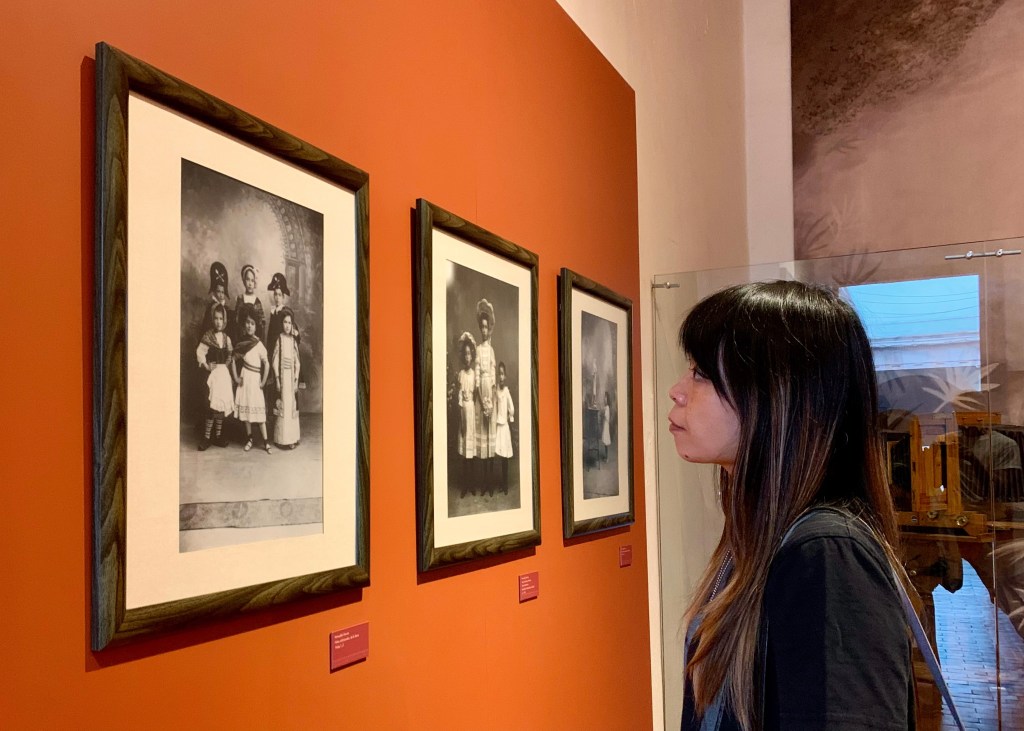
A cultural day for a change. It’s taken us three weeks in Guanajuato to visit the regional history museum located in the former granary/fortress/prison — the building the possibly apocryphal El Pípila stormed in the Mexican War of Independence. Strange building: from the outside its tiny windows belie its origins as a fortress; yet once inside, we find ourselves in a handsome neo-classical courtyard, the two wide staircases decorated with typically gigantic murals:
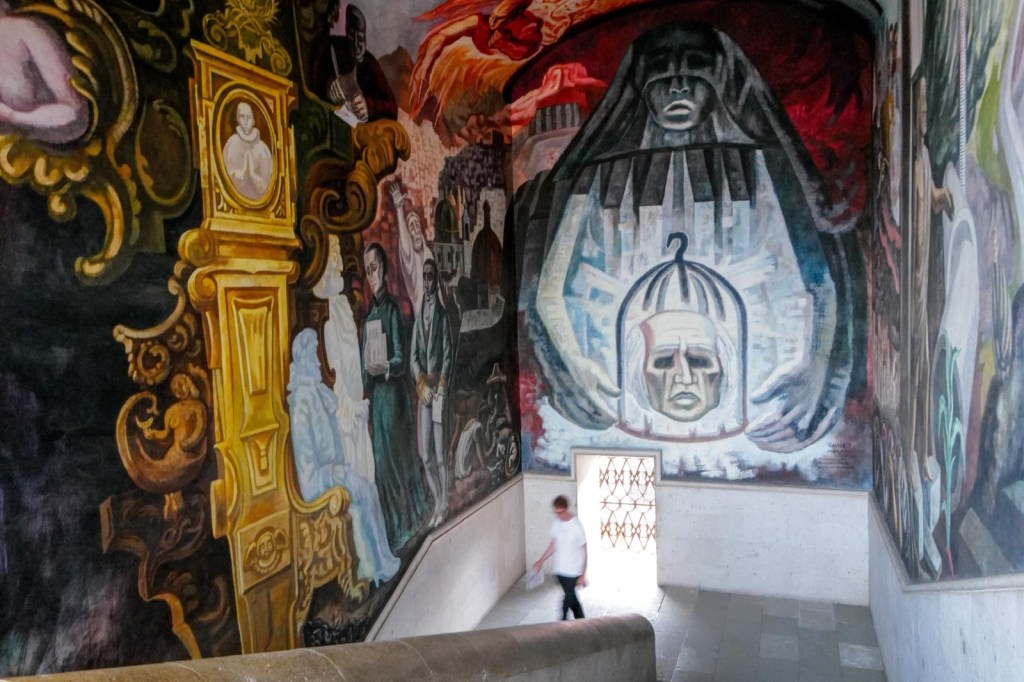
Like almost everywhere in this part of the world, the text panels are only in Spanish. Helpfully, the lady doubling up as both ticket-seller and cloakroom attendant hands us what appears to be the museum’s sole set of laminated information cards in English. After all, we’re more or less the only visitors.
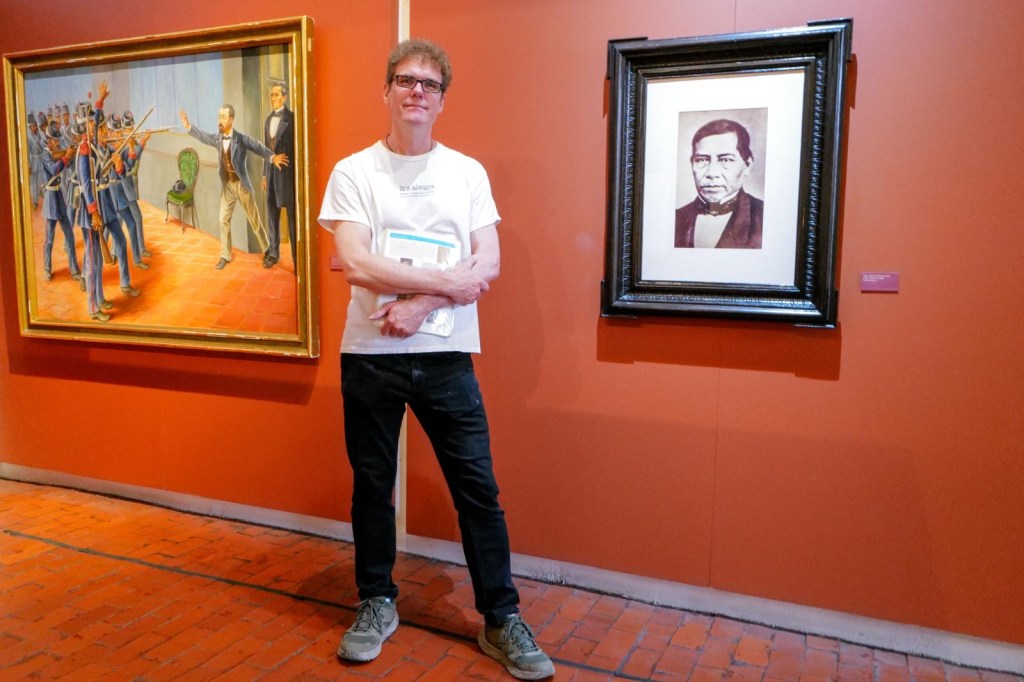
Given the role of Guanajuato in Mexican history, the museum is worth the unusually steep entrance fee. We’ve spent enough time here to get a feel for Mexico’s difficult and troubled past — fifty pages left of my 600-page weighty tome — which the museum does a solid job of bringing to life. With the effort we’ve put in, I can ask K to snap a photo of me with Benito Juárez, and have a sense of who he was and what he means to Mexican identity:
Another deafening thunderstorm strikes as we wander the museum displays. The only other visitors we see are a pair of British girls, who I hear chatting as they catch up with and quickly overtake us before I have an opportunity to greet a couple of rarely-spotted fellow Brits. Perhaps we’re too into museums for our own good.
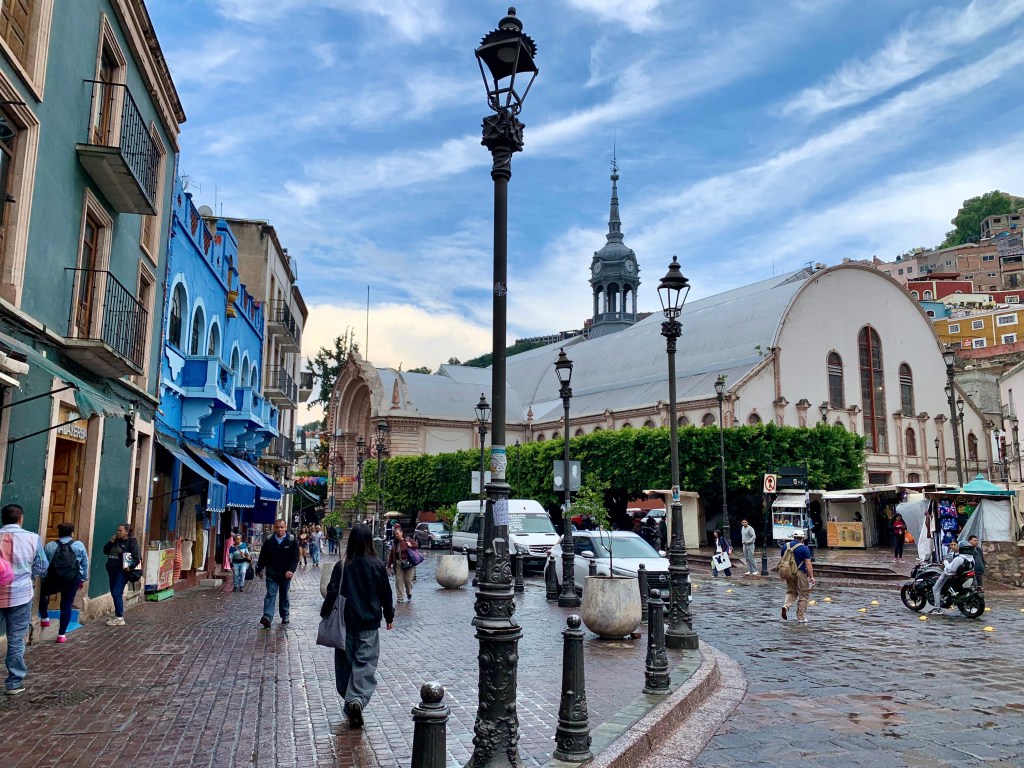
Walking back through town in the aftermath of the storm, I’m struck for the first time that we’re leaving Mexico soon. Despite my struggles with the language and the food, I’ll miss it. We came here knowing almost nothing about the country — just our tired preconceptions of cactuses, criminals and Corona. We’ll hardly leave as experts, but we at least have a sense of how everyday life flows and how Mexico got from Hernán Cortés to hosting the World Cup.
Back at the flat, there’s more mopping to do, but despite the ferocity of the storm earlier nowhere near the volume of water as yesterday. We’re in time for the second half of a cracking Portugal vs Croatia match. In the second half alone, four goals are ruled out for marginal (but correct) offsides, including a last-kick would-be-equaliser for Croatia. Instead, they go out in the cruellest of circumstances — had all four disallowed goals stood, they’d be 4–3 winners instead of slipping out 1–2.
Friday 3 July
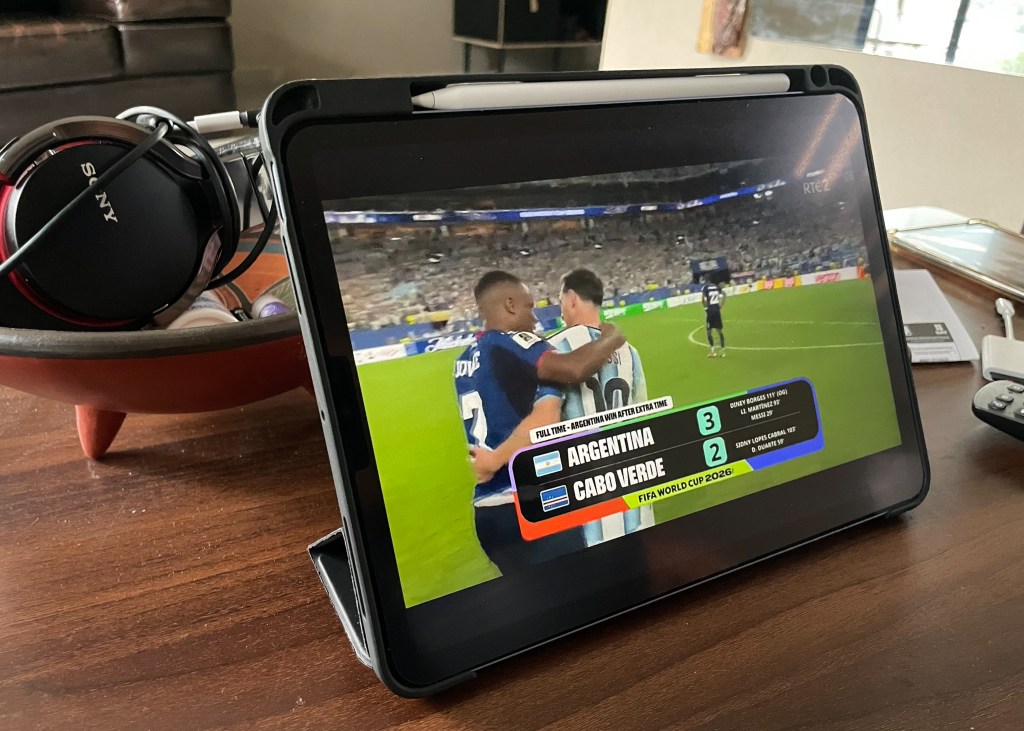
For a second day, the World Cup throws up a classic as defending champions Argentina go toe-to-toe with humble Cape Verde. Argentina edge it 3–2 in extra time — but only after Cape Verde equalise twice, their second goal at 103 minutes a moment of sublime beauty for which we whoop louder than for any England goal so far.
They fall behind again at 111 minutes to a cruel deflection, but refuse to give up. At the whistle, they’re understandably distraught, but they’ve won a place in global football memory. It’s a romantic underdog performance for the ages — and we were in the right time zone to see it unfold in real time.
Cape Verde are today’s highlight. At the supermarket, I keep an eye on extra time and the subsequent penalty shootout between Australia and Egypt on my phone. (Egypt win that one.) And we pass on Colombia vs Ghana after the Ghanian low block against England last week almost sent us to sleep.
Instead, we watch a YouTube Antarctic cruise blog suggested by Oli. I’ve messaged him to draw on his cruising experience; he generously comes back not only with an answer but a link. In recent days we’ve started researching Antarctic cruises. I want to do it (perhaps not as much as K, but I do). But I have two mental blocks worthy of any middle-class pragmatist: the cost, and the potential for rough seas. I can rationalise both. The cost buys a bucket list experience like few others. And while rough seas can’t be wished away — if only! — we can pick a mid-ship cabin and keep medication at hand. More research ahead.
Oh, and the neighbourhood has another power cut. The TV goes blank at half time in the Cape Verde match. We guzzle through phone data to watch the second half on an iPad hitched to a hotspot. The sun sets. I cook by twilight, and once again we find ourselves eating by phone torch. I’m just about to make tea by boiling water in a saucepan on the gas hob in the dark when the lights finally come back.
Saturday 4 July
A day without football — at least for us. The World Cup has downsized to two matches a day as it moves into the Round of 16, but we decide to take a 24-hour breather.
Another thunderstorm pulls the plug on a planned afternoon out. K sorts photos; I research Antarctic cruises and read, finally disappearing for a cardio workout down to the town and back up again when the rain stops.
We’ll be out tomorrow night for England vs Mexico, so it’s a rare Saturday night at home. More Antarctic research on YouTube, and the highlights of the two matches we opted out of. Hosts Canada crash out to Morocco, while France go through despite ten tons of shithousery from a Paraguay side, including scuffing up the penalty spot when France are awarded a clear penalty. (They still score.) After cheering Paraguay for sending Germany home, today they revert to the stereotype of a dirty tricks South American team. They won’t be missed.
Sunday 5 July
Mexico vs England. The Big One. But we’ll get there in a moment.
Because football isn’t the only event today. Shortly before midday, Guanajuato is hit by Mexico’s equivalent of a Hong Kong black rainstorm. We thought mopping up a bucket of water from the spare room after last week’s storm was excessive. Today, we fill four. The water oozes in through the poorly-fitted balcony door faster than I can remove it, splashing about barefoot with a bright orange mop while K stuffs bin bags in the gap under the door in an attempt to stem the flow.
This was before it got bad:
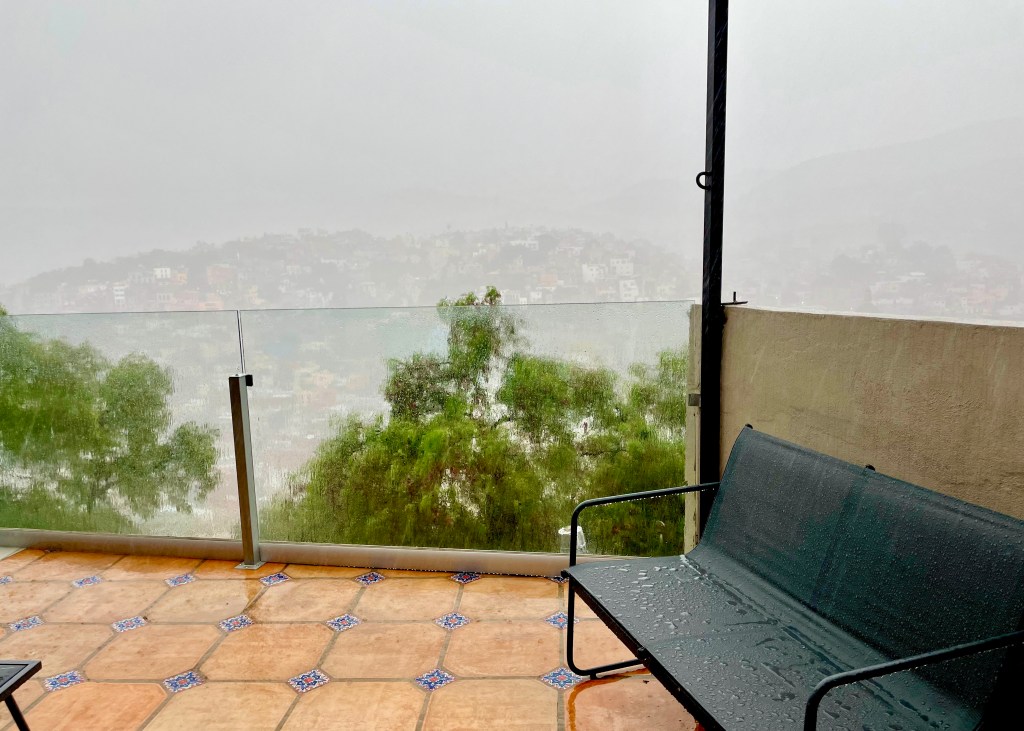
What I thought were small drainage holes in the balcony wall turn out not to be holes at all: they don’t go right through. No wonder water collects every time it rains. I only realise this when the storm has subsided and I can wade onto the balcony with a scoop without being targeted by bolts of forked lightning every few seconds.
And that should be enough drama for one day. But oh no. Spluttering England are playing Mexico at fortress Azteca.
From our now-dry balcony La Flor de Limon looks busy, but we spot one empty table:
We’re immediately shepherded to the one remaining table and order — only to learn a second Mexico game is delayed an hour by splashy conditions in the capital. We commit to sipping our drinks very slowly.
Before the delayed kick-off, a few customers drift away, deflating the buzz. Fortunately, a big group — the same one as last time? — remain between us and the TV.
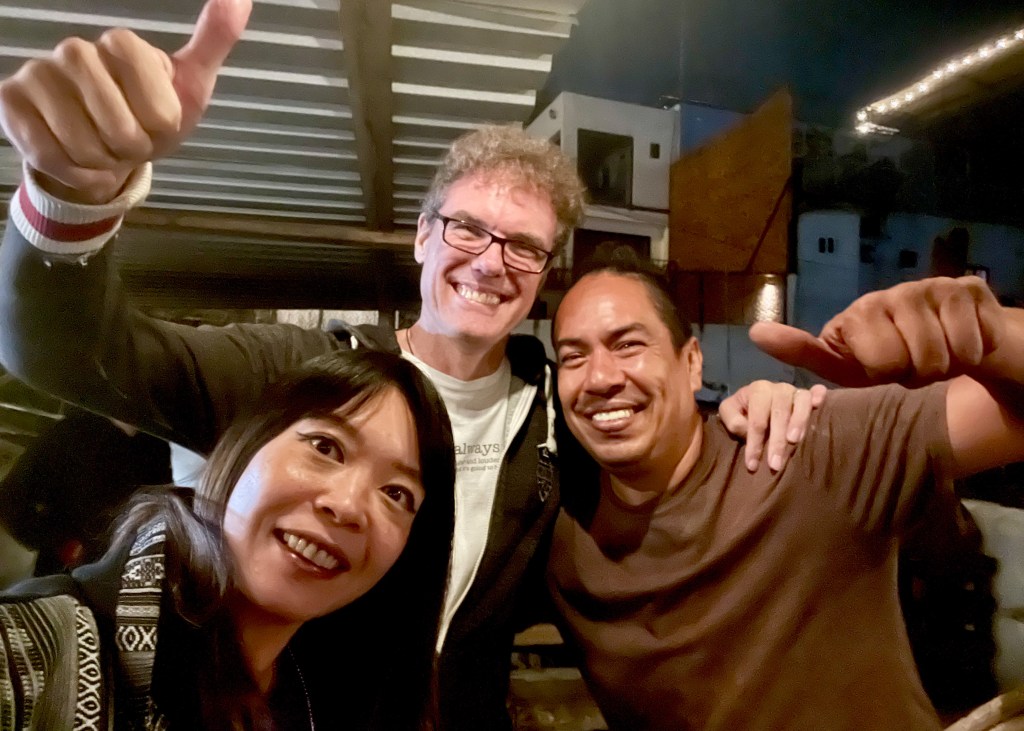
Granted, the pitch is wet and slippery, but until the first-half tea break England are far from convincing. I lose count of sloppy passes rolling out for throw-ins. And then Jude Bellingham scores. Twice. In 90 seconds. I take sharp intakes of breath and raise my hands apologetically when a lady in front turns round and says something in Spanish I don’t catch. Thankfully she’s friendly. Later, she even insists on a photo with us:
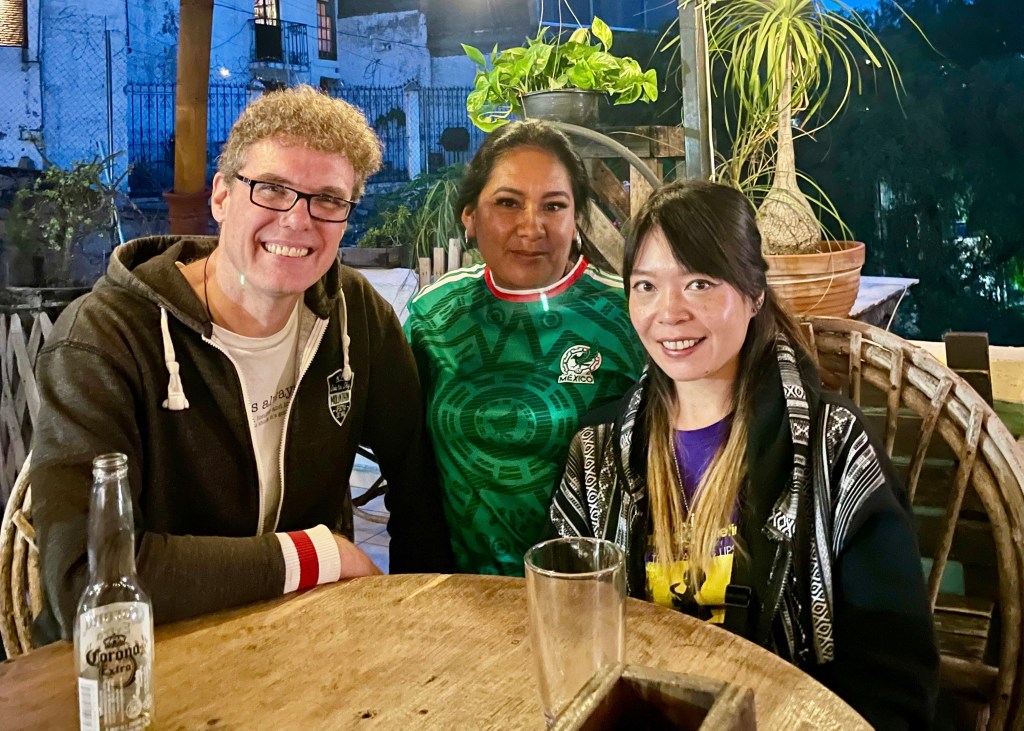
Just before half-time, Mexico pull a goal back from a corner. Everyone’s on their feet. It should be a gripping second half.
The second half is one long drama. Jarell Quansah is sent off for a reckless challenge. Harry Kane converts a penalty before conceding one to Mexico. They score. 3–2. England survive 11 agonising minutes of added time by putting in a defensive masterclass and booting the ball as far upfield as they can at every opportunity.
And then it’s over. We’ve done it. I shake hands with the staff and tell them the World Cup will be poorer without Mexico. They agree.
It’s win-win now. Norway sent Brazil home earlier today. An England–Norway quarter-final means even if Erling Haaland sinks England, Norway will be in the semi-final. What’s not to like?
Monday 6 July
At dawn on the terrace, the now-quiet La Flor de limón below, I’m struck by a morning-after feeling. There’s a sense of treading water now. Last night was the metaphorical 90th-minute winner of our three-month stay in Mexico; now we’re knocking the ball from side to side through added time, waiting for the final whistle.
There’s a final trip to the supermarket — the long walk there, the short walk back. The Mexico shirts and other World Cup paraphernalia have been moved from their own aisle to a small, desultory special-offer zone by the checkouts. It’s just a supermarket, yet there’s a sedate, serious feeling in the air today where until now there’s been sparkle and buzz. Or perhaps it’s just me.
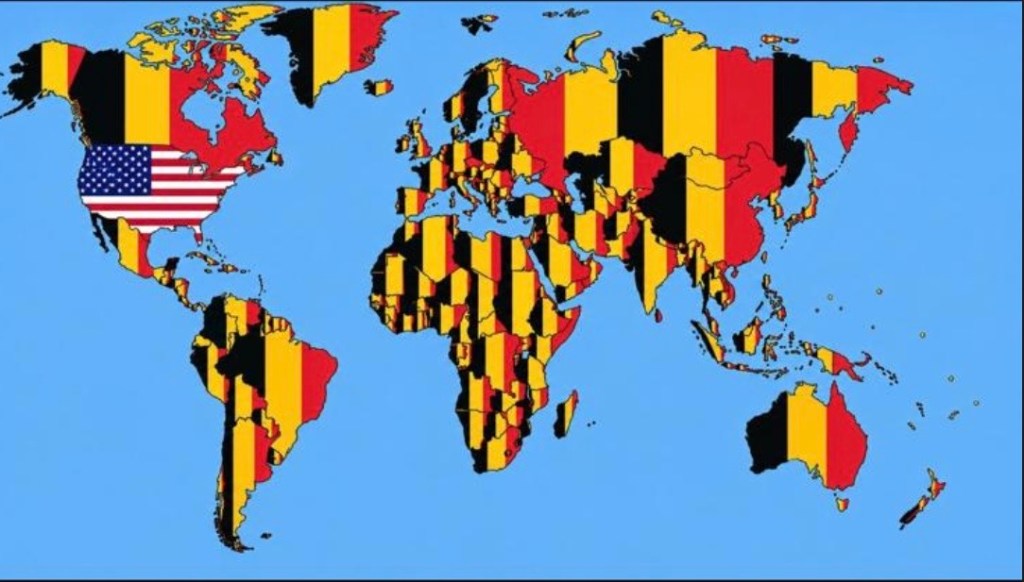
Today’s big event is the USA vs Belgium in the Round of 16, overshadowed by a scandal over Trump pressuring FIFA to rescind Folarin Balogun’s red card from the Bosnia match last week. The whole football world bar the USA is backing Belgium tonight. They oblige by thrashing a walking-dead USA 4–1. Cue the memes.
Tuesday 7 July
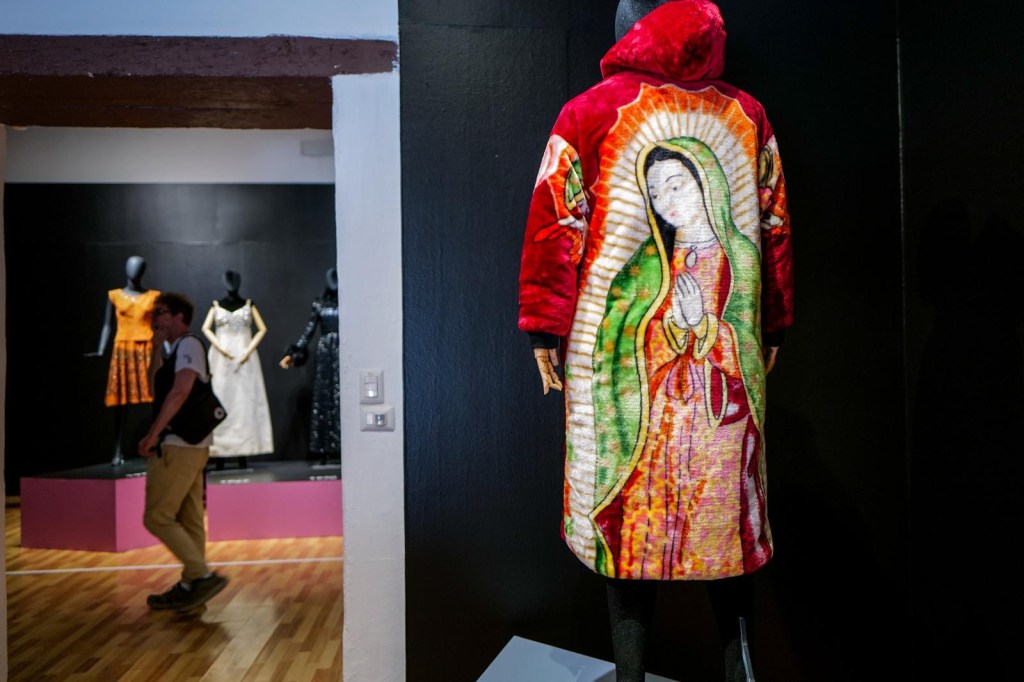
Two more days in Guanajuato. The Museo del Pueblo de Guanajuato offers free entry on Tuesdays. Google Maps promises a small museum of art; it turns out to be frocks by Latin American designers. Not our thing, but for pure kitsch, this is hard to beat:
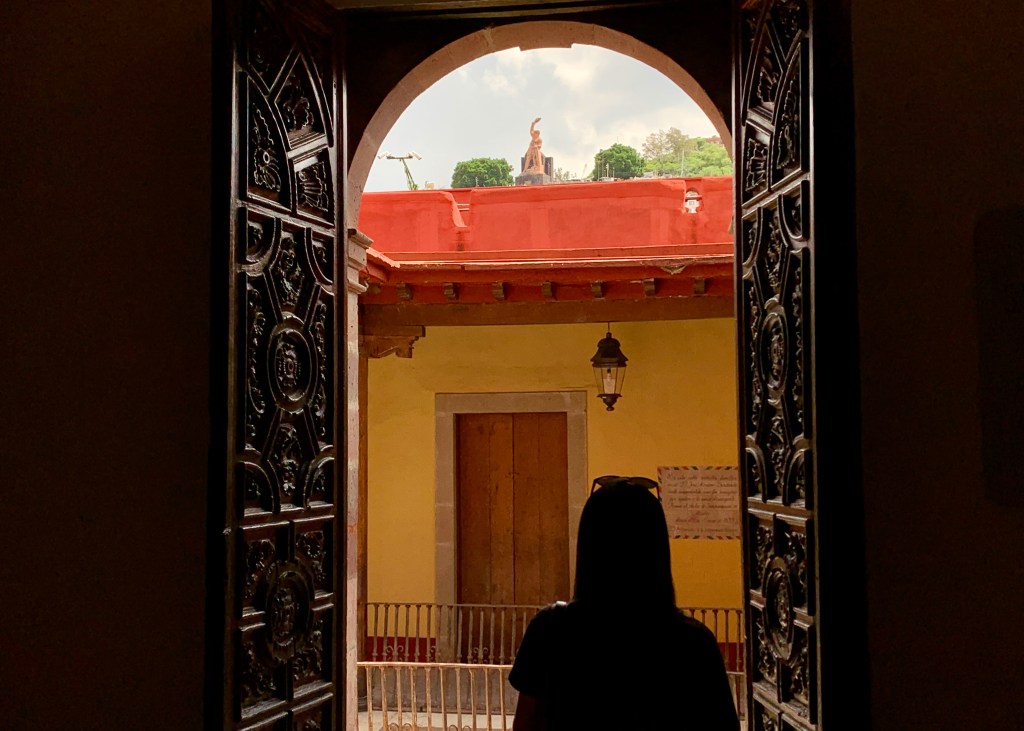
Plus there are good views across to El Pípila on the hillside:
We’re in and out in twenty minutes. The exit is right by the university, so we slip into the bookshop café, order espresso tonics, and read. I begin One Hundred Years of Solitude — only forty years after I’d intended.
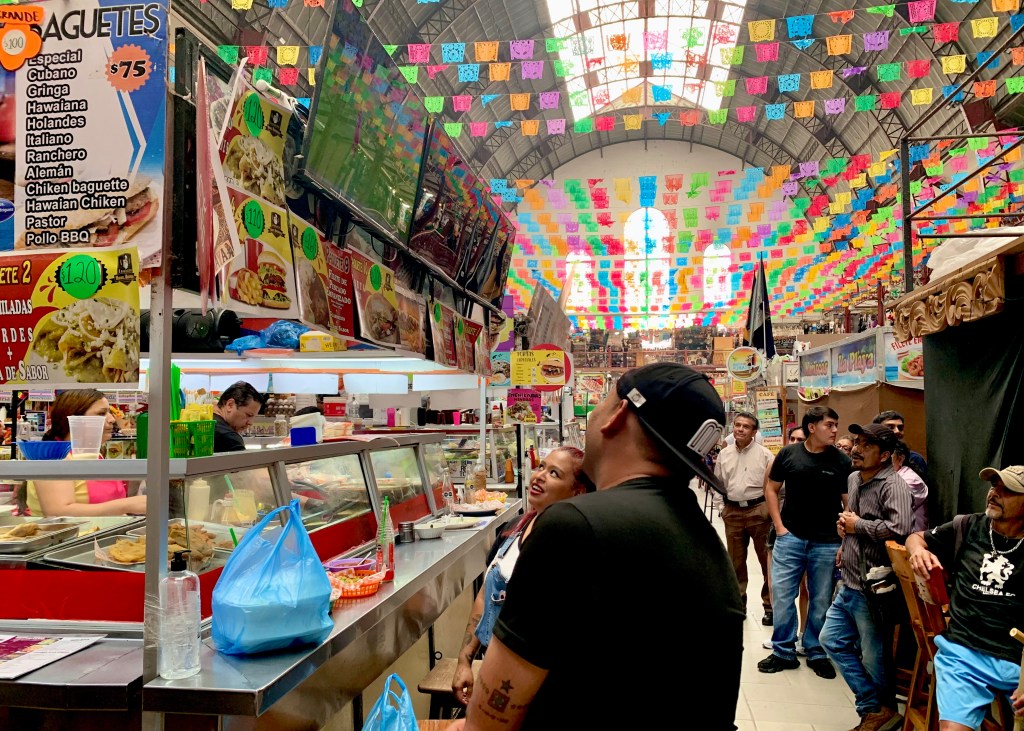
K’s after a small gift for her mum, so we wander the narrow streets looking for just the right thing. In the Mercado Hidalgo, Colombia vs Switzerland has gone to penalties. We gather round a TV with a dozen others and groan with them when Colombia bow out, leaving Argentina the only team from the Americas to contest the quarter-finals later this week.
Earlier, Egypt lead Argentina 2–0 with eleven minutes left, then somehow lose 2–3 within normal time. Cue inevitable accusations of corrupt officials — the kind only a country as corrupt as Egypt could believe. In truth, the refereeing was poor and inconsistent, but unlikely corrupt. With different match officials, Egypt may well have won. A shame.
Wednesday 8 July
Our last day in Mexico is subdued. I have a mild tummy bug and feel lethargic, dozing through much of the afternoon. Any plans we had to make something of our final day are quietly shelved.
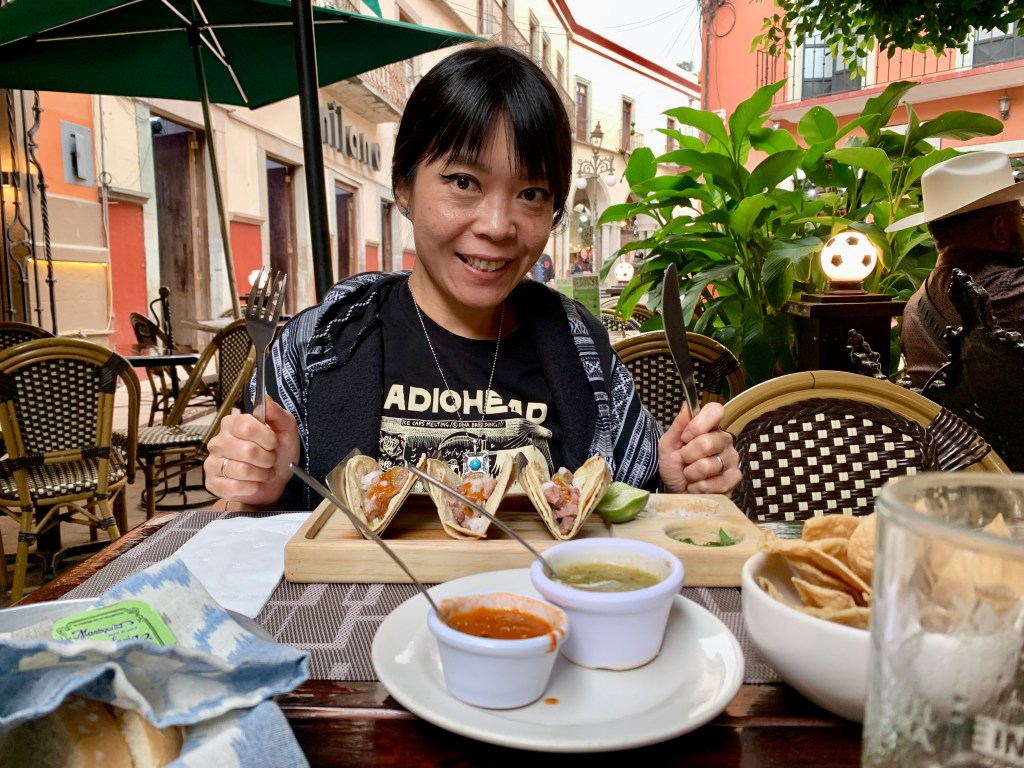
Shortly before dusk, we clamber down to the Jardin de la Unión to eat. The food is better at Van Gogh, but its mariachi band are already in full swing and I don’t feel up to shouting a conversation over the commotion. We return instead to the bland hotel restaurant at the opposite end of the square, away from the noise. The affable waiter recognises us and suffers our still-appalling Spanish with good humour. Rain threatens. A cold breeze sneaks through the plaza. We’re both wearing hoodies tonight, the second week of July.
K goes out appropriately on tacos; I make do delicately spooning a small bowl of minestrone soup. We discuss our best memories of Mexico — the Avienda de la Reforma on a Sunday in the capital, the Ray Charles lookalike taxi driver in Puebla, the Belle & Sebastian and Pulp gigs, the good grace of the locals when England ended Mexico’s World Cup run — then huff and puff a final time back up to the flat.
It’s an inconsequential final day, but we have little left to prove. It’s fine.
I’ll miss Guanajuato’s crazy geography: above ground, its centre devoid of traffic lights and neon signs; below ground, its network of mining tunenls repurposed for traffic. In many ways, Guanajuato has been a microsm of our experience in Latin America: quaint and exotic when we’ve looked for quaint and exotic, old enough and different enough to romanticise, but also modern and recognisable in many ways.
Thursday 9 July
At dawn on the terrace, watching the sun rise over Guanajuato one last time, I check messages and learn my old QMC and Bejam pal Dave Spurgeon has just made an album. A full album. I didn’t even know he was a musician. He’s shared a Spotify link on the Basingstoke Boys chat group. I listen to the first song: a languid rap that reminds me of Loyle Carner set to a Nile Rogers-esque guitar loop. It’s surprisingly good.
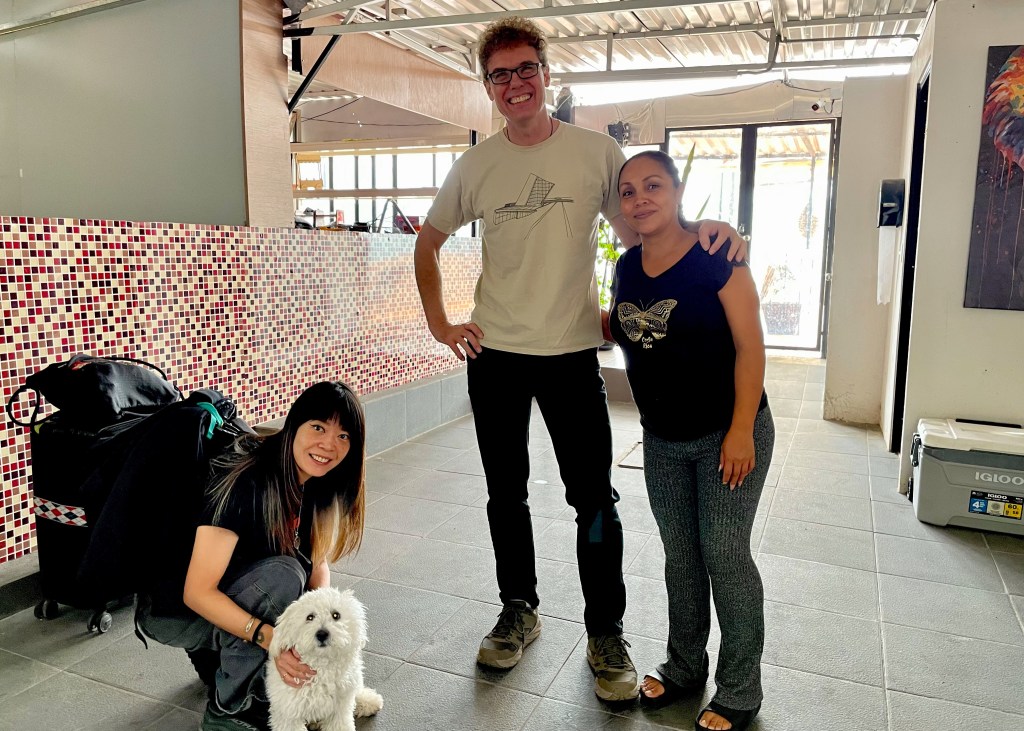
Mid-morning, we say goodbye to Naye and to Leo the dog. Naye’s son drives us to the bus station, his girlfriend up front with him. We manage a broken chat about football and leave them promising us they’ll be supporting Norway on Saturday. Quite right too.
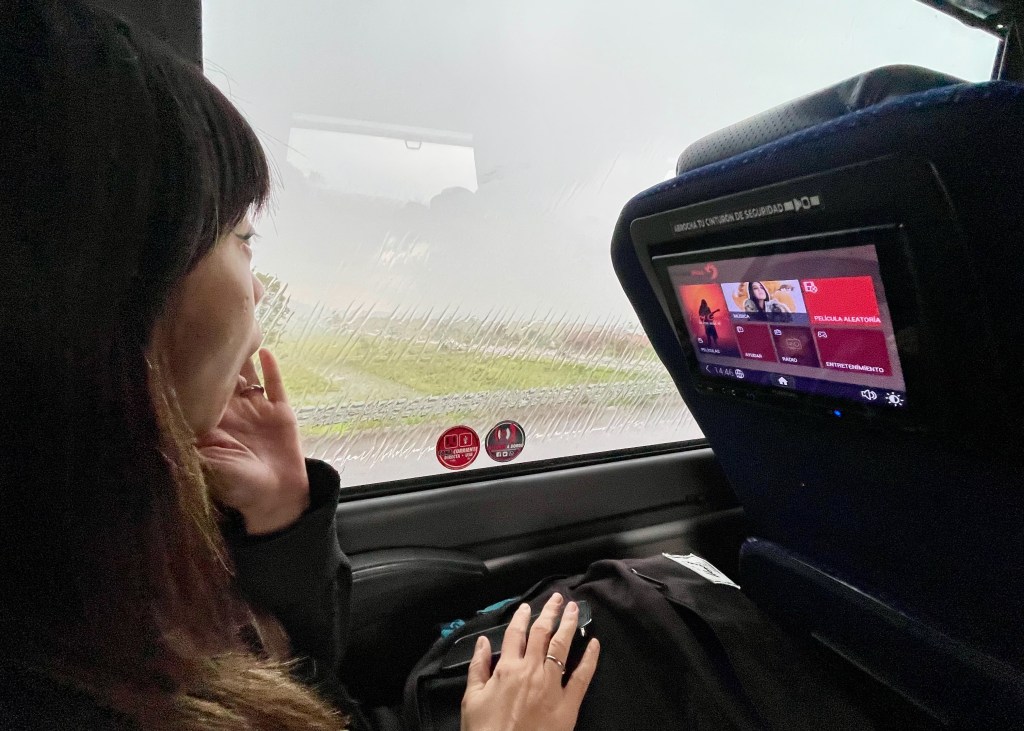
It’s a long ride back to the capital through the largely empty countryside. There may be 130 million Mexicans, but there’s surely room for ten times that number. And this is the crowded part of the country.
Dark clouds gather and we plunge into a torrential storm. With time on my hands, I resolve to listen to Dave’s album from beginning to end. Like any 52-minute record, it could safely be pared back to 40, but that’s a relatively minor quibble. I had no idea corporate Dave had taken in his fifties to writing and recording music. He’s apparently made the whole record on GarageBand, and at least half of it is genuinely impressive. I can’t make out all the words, but I get an impression he may have been navigating some troubled waters of late.
At the bus station we return to the “dis dis rice” joint that served us well last month when we passed through for the Pulp gig. It’s almost five and we’re famished. Taxi to the airport. A few hours sitting on our hands before we can drop our bags. And then we’re at the gate waiting to board a flight to Toronto.
But noisy Mexico has one last ball to serve: the shop next to our gate is playing mariachi music so loud we can barely hear the boarding announcements. I grimace and try to concentrate on One Hundred Years of Solitude, wishing I could have just that.
So, goodbye Mexico. At this point, I’m ready to leave and allow time for three months of memories to settle. Canada may be less exotic, but I’m looking forward to a few weeks of easy communication.
I’ll let Paul Gillingham, author of Mexico: A History, have the final word on the biggest of big-picture takes of what we’ve lerarned here:
“Spain’s occupation of the Americas was perhaps the greatest case of unintended consequences in history; hoping to find a quicker route to the spices and textiles of Asia, their sailors bumped into the other half of the world. The subsequent comings and goings of a mere two ships a year between Manila and Acapulco, and one fleet between Veracruz and Seville brought revolution to the global economy. They created it, in fact.”


Leave a Reply