Winding down a year of travel as Dalmatia prepares for Christmas
Thursday 21 November
And so to Split, our final base for this trip to the former Yugoslavia. After two out-of-character days of steel grey skies and rain in Mostar, we leave at lunchtime in bright golden sunshine following the Neretva river south to the Croatian border. The scenery is – and will remain – spectacular until it gets too dark to see it. We both settle for gawping out the window all afternoon while listening to music: I’m on Al Green’s ‘Al Green Explores Your Mind’ as far as the border, Laura Marling’s new ‘Patterns in Repeat’, and then The Cure’s new ‘Songs of a Lost World’ (only once night has fallen, naturally). Kathryn’s also listening to the new Cure album, along with David Gilmour’s and Mercury Rev’s new albums. I include this detail because the coach ride is so beautiful that we’ll both associate these albums with this very special journey for a long time to come.
There are only 14 of us on the coach. We pass through the border in a matter of minutes. It’s a very different experience to the Turkey-Bulgaria border, which took us three hours to navigate. Standing just inside Croatia, I chance my luck by taking a photo of our empty coach pulling through the border post. A policeman sees me and ushers me over. He’s polite enough, and I’m all apologies. I delete the photo. A bit embarrassing, but no real harm done.
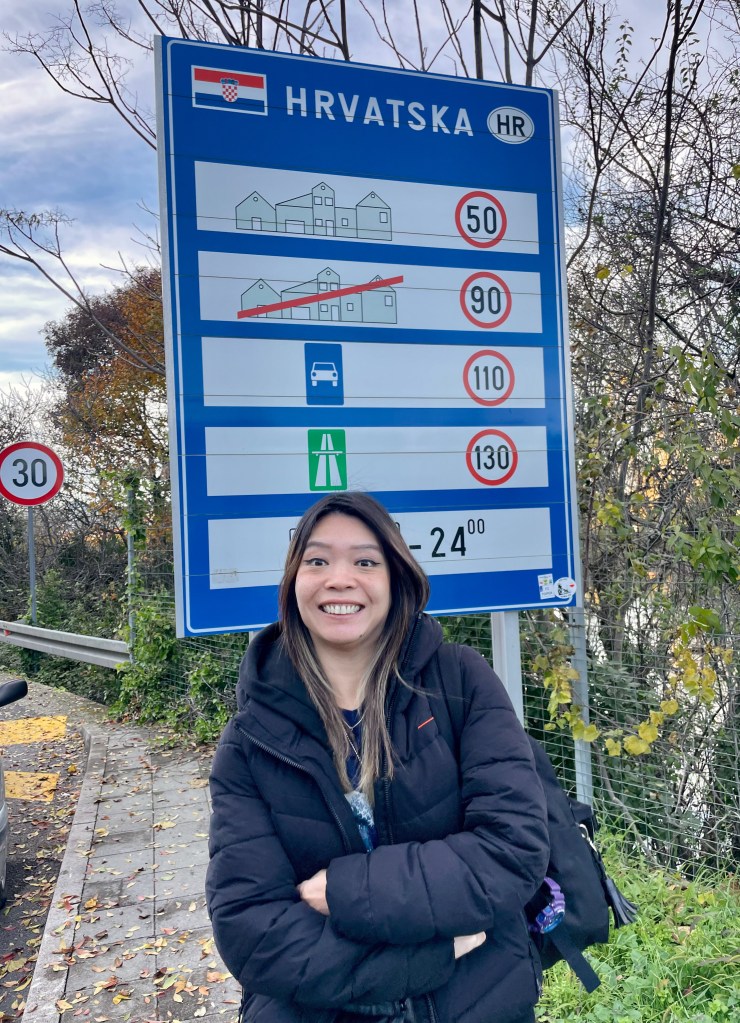
Not far south of the border, the Neretva flows into the sea at Rogotin. From here, the coach follows the almost empty, winding, single-carriageway coast road all the way to Split. It’s spectacularly beautiful: small resort towns occasionally appear below us looking out to the Dalmatian islands, while the mountains above us are bathed in warm autumn sunlight. It’s perfect, and more.
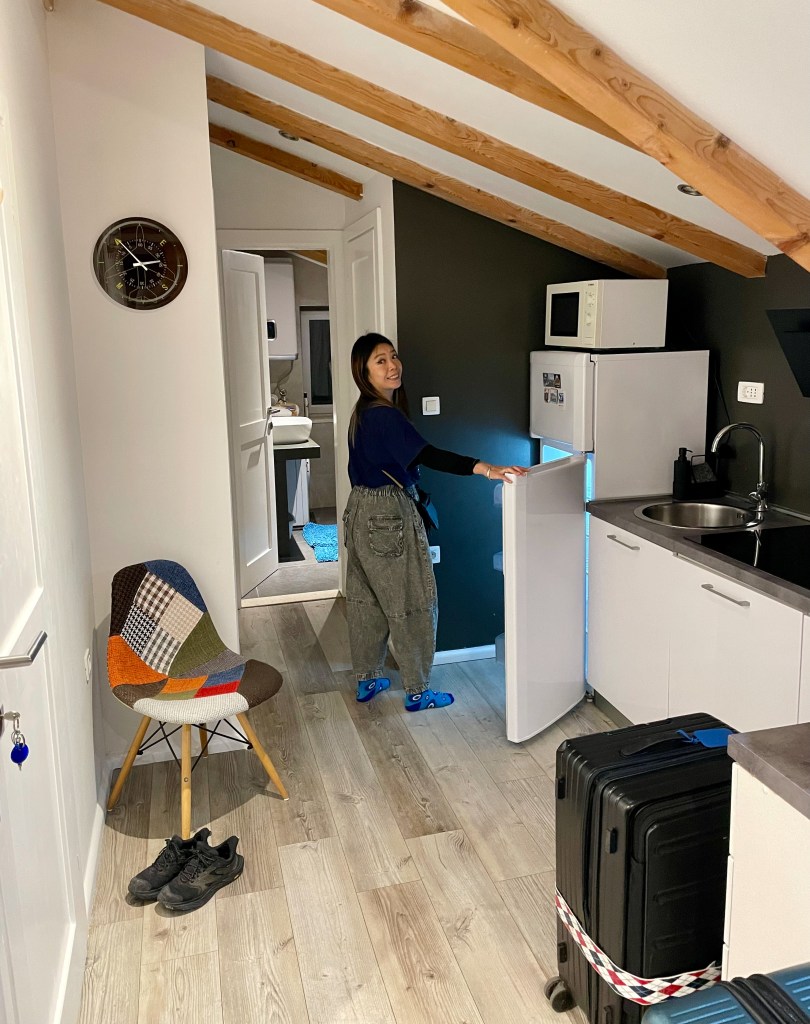
We arrive in Split shortly before six o’clock. It’s already been dark for well over an hour and it feels later than it is as we wheel our suitcases around the harbour to locate our Airbnb above the old town. The loft flat is fine: it’s clean and modern, although it perhaps feels a little pokey after all the space we had in Mostar. Once we’ve unpacked and made ourselves at home, we head out for groceries. It’s a bit too late to bring them home and start cooking, so we find a reasonably-priced pizzeria. Prices feel rather steep after Bosnia, but that’s inevitable. We’ll start exploring tomorrow.
Friday 22 November
Our first day in Split starts overcast and wet — which is fine because I have work to do. The moment I wrap up work and we venture outside, the sun pops out. By the time we’ve sorted SIM cards and located the nearest big supermarket — like Mostar, still no black tea, plus black olives seem to be rare as hens’ teeth in Croatia — the sky is brilliant blue.
We haven’t yet found time to read up on Split, so we wander the old town with little idea what we’re looking at — actually rather liberating. Later, I’ll learn we’re wandering through local-boy-and-late-Roman-Emperor Diocletian’s retirement palace. There’s also an enormous statue, which turns out to be a medieval bishop from Nin, up the Dalmatian coast. Whoever he was, he inspired a fine statue.

Back at the flat, I read up on Split on Wikipedia. Scurrying down rabbit hole after rabbit hole, I eventually find myself reading about the Fourth Crusade’s 1204 sacking of Constantinople — an event with spectacular consequences for the next several hundred years. Catholic and Orthodox Europe had (literally) been at each other’s throats before, but this was the moment of the Great Schism. Eight hundred years later, the more nationalist-inclined Serbs and Croats still appear to be reeling from it.

Saturday 23 November
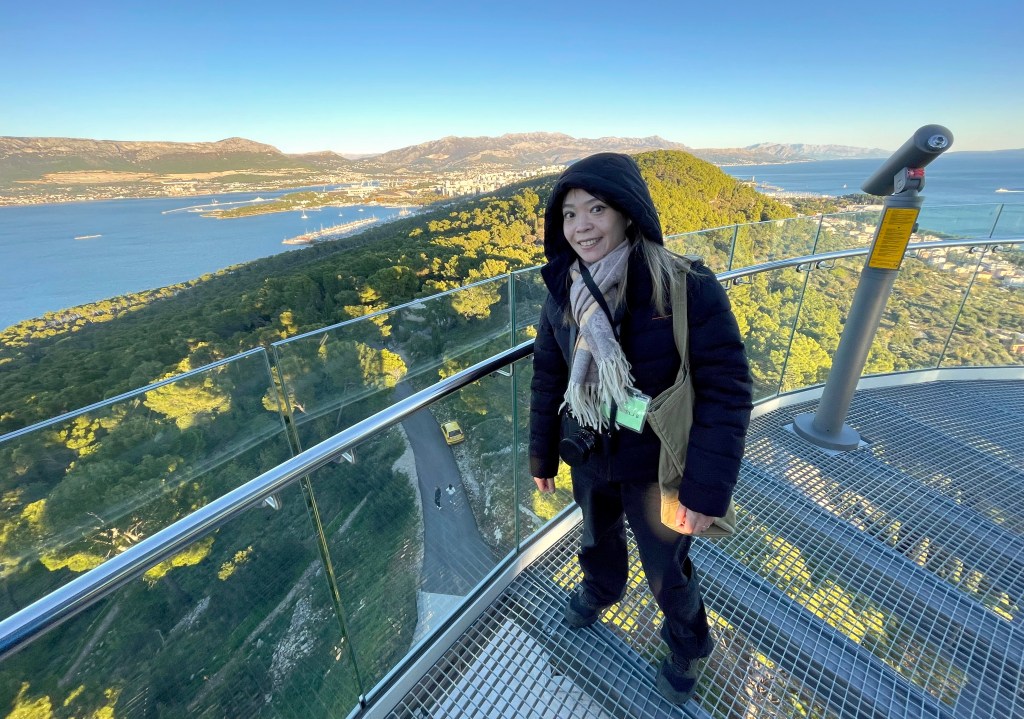
We head out to explore Marjan Park at the head of the Split peninsula. The entrance is only five minutes from us and the park itself, which extends for a couple of kilometres to the end of the peninsula, turns out to be a perfectly pleasant afternoon stroll. We stumble across a free-entry viewing platform, from where we can see back to the city in the late afternoon autumn sun. Split may lack the edge of Sarajevo and Mostar, but it can be very pretty.
It’s Saturday, so we head to Terminal F, a bar near the harbour we earmarked yesterday. This turns out to be a good choice: the pub food is tasty and reasonably priced in an area that’s mostly given over to the white tablecloth crowd. We stay for a second drink. It bumps the bill up from 40 euros to 50, but this is a place we like and can come back to.
Sunday 24 November
Despite glorious sunshine, we opt for a lazy Sunday indoors. We still have 20 days in Split: we’re not in a rush. It’s also a rare day without any outstanding work to tie me up.
Next spring’s Great Kiwi Family Road Trip is gathering momentum: in the morning, I have a video chat with cousin Claire — currently staying at mum’s — to talk logistics. Later, there’s a rare video chat with Sue in New Zealand to discuss further. We seem all set to book internal NZ flights, and accommodation in Queenstown, which I’ll get onto this week.
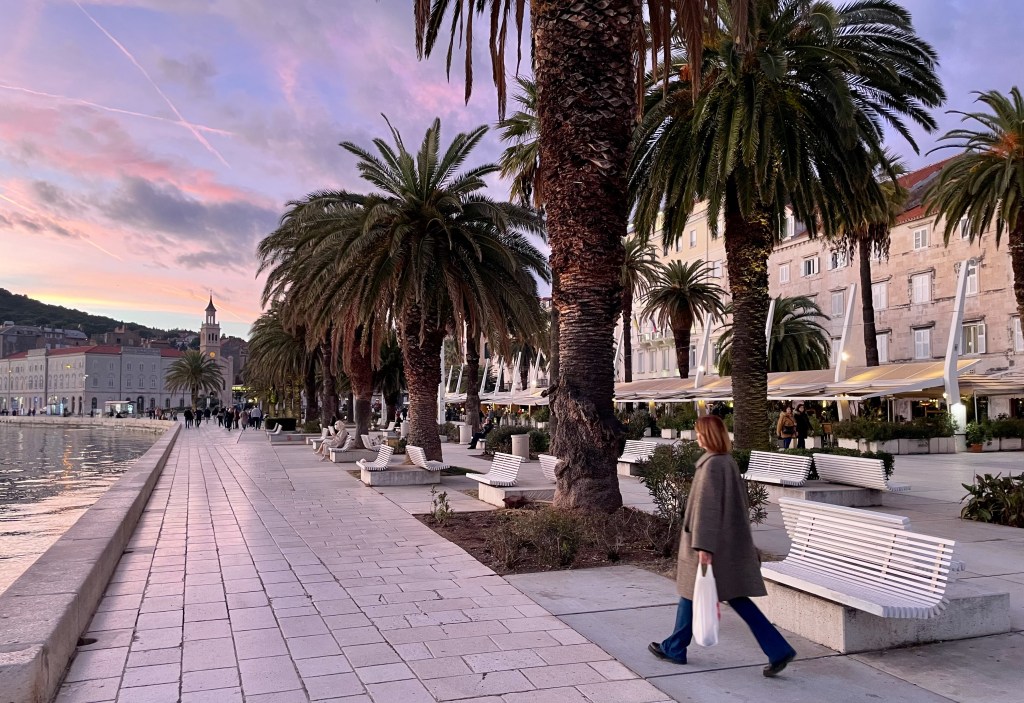
I head out to stretch my legs and get some air: in the morning, I stroll into the northern residential suburbs of Split. They’re clean, tidy and leafy. They look and feel more comfortably off than similar suburbs in Bulgaria, the only other EU country we’ve visited this year. At dusk, I head out for a second time into the old town and wander through the narrow lanes of Diocletian’s Palace and treat myself to a slice of cherry pie from a backstreet bakery. Stumbling out onto the waterfront, I find a bench and munch my pie looking out over the darkening harbour.
Monday 25 November
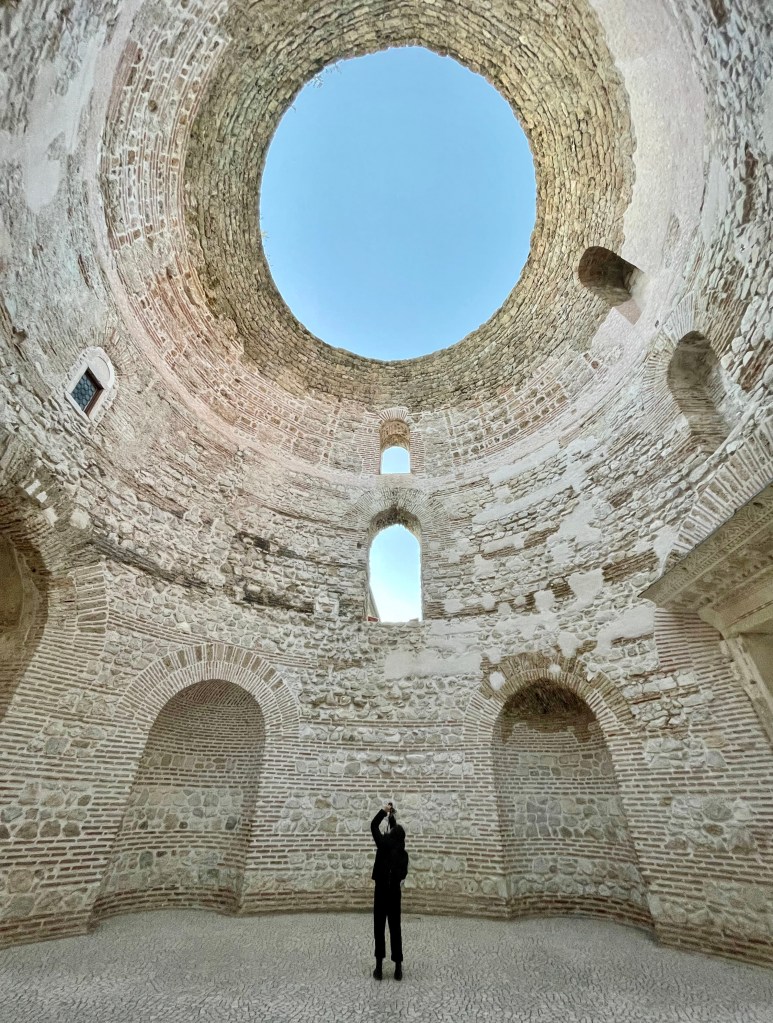
We’re still getting to know Split. Today is our fourth full day and our immediate neighbourhood is beginning to feel familiar. We wander into the heart of Diocletian’s Palace — otherwise known as the city centre — and pay eight euros each to venture into the substructures of the palace. They’d be worth the entrance fee even if they weren’t the filming location for where Daenerys Targaryen kept her dragons in Game of Thrones.
The whole centre of Split is extraordinary. There must be other cities whose entire core is a UNESCO world heritage site — in this case, one of the best preserved architectural achievements of Late Antiquity — but we’re still new to exploring Europe. To us, it’s all hugely impressive. And there’s almost no one around. The cruise ships have long departed; it’s just us and a handful of other off-season travellers.
Tuesday 26 November
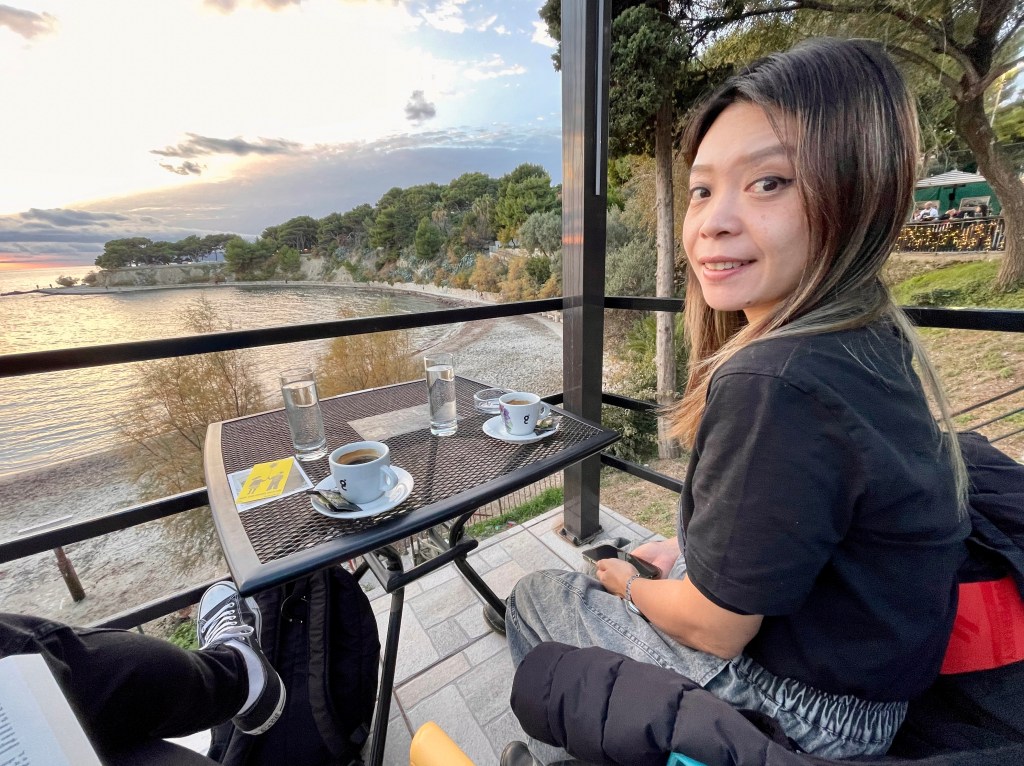
We take an afternoon stroll past Split harbour and round a small headland to the city beach (very unenticing), and beyond. Eventually, we settle on a cafe — one of the few open in late November — above a more out-of-town beach, where we stop for a coffee and a spot of reading as the sun sets over Otok Ciovo island. Like Bosnia, music in cafes is invariably Anglophone, and retro. Today, we get Tom Petty, Neil Diamond and ELO, among others. Apart from grocery shopping, that’s about it for today.
In the evening, we book flights from Auckland to Queenstown and back. Next year’s New Zealand trip is rapidly coming together. And we watch another Croatian movie — our fourth, I think. In Marshal Tito’s Spirit (1999), Tito appears to return as a ghost on a rundown Dalmatian island. It’s light-hearted fare, but it does seem to offer insights into how Croatians saw Tito, at least at the time the film was made. This, of course, is the point of watching it.
Wednesday 27 November
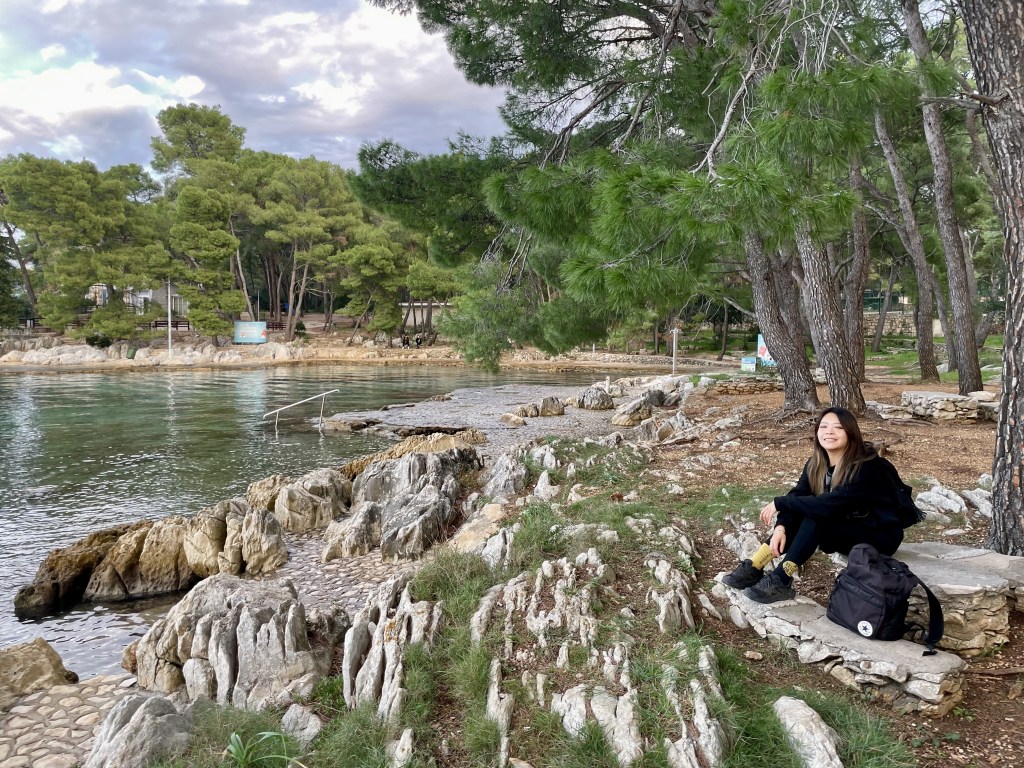
Just a walk along the north coast of Marjan Park today to a small cove — Kupaliste Bene — that we’ve spotted on Google Maps. It’s a decent enough stroll but the path leading there mostly sticks close to the coast road. Considering this road doesn’t go anywhere except around the parkland peninsula, it’s surprisingly busy. We notice a lot of torn-up roots, sawn logs, and newly-planted saplings. Clearly, a ferocious storm ripped into Split in the recent past — a quick search suggests severe summer storms in Split both this year and last year. We stop at the cove a few minutes, but the light is already beginning to fade. We follow a parallel path higher up Marjan Hill back to town. It’s quieter up on the hill — just an occasional jogger.
After a return visit to the pizzeria we stumbled across on our first evening, we settle down to start watching a four-and-a-half-hour BBC documentary The Death of Yugoslavia, which I’ve found on YouTube. It’s compelling stuff: filled with interviews with Milosevic, Tudjman, and many others. Given how long it is, it’s hardly surprising that it’s meticulous and exhaustive. This is what we both really need right now. On the surface, Split feels like any prosperous coastal European city, but most people here were born into a different country to the one that exists now. There’s so much to learn, even if Split itself was spared the physical destruction that the fall of Yugoslavia wrought on Bosnia.
Thursday 28 November
Split is wet today. With no work in my in-tray for a change, the morning is for catching up with life admin and beginning to add detail to next year’s visit to Poland.
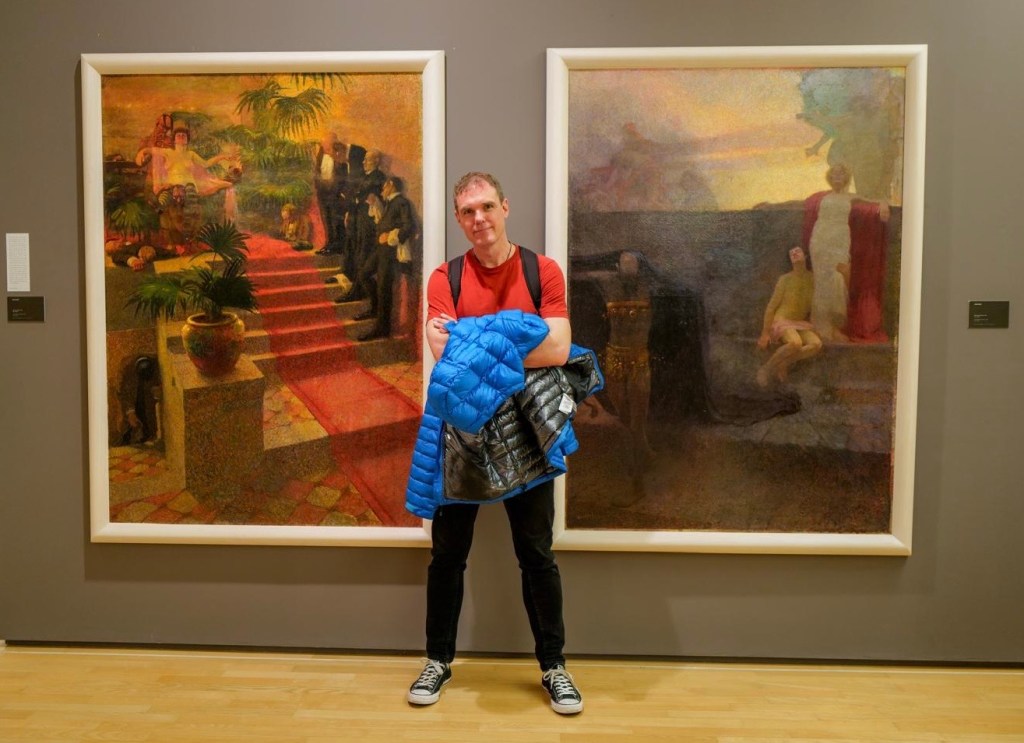
The rain eases after lunch, so we head to Split’s Gallery of Fine Art. It’s a decent collection, and once again we’re the only visitors. It’s dark by the time we leave. We stop for a coffee on the edge of our neighbourhood. No food again. We’re beginning to realise that Croatian cafes serve drinks and nothing else. No chocolate cake. No banana bread. And certainly not a warm croissant drizzled with pistachio sauce. How we miss Mostar’s Fabrika Coffee!
Friday 29 November
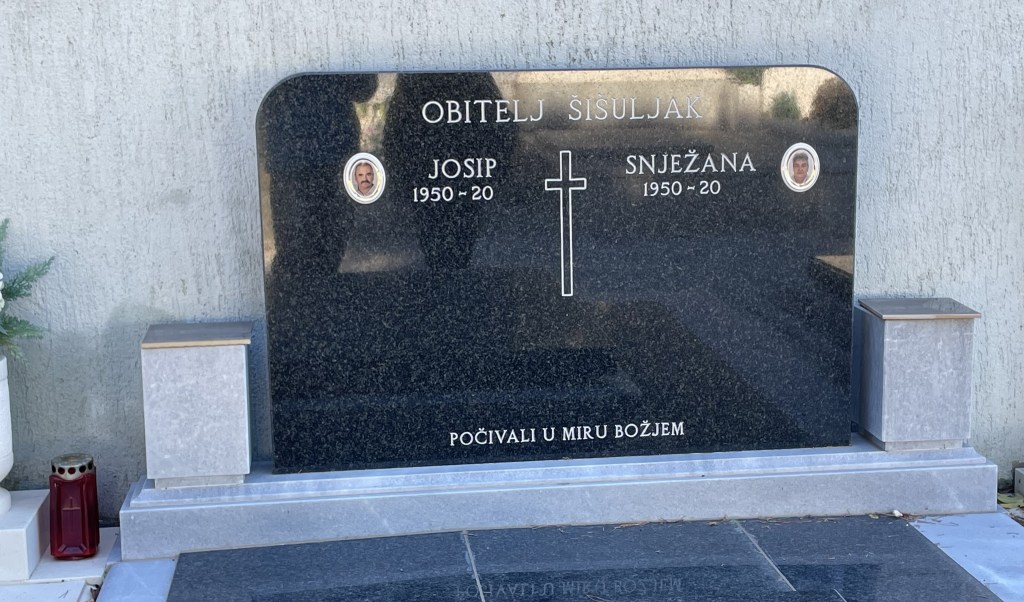
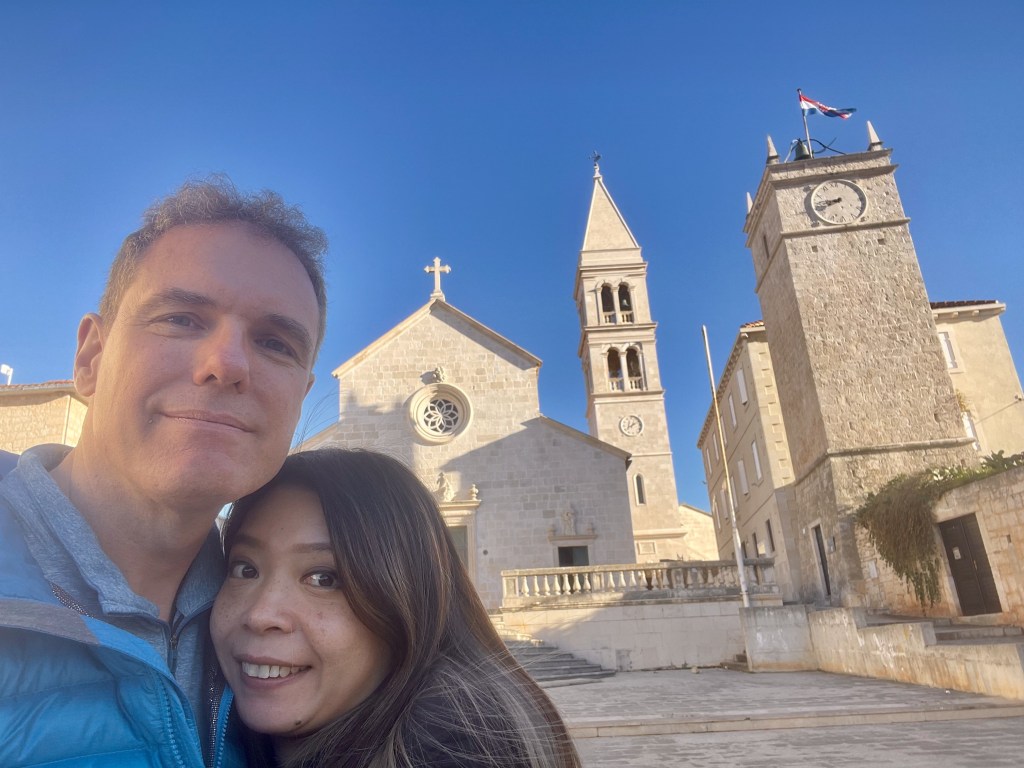
We’ve been in Split for a week. It’s time to stray beyond the city. At 9am, we’re on an almost empty ferry bound for Supetar on Brac island, 50 minutes away. Brac feels a little like Istanbul’s Heybeliada: quiet and peaceful, largely rural, but within sight of the city. We have a little over five hours to explore. We walk around Supetar’s bay passing beach shacks, restaurants and water slides that have all closed for the winter to reach the Church of St Nicholas on a promontory overlooking Supetar harbour. In the immacuately kept church graveyard we spot several yet-to-be-occupied graves with names already inscribed on the headstones alongside family who have already passed. This strikes me a bit ghoulish — just imagine looking regularly at your own name on a grave you’re tending — but I suppose it might be comforting in a certain way.
From the graveyard, we walk to the neighbouring village following a coastal path through woods of Aleppo pines. The path is separated from the sea by six-foot high dry stone walls built with the island’s white limestone. They’re beautifully constructed, although it’s unclear how much purpose they still serve much now that tourism has replaced agriculture as the main industry on the island.
After a refreshment at our destination village, we follow the road back to Supetar and find a cheap and cheerful place — Croatia’s version of a trucker’s cafe — for a cheeseburger. We use the remaining hour to walk the back streets of Supetar. It’s a charming little place and it’s good to be back on a quiet island for the first time since we were in Naxos last year.
Back at the flat, we settle down for a third and final evening watching the BBC’s marathon documentary The Death of Yugoslavia. I’m slowly patching together some sort of understanding of the catastrophe of those years. It’s complicated. Every time I use Wikipedia to make sense of things, I’m immediately scattered in all directions by new questions that come to mind.
Saturday 30 November
We stroll around the south side of the Marjan Park peninsula, past the marina and a couple of small bays where the water is sparkling clear, but access is usually via a concrete boardwalk. We eventually reach a small, tidy beach just after sunset and walk back along the road. It’s all pleasant enough.
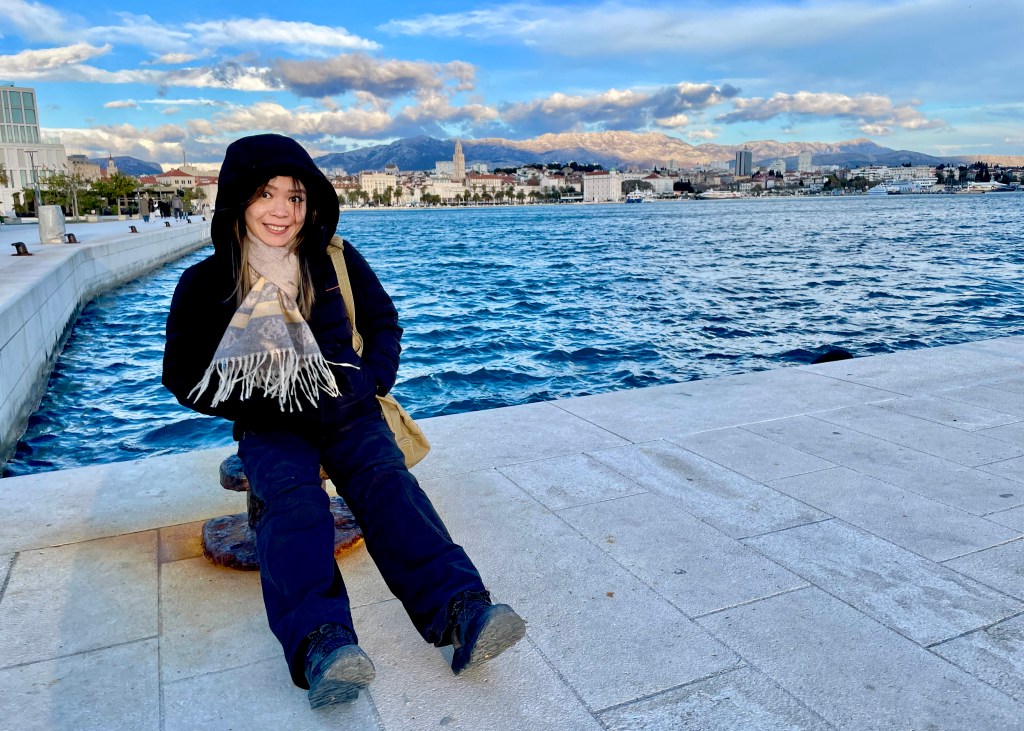
In the evening, we return to Terminal F on the waterfront near the ferry port. Again, pleasant enough. I’m not complaining: Split’s an attractive place, in a spectacular natural setting, and the people are welcoming. I think we’re both still adjusting to the lack of edge that Bosnia had for its sad history.

Sunday 1 December
It’s getting dark by the time we leave the flat, hoping to buy tickets at the gate for the Hadjuk Split – Dinamo Zagreb match. After walking 20 minutes, we arrive at the stadium to find it thronged, as anticipated. Unfortunately, we discover the tickets sold out days ago. A tout offers us two tickets for a 100% mark-up. I briefly consider this, but some young boys standing nearby advise us against it. They tell us they’ve been scammed themselves and not to trust any touts.
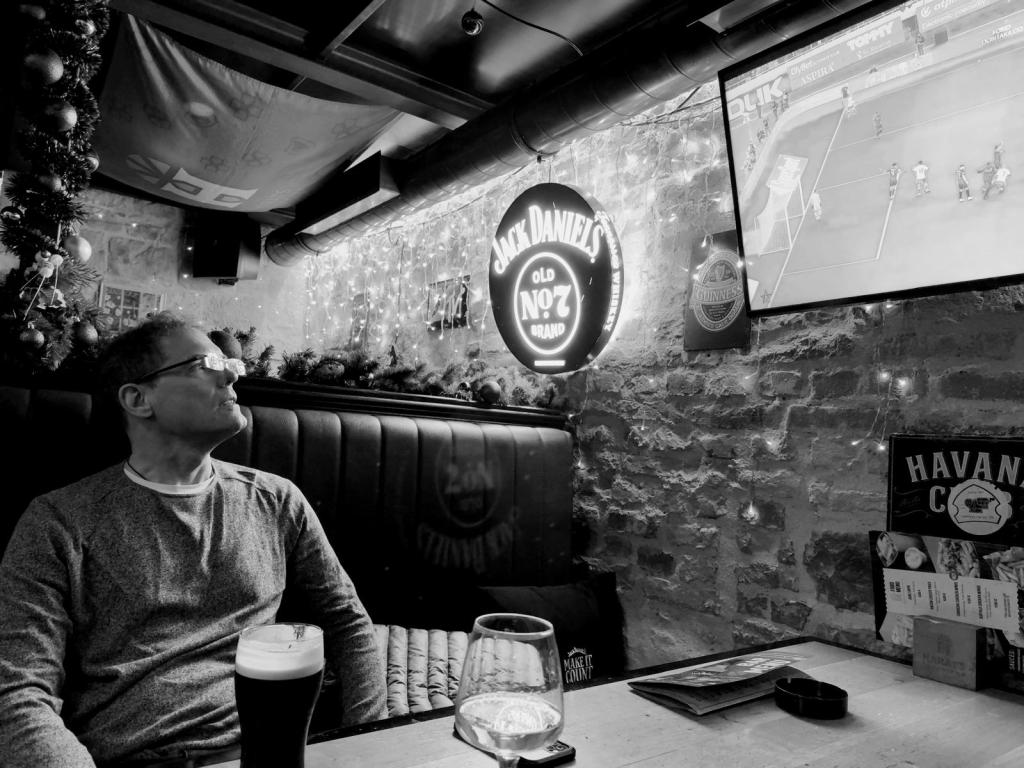
We’d already committed to spending 40 euros on tickets, so rather than go straight home, we find a bar to watch at least part of the game on TV. On our way back to the centre, we pass a rather rough looking place, but the TV signal is down and we push on to our local Irish Bar. The match is scrappy. Hadjuk win 1-0, but the game is full of unforced errors and too many players crowd the ball. A League One match in England, perhaps? It’s most memorable for a Hadjuk player almost being being hit in the legs by a flare thrown by Dinamo fans. Perhaps not like League One.
Monday 2 December / Tuesday 3 December
Monday is quiet. We only venture out for groceries and a late afternoon coffee.
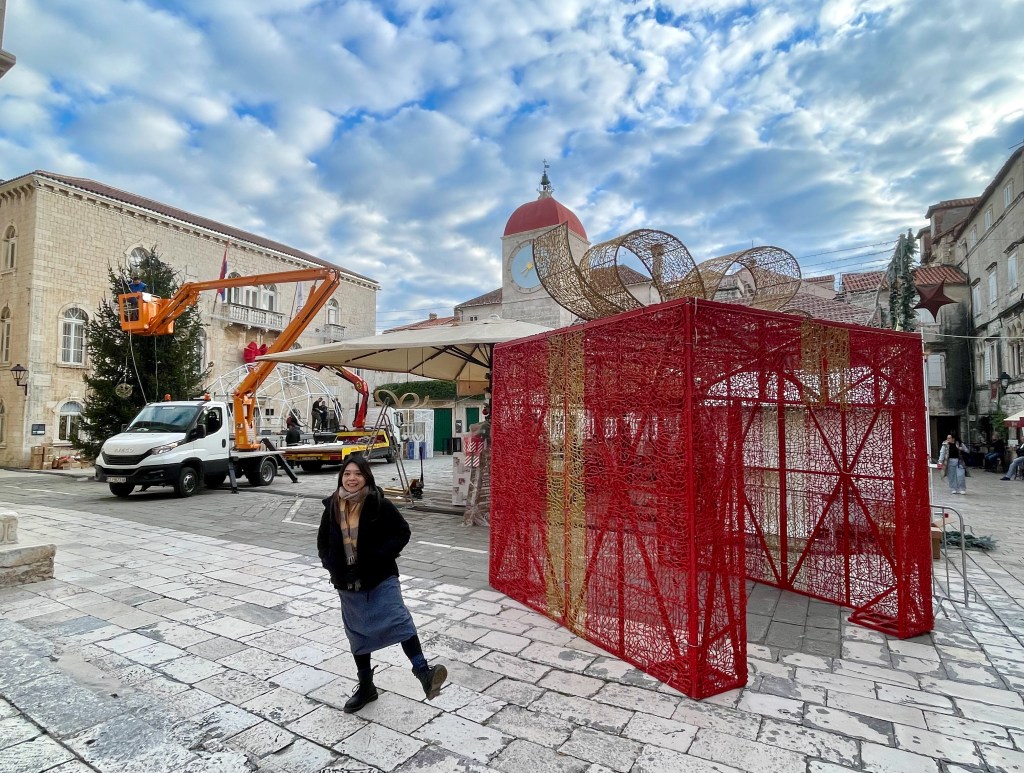
Tuesday is a birthday day! We jump on a suburban bus and ride over to neighbouring Trogir, 30km up the coast. The coast road remains fairly built up all the way to Trogir, occasionally giving way to an olive grove or – less pleasing on the eye – a cement works. Trogir, built on a small island between the mainland coast and the much larger island of Otok Ciovo, is lovely but deathly quiet. Of all the restaurants lining the harbour, all but two have shut for winter. Three sixty-something Americans are the only other lunch customers at the restaurant we settle on. Stomachs filled, we wander the back streets before settling down for an afternoon coffee on the compact main square, which the locals are busy decorating for Christmas. The bus ride back to Split as it gets dark feels strangely like the old days of commuting.
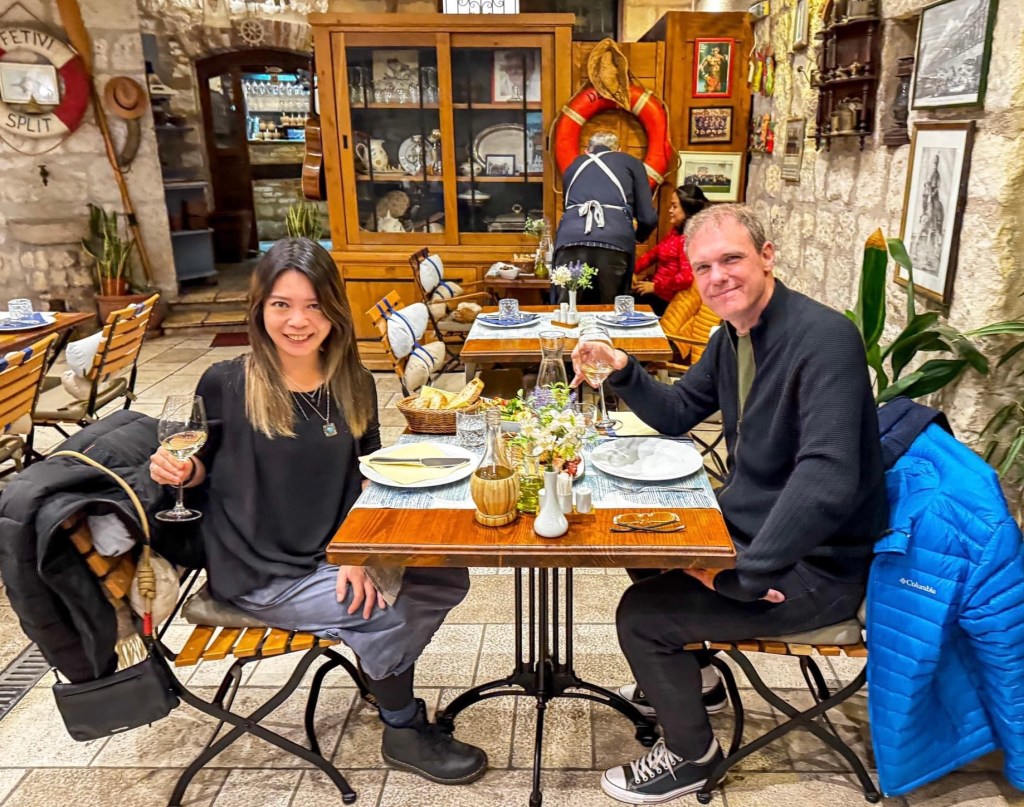
We arrive at the French restaurant K’s chosen for her birthday meal to find it also shut for winter. Hey ho. We retreat to the old town, where we stumble on a Michelin-approved place. After a cursory glance at the menu, we head inside and share delicious plate of sea bass, sea bream, amberjack, shark, and octopus – all washed down with half a litre of local wine. The starter of octopus and chickpea stew is also heavenly, as is the dessert of apple strudel. We may have been forced to compromise on a long tradition of eating French on K’s birthday, but when the food is this good, who’s complaining?
Wednesday 4 December
We’re approaching the two-week mark in Split now. We’ve found our feet and have only a limited urge to explore every day. The forecast is for rain over our remaining time here, so perhaps our final ten days will be an opportunity to catch up on life admin that I’m forever chasing after. There’s Christmas shopping to sort, travel planning, financial planning, and much more.
Today, we venture only to the supermarket for supplies. In the evening, we rewatch Ten Years, the 2015 Hong Kong film set in a dystopian 2025. Naturally, it’s fascinating seeing how prescient or otherwise the five shorts that make up the film were. Staged assassinations of pro-government politicians (‘Extras’) now seems far-fetched, but perhaps wouldn’t have been entirely shocking a few years ago. In ‘Dialect’ a non-Putonghua-speaking taxi driver struggles to adjust and to communicate with his Putonghua-educated kid after Putonghua replaces Cantonese as Hong Kong’s only official language. ‘Local Egg’ strikes a chord about the policing of language as primary-school age kids dressed as Red Guards inspect shops and report an egg stall holder for displaying a sign advertising local eggs – the word ‘local’ has been banned. Most tellingly, it also reveals strictly policed bookshops.
But ‘Self Immolater’ is the short that seems to have come closest to anticipating the future. It’s set in the wake of the ‘2020 riots’ and presented as a documentary complete with talking heads reflecting on the political climate. All five shorts would be deeply seditious in the real 2025, but none more so than ‘Self Immolater’, in which actors openly call the CCP evil. It’s unthinkable that hundreds of us sat on a street in Sai Wan to watch a public screening in 2015.

Thursday 5 December
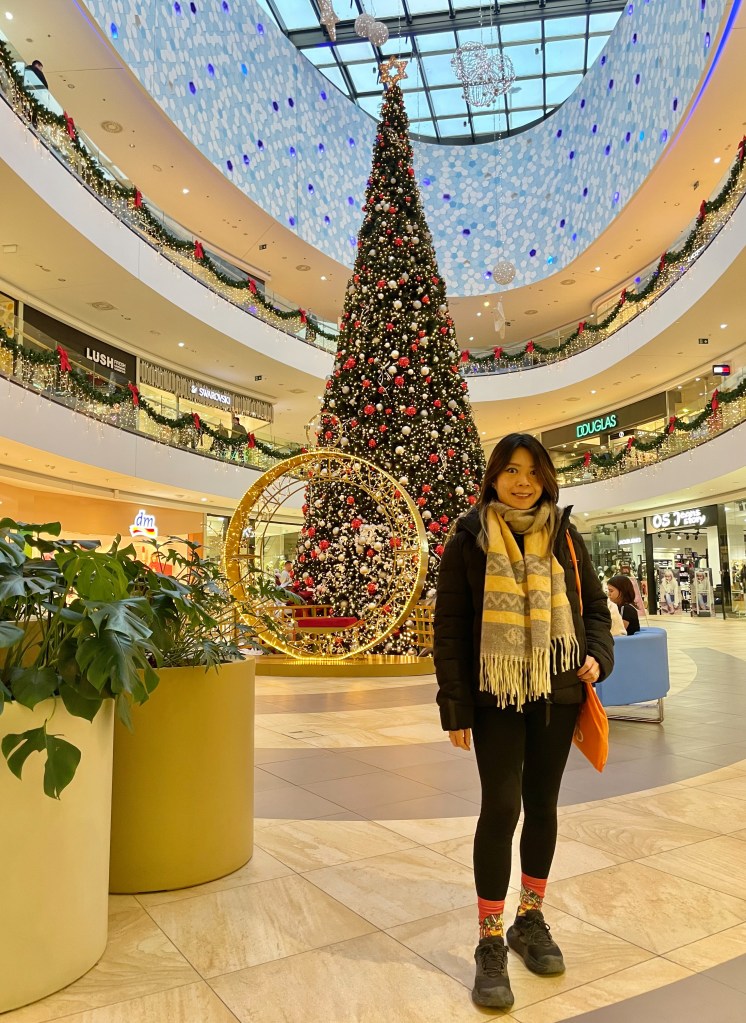
The first part of the day soon disappears in online Christmas shopping and travel planning. Later, we hop in a taxi for a ride out to the enormous suburban Mall of Split – partly just because, partly to check the prices of good hiking shoes, which I’ll need next summer in the Tatra mountains. They’re no cheaper than they’ll be in the UK or New Zealand, so I decide to kick that can down the road for now. The mall is looking suitably festive. After coffee and cake, we hop in a taxi back to the Old Town. A slight day, but all part of the jigsaw.
Friday 6 December
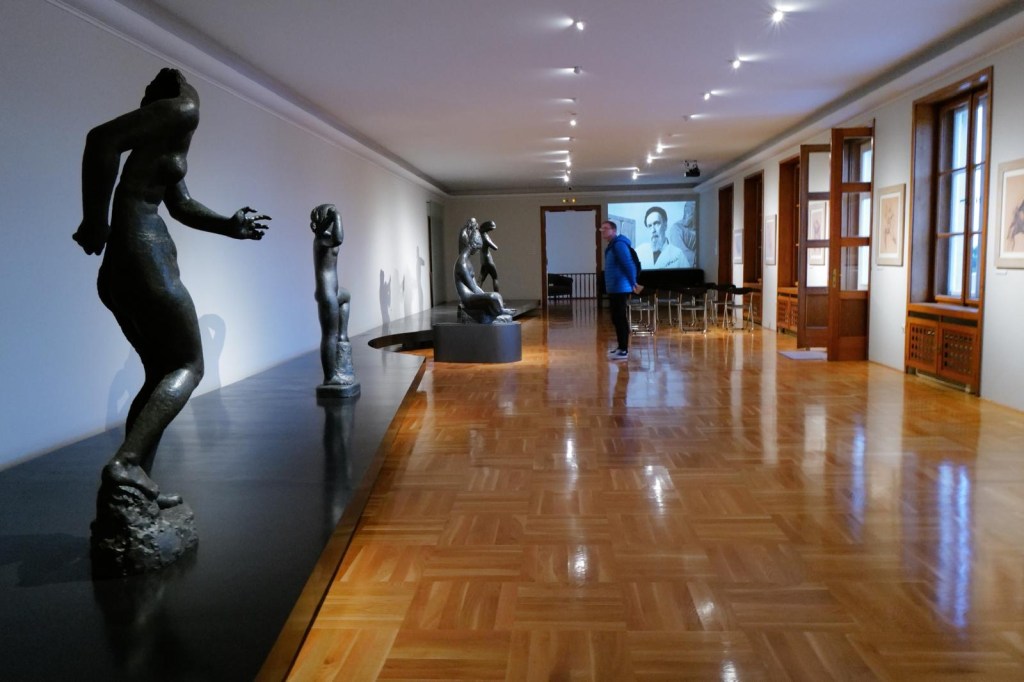
Today’s blast of culture comes from a gallery dedicated to Croatian sculptor Ivan Meštrović (1883 – 1963). I don’t generally pay much attention to sculptures in galleries when they sit alongside handsome paintings. But despite a steep 10 euro entrance fee, I have to concede it’s worth the visit. Most of the sculpture is bronze, but there’s marble, plaster and wood too. How is bronze sculpting done? I don’t know. It’s on my to-do list to find out.
Saturday 7 December
It’s a glorious day (we’re not having so many of those now that we’re on the cusp of winter) as we head by bus to Sibenik, 60 miles up the Dalmatian coast, for the day. Choosing Saturday turns out to be a fine move. Not only is the weather perfect, we also arrive in Sibenik on a day full of local activity. A flotilla of yachts look about to start racing, but when a small cannon fires close to us, causing us to instinctively duck, it’s to signal the start of the local half-marathon. We watch the runners spring into action, then wander through the narrow streets of the old town, eventually emerging near a small outdoor ice rink where kids skate to the improbable sound of Mud’s Lonely This Christmas (50 years old this festive season).
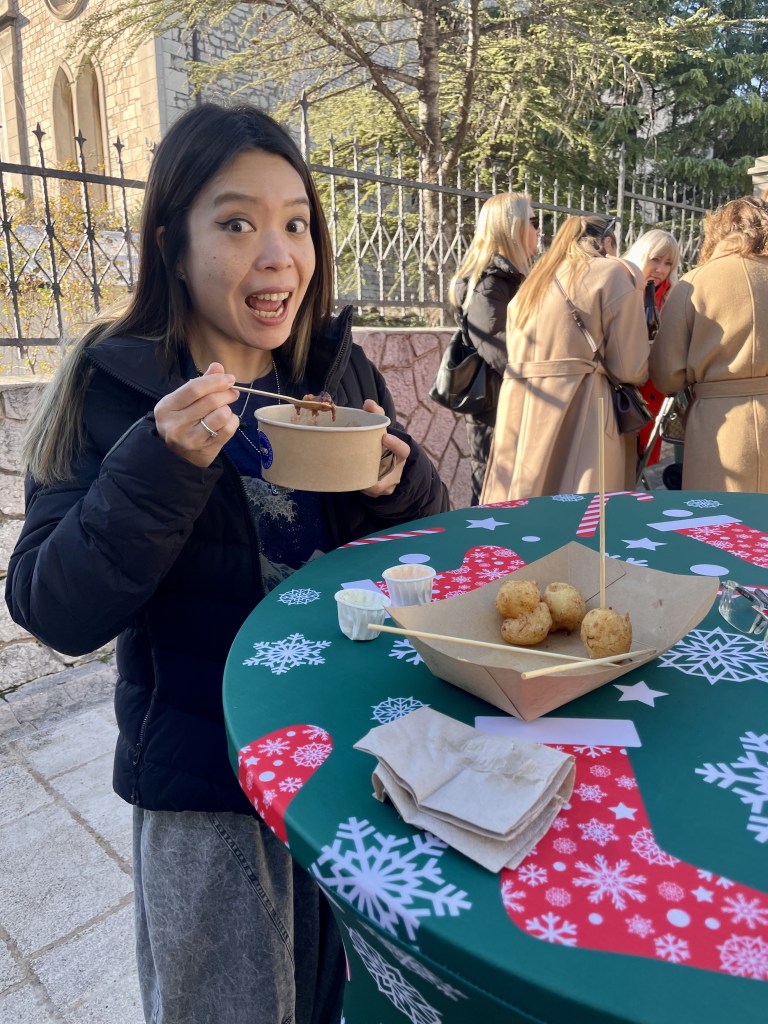
Next to the ice rink, we find a small park full of food booths and a stage being readied for live music. It’s perfect for a stand-up lunch of cod fritule (me) and octopus and gnocchi stew (K) listening to the live band playing old Simply Red, Police and Tom Petty hits.
Elsewhere, we hear Shakatak’s ‘Down On the Street’, Madonna’s ‘Like a Prayer’, Queen’s ‘Another One Bites the Dust’, the Human League’s ‘Don’t You Want Me?’, Blondie’s ‘Heart of Glass’, Stevie Wonder’s ‘Boogie on Reggae Woman’ and the Emotions’ ‘Best of My Love’, adding further evidence to my hypothesis that 21st century pop music just doesn’t much cut it in the former Yugoslavia. This hypothesis to be further tested in Serbia next year.
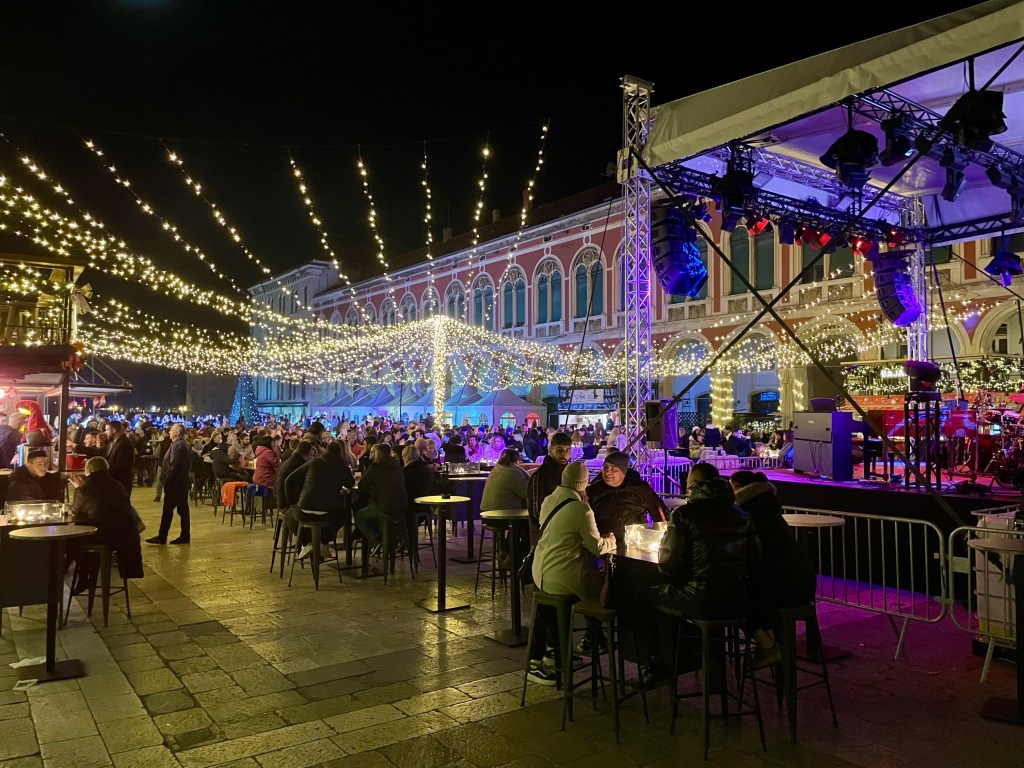
After a further stroll and a coffee in bright sunlight that will later send me to bed early utterly exhausted, we hop on the bus back to Split and return to our go-to eat-out option, Terminal F. The Split riva is now in full Christmas mode, with lights and food stalls, an ice rink, and a surprising number of hardy souls sitting outdoors at bars and restaurants. We’re happier indoors, but we’re clearly in a minority as Terminal F is almost empty tonight on this, our third visit.
Sunday 8 December
After a beautiful blue day yesterday, it’s grey and dreich today. We don’t leave the flat. Plenty of life admin to get on with.
In Syria, Bashar al-Assad has just been overthrown. I’ll shed no tears for the schmuck, but I fear Syria will now spiral downwards into a bloodbath of sectarian bloodletting. Saddam Husseyin…Muhamar Gaddafi…we’ve been here before: short-lived celebration before the recriminations begin…
Monday 9 December
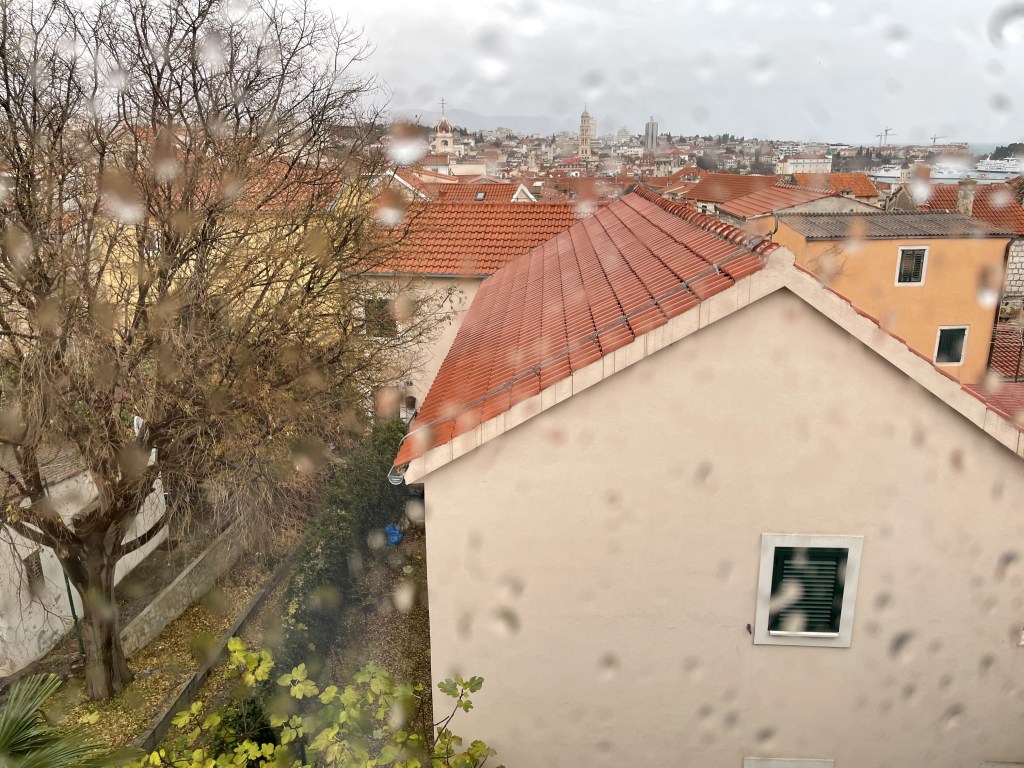
Another wet, stormy day. Perfect for continuing to catch up with admin, including booking accommodation in Belgrade and Budapest next spring. We’re planning a half-day trip later this week to a fortress overlooking Split if the weather improves long enough, but I’m more-or-less content just mooching now. Today, we limit ourselves to grocery shopping, buying some posh local chocolate for Christmas gifts, and stopping for coffee to pass away a damp, grey dusk with our books.
Tuesday 10 December
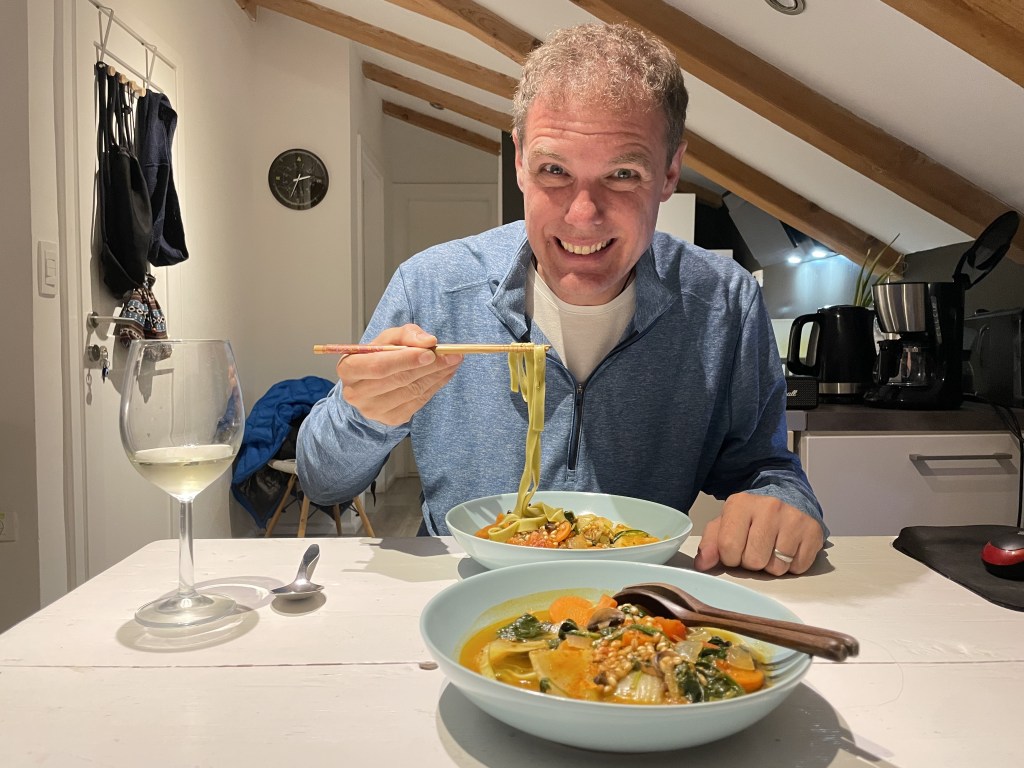
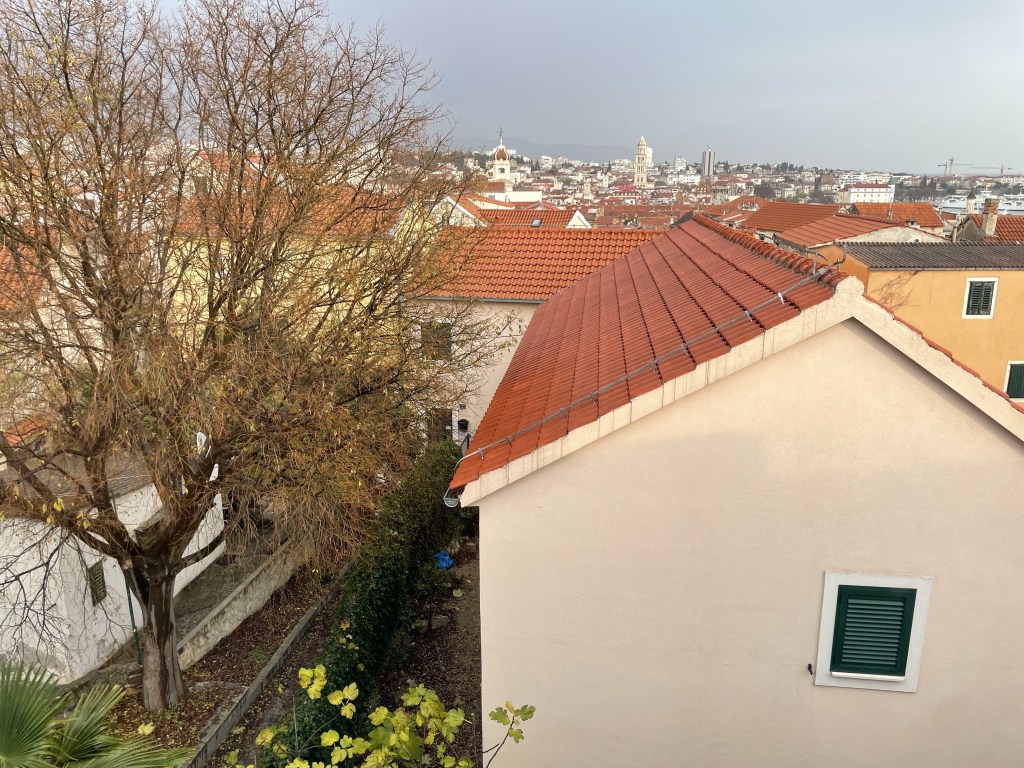
Another wet day. But we do love this flat, so it’s hardly an inconvenience to be confined indoors except for a quick trot to the local shop to buy a jar of olives (loose olives aren’t a thing in Croatia, we’ve found).
Today’s project is to set up a Trusted Housesitters profile. It’s quite an undertaking: it’s more than just writing an arresting profile; it also involves identity checks, soliciting references, and uploading details of all the animals we’ve cared for. Once I’ve contributed our profile, I hand over the reins to K and spend a satisfying couple of hours on the sofa with headphones clamped on crafting my Festive 20.
Wednesday 11 December
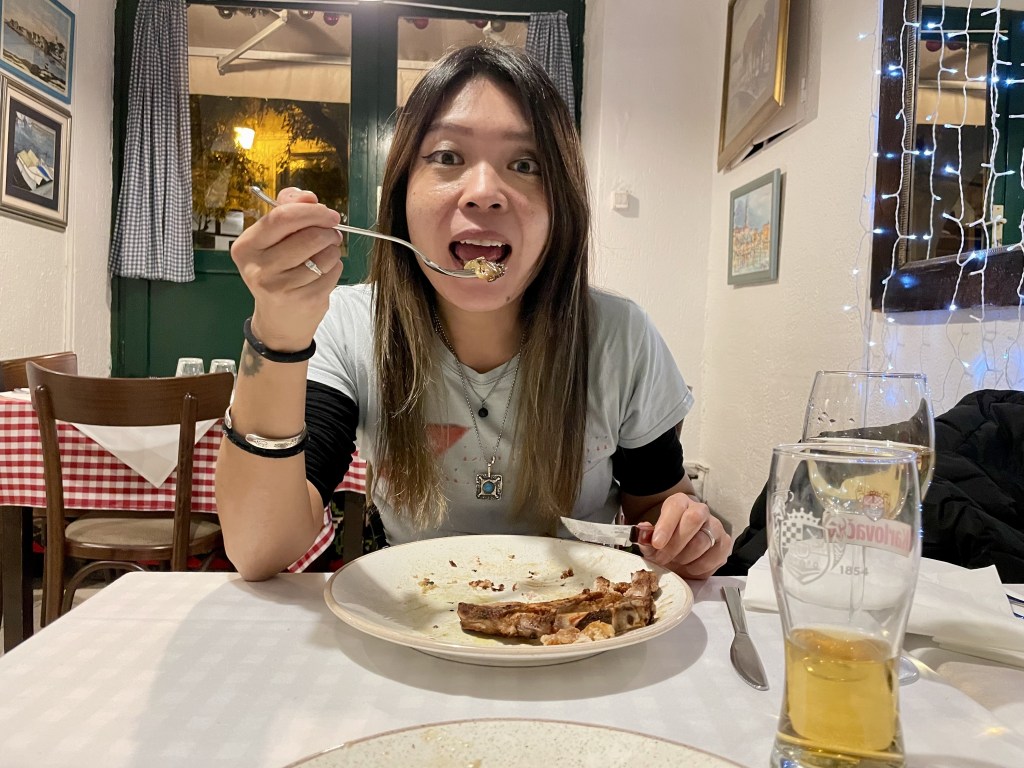
Work is back: I’ll be working on the PBS magazine for the next few days. The weather remains pretty miserable, so it’s no great trial being indoors. Last grocery shopping today as we gradually wind down our time in Split. K uses Google Maps to choose a nearby local taverna to eat at this evening. But when we reach it, it’s closed for winter and looking rather forlorn. We give up on Google Maps and walk to nearby local place that we know is open. We’re the only customers but the food – a bit pricier than we usually allow ourselves – is absolutely superb.
Thursday 12 December
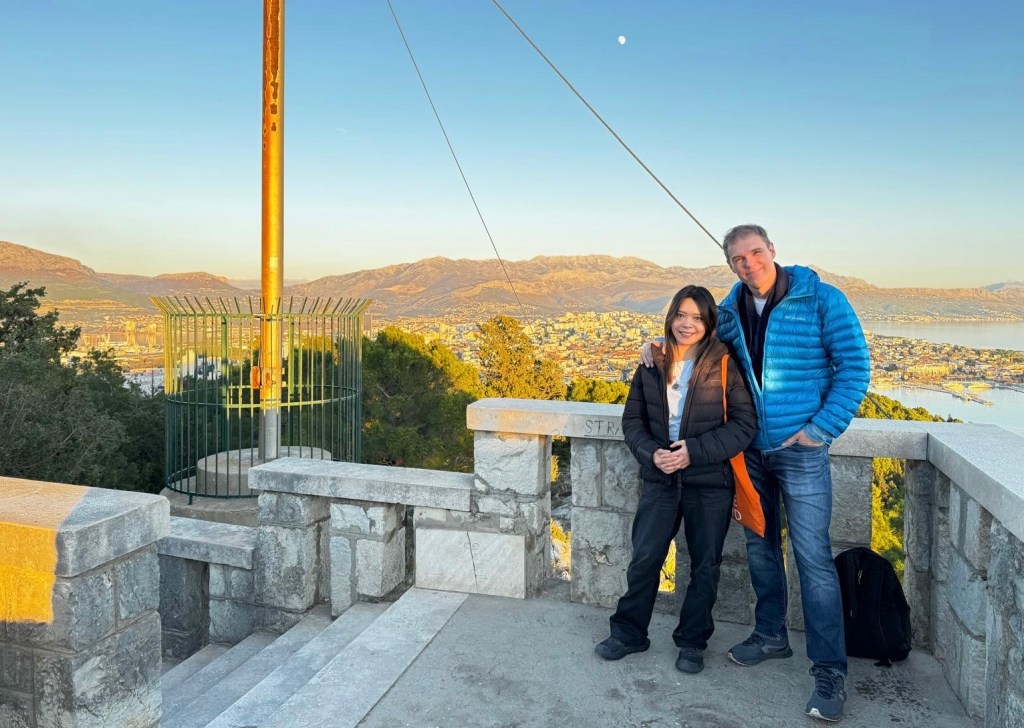
The rain has gone and it’s bright blue once again. The original plan is to head to a medieval fortress a few miles out of town for the afternoon. But by the time we’ve had lunch it’s already rather late to make the trip worthwhile. Instead, we walk up to the Croatian flag at the highest point of Marjan Park. The park is almost empty on a weekday afternoon in December. Back in town walking along the riva with its Christmas stalls, we decide against trying the fortress tomorrow, our final day in Split. Instead, we’ll just wander around one last time and say goodbye.
Friday 13 December
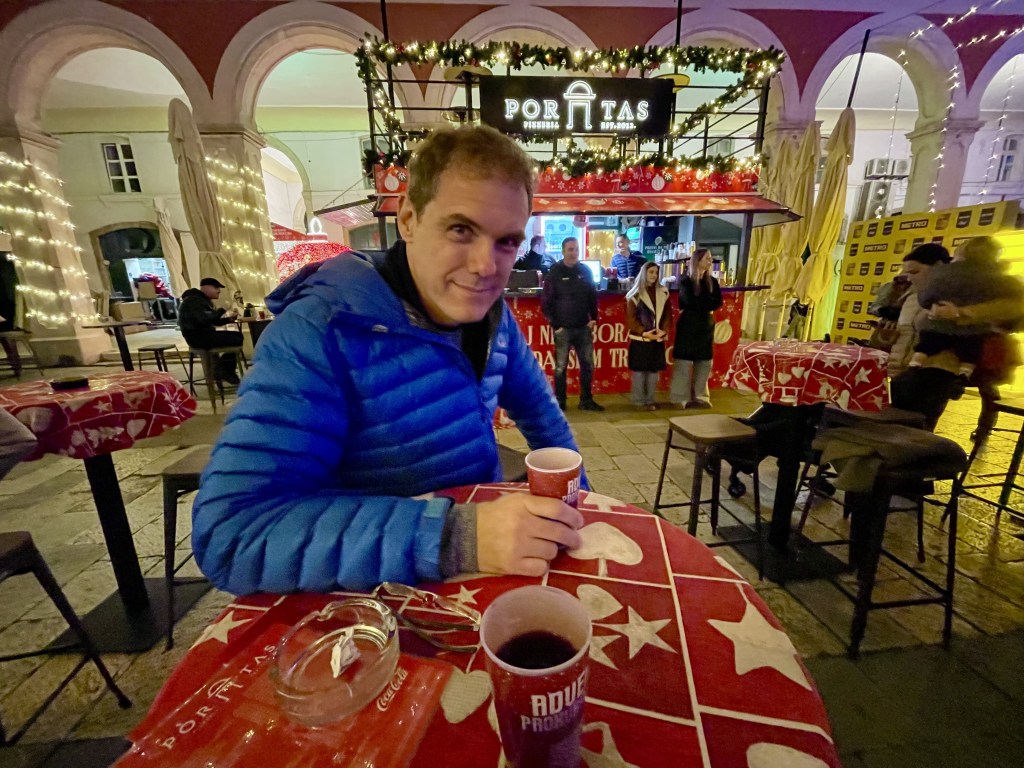
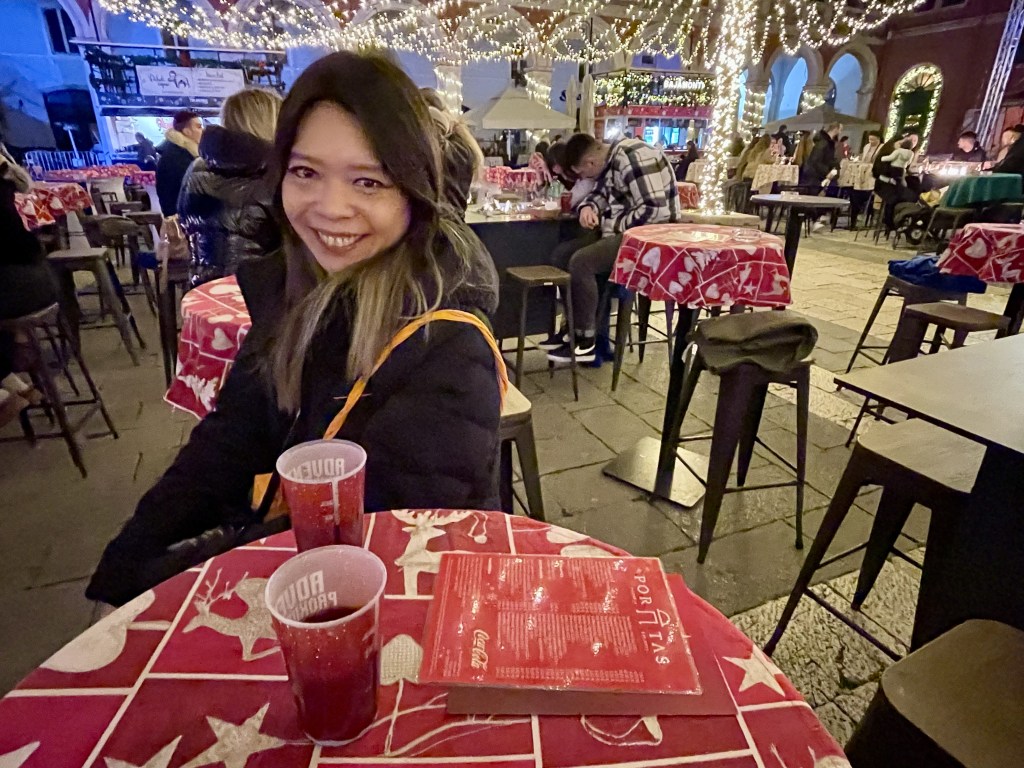
It’s our last day in Split, and it’s gloriously sunny: a day for simply wandering and taking everything in one final time. After a lengthy afternoon walk out to the suburbs and back around the south side of the peninsular, we get a big cup of chocolate fritule from a stall at the Christmas fair on the riva and look out at the ferries coming and going in the darkness. Bellies full of fried dough, we wander on to Republic Square for a mulled wine and to watch the ice skaters. The moment is spoiled a little by a band on the nearby stage doing a very loud soundcheck. But by the time we leave, they’ve given way to a PA system playing Frank Sinatra and Bing Crosby. After a final pub grub meal at Terminal F, we head back to the flat through Diocletian’s Palace, which feels wonderfully festive with its decorations and old-word charm. I’m a little sad to be leaving Split in all its festive merriment. But we have places to be…


Leave a Reply