A visceral month in a tragic city
Monday 7 October
After whiling away the night at Heathrow Terminal 2, we depart at 6am on a flight to Vienna. Largely sleepless, we doze all the way. Vienna airport is shrouded in thick fog. We don’t see the ground beneath us until just seconds before we land. Who would be a pilot?
Breakfasted, we leave a much clearer Vienna airport a few hours later for the 45-minute flight to Sarajevo. As we fly in, Sarajevo looks beautiful, surrounded by forested hills and handsome villas. Immigration, baggage claim and SIM card purchasing are efficient, and we’re soon in a taxi heading downtown. Our taxi driver claims it’s faster via the scenic route. Of course he would. But my initial cynicism and irritation fade as, in glorious autumn sunshine, he drives us on quiet country roads high above the city, telling us about his son – who apparently works in Harrods – until all we have to do is to head downhill and across a narrow bridge over the Miljacka River to our Airbnb.
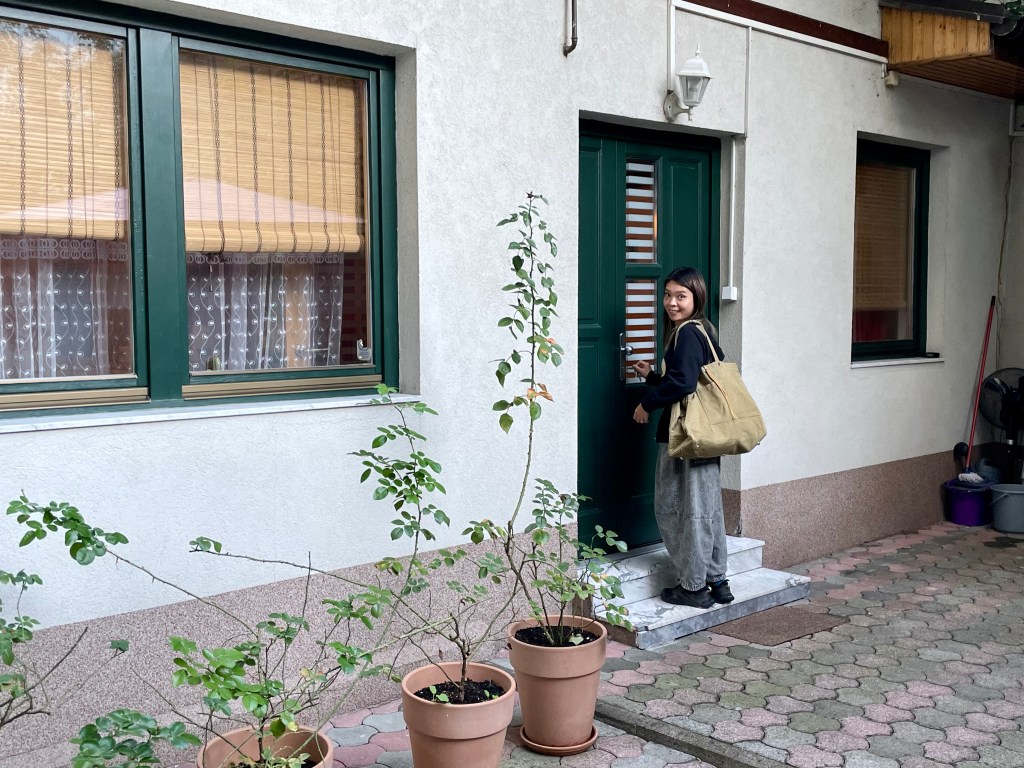
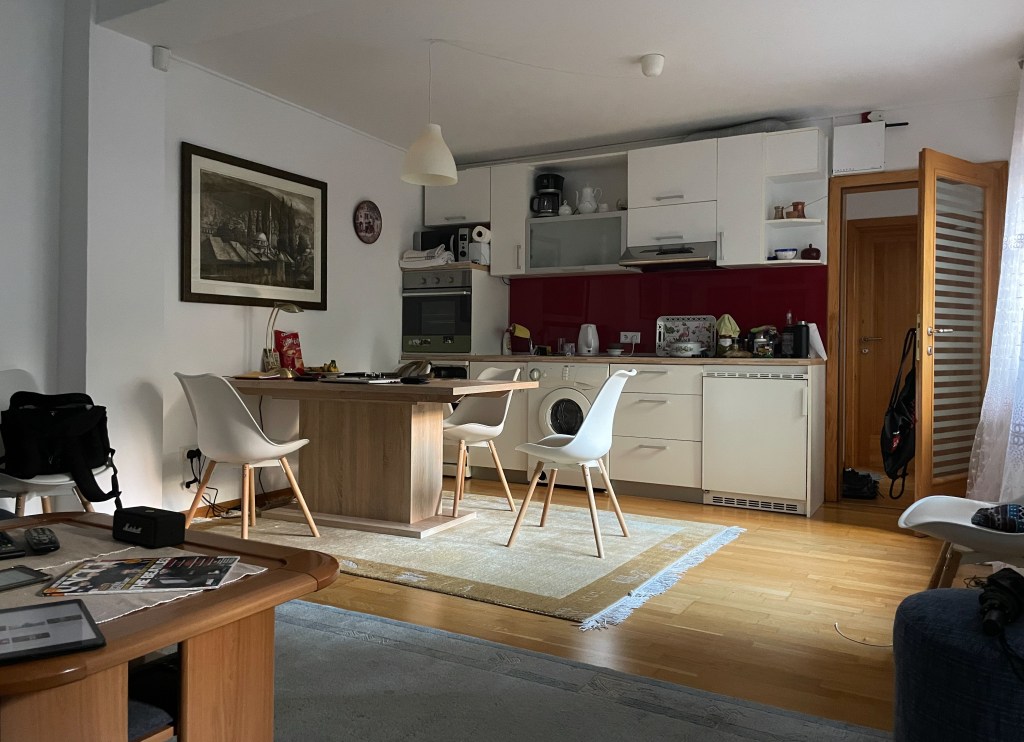
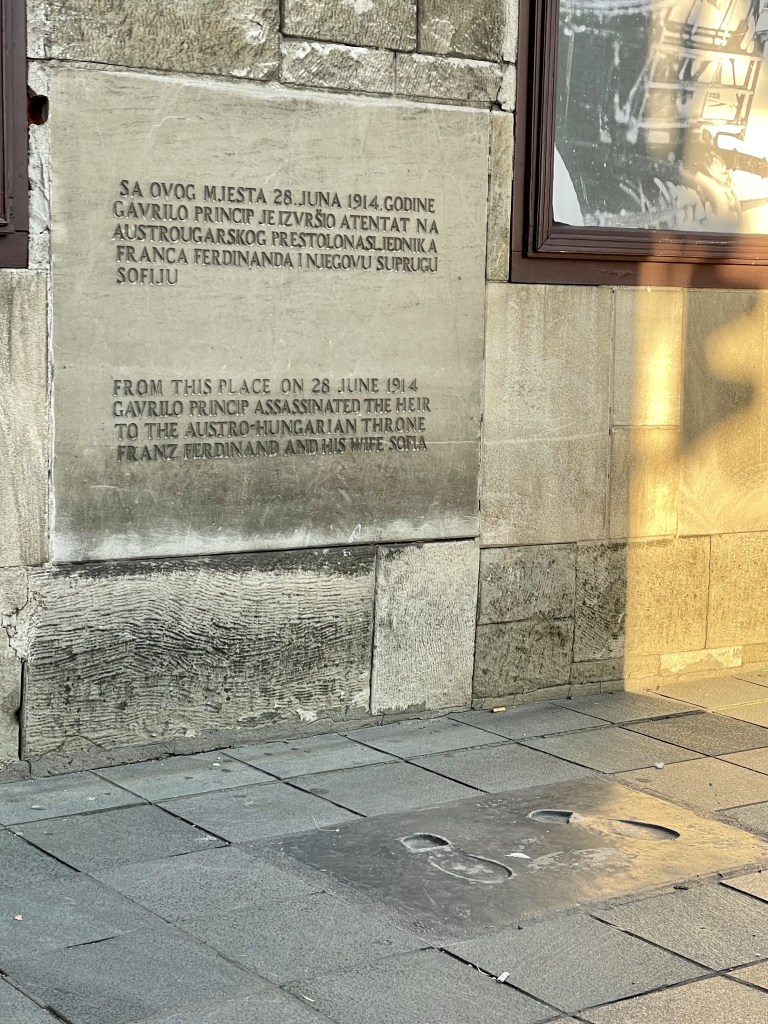
Our new home is just metres from the spot where Gavrilo Princip assassinated Archduke Franz Ferdinand and his wife 110 years ago, on a street corner by the Latin Bridge. We couldn’t be more central, yet the flat is quiet and private. And it’s literally next door to a supermarket, albeit one that doesn’t sell fresh fruit and veg. It’s immediately one of the best places we’ve stayed. When we arrive in the late afternoon, the flat is bathed in sunlight.
After stocking up from the supermarket next door, we strike out for a second supermarket that sells fresh fruit and veg. We embarrass ourselves by taking everything straight to the checkout to be priced. Wrong! The assistant sighs and marches off to print the price labels in the fresh produce section. Every country does the fruit and veg thing slightly differently. Sometimes, you just have to learn the hard way by embarrassing yourself…
More successful is our choice of restaurant. It’s excellent, and even cheaper than Bulgaria. Still largely sleepless, by nine o’clock we’re back home and ready for a long recuperating sleep.
Tuesday 8 October
Our first full day in Sarajevo. There’s much we could do, but I currently have five different editing jobs to complete. We eventually head out around four o’clock to stroll along the banks of the Miljacka River. It’s a glorious day once again as we head west towards the modern city centre, continually crossing and re-crossing the narrow river as we reach bridges, depending on which bank looks more interesting to walk on. Buildings along both banks of the river are pockmarked by bullet holes and mortar fire. We eventually come to the bridge where Bosco Brkic and Admira Ismic, the Bosnian War’s ‘Romeo and Juliet’ couple, were shot dead by Serb snipers in 1992. Crossing the bridge, we come immediately to a modern upmarket shopping centre. It’s quite a juxtaposition.
We head back to the flat, when we watch a documentary about the famous, and visually striking, Sarajevo Holiday Inn – now the Hotel Holiday – from where the international press covered the war.
Wednesday 9 October
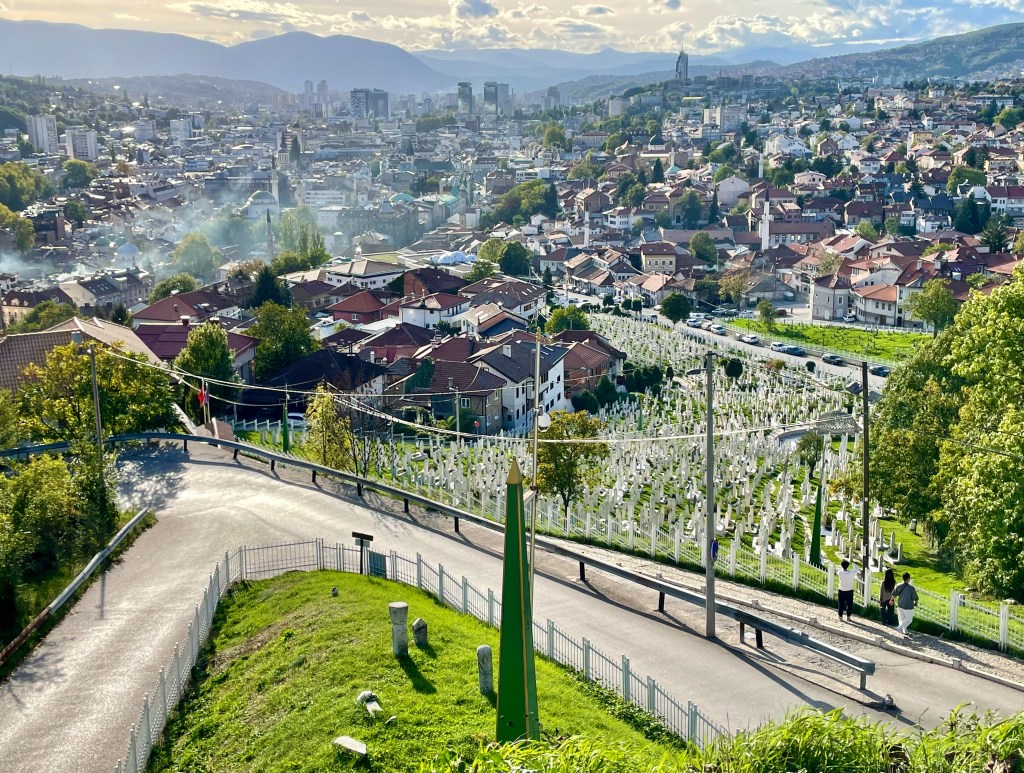
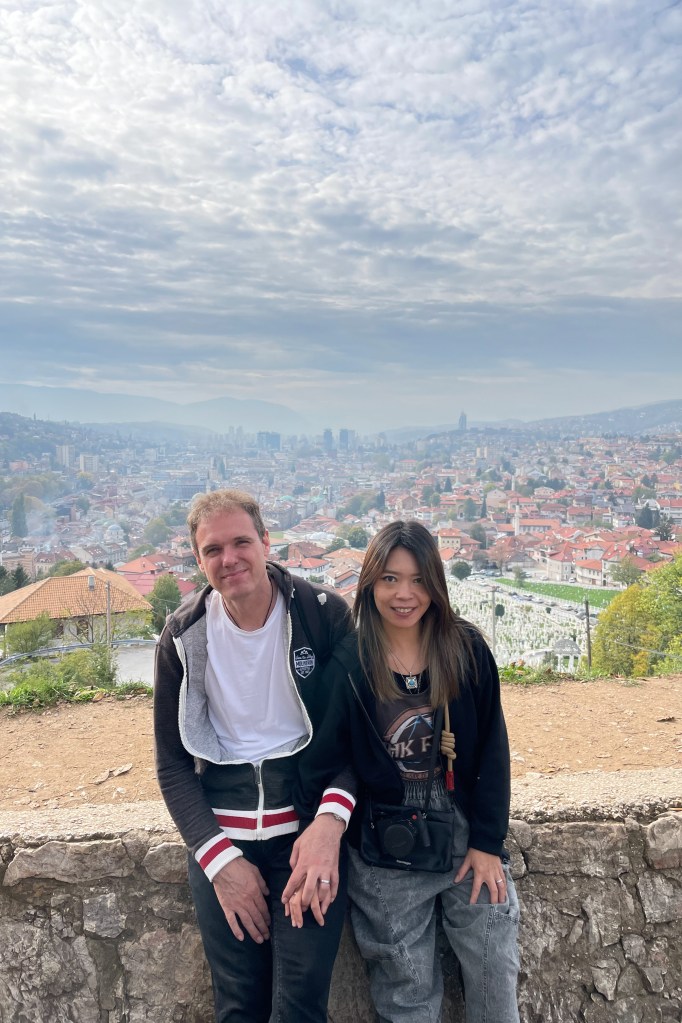
Our second full day is Sarajevo is much like the first: I work until mid-afternoon, then we head out to explore. Today we head east along the river, but soon find ourselves climbing quaint cobbled streets before skirting a (post-war) cemetery and descending back down to the river. We eventually find ourselves at the Yellow Fortress, famous for its views of the city. Although it’s late afternoon in autumn, it’s still a good hour until sunset. We’ll come back another day for the sunset views. For now, it’s more than enough to get our first panaromic view of Sarajevo and begin to figure out where everything is in relation to everything else.
Back at the flat, I send recommendations of what to do in three days in Hong Kong to Matt Shaddick, who I haven’t seen in 34 years. Matt’s stopping over next month en route back from a holiday in Japan. It would have been marvellous to meet up. But there you go. Perhaps one of these days in London?
Thursday 10 October
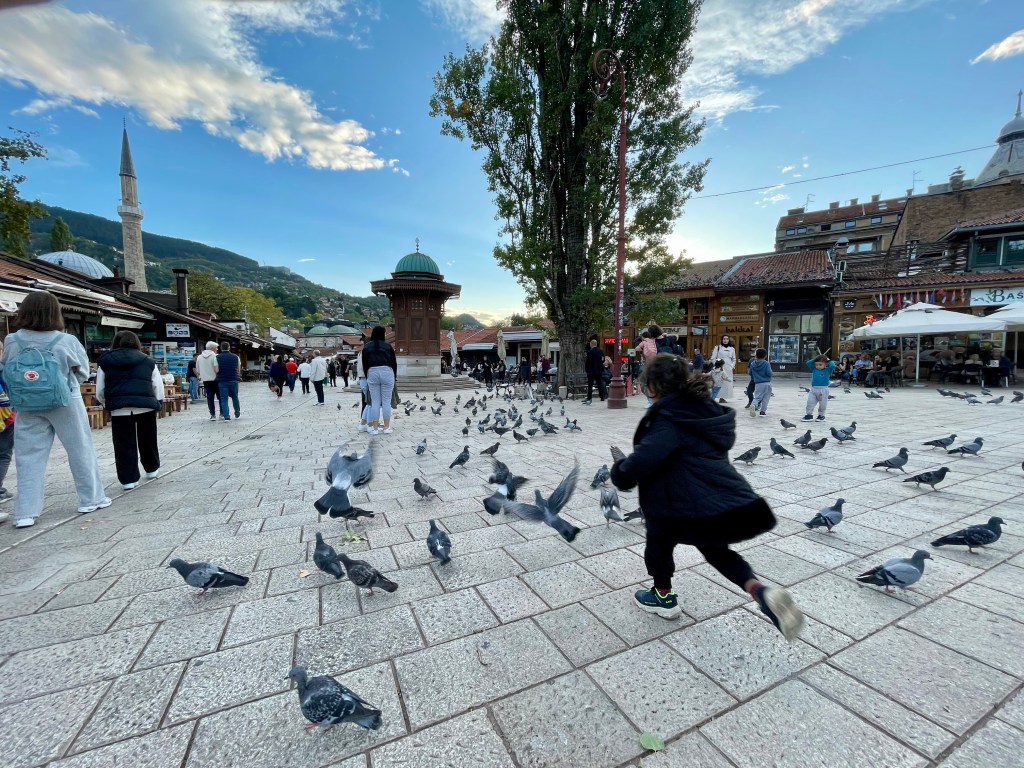
Our third day in Sarajevo is much like the first two: I work until 4 o’clock, then we head out to explore. This time we stick to Bascarsija right on our doorstep. The first thing I immediately notice is the number of people speaking Turkish around me. Sarajevo’s clearly popular with Turkish visitors, which makes perfect sense: they can visit Europe without needing an EU visa, it’s affordable, and of course it’s at least nominally majority Muslim. Bascarsija is full of bustling teahouses in shady courtyards where many customers puff on a hookah with their tea. I haven’t encountered so many Turks abroad since I briefly lived in Green Lanes in 1996. Even in Azerbaijan, they weren’t this common.
The late afternoon light is perfect for taking photos, and Bascarsija is endlessly photogenic. We indulge.
We decide to make Monday’s first night restaurant meal an exception rather than a substitute for our regular Wednesday meal out, so we find a quiet local restaurant and call Thursday night our regular Wednesday night. The food’s not as tasty as the Bosnian pot and goulash that we ordered on Monday, but it’s decent enough, and even more affordable than Monday. Konoba Fakat is run by the indominable Leyla, whose 20-something son sits outside tapping away on a keyboard as we munch inside on lamb cutlets and chicken curry rice. She’s a force of nature: chatting with us, doing all the cooking, and somehow keeping an eye on the handful of other customers, all of whom choose to sit outside. Her food may not be the best, but we’ll be back for the sheer entertainment value.
Friday 11 October
A wet, dreary day. The rain stops mid-afternoon and we head for the nearest supermarket that stocks fruit and veg. The rain starts again soon after we leave the flat. We have umbrellas, but grocery shopping today is a soggy and somewhat cheerless experience. We do, however, figure out how to price our own fruit and veg: each product has a three-digit code displayed next to its price per kilo. Plop your cucumber on the scales, enter the code and press the button. Your price tag pops out.
After bringing the groceries home, we don’t want to venture far, so we head 50m around the corner to visit the Museum of the Assassination of Archduke Franz Ferdinand. There’s not much to it. It’s just a room with displays that purport to include the assassination weapon and the clothes that Gavrilo Princip was wearing. Perhaps they’re genuine, but who really knows? (Update: Wikipedia says that the actual assassination weapon is on display at a museum in Vienna.) Far more engaging, and for a steep additional fee, is a 10-minute VR re-enactment of the assassination. It’s absolutely gripping; all the more so as we’re sitting at the exact spot where the assassination took place.
Saturday 12 October
The weather is glorious again as we take a stroll down ‘Sniper’s Alley’, past the old Holiday Inn, to visit the History Museum of BiH. On a large table in the foyer is a photo exhibition of a couple of hundred photos of Sarajevo clearly taken sometime in the 1990s. The photographer, a Canadian chap my age, just happens to be in the foyer at the same time as us and welcomes us to ask him anything we want. I ask him when he took the photos (April 1996, soon after the end of the war) and how he came to take them (he was en route to Albania but never got there). He’s a mine of information and shows us on a map where he took various photos. We thank him and spend a couple of harrowing hours looking around the exhibits before heading back to our end of town to eat at a restaurant opposite the City Hall, in an old house that was, if you believe the story, moved there brick by brick when the original owner refused to give up his house to allow the City Hall to be built in the 1880s. I don’t buy it for a minute, but it’s a cute tale.
Sunday 13 October
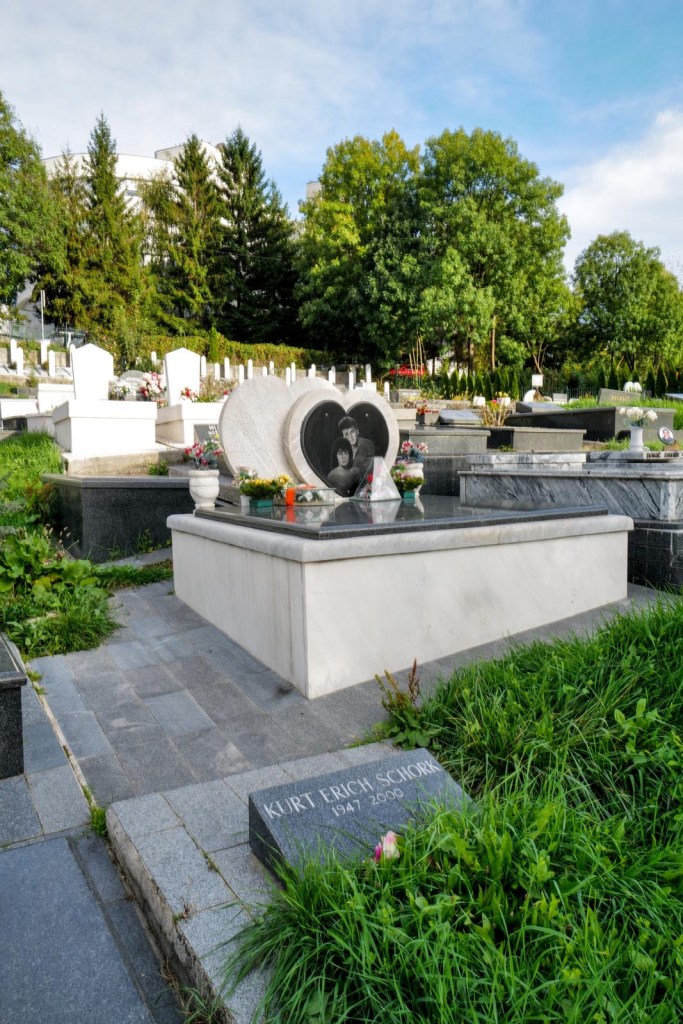
We walk up to Lion (Lev) Cemetery, 35 minutes away, to locate the shared grave of Bosco Brkic and Admira Ismic, along with the nearby grave of Kurt Schork, the Reuters journalist who wrote about them, and who was himself later killed on assignment during Sierra Leone’s civil war.
Monday 14 October
We decide to call today our day off from relentless sightseeing. We venture out only to walk up Logavina Street, the street on which Barbara Demick’s account of the Siege of Sarajevo focuses (I’ve just started it; it’s gripping). The bottom of the street is two minutes from our flat, the other side of the Old Town. We follow Logavina Street uphill. At the mosque and adjoining cemetery at the top of the street, we turn and head down a parallel street back to the Old Town. Despite the horrors that Logavina Street suffered in the war, the 30-minute loop stroll is a now a lovely neighbourhood stroll. I promise myself to start walking the loop regularly as I get to know the people who lived, and in some cases perhaps still live, on this street.
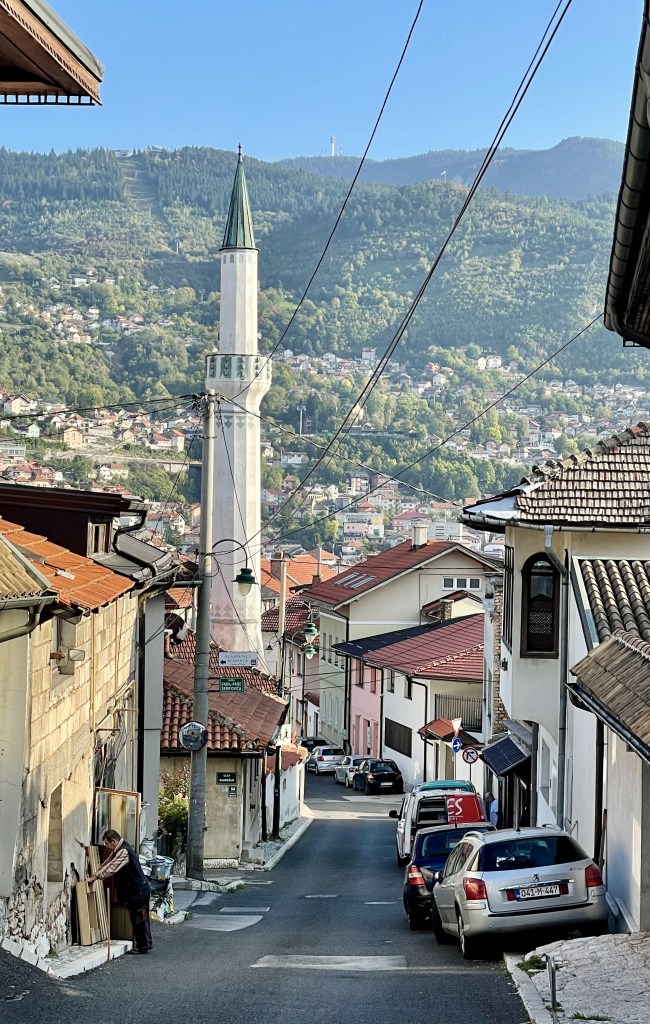
The photo below isn’t Logavina Street; it’s the parallel street that leads back down to the Old Town.
Tuesday 15 October
We do a walking tour of Sarajevo with an excellent late 20-something guide and eight others from Ghana, Germany, South Africa and China. Leaving the walking tour until our second week was a good idea: we’re now fairly familiar with the Old Town, which the tour was limited to, but not with its history. Plus, I had an opportunity to ask some questions that intrigued me: are Bosnian, Serbian and Croatian really distinct languages? (To a purist: yes; for all practical purposes, no.) And when did our guide first become aware that of the catastrophic war that he’d been born at the end of? (Hard to say. By degrees, and by osmosis.)
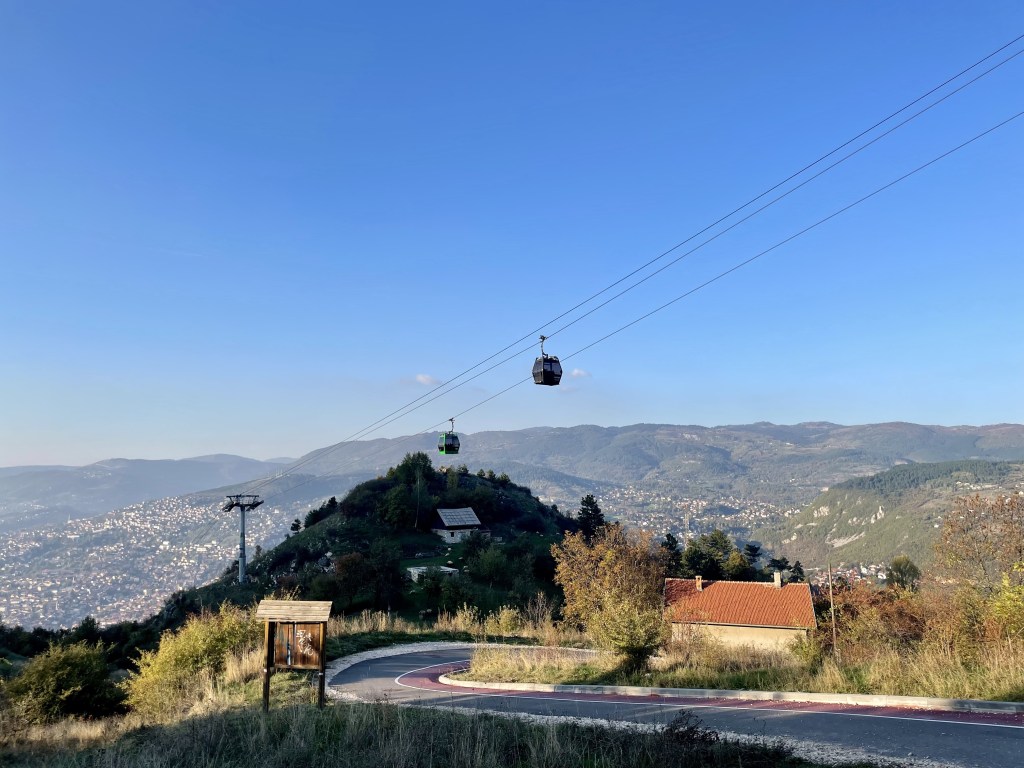
Wednesday 16 October
We plan to take the cable car up Mount Trebevic, but it’s closed for maintenance. We improvise a walk up through and back down from the suburb surrounding the lower cable car station, starting at another small war-related museum. Among many war-related paraphanalia, this one displays diaries written by teenagers cooped up in freezing basements for months on end. One is open at a page dated 18 February 1993, the day that I first got married. It’s sobering to reflect on how someone else not so far away from Istanbul was living an entirely parallel life to mine that winter. It also has a homemade generator rigged up to a bicycle dynamo: spin the pedal with your hand to power a radio.
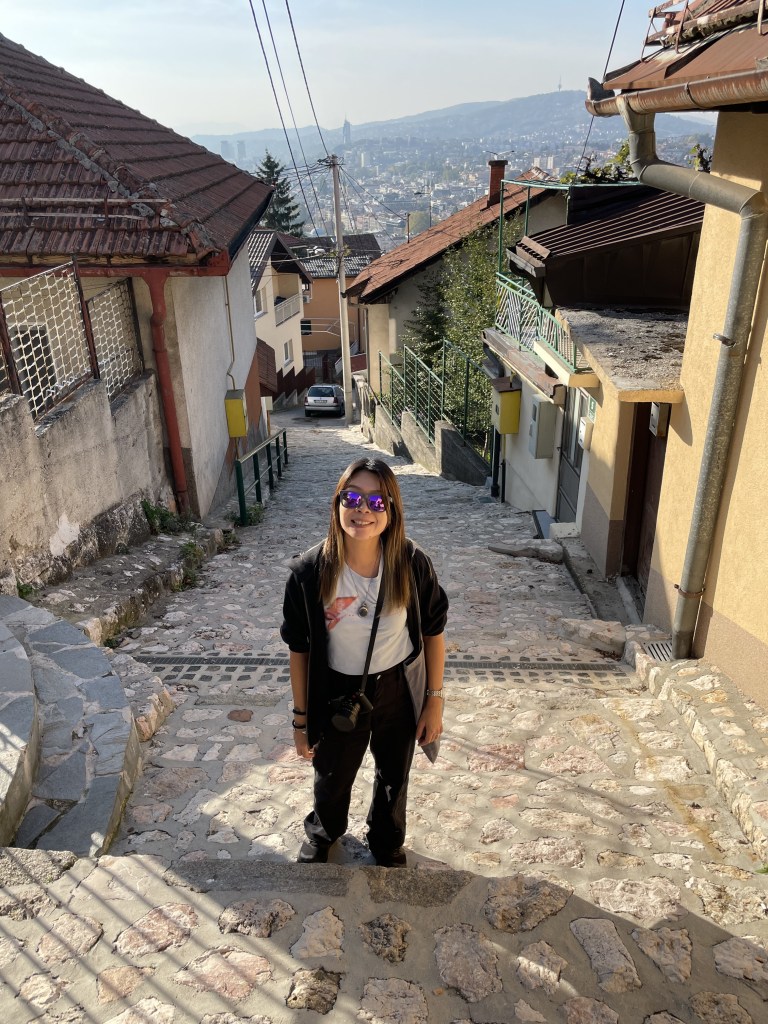
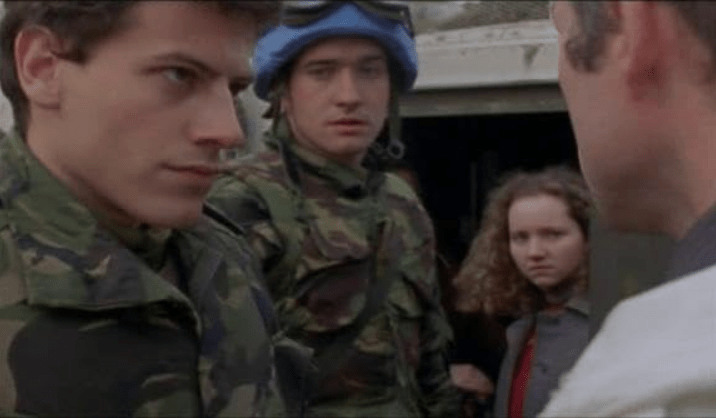
As if the museum wasn’t harrowing enough, we spend the evening watching a 1999 BBC made-for-TV film, ‘Warriors’. It follows an increasingly traumatised British UNPROFOR team through a six-month stint in rural Bosnia in the winter and spring of 1992-1993 at the height of the Serbian and Croatian attempts to ethnically cleanse territory through terror and murder. It’s nearly three hours long, but we’re enthralled right through to its final scenes of the soldiers back in the UK struggling to adjust to ordinary life after the horrors of what they’ve seen, and their frustration at not having been able to do more to prevent the attempted genocide of Bosniaks. It’s grim viewing, but we agree it’s one of the most visceral war films we’ve ever seen.
Thursday 17 October
Kathryn’s dad turns 70 today. Next year, I’ll be the age that he was when I first met him. Whoosh. Thank goodness I’m using my time well. At least, I think I am.
Today is grey and damp. I have a pile of editing work to get on with. I get on with it. We only leave the flat to grab some groceries.
The day’s high point is watching Pulp Fiction on the occasion of its 30th birthday. It’s as marvellous as ever: razor sharp dialogue, pitch black humour, and that ever-thrilling soundtrack.
Friday 18 October
Editing, editing, editing.
Saturday 19 October
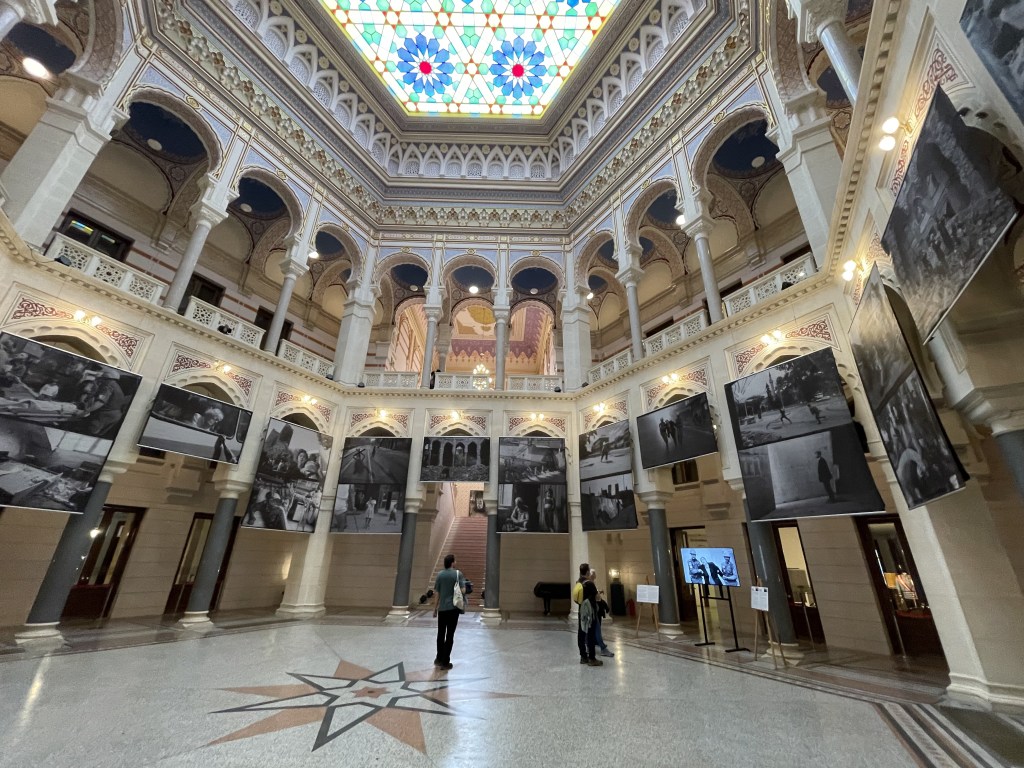
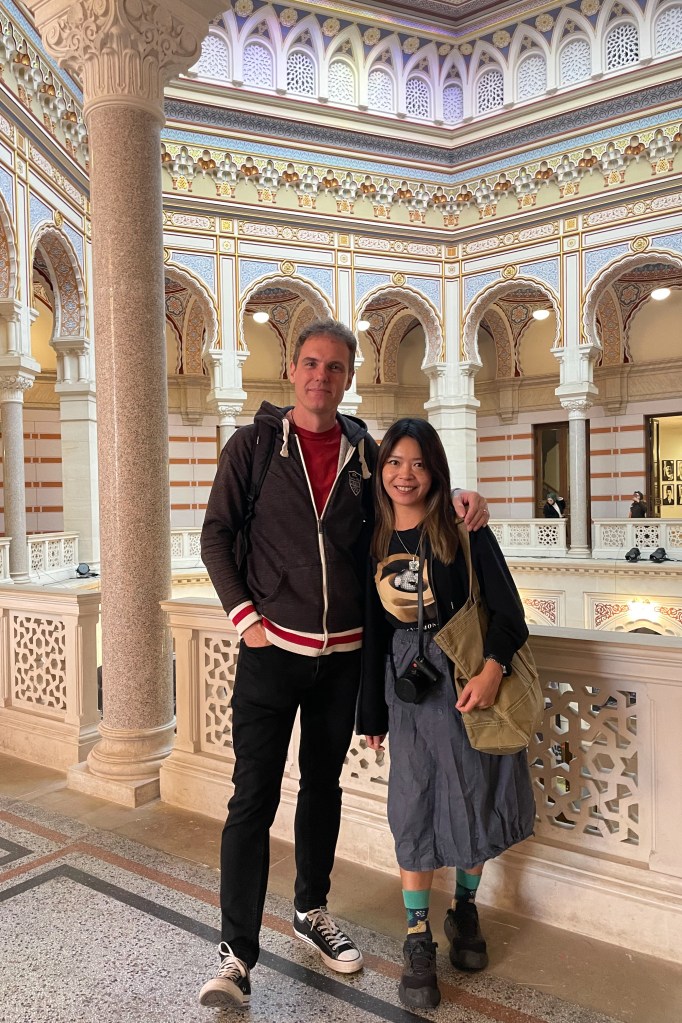
Editing, editing, editing – but today followed by a couple of hours exploring nearby City Hall. Perhaps the main point of interest is the building itself, completely rebuilt after the war. The ground-floor atrium has an exhibition of war photos taken by British photojournalist Paul Lowe, who it transpires was stabbed to death by his son a few days ago (the son had suffered from poor mental health for years). It’s unclear whether the exhibition was hastily assembled in honour of Paul Lowe’s life and work, or whether it was already showing.
There’s also a permanent exhibition explaining the work of the International Criminal Tribunal for the former Yugoslavia. It’s deeply disturbing, but it does point out that 170 people – mostly senior officials – were eventually convicted of war crimes. Then again, according to Barbara Demick’s book on the siege, the Bosnian-Serb army had 80,000 soldiers. Most, if not all, of those presumably committed war crimes by attacking civilians. It seems a very slim application of justice.
Sunday 20 October
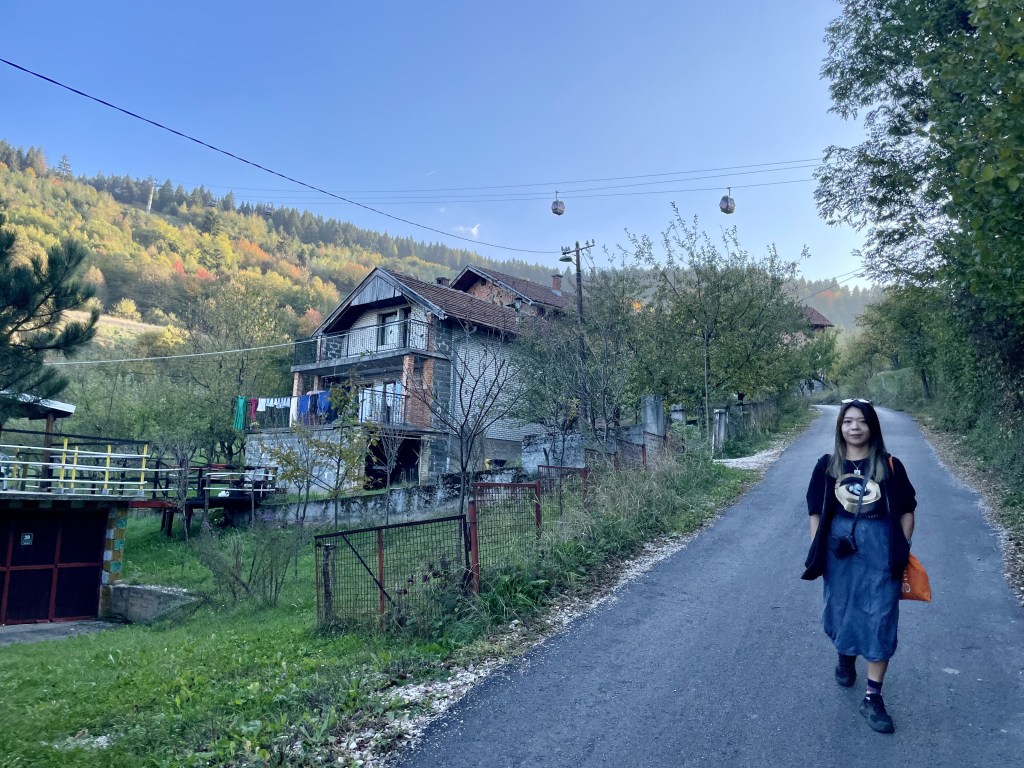
After a week in which I’ve worked much more than I would have liked, we finally get out properly and explore. On a glorious autumn afternoon, we take the cable car up Mount Trebevic, walk around the mountain, then down the 1984 Winter Olympics bobsled track, and on down the hillside on a quiet road that winds past rural smallholdings until we eventually end up back at City Hall. It’s a perfect afternoon.
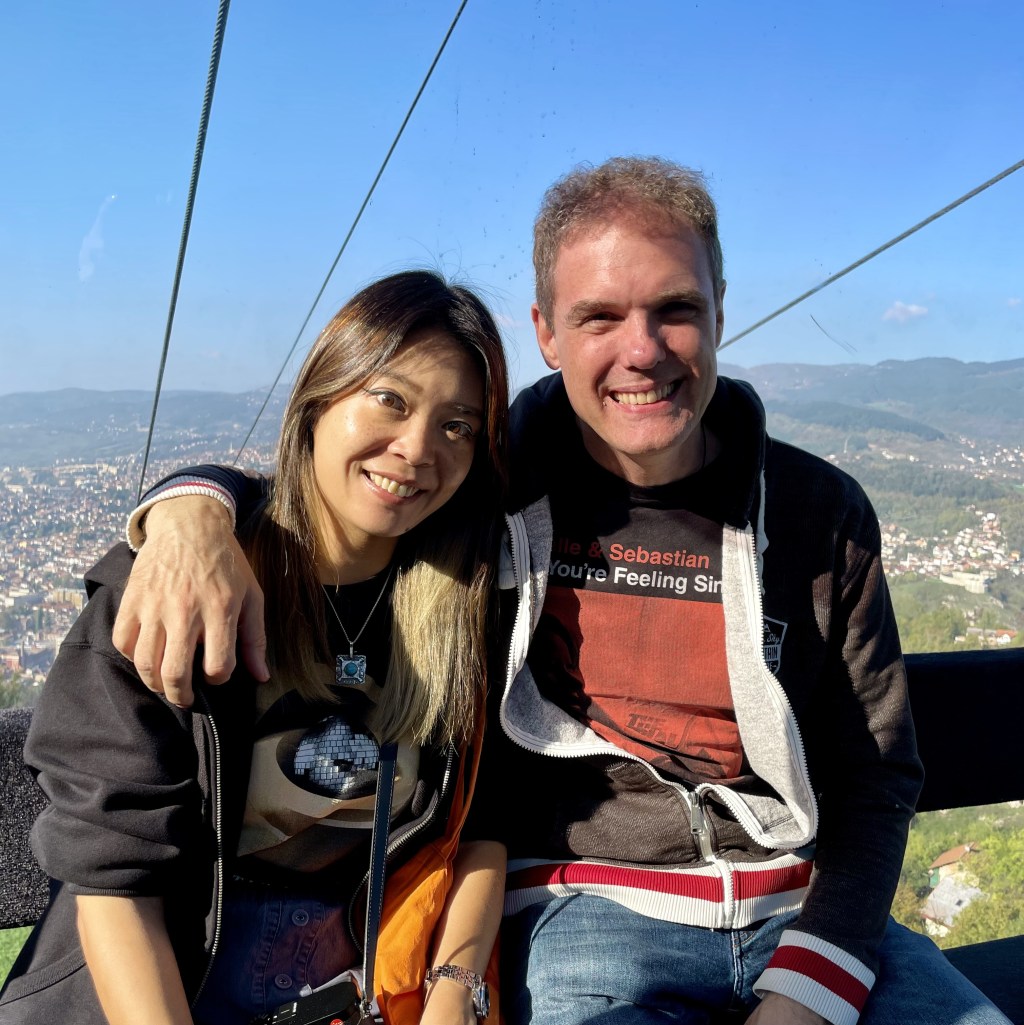
It starts busy: there’s a queue for the cable car, and around the top station everyone seems to making the most of the perfect weather. The first half of our clockwise loop of Mount Trebevic isn’t entirely unlike walking Lugard Road around the Peak in Hong Kong, but much quieter. The back half follows a road leading to a hilltop carpark, which isn’t really what we had in mind. But before long we’re able to cut back through the forest to where we started (that Wikilocs app is pulling its weight today). Back where we started, we head for the bobsled track. This turns out to exceed my expectations. It’s longer and feels more remote than I’d expected. But most of all, as we walk it, I can begin to imagine just how exhilarating/terrifying it must have been to shoot down it at 150kph.
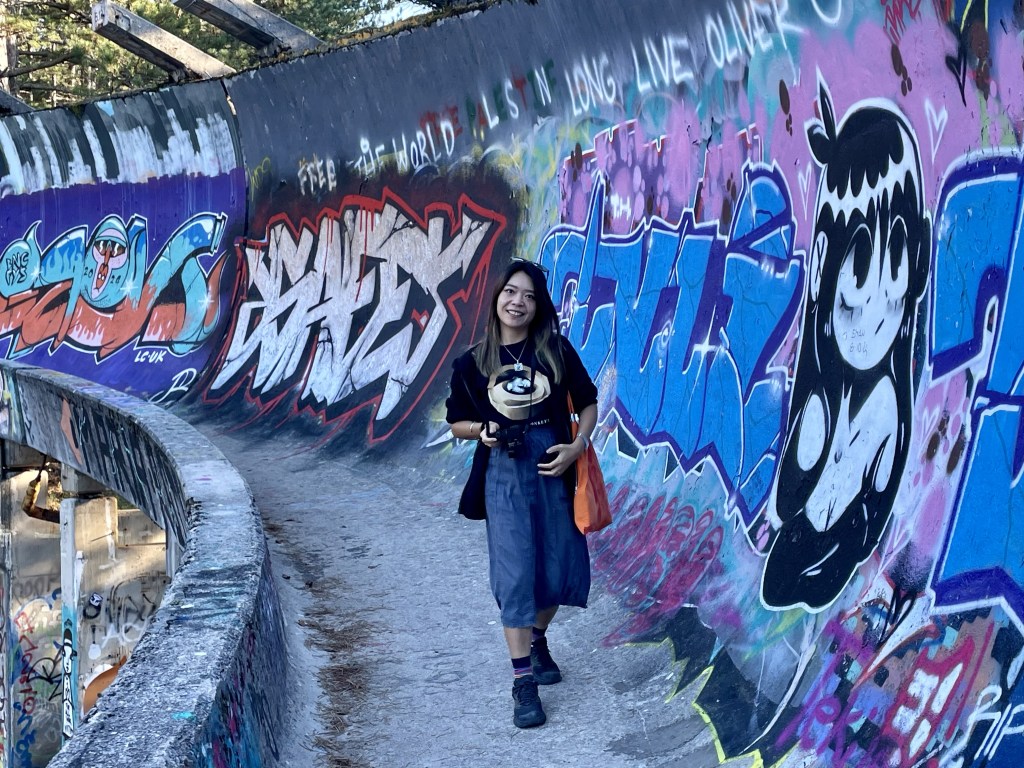
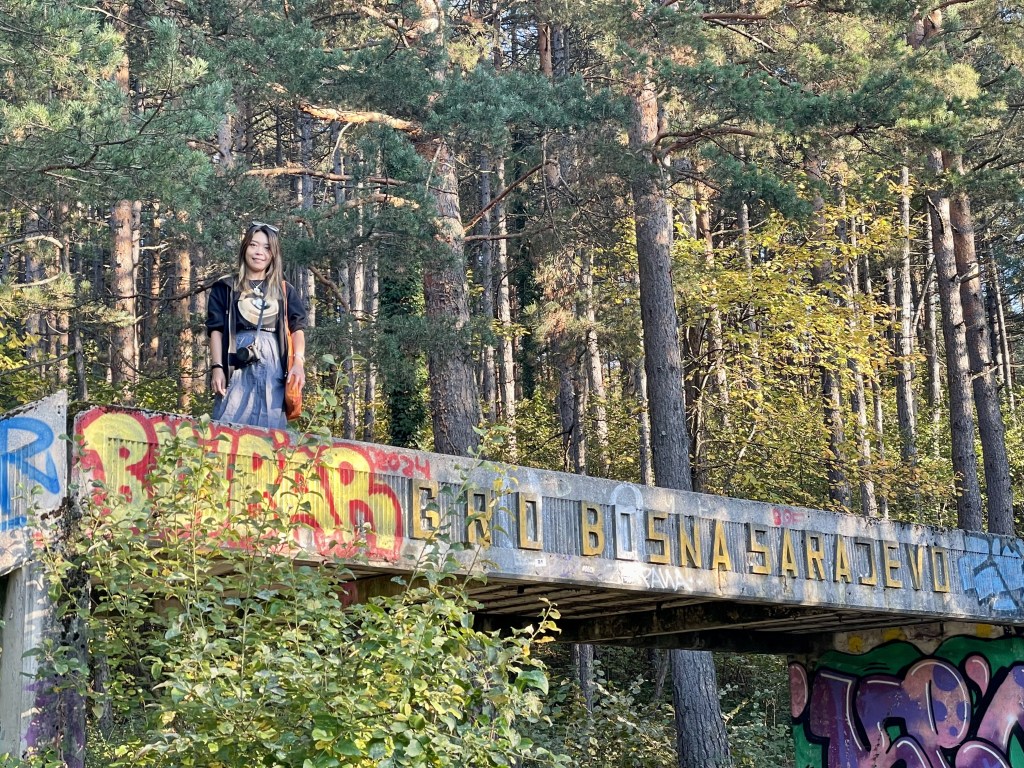
The bobsled track finally comes to an end. There’s no one else around, even on what started as a busy Sunday afternoon further up the mountain. We pick up a paved pedestrian/bike path that continues to wind down the hillside until we eventually reach the first scattered hillside houses that announce the furthest reaches of Sarajevo, although here we could be in the middle of rural Bosnia. Gradually, the smallholdings give way to suburban homes, and eventually we reach City Hall just as the sun sets.
I really needed that. I’m really enjoying Sarajevo, but after a week of editing, editing and more editing, I desperately needed to get out into nature. Perfect.
Monday 21 October
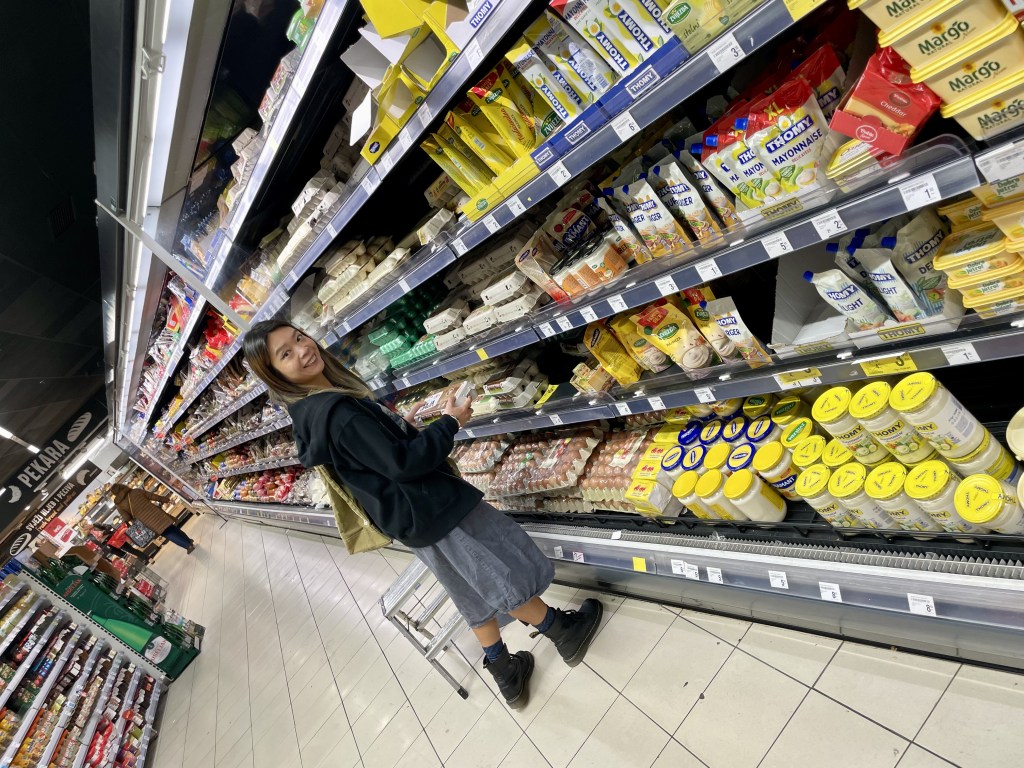
We walked almost 10km yesterday: nothing special by our past days of hiking the hillsides of Hong Kong, but enough to leave us with rather sore legs this morning. Despite more editing work coming in from PolyU, I award myself a day off. Apart from a spot of grocery shopping, today is a kicking back day.
Tuesday 22 October
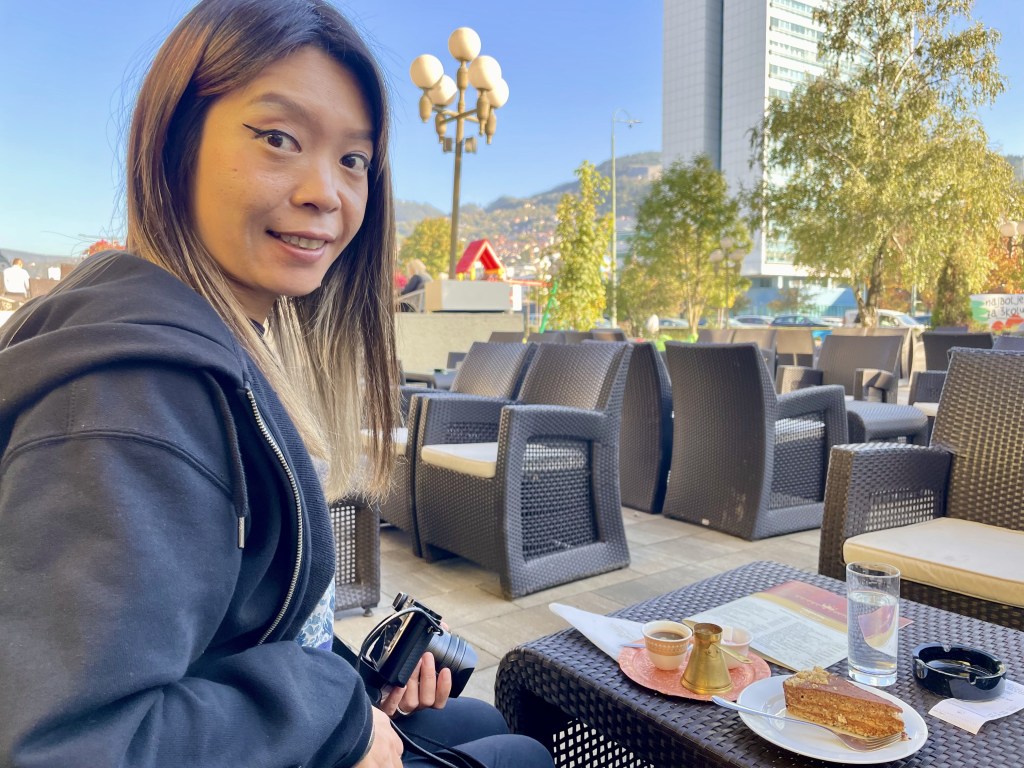
In the afternoon, we walk down to the former Holiday Inn – now the Hotel Holiday – on what was, during the war, Snipers’ Alley, and the base of the international press. Taking a wrong turn, we first end up in a high-end supermarket, Sarajevo’s equivalent of CitySuper, and come away with some nice chocolate and beer. The hotel entrance is actually next door and once we’re inside, the lobby is immediately recognisable from the various footage we’ve seen: it’s one of those hotels where the rooms open onto the atrium. It’s impressive, but there’s no cafe with a view of the atrium, so we wander through the hotel and find a patio cafe overlooking ‘Snipers’ Alley’. We have coffee and (very disappointing) cake and soak up the autumn sun on the hills above the city.
Wednesday 23 October
A quiet day. We head out late afternoon to visit the nearby Museum of Crimes Against Humanity and Genocide. It’s as sad and wretched as its name suggests, but necessary to see. Inevitably, there’s some overlap between the museums we’ve visited and the stories they tell. But we feel a duty to see each one.
In the evening, we return for a third visit to the cozy local restaurant that we first stumbled across on our first night in Sarajevo. They seem to recognise us in there now, as does the lady whose stall we’ve taken to visiting each time we head to the main fruit and veg market.
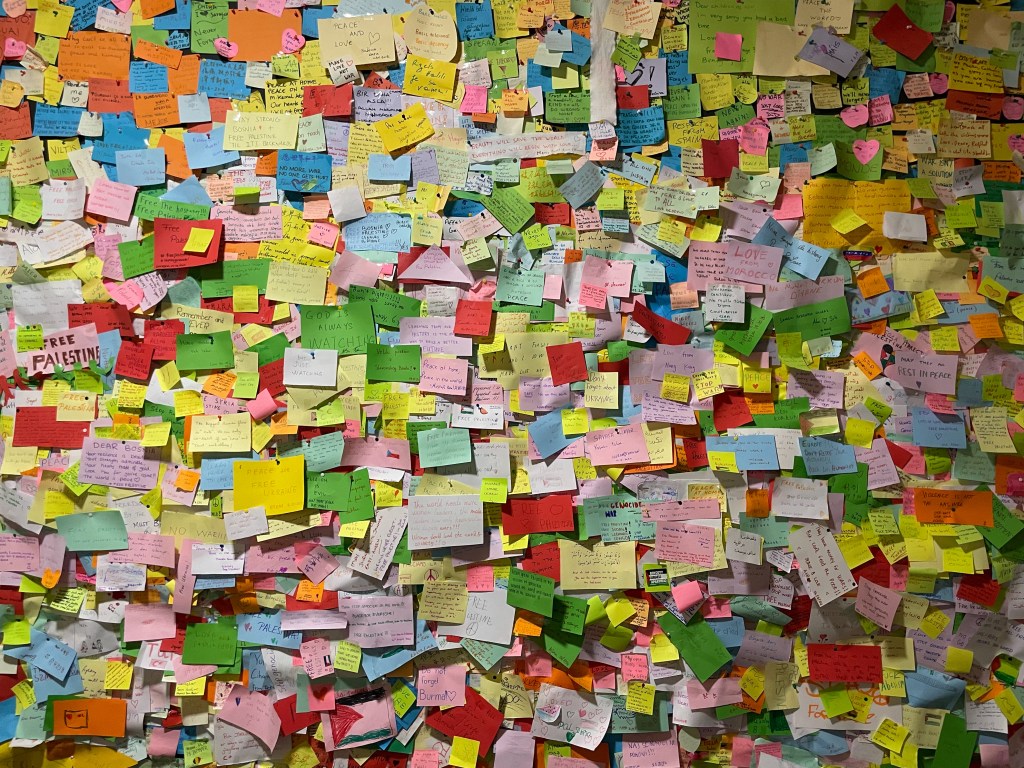
Thursday 24 November
We join a Fall of Yugoslavia/Siege of Sarajevo tour. We haven’t noticed many British tourists here in Sarajevo, but today we’re joined by two British couples and a nomadic Palestinian gentlemen whose family are in Syria, and who himself seems to divide his time between Hungary and Spain. Our guide, Ago, starts rather robotic, but improves quickly as we pepper him with questions, forcing him to veer away from what appears to be a memorised script and ad lib instead. He was born in 1990 and his earliest memories are from the war years.
Admirably, Ago freely concedes that, yes, in the Bosnian War – as in all wars – all sides committed atrocities. He cites the horrific story of a three-year old Croatian girl murdered in her mother’s arms by a Bosnian soldier. “There’s no excuse,” he concedes. In the case of the Bosnian army, one unintended consequence of the wartime arms embargo was apparently that guns were especially common among violent criminals, who already owned them when the war broke out. Sadly, violent thugs are prone to committing atrocities no matter which side they’re fighting on. Ago does, however, make the fair point that while atrocities were committed on all sides, only in the Serbian army were they ordered from high up the chain of command.
Saturday 2 November
It’s over a week since I’ve written anything here.
This is partly due to us coming towards the end of our time in Sarajevo – the thrill of the new has wound down into a general agreeableness with our current surroundings. But it’s largely because I’ve had so much work going on. It’s frustrating because I don’t really need as much work as I have. But in the interests of working relationships, I can’t easily say yes to some requests and no to others. This is just how it is right now.
Last weekend, I churned out a 20-minute, 2500-word speech; this weekend I’m working on an 8-minute, 1000-word speech. In between, I’ve had more than a dozen valedictory speeches to edit, as well as several other short speeches for the Dean to deliver at graduations and doctoral residential workshops. I get up, I work, and mid-afternoon we generally go somewhere. It’s been like this more or less the whole month we’ve spent in Sarajevo.
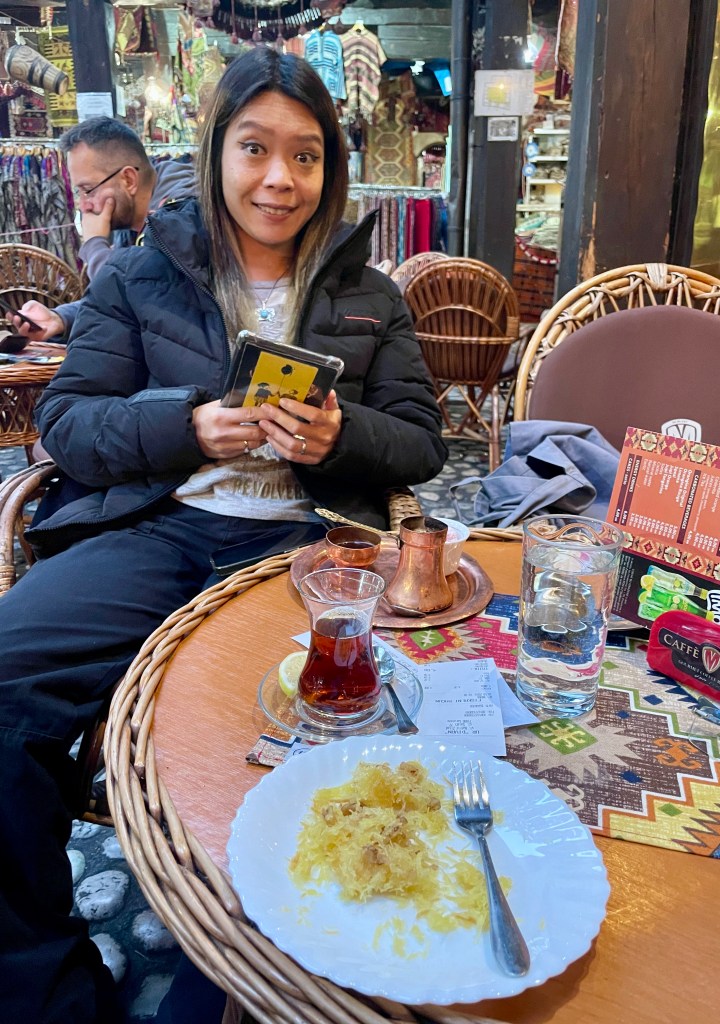
Autumn is well underway. Every day or two, I sweep up the leaves in the courtyard. I probably haven’t swept fallen leaves since I was a kid. The mornings are foggy. The fog lifts by mid-morning to reveal another clear blue sky. The clocks have gone back. It gets dark early now, and the chill sets in fast. There’s a comforting scent of wood stoves in the air. Some of my favourite moments have been sitting at the cafe at the old caravansaray in the Old Town, sipping tea, eating kadayif, and reading Barbara Demick’s book on the Bosnian War.
We’ve ventured out to a few remaining locations on our to-do lists: the War Childhood Museum on Logavina Street – the subject of Barbara Demick’s book – was a deeply personal collection of just a hundred or so objects and the story behind each one; the Siege of Sarajevo Museum was based on the same idea of objects and associated personal recollections, but told so many sad and wretched stories that they ultimately all bled into each other in one enormous canvas of human awfulness; the Jewish Museum was housed in a beautiful old synagogue, and a reminder that ethnic cleansing has come before to these parts; while the National Gallery had a decent collection of landscapes and rural scenes, but its two exhibitions of more contemporary art were underwhelming.
Sunday 3 November
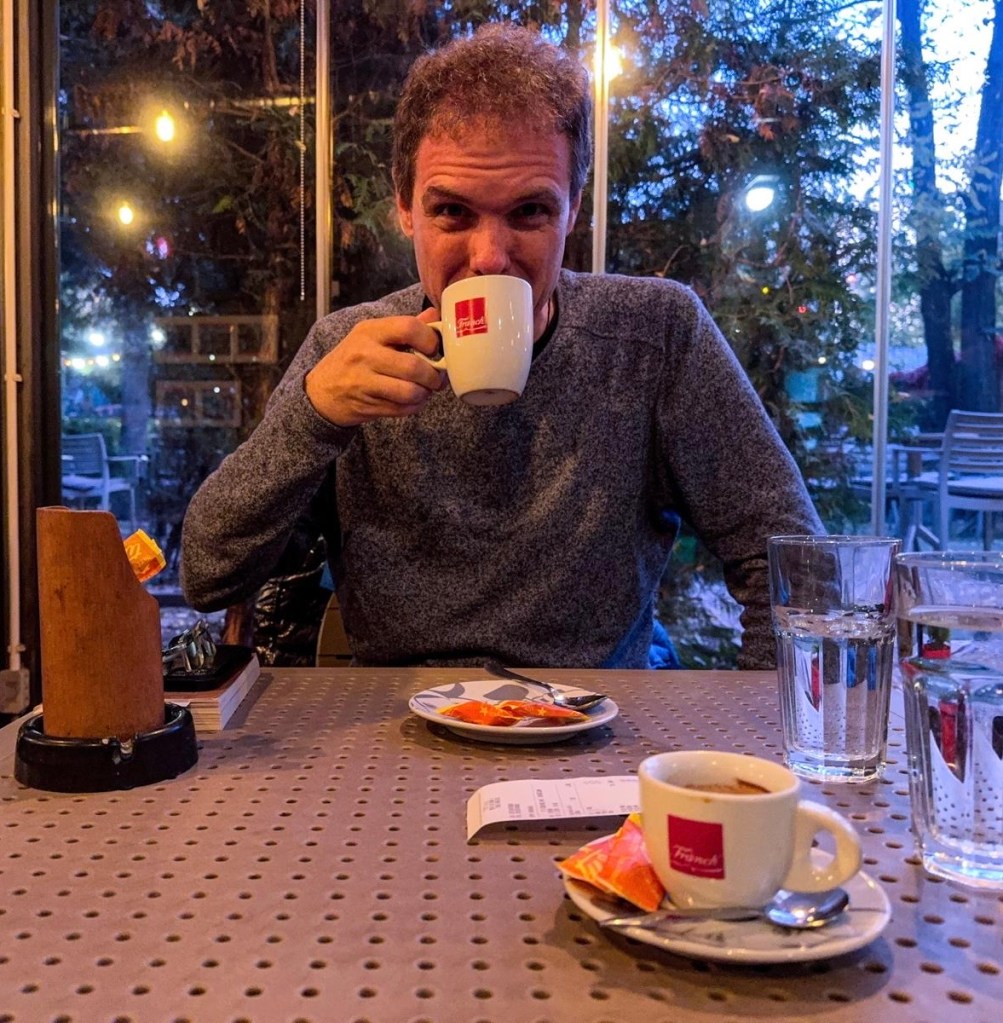
Still working hard, but we head out mid-afternoon to walk to a Tito-themed cafe near the river. It’s opposite Grbanica, the Sarajevo suburb held by the Serbs in the war, which brought the front line right down to the river. It’s dusk by the time we arrive at the cafe, which turns out to be underwhelming, and smoky. When Kathryn asks for a Bosnian coffee, the waiter seems somewhat taken aback and offers her an americano. I have a feeling that this is a Serb cafe. It’s dark and getting chilly by the time we walk back up the river to our end of town.
Monday 4 November
It’s our final day in Sarajevo. It’s a familiar feeling: I’ll be rather sad to leave, knowing that I’m unlikely to ever come back, but I’m also ready to move on. It’s time for new adventures.
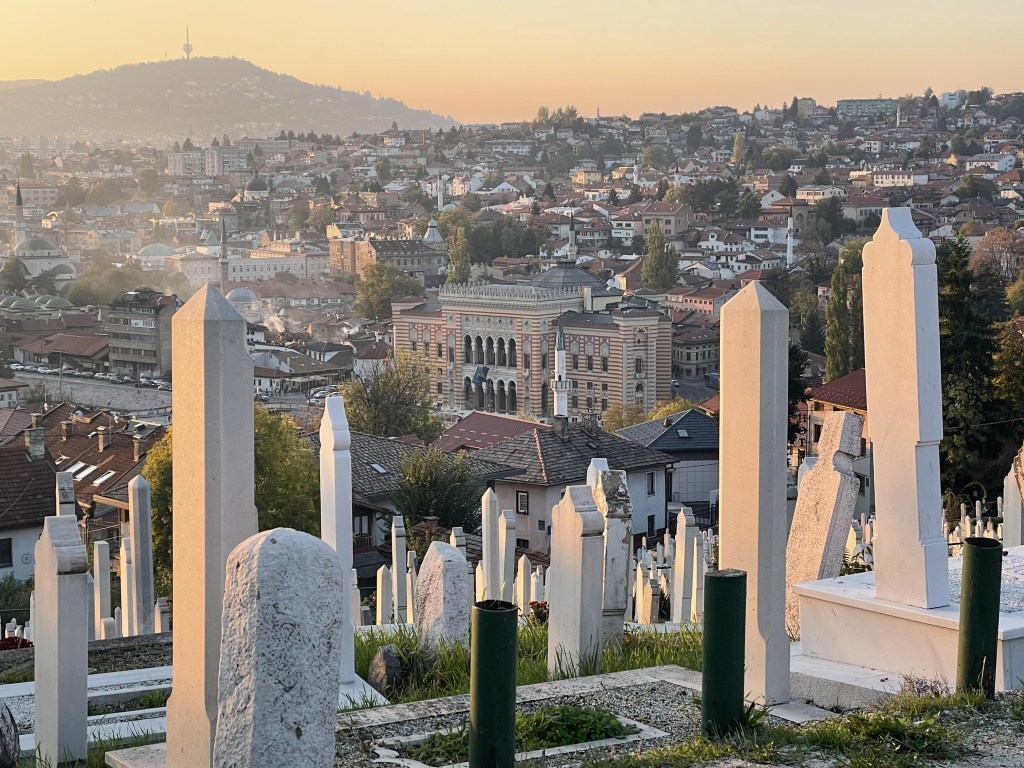
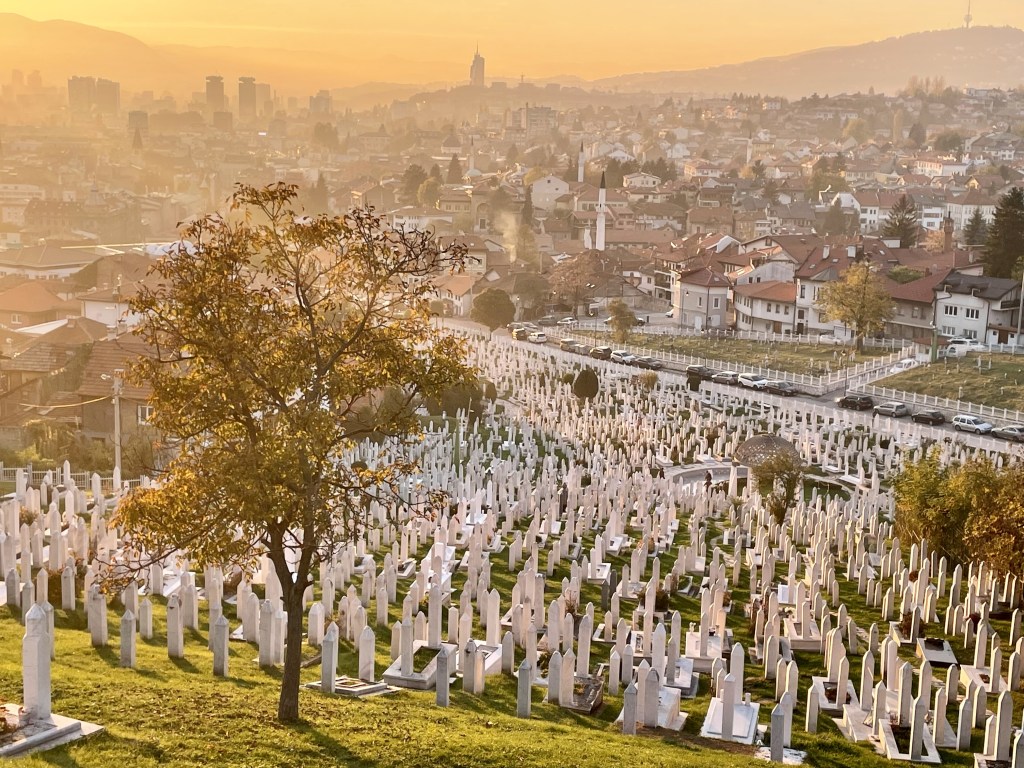
It’s yet another glorious autumn day. Having deposited our recyclables in the recycling bins near the bottom of the cemetery in the photo, we check the sun and decide to walk up to the Yellow Fortress to catch our final Sarajevo sunset. From there, we head to Caffe Melik in the courtyard of the old caravansaray one final time. Goodbye Sarajevo. It’s been a pleasure and an education.
Tuesday 5 November
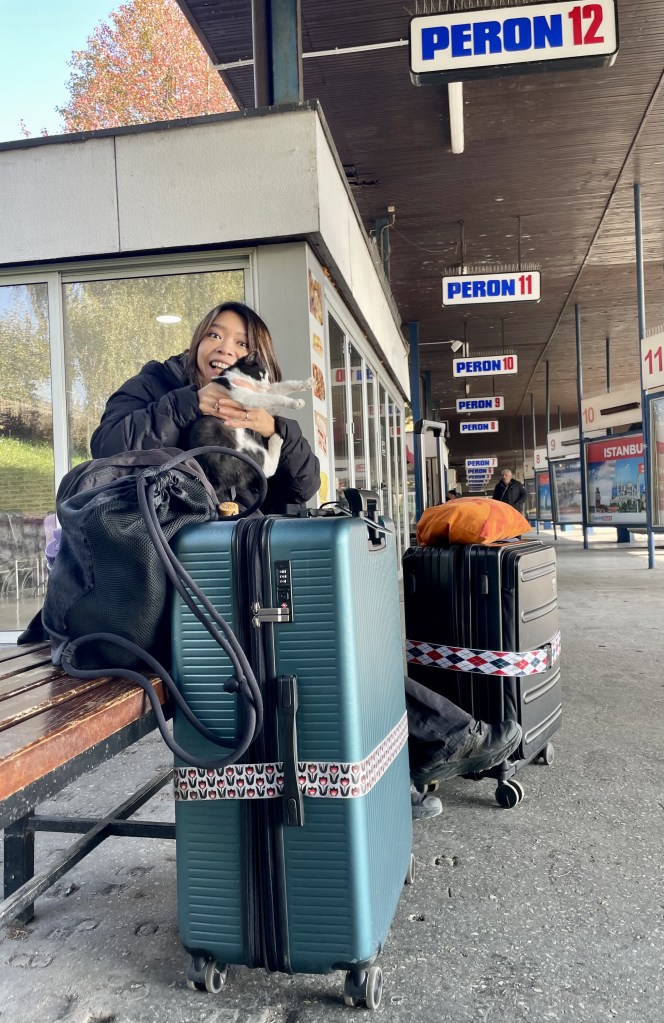
We’re off to Mostar…


Leave a Reply