Of all the casbahs in all the world…! European style planning meets Moroccan charm in the city on the Atantic coast.
“I reminded myself not to be deceived by Casablanca. It was an enormous thriving city, with the latest European fashions, fast cars, and chic restaurants. But all that was froth on the surface. The real Casablanca was a place of die-hard tradition, in which ancient Moroccan customs endured.” – Tahir Shah – The Caliph’s House
Monday 22 September
I was apprehensive about everything Morocco. We’ve been here less than a week, but so far everything has been a breeze.
Today’s journey from door to door couldn’t have been simpler. OK, we made the first stage easier by asking the staff at our riad to book our ride to Marrakesh railway station (at least twice the rate we would have paid hailing one on the street). But it’s money well spent—it saves us the stress of finding our own taxi and clumsily negotiating a reasonable fare.
Marrakesh station is an architectural gem. Unfortunately, we’ve no time to give it our full attention as we arrive to discover from the departures board that our train is scheduled to leave fifteen minutes early. This makes no sense at all, but it’s a darn sight more welcome than the will-it-run-won’t-it run roulette wheel of the British train network.
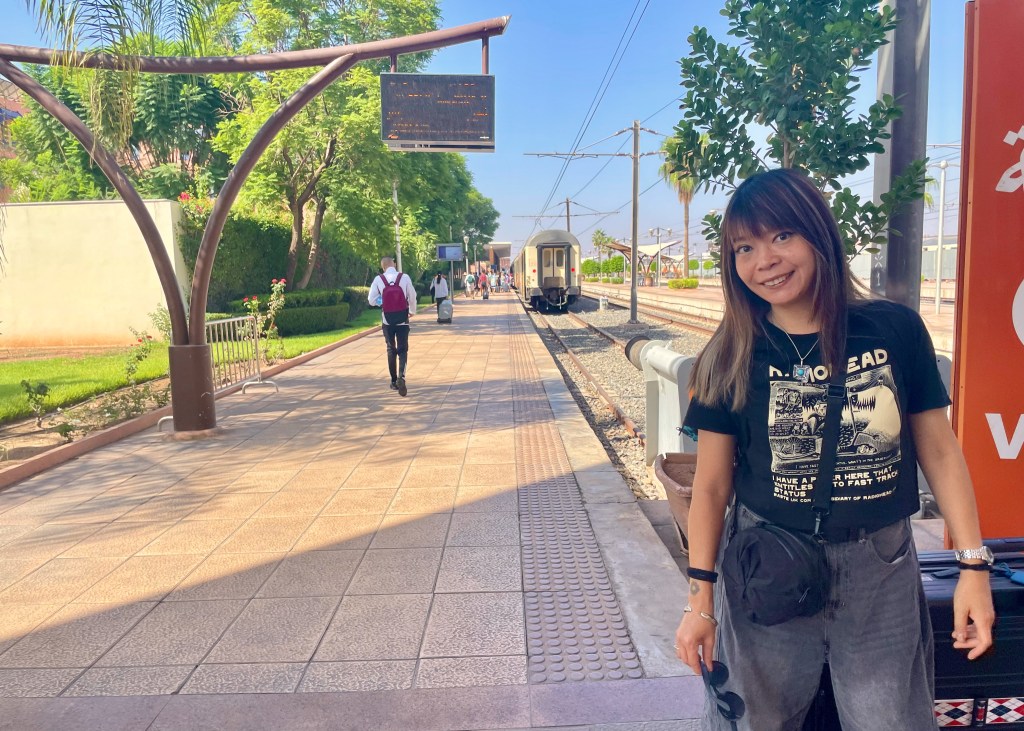
Our carriage of eight is full. We’ve seen very few East Asian tourists in Morocco, so we’re rather surprised to find two of the seats occupied by two young Japanese men. Both of us spend much of the next two and a half hours sorting and editing our overflowing photo folders, only occasionally peering out of the windows at the dry Morocco countryside.
Casablanca Voyageurs railway station is as handsome and grand as Marrakesh station. Outside, I’m expecting taxi hustle 101, so I’m suspicious of the driver who accosts us asking, in English, if we need a taxi. “Of course, sir!”, he replies when I ask if he has a meter. He doesn’t, of course. But when we reach his car, he asks for a not entirely unreasonable 100 dirhams (HKD85). It’s the rate I was prepared to pay anyway, so we load up and hop in. He’s a lovely chap from a village in the Atlas Mountains, who moved to Casablanca fifteen years ago. He tells us that his kids don’t study French at school, only English. (In our first week in Morocco, we’ve found that English is much more widely spoken than we anticipated—at least in Marrakesh.)
We arrive at the building housing our Airbnb. As our taxi driver pulls away, the lady in the car behind him lowers her window. “Are you sure you’ve got all your bags?”, she asks in English. She seems to think that the true gent driving the taxi is likely a lowlife scoundrel who would speed off with our bags without a second thought. Still, she’s well-intentioned. “Yes! Don’t worry! We have them all!”, I assure her.
There’s some initial confusion at the entrance to the building. An old-timer standing near the entrance assumes we’re at the wrong address and must be looking for a hotel and, probably with good intentions, starts walking off with K’s suitcase, beckoning us to follow. I assure him that we’re at the right building and firmly but politely snatch the suitcase back. I was expecting a lockbox at the entrance to the building. There isn’t one, but the door is open, so we head straight in and take the lift up to the second floor, where we find the lockbox outside the flat and let ourselves in.
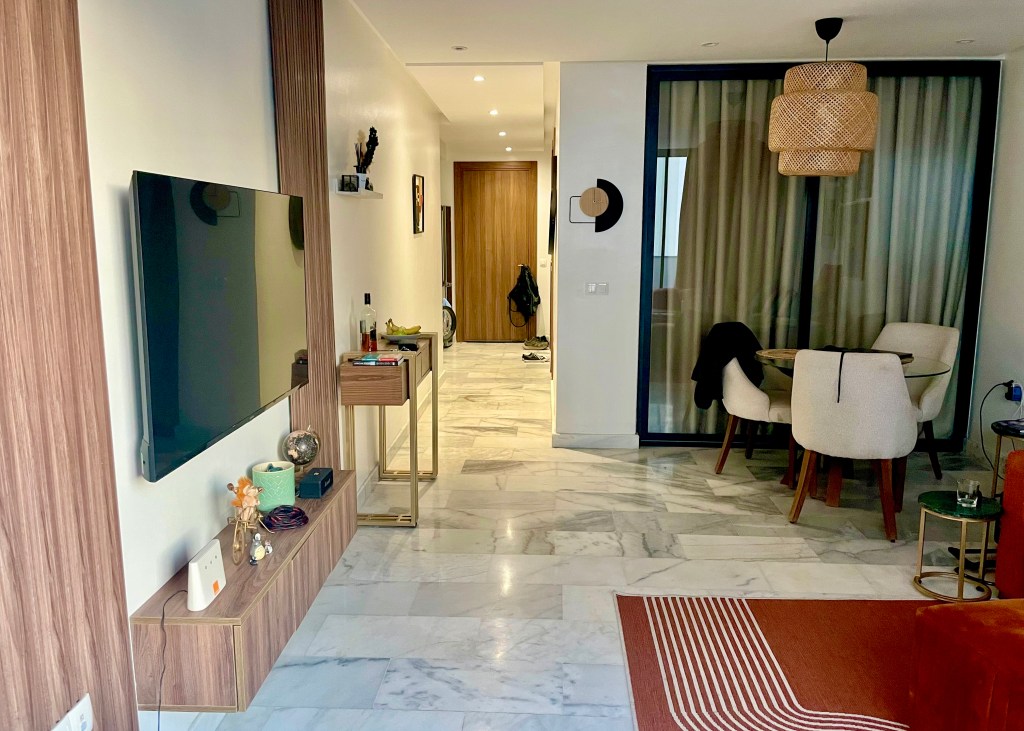
It’s so good to have our own flat again. It’s nearly two weeks since we left our housesit in Macclesfield, and seven since we left Gdańsk. Finally, we’re stationary for two whole weeks, which suits us just fine. We unpack and head off for groceries. Casablanca—at least this part of it—looks stylish and modern, but we’ll leave exploring for another day.
Before we turn in for the night, K remarks that we can’t hear the call to prayer from our new flat. She’s right. This is a very different vibe to Marrakesh.
Tuesday 23 September
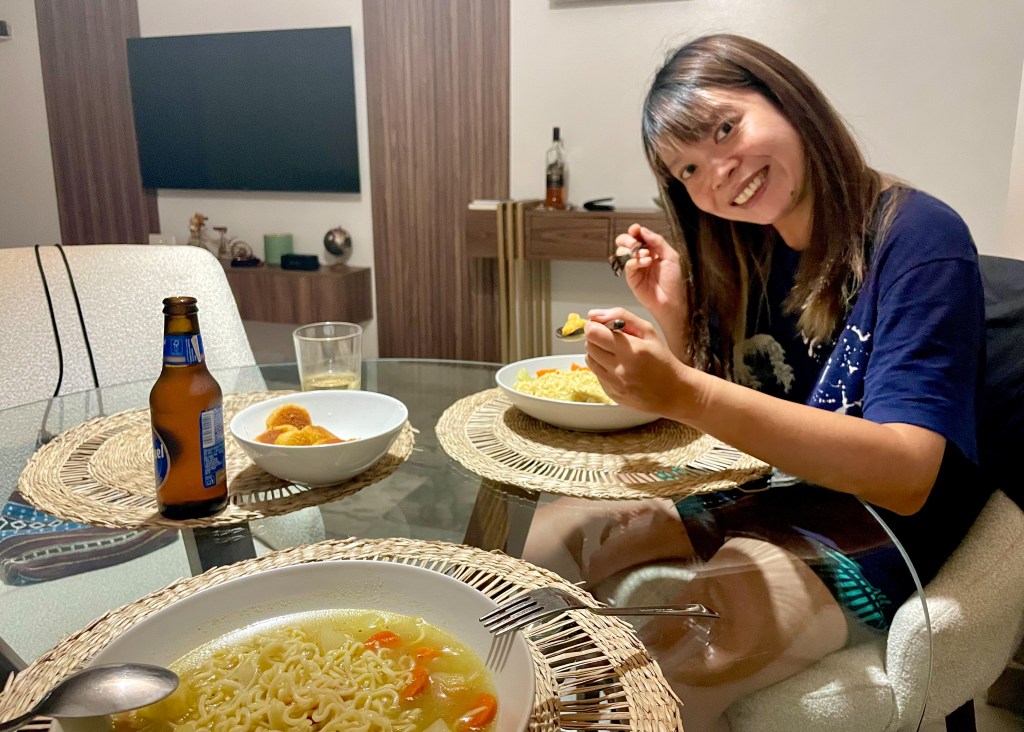
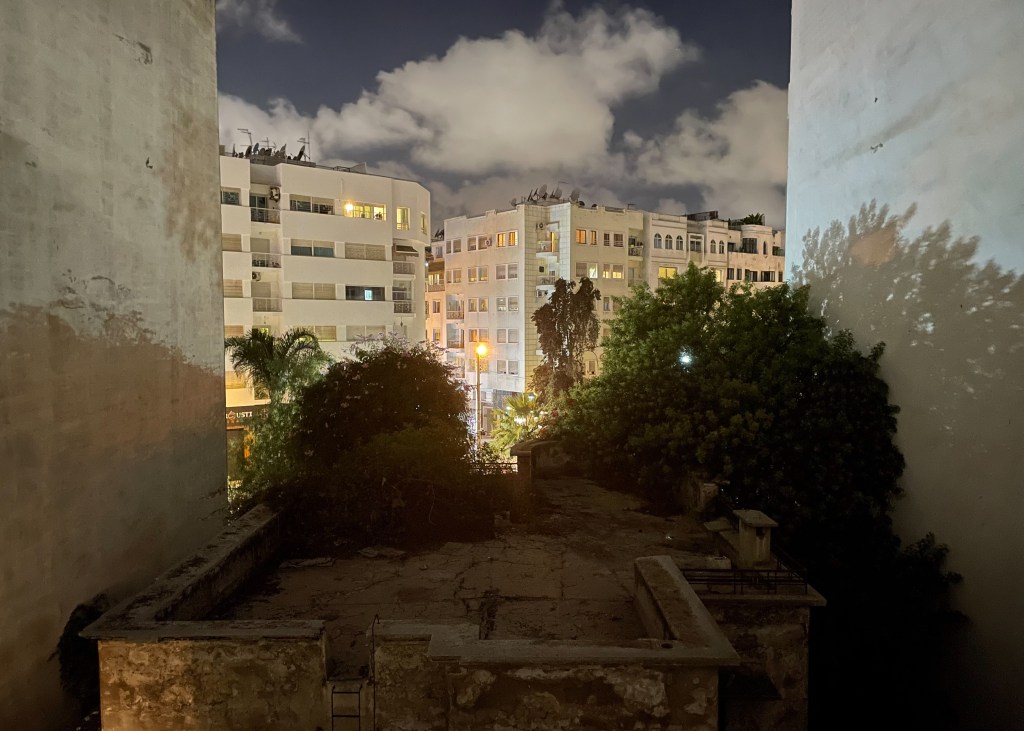
Normal life, or at least what we consider normal life, resumes. Work in the morning, a trip to the supermarket in the afternoon. And that’s about it. Casablanca’s a big place and there’s much to explore. But after a relentlessly busy two weeks since leaving Macclesfield, today we’re content to do no more than the necessary. I don’t even take a photo today. Instead, here’s one I took yesterday of our view, looking out over a once grand but now derelict bougainvillea-strangled villa at sunset:

Wednesday 24 September
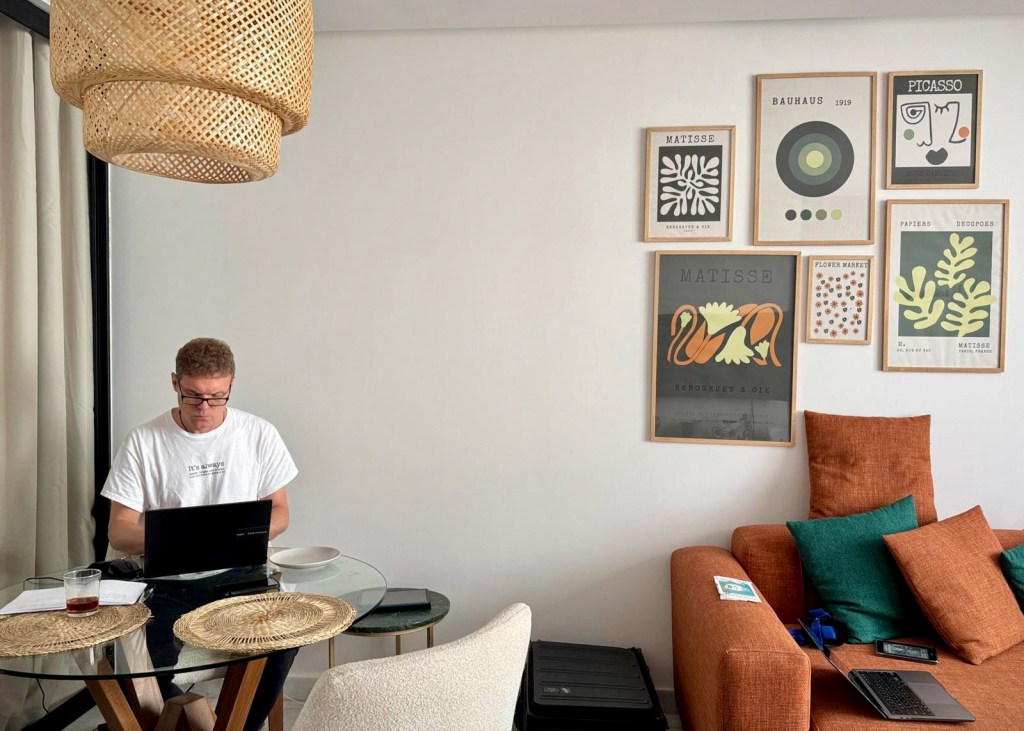
It’s time to start exploring Casablanca. I’m busy with work until after lunch. By the time I’ve sat down to study some French, it’s gone four o’clock before we leave the flat. But that’s fine. I’ve read that, despite the city’s size, the centre of Casablanca is reasonably walkable.
It is. The Atlantic coast isn’t as far away as it looks on a map. We pause a while on the waterfront gazing at the Atlantic waves churning in—it’s hard to imagine that we were riding camels in the desert just a few days ago. Casablanca’s architectual highlight, the Hassan II Mosque, stands at the eastern end of bay. It’s imposing and beautiful, but it’s too late in the day to visit. (And besides, I have reservations about Morocco forbidding non-Muslims entry to all but two mosques in the country. We’re only welcome at this one if we cough up a sizeable entrance fee.)
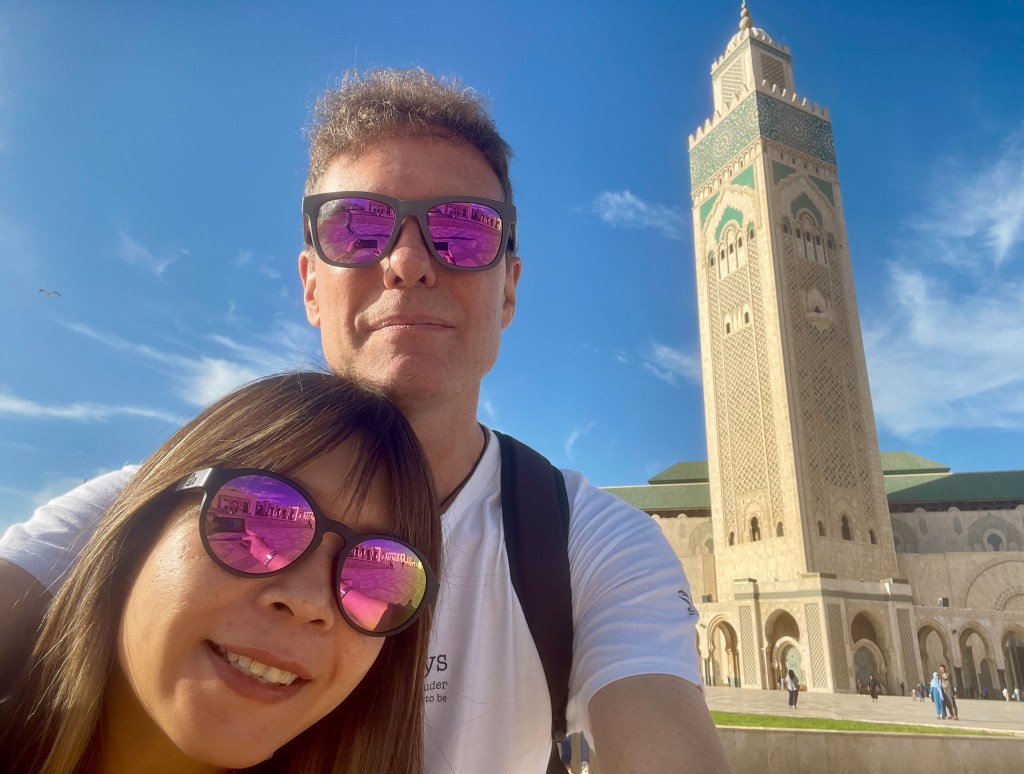
We continue following the coast path, but it seems we’ve strayed off the chic pedestrian walkway and onto a less salubrious path below it. Above us, well-dressed couples sit dangling their legs over the edge of the walkway, but down here the path becomes ever more scruffy the further we drift from the mosque. Fishermen aside, it seems mostly frequented by shifty-looking types. Or perhaps I’m being over-cautious. We quicken our pace and eventually dart through a hole in a fence opposite a large shopping mall, back into our comfort zone.
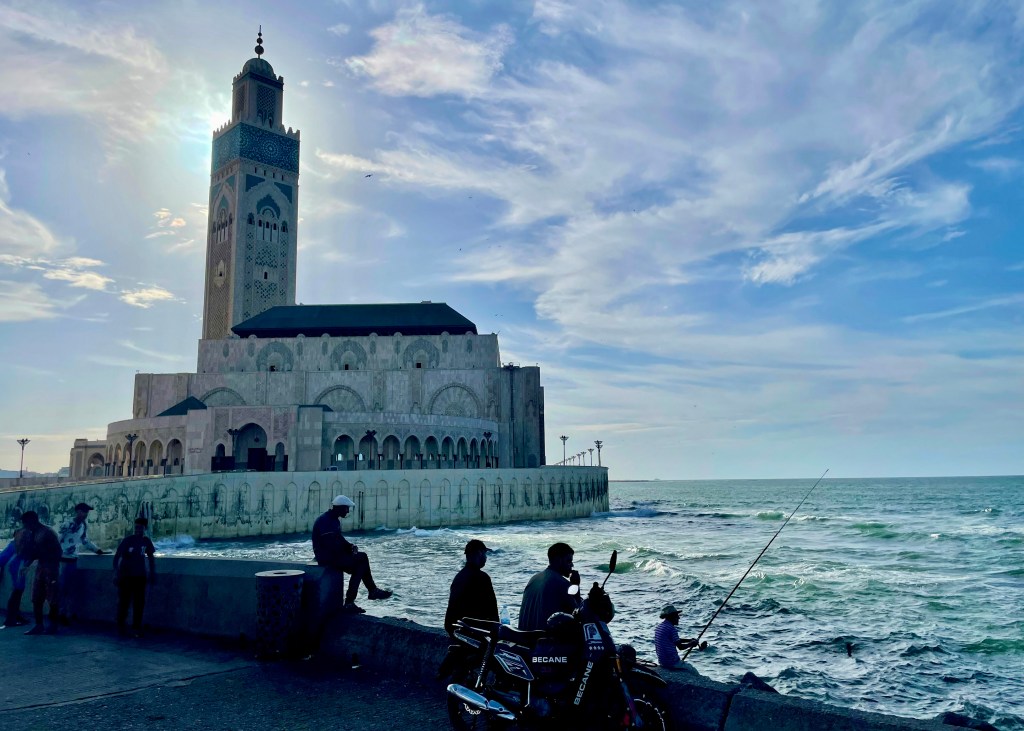
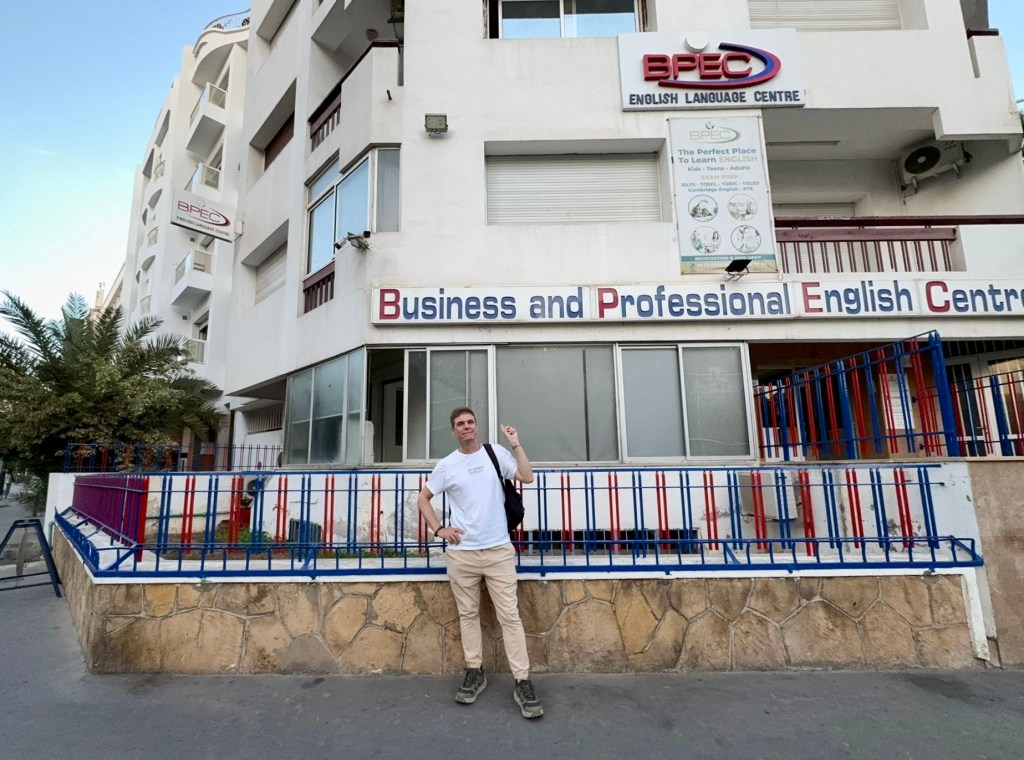
After a coffee and a pain au chocolat, we continue our loop of downtown Casablanca, past the oppotunistically-named Rick’s Cafe (no, it was filmed entirely in Hollywood) and through the bustling market hugging the medina wall. Eventually, we emerge back into the new town and pass the Business and Professional English Centre:
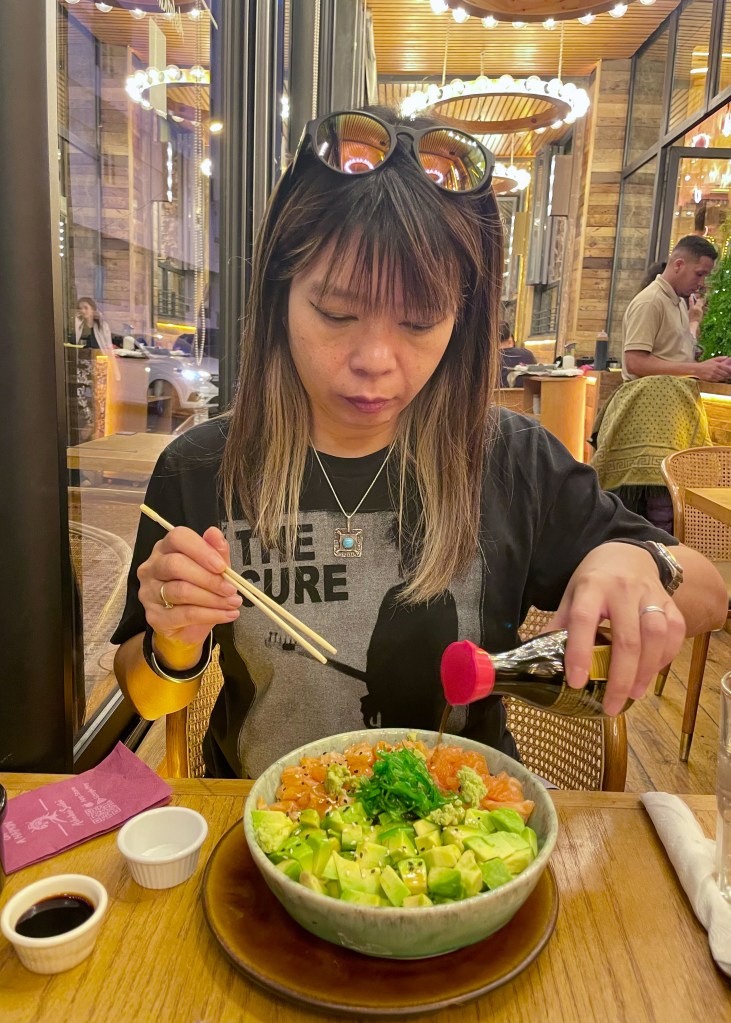
We’re aiming for an Asian street food restaurant that we spotted earlier not far from our flat. It’s our first meal out in Casablanca, and it’s excellent, as well as very affordable (there’s no alcohol to jack the price up, of course). It’s very much a neighbourhood restaurant—we appear to be the only tourists tonight and manage to navigate in French only.
Back at the flat, it’s time to watch Casablanca. I downloaded it earlier and it’s good to go. Although it was filmed entirely in Hollywood, there’s a definite thrill to watching the film unfold in the city where it’s set.
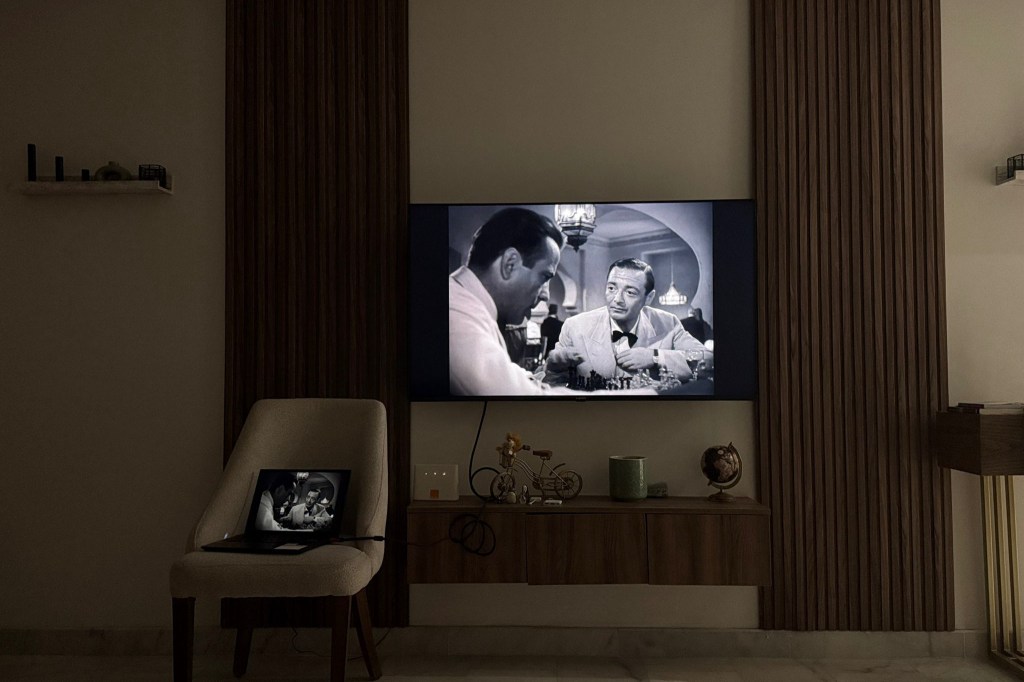
Thursday 25 September
I’m busy working so, for a second day, we only step outside towards late afternoon, this time heading for the nearby Arab League Park. As a destination, it’s only mildly diverting—rather too manicured for our tastes. But in these first days in Casablanca, the greatest appeal for both of us lies simply in exploring the neighbourhood—its buildings, its shops, cafes and restaurants, its parks, and its mix of people.
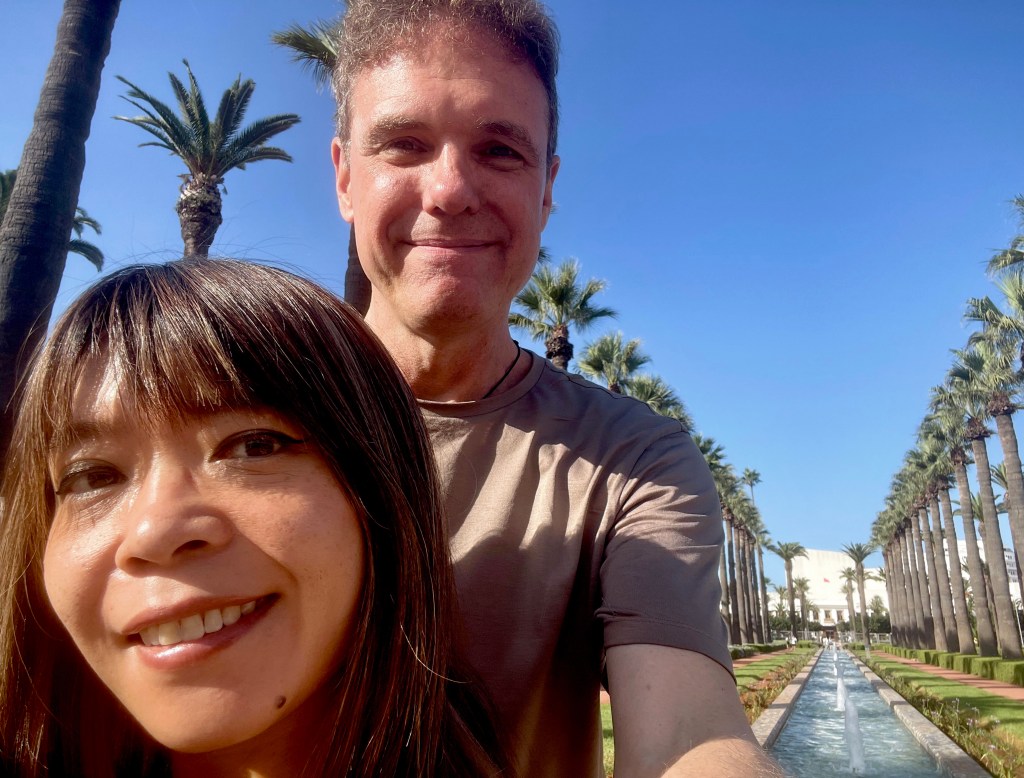
It’s only our second visit our local Carrefour Express, but the staff seem to recognise us already. (The day’s most bumbling, tongue-tied customers, no doubt.)
Friday 26 September
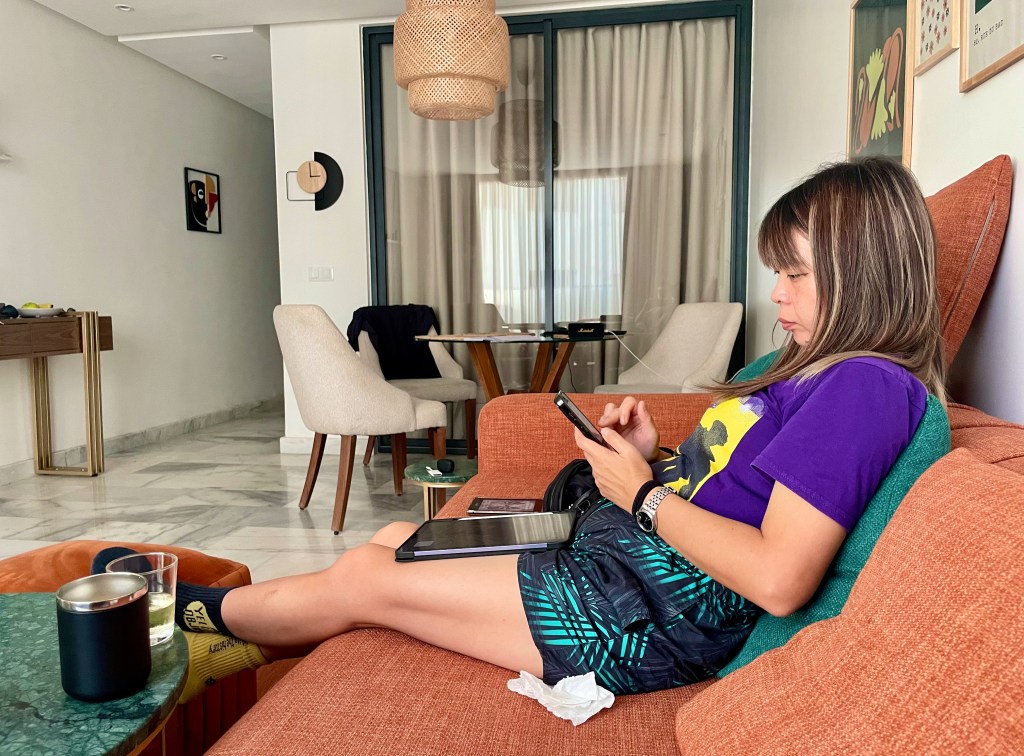
I’m busy with a paper for AsiaEdit, which fills the whole day. Come late afternoon, we pop out for groceries, this time heading to another branch of Carrefour, dicing with death every time we cross a road. Our walk takes us through the neighbourhood to the south of where we’re staying—not as visibly affluent as ours, but still fairly smart. If we’re in Ataköy, the adjacent neighbourhood here is more Zeytinbürnü. Istanbul comparisons work well in Casablanca: we both agree that Casablanca and Istanbul feel similar: the urban architecture, the countless small shops and cafes, the people, and the everpresent sense of chaos lurking just below the surface of an outwardly cosmopolitan city.
Saturday 27 September
Another full day of work before heading out to explore in the late afternoon We walk nearly four kilometres to the observation deck near the El Hank lighthouse. It’s Saturday evening, I figure. The weather is glorious. Surely there’ll be a few people around.
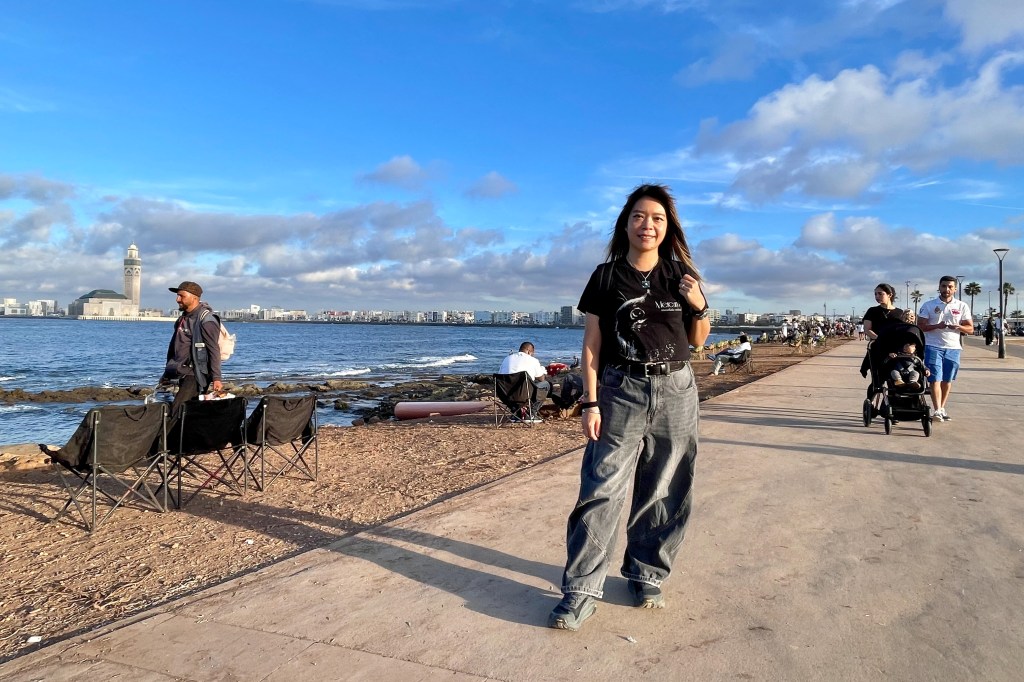
There are. Hundreds of people. They rent camping chairs and perch at the edge of the small cliff overlooking the bay, looking out towards the Hassan II Mosque, splendidly bathed in the early evening sunlight. Improbably, the mosque looks bigger from across the bay than up close. It towers over Casablanca’s modest skyline.
We sit down and people watch to our hearts’ content. They ride bikes, roller skate, play football, and escort small children in pushchairs. It’s all rather wonderful. By chance we find ourselves sitting next to two Cantonese speakers with Hong Kong accents. I want to say hello but they’re busy talking and they’re soon joined by others, all talking at once trying to decide where to eat tonight. One calls a restaurant to ask for a reservation for tonight. No luck—they’re full. They fall back into debating what to do and eventually move off. It’s lovely to hear Cantonese in this unlikely corner of the world and I rue not feeling able to greet them without interrupting their flow.
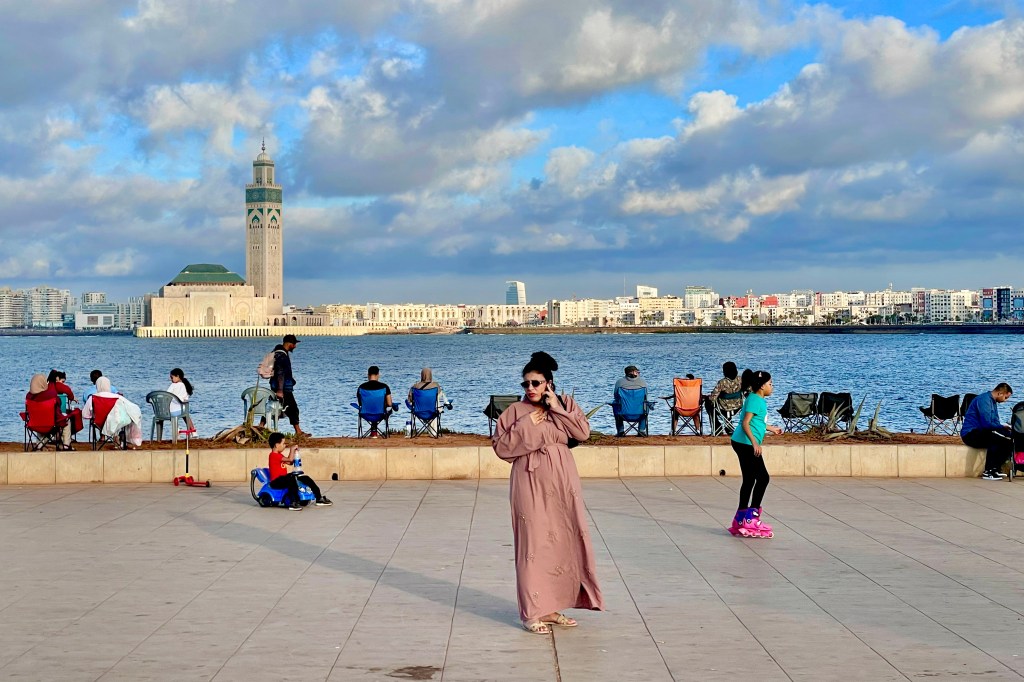
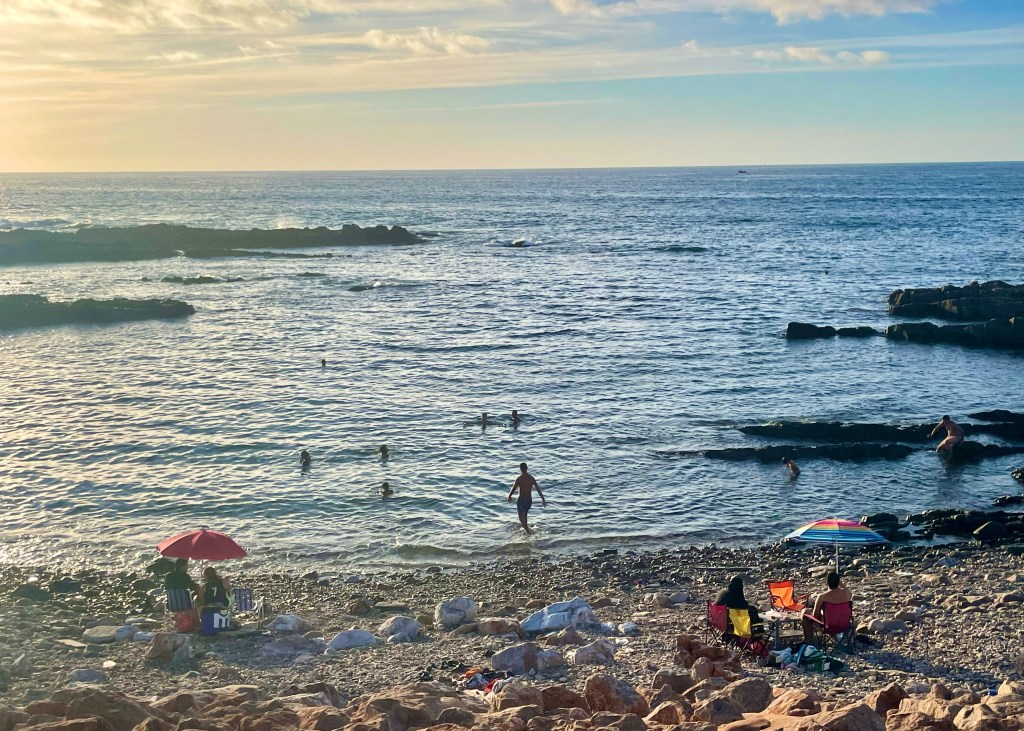
We wander on as far as the lighthouse. Below, a few families are making the most of a small scrappy beach. Half a dozen brave the (surely bracing?) Atlantic. A mouthwatering smell of grilled fish wafts up from the beach. It’s time to head back into town for dinner.
It’s a long walk back to our neighbourhood, but the sun is setting and the cafes are full. We alternate between affluent neighbourhoods where shop windows bulge with designer gear, and rundown—but never threatening—neighbourhoods where boistrous kids kick footballs.
K’s targetted a Korean restuarant close to the flat. It’s empty when we arrive, but they serve beer, and at this point we could use an adult refreshment. The food is excellent—bimbimbap for me, sweet potato noodles with vegetables and beef for K. The tiny 250ml bottles of Casablanca beer go for HK$40 a pop, so we make them last rather than ordering a second round.
Sunday 28 September
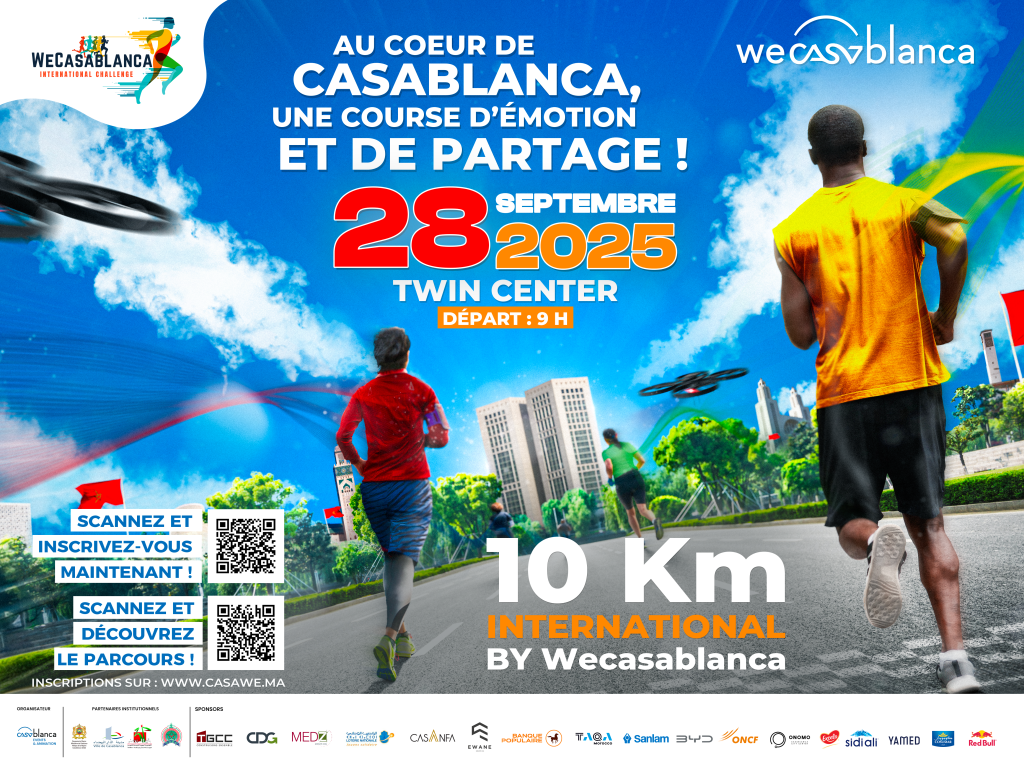
Finally, a day with neither work nor sightseeing. Just a day to rest and recharge. I’m just about to tuck into breakfast when curiosity gets the better of me: there’s quite a racket going on outside. Is it the promised political demonstration that our guide Omar told us about last week? Or could it be related to the 10km run that we saw posters for yesterday? I slip down to the street to check.
As it happens, the finishing line for the 10km run is right at the end of our street. Quite a crowd has gathered, and a PA system adds to the general racket. The runners are coming in at quite a clip, finishing in around 35 minutes. These are seriously fit fun athletes. Unfortunately, I don’t think to take a photo.
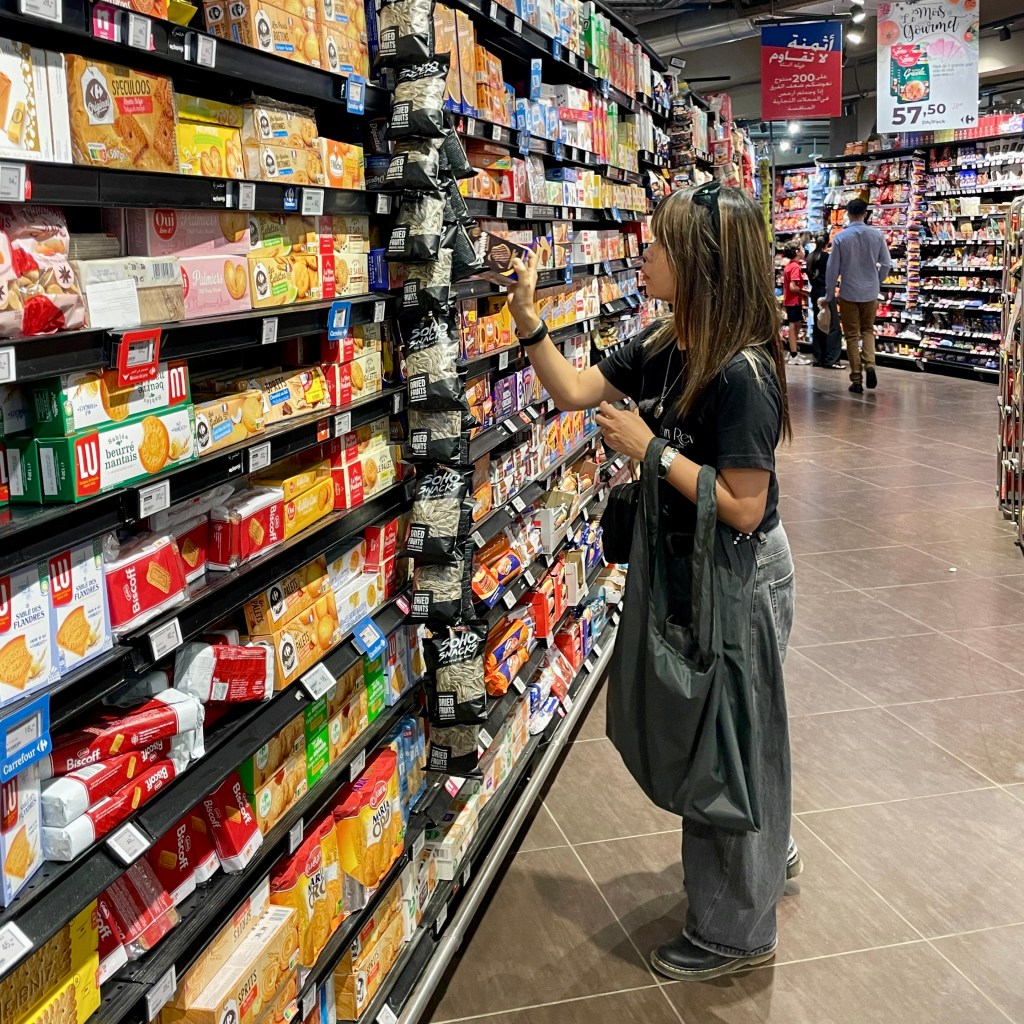
During a short afternoon visit to Carrefour for breakfast supplies, I’m bamboozled by the fast-talking cashier because I can’t make out the “virgul” when she announces what I owe as quarante-deux virgul cinq (to me it sounds like quaranteblllllluuuuhhhhh). What’s a chap to do? Sheepishly, I have to peer around her side of the screen to see that I owe 42,50. Ouch.
Monday 29 September
Work remains solid (I’m currently checking this year’s IMM exam for CPBE), so things remain quiet. But we’re both enjoying some pottering time. Today we potter to the local supermarket. And potter back. Really, I’m very content doing no more than this for now. I still feel I’m getting my breath back after five busy weeks from the day we left mum’s until the day we arrived in Casablanca. The weather is perfect, we have enough space, the people here are lovely. What more do we need?
Tuesday 30 September
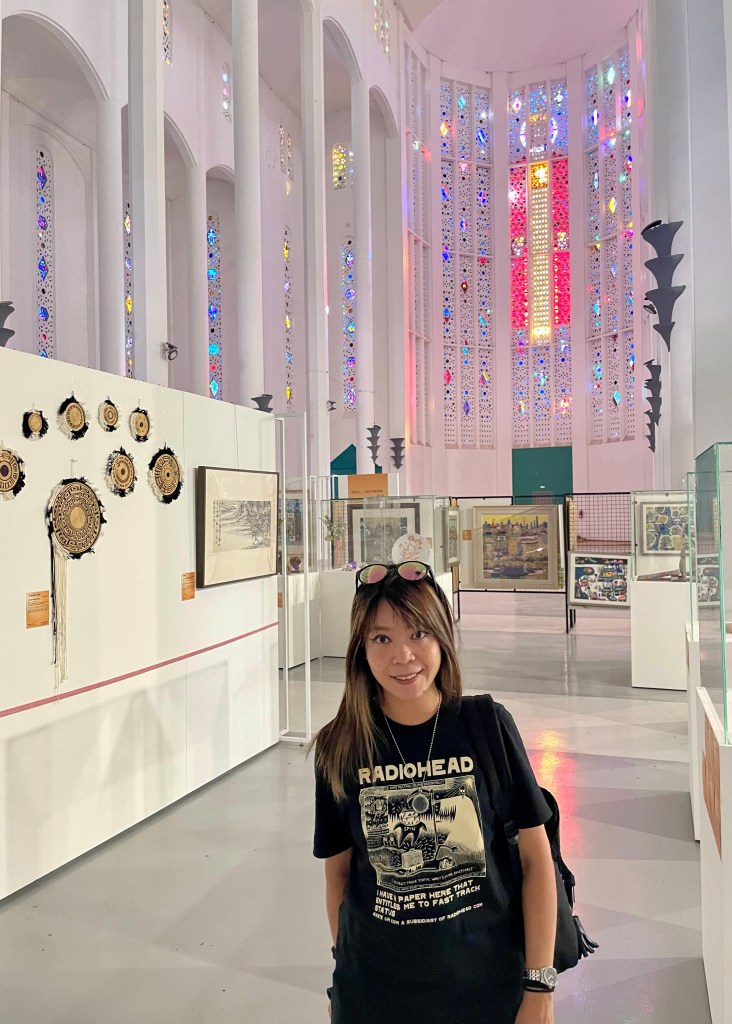
Another full day of work on the IMM exam. Our late afternoon walk takes us to the rather non-descript Mohammed V Square, but that’s OK: simply walking around the streets of Casablanca is a pleasure in itself. Our route takes us past a church that was repurposed as a cultural centre when the French left. By chance, it has an exhibition of Chinese art. Entry is free, so we wander in. The exhibition is small but worthy, but the real draw is the buillding itself, with its white interior and abstract stained glass:
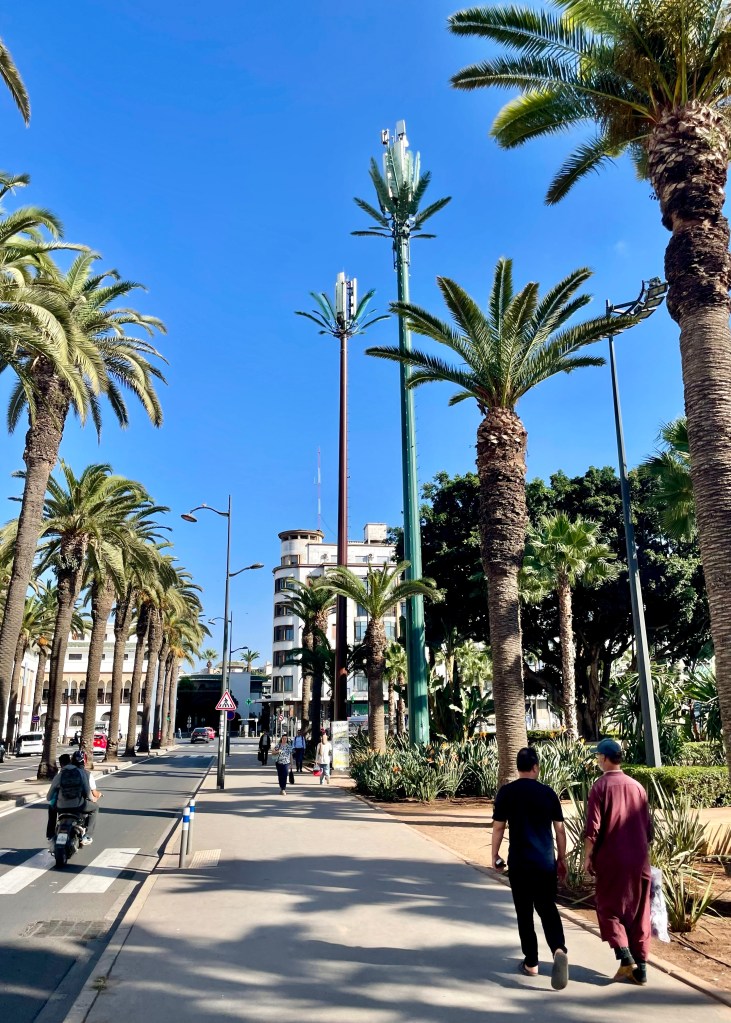
Our route also takes us past two cell towers cunningly disguised as date palms. It’s a fabulous idea:
After a cursory loop of the square, we wander back. Nothing earth shattering; just a pleasant amble through handsome Casablanca.
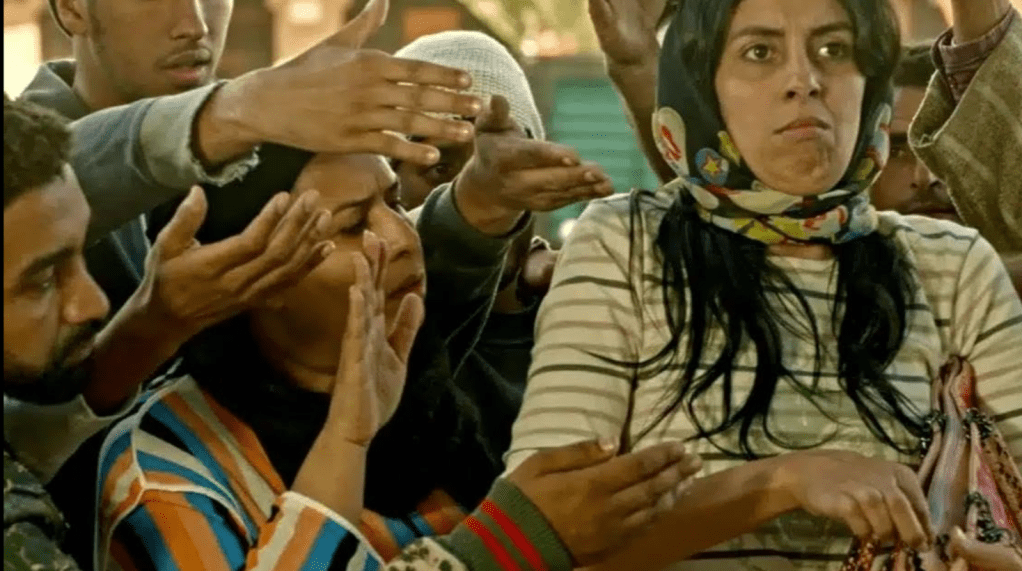
While K’s cooking, I search Netflix for Moroccan films. The only one I can find is called ‘Moroccan Badass Girl’. It’s a comedy, and it’s set in Casablanca. With a name like that, it could be dire or it could be an iconoclastic gem. There’s only one way to find out. In truth, it falls somewhere inbetween, but it’s well worth our time.
Wednesday 1 October
I’m on top of work for now, but there’s more than enough admin to keep me going for the next couple of days.
An afternoon stroll takes us down to Casablanca’s medina. After Marrakesh, this turns out to be rather underwhelming. A couple of souks with slatted wooden roofs to lock in the shade are mildly diverting, but we have no reason to do any shopping. All we really want is to wander and find a coffee shop. The medina isn’t short of coffee shops, but they’re uniformly populated by gruff-looking men. They’d serve K, but it wouldn’t be a comfortable environment. We push on through small grubby lanes, many with intimidating football-themed freizes courtesy of the local ultras, never far from the all-pervading small of rotting rubbish.
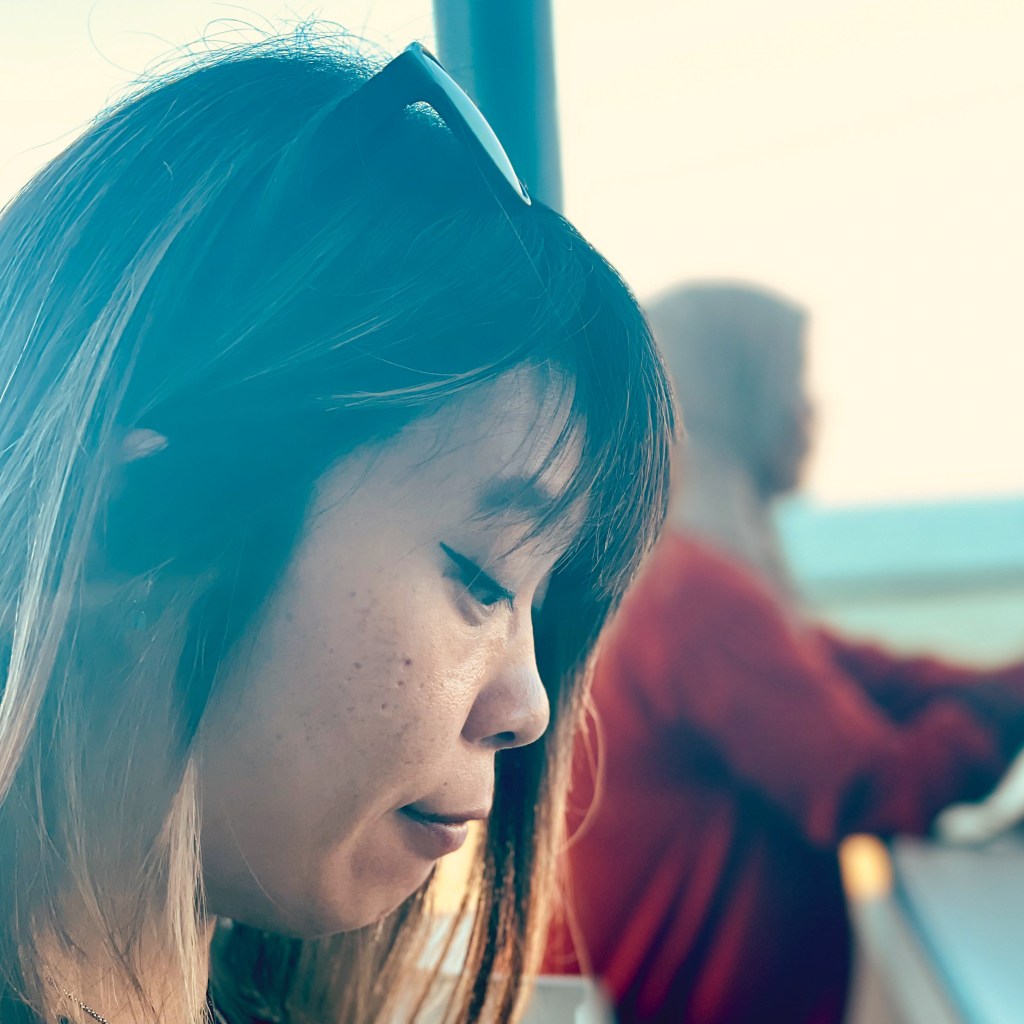
Fortunately, we exit the medina opposite the Marina Mall. It may not be in the spirit of true adventure, but it’s clean and, notably, full of women. We order drinks—K’s mocktail is shocking blue; I stick to lemon and ginger tea—and sit outside overlooking the Atlantic reading our books.
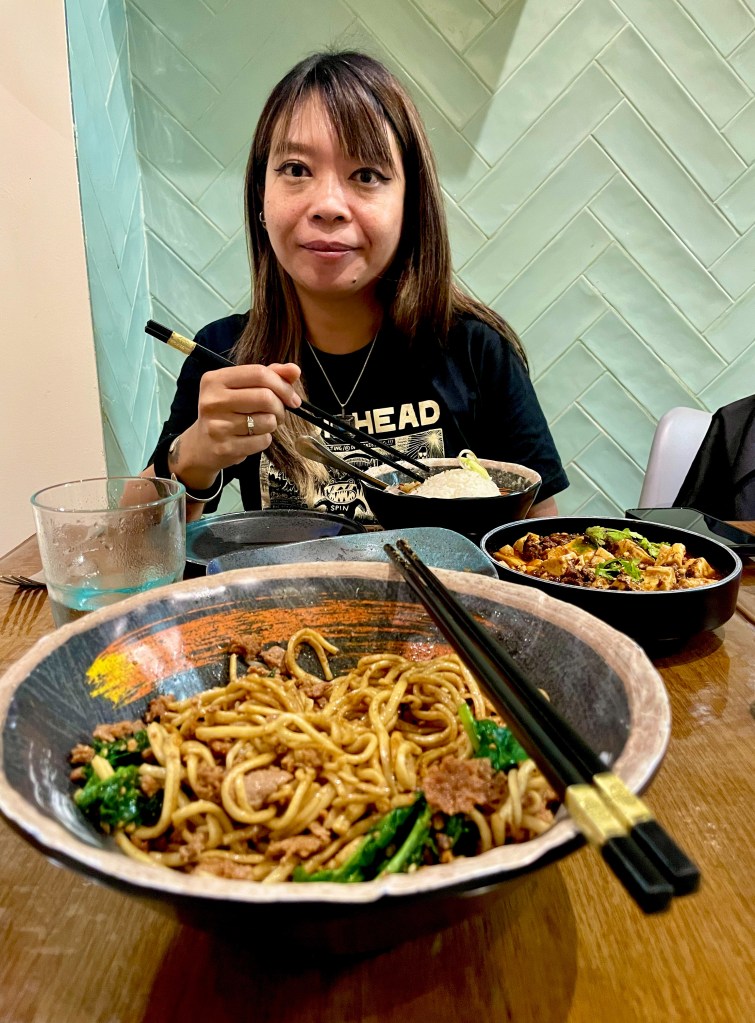
From the mall, we walk along the Atlantic coast to the Hassan II Mosque, where we turn inland and back towards our own neighbourhood. K’s found a Chinese restaurant five minutes from our flat and, having already tried Japanese and Korean restaurants in Casablanca, wants to try Chinese too. It’s small and super-friendly, and the food is delicious.
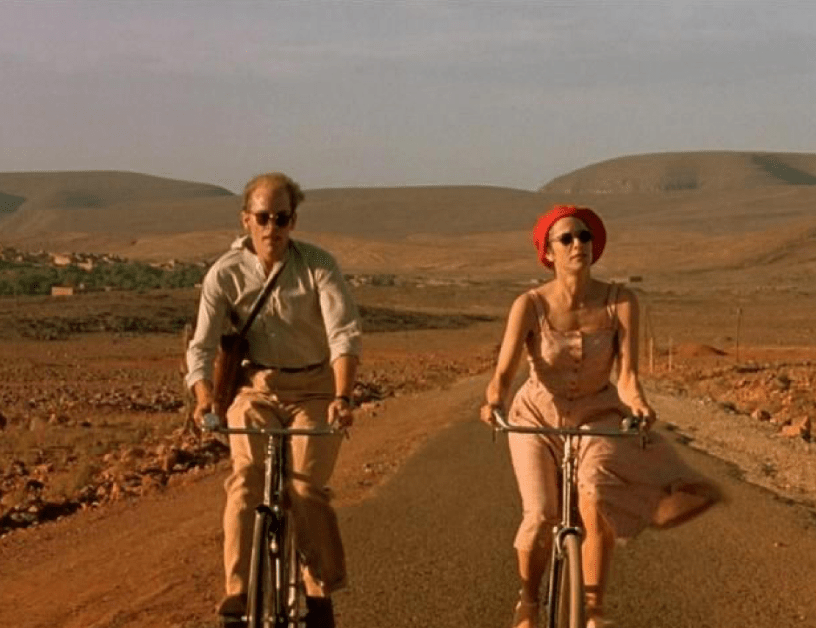
Back at the flat, I’ve downloaded the film version of Moroccan-set classic ‘The Sheltering Sky’ starring John Malkovitch and Deborah Winger. I’ve read the book twice without really enjoying it on either occasion. The film version is strong on the magnificent location photography in Morocco, and Malkovitch is typically peerless. But, as with the book, I’m left wondering what it’s all supposed to be about. It’s all a bit like grasping thin air to me. Perhaps my own life is just going too well to be able to understand existential despair?
Thursday 2 October
I shouldn’t have mentioned existential despair yesterday. Today, I’m close to being dragged into its vortex.
Everything starts well when, before breakfast, I speak to Mike in Taipei for an hour. It’s a while since we last caught up and it’s good to chat, even if the greater part of our chat is Mike talking up his plans for his new YouTube channel.
Then the ripples begin. It takes over an hour to successfully buy our onward train tickets to Rabat—longer than the journey itself will take. Initially, the website freezes as it processes my payment. Next, I try the app. It insists on inputting a 10-digit phone number even though mine is only nine digits (a thought: perhaps an intial ‘0’ was what it wanted?) Finally, I manage to secure our tickets using a different credit card: two of us for about HK$75. A bargain if ever there was one.
The real existential burn involves trying to sort out a log-in problem I’m experiencing with Interactive Brokers. It’s too dull, and—I hope—ultimately too ephermal to be worth recounting here. Suffice to say I spend several hours trying to solve it, without success. Eventually, I do manage to ping an email to a real human being in the Hong Kong office. I leave it at that and go off to lie down in a foetal position, comforting myself with a podcast.
Things perk up when we head out to visit a small art museum. But before we get there, as we’re about to cross a main road, I spot a blind chap step off a bus and struggle to find the pavement despite his stick. I sidle over and help him onto the kerb, but there’s not a lot more I can do, and my French—he speaks no English—holds me back. Je voudrais vous aider, monsieur, mais je n’est pas d’ici. Je ne connais pas ce quartier. Je suis desolé. What else can I say? (In fact, even that’s considerably better that what I managed on the spot.)
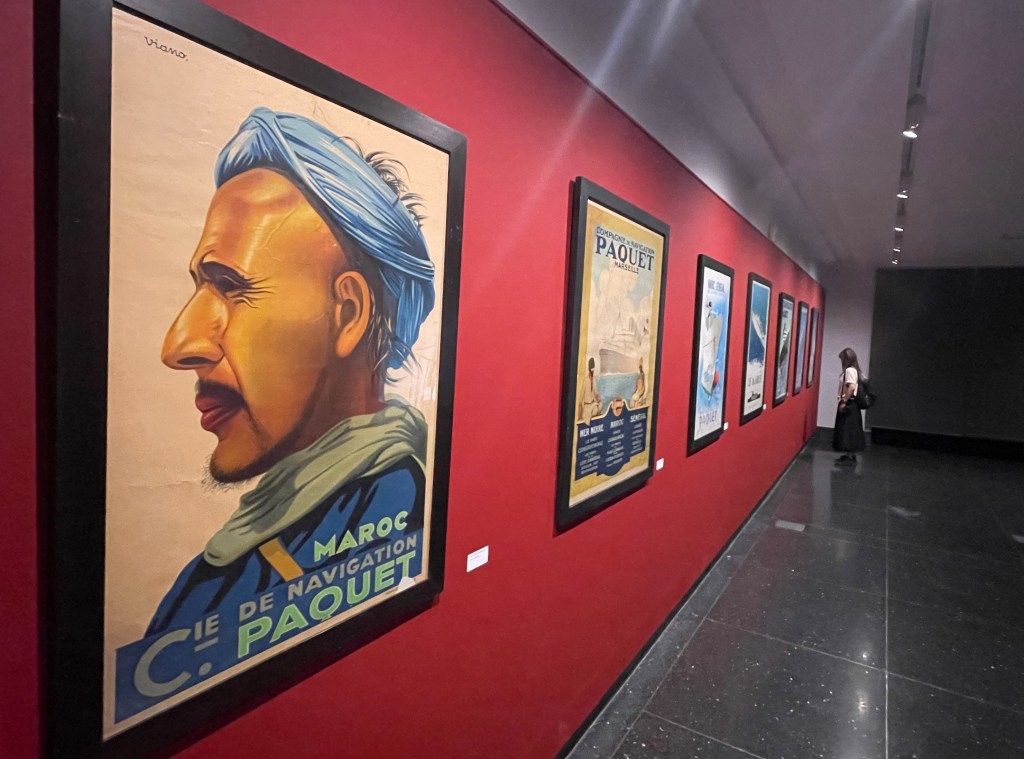
The museum is modest, but it does have a fine collection of art deco travel posters from the 1920s and 30s. They alone make the entrance fee worth paying.
We arrive back at the flat to find that our key to the door of the apartment building no longer works. The key’s exactly the same as yesterday, so it would appear that someone’s been too forceful with the lock and bent it out of shape. Fortunately, the concierge is on hand to let us in.
As soon as I take my shoes off, I realise that I forgot to buy beer. I head back out only to find our local bottle shop is closed. Undeterred, I walk on to the next one: a 25-minute round trip for two cans of beer. And, with a key that no longer works, I have to call K to come downstairs and let me in.
This is not a good day. But first-world problems and all that.
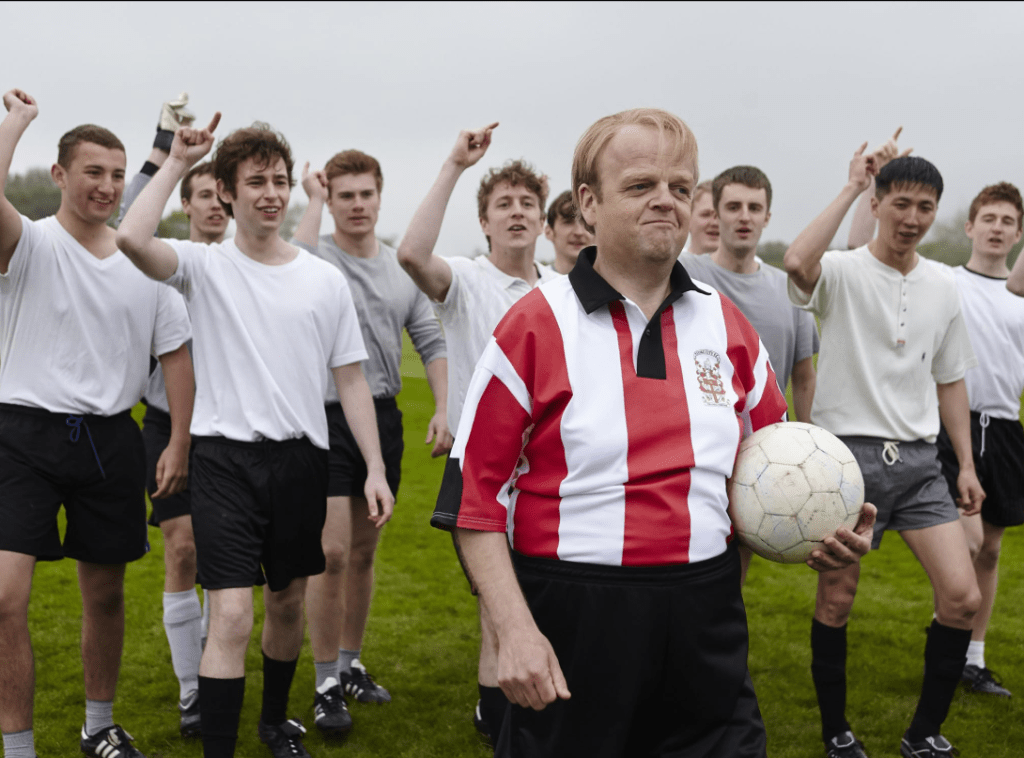
Fortunately, I downloaded a movie yesterday that seems perfect for a frustrating day. ‘Marvellous’ stars Toby Jones as the real-life Neil Baldwin, a socially-awkward but good-hearted chap who spent many years as Stoke City’s kit man. It’s just the tonic I need and I go to bed vaguely reassured that I’ll sort out my problem with IBRK shortly.
Friday 3 October
I take a day off from the world. I need time to recharge after the stresses, big and small, of yesterday.
It’s a day for tidying up files, listening to music, reading, studying, and just taking it easy. Heaven knows, we all need such a day now and again.
I only leave the flat to take the rubbish out a buy a bottle of wine. It’s then that I realise that the streets immediately around the flat are once again full of parked cars. I’m vaguely aware that Casablanca is experiencing a wave of anti-authoritarian protests. We haven’t seen anything, but yesterday we did stumble into gridlocked traffic on the main throughfares when walking back from the art museum. We speculated at the time that a demonstration might be the cause.
I also noticed yesterday that the streets around our flat were eerily quiet: very few parked cars and several closed businesses. Something was definitely up, but I had other things on my mind.
Late in the evening, cousin James texts to say he’s seen there’s trouble brewing in Casablanca and are we OK? I assure him we’re fine. But what a bubble we seem to have drifted into if James is more aware of what’s going on in this city than we are. I’ll keep a closer eye on the news this weekend.
Saturday 4 October
Yesterday’s recharging day did me a lot of good. Today, I’m ready to get out and explore again. We try out Morocco’s equivalent of Uber to take a private taxi to United Nations Square, which our Lonely Planet guide recommends as a good place to start a walking tour of Casablanca’s art-deco heritage.
In the taxi, for the first time, I strike up a conversation in French that doesn’t involve ordering food. I know I’m making an absolute hash of it, but I’m only going to get better if I use it. The poor taxi driver struggles to make sense of me, but I do manage to come away with a sense of the risks of operating as a non-licensed taxi driver in Casablanca (he does use Google Translate from Arabic to English at one point).
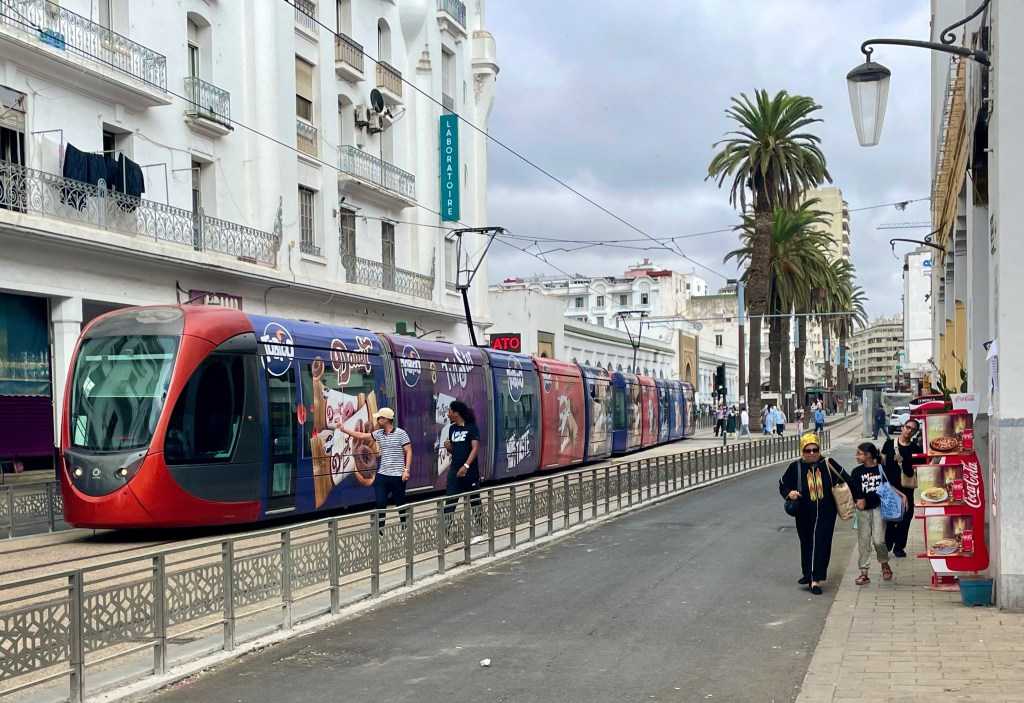
Our art deco tour is a little underwhelming. The architecture is fine enough, but in the years since the colonial era the centre of Casablanca has drifted away from Mohammed V Avenue, its-then main drag. A modern tram glides down the otherwise quiet street, which feels half-forgotten. We spot the Central Market and slip in for a look. It turns out to sell almost exclusively fish and seafood, which it sells to the many small restaurants in the surrounding courtyard. It’s mid-afternoon but the al fresco tables are nearly all full with local families eating plates of breaded fish and squid.
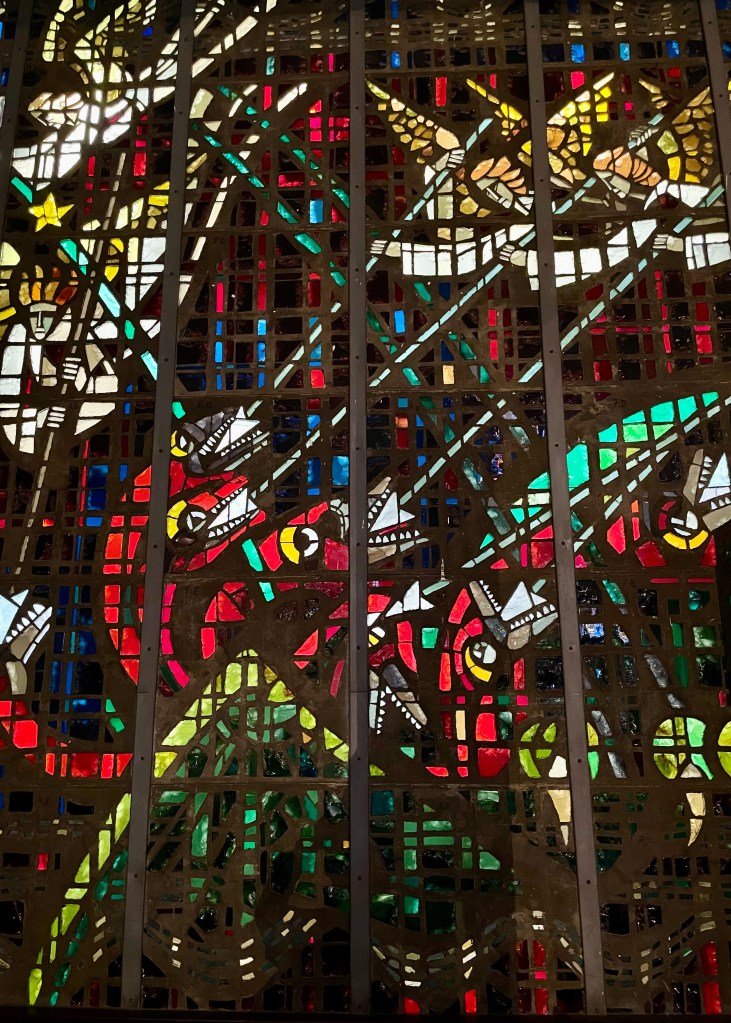
We continue through non-descript shabby commercial streets, aiming for the Notre-Dame des Lourdes Church. (I spotted its striking art deco design from our taxi from Casablanca railway station on the day we arrived.) Inside, the church is more brutalist than art deco: the upper columns and roof are unadorned concrete. But this disappointment is more than offset by two full walls of stunning art deco stained glass. Near the altar, a black gospel choir are rehearsing. It’s quite magical.
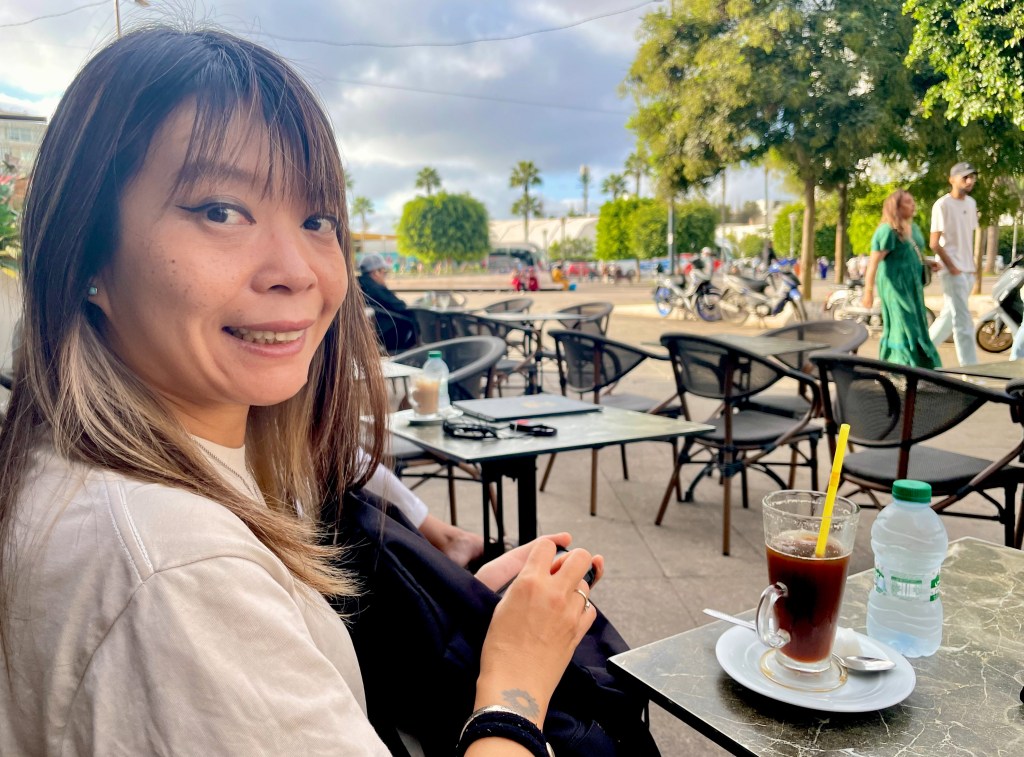
Back at United Nations Square, we pause for a coffee and alternate between reading and people watching. It’s not a lovely square, but we have a perfect spot to watch late Saturday afternoon Casablanca roll by.
I veto the Moroccan restaurant where we’d planned to eat: it has a less-than-salubrious vibe about it—by which I mean it reeks of cigarettes, all the customers appear to be men, while the servers are women. Instead, we pick a rather anonymous restaurant nearby, where we order tajines for the first time since we left Marrakesh, and watch the second half of the Chelsea – Liverpool match.
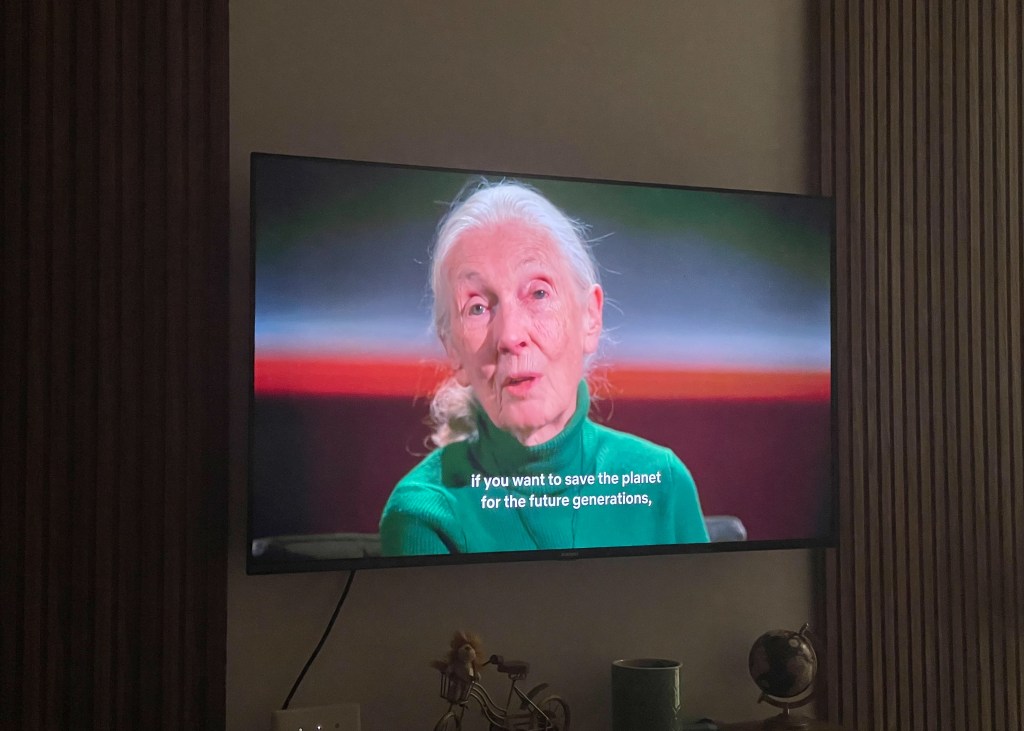
Jane Goddall died this week. Back at the flat, we watch an interview with her recorded shortly before she passed. She’s someone I was aware of, but knew very little about. It’s poignant viewing. Among her many wise words: “You can reach ignorance, but you can’t reach evil.”
Sunday 5 October
It’s our last day in Casablanca. I’m glad we came here, but I’m ready to move on. Seeing Morocco’s biggest city, with its latest European fashions, fast cars and chic restaurants, cheek by jowl with its shabby, tumbledown underbelly, has been more than worthwhile. But I’m ready for somewhere smaller. Rabat barely fits that description, but in size it’s a step towards Tangier, and then Estepona.
For our final day, we walk up to the seafront, where we stop for refreshments and an unexpectedly enormous mound of chocolate coated Belgian ice-cream. Both the waterfront and the cafes are busy on a Sunday afternoons with families enjoying the perfect early autumn weather.
Even busier is our local Asian restaurant, which we return to for our last meal in Casablanca. We arrive early enough to walk right in. But by the time we leave, the queue—all female—extends several metres up the street. Except for that ramen joint in Krakow in June, I’ve never seen queues outside restaurants beyond Hong Kong. Where are the menfolk? Are the women happier eating out without them? As we leave and walk home, the cafes are full of men sipping their cafe noir. That may answer the first question. The second? I’ve no idea…
“Casablanca is a city that never ceases to surprise. When you first arrive, you assume it’s a modern metropolis. But then you begin to glimpse the many layers and conclude that the newfangled buildings and nouveau riche are no more than a façade laid atop a bedrock of raw tradition. After that, you begin to see the mixture of new and old, and your doubts begin all over again.” – Tahir Shah – The Caliph’s House
 Two On Tour
Leave a comment