Two weeks in Poland’s ‘Phoenix City’. WWII may be a long time ago, but its shadow is hard to escape.
Saturday 28 June
It’s a damp, gloomy, and chilly morning as we prepare to leave the Tatra Mountains. Kasia, Matthew and Mitch depart early for the long drive to Warsaw. Vłodek arrives soon after eight to collect our suitcases, which he’s kindly offered to transport to Warsaw for us in his car.
We only have our small backpacks to carry on this consequently simplest of travel days. We board an empty minibus mid-morning, which mostly fills up during the short but circuitous route to Zakopane. We have some time to kill before our train departs, so we wander the town, buy some local sheep’s cheese, and stop for a coffee and a slice of apple pie with whipped cream. There’s still time to return to the sushi bar near our former Airbnb for lunch, from where it’s a mere hop, skip and jump to the railway station.
Our six-seat first-class carriage fills up once a family of four join us before we depart Zakopane. Their suitcases fill the luggage racks in the cabin and we feel relieved that we have Vłodek’s porter service today (although as we boarded first, it would have been their problem, not ours!) Interesting family: the mother is clearly Polish, but speaks to her young daughter and son mostly in English. She’s also reading an English book, ‘Good Energy: The Surprising Connection Between Metabolism and Limitless Health’. A quick check on Good Reads suggests that this could be the health equivalent of Bill Perkins’ ‘Die With Zero’. Alternatively, it could equally well be a load of mumble jumbo, hocus-pocus gibberish.
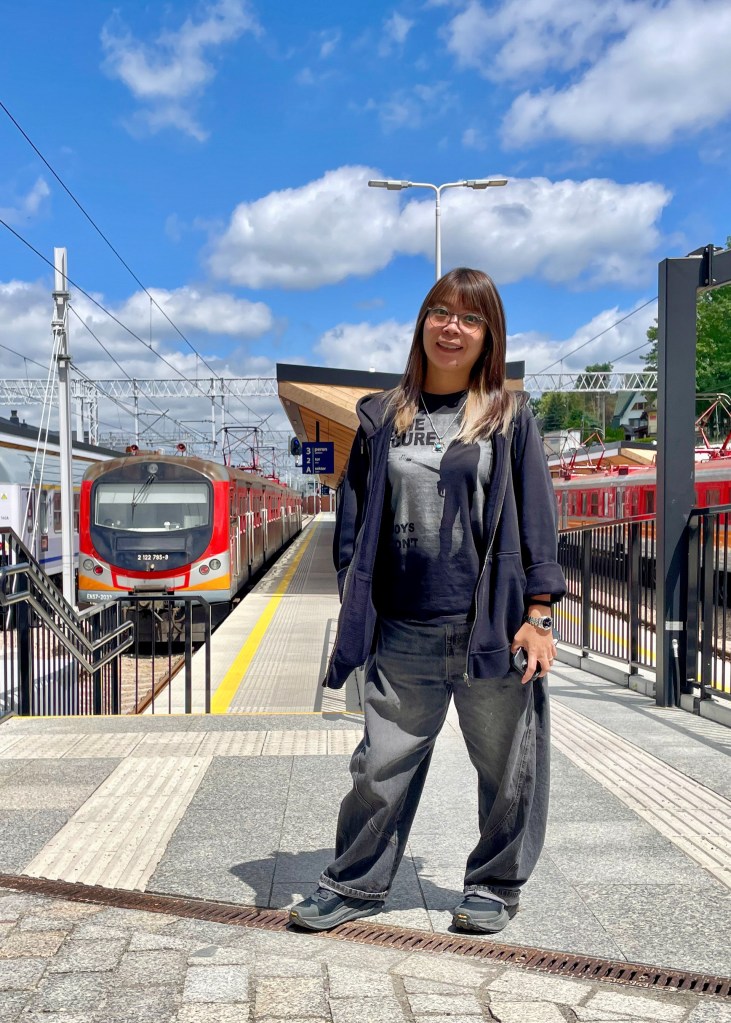
The journey to Warsaw takes five and a half hours. It’s sunny, but agreeably warm rather than baking hot on this last weekend before high summer. Around halfway to Warsaw, I leave the cabin and stand at the open window in the corridor for twenty minutes watching gently undulating farmland flit by. The fields are small and narrow compared with Britain: within seconds, plots of cabbages, potatoes, barley and corn all hurtle by one after another. Towns are few and far between. In fact, with the notable exception of Krakow, we don’t appear to stop anywhere of size in the 400-plus kilometres to Warsaw.
Kasia, bless her, is on the platfom waiting for us when we arrive at Warsaw Central. She’s already driven from Zakopane this morning and has to drive to the airport later tonight to collect an Italian friend of Marianna’s, who’s staying with them for the next few days. As we step out of the station, we’re greeted with a sweeping view of the imposing Stalinist heap that is the Palace of Culture and Science, one of the twentieth century’s most conspicuous unwanted gifts.
Tom’s waiting in the flat. He’s flying to the UK later tonight (it’s a full-on day for the Martin family). After I unload our suitcases—they’re now in Kasia’s car—we have the briefest of opportunities to catch up before he and Kasia are off, leaving K and I to settle in to a tastefully modernised and comfortable flat. It’s Saturday night, but by now it’s already mid-evening and we’ve already splashed out on sushi at lunchtime. We head round the corner for a bag of groceries and whisk up a simple meal in our new home.
Sunday 29 June
We’ve had a busy few days, and constant exploring can be exhausting and numbing. Today, therefore, is a guilt-free chill day in our new surroundings. For me, it’s part work, part admin, and part relaxation.
Kasia invites us to her family flat for an evening meal. We figure out Warsaw’s public transport system on the hoof and are met by Matt at the neighbourhood bus shelter a few stops up the road. Mitch flew back to Hong Kong earlier today, and Matt seems more affable and mature without his sidekick. Kasia’s daughter Marianna, who we last saw in the 2022-23 hiking season, is now 17 but still enthusiastic and chatty. Her Italian friend, Amanda—a pal from a German language school she attended last summer in Berlin—is visiting from Tuscany. Amanda speaks fluent English, which she says she learned largely by watching all 134 episodes of the US remake of Shameless. (I wasn’t even aware that there *was* a US remake of Shameless.) She’s vivacious and frequently hilarious. No doubt she’ll go far.
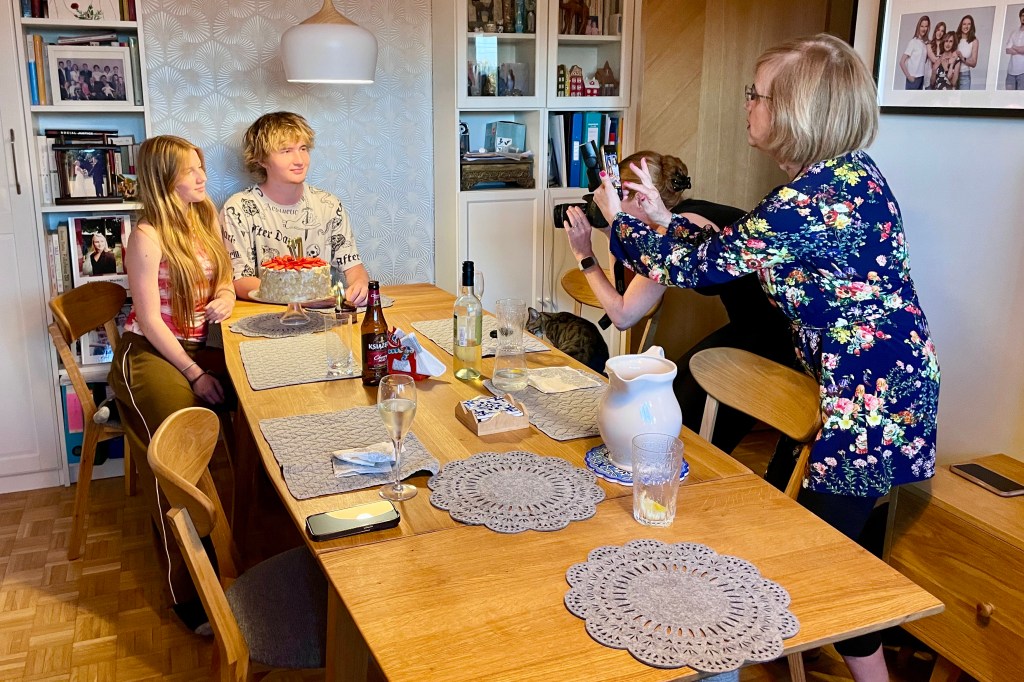
Dinner over, Kasia brings out belated birthday cakes for both Marianna and Matt, and Vłodek and his wife, who live downstairs, show up to sing Happy Birthday, which we do in English, Polish, German, Italian and Cantonese. We chat with Vłodek about growing up in hardscrabble postwar Warsaw and, after he takes his leave, with Kasia about the pros and cons of the various homes her and Tom have lived in since becoming parents. (In Warsaw, their living room doubles up as their bedroom: hardly ideal, “But it’s the same for everyone”, Kasia reflects.) We take our own leave and take the bus back to our own flat, which now feels luxuriously spacious on account alone of having a separate bedroom and living room.
Monday 30 June
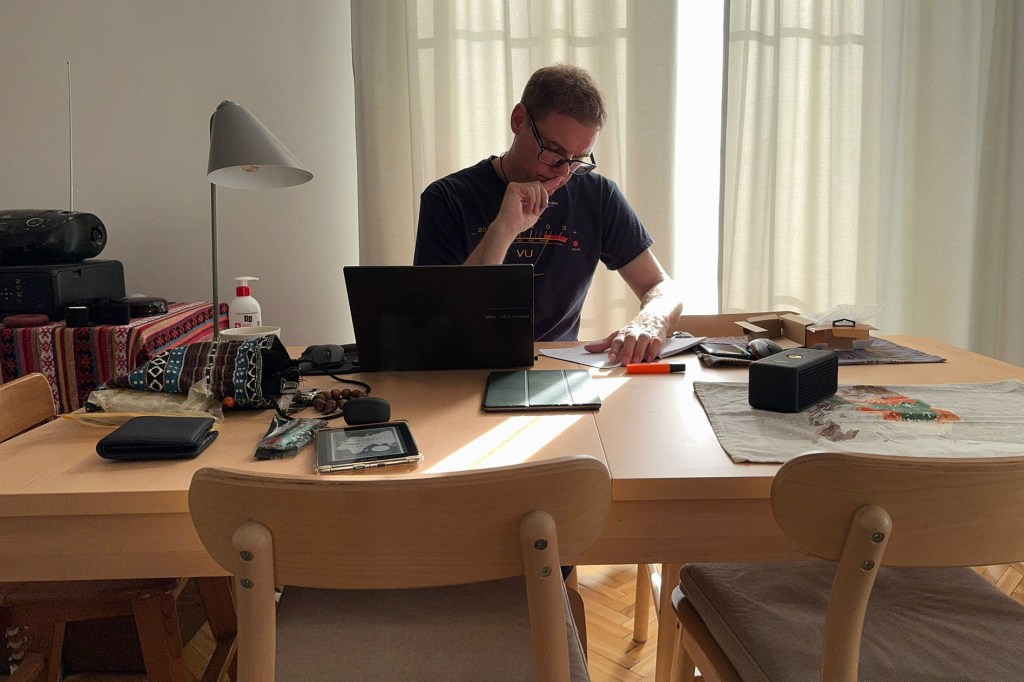
We’re making a very slow start to exploring Warsaw. Work and admin eat up the morning. In the afternoon, we have plans to explore our immediate neighbourhood as far as the river, but what we intend as a quickish grocery run – in the opposite duirection of the river – takes far longer than we anticipate as we evaluate three ever-more distant supermarkets. I do, however, come away with a new computer mouse from the local-but-not-that-local shopping centre: my old mouse was rapidly becoming unusuably sensitive, resulting in ever more frequent grumpy outbursts. Peace has returned!
Tuesday 1 July
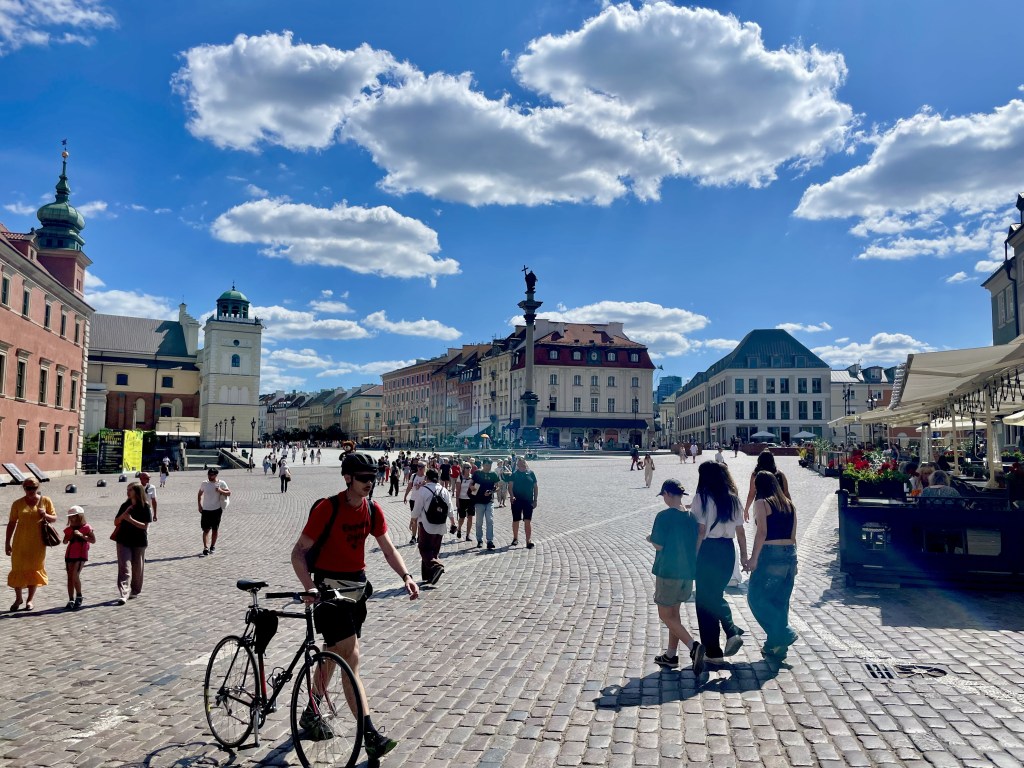
Finally, a full three days after arriving, we start exploring Warsaw properly. The Old Town is closer than we thought, and walkable. A brief loop is enough to establish that ‘old’ towns don’t necessarily have to be authentically old to be attractive. Almost every building in the historical heart of Warsaw was reconstructed as a fascimile of its original, destroyed by the Nazis to punish the Poles for the Warsaw Uprising of 1943. We head into the Warsaw Museum on the Old Town Square to learn more. It turns out that the near destruction of the city in World War II was used as an opportunity to improve it, clear away slums, and create more parks. Of course, that’s true for London too, but the reimagining of the city was necessarily on an entirely different scale in Warsaw.
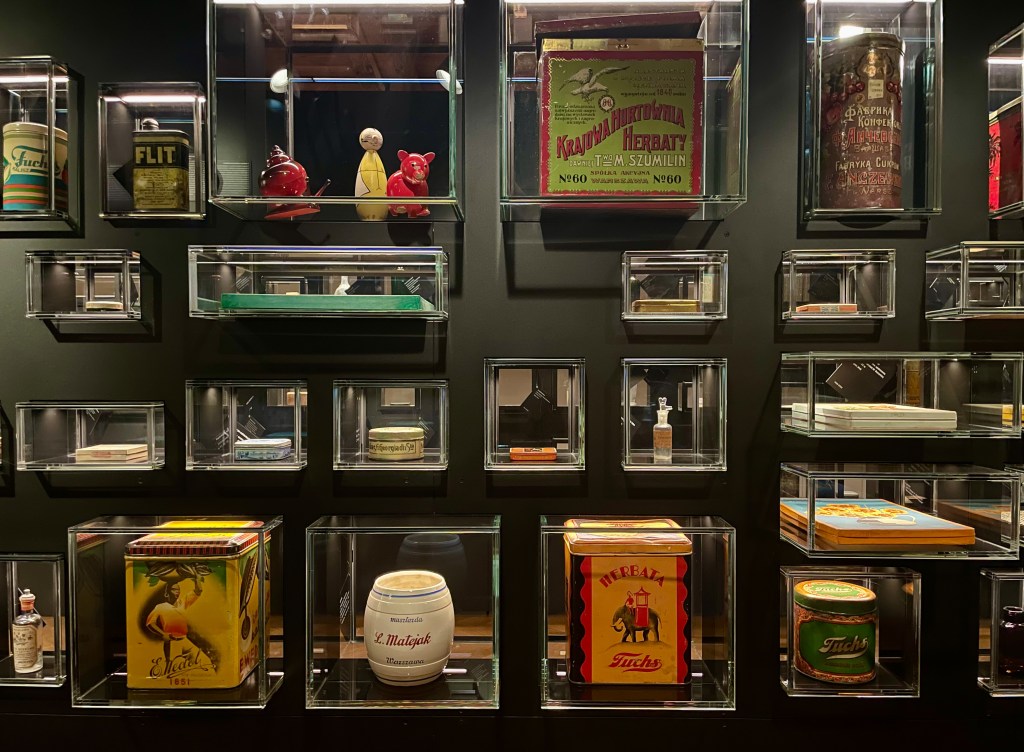
The Warsaw Museum is truly excellent: 21 beautifully-presented themed rooms ranging from old maps to product packaging, and silverware to a haunting collection of wartime photos taken in the ghetto. Old and new are typically combined into one space, avoiding the conventional chronological layout. Unusually, some staff are keen to chat and engage instead of moping sullenly on chairs in the room corners. The clocks and watches room was not one that I was planning to linger in, but the room attendant was so keen to talk that he would barely let us move on.
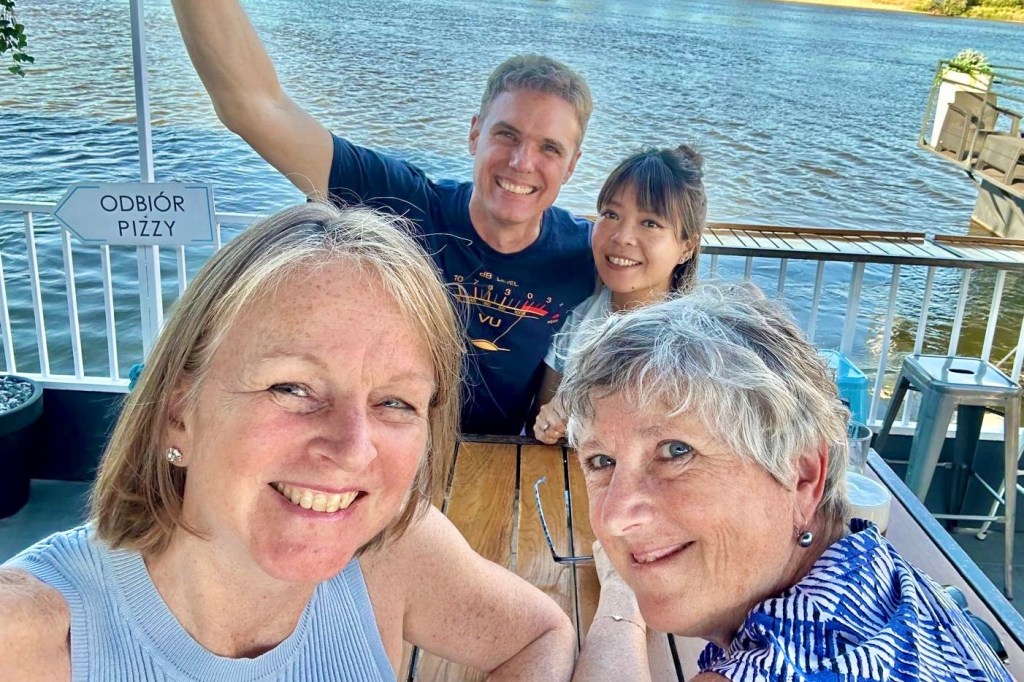
From the museum, it’s a short walk to the bank of the Vistula, where we meet Rachel Launey and Loraine Kennedy for an early evening adult refreshment on a boat that appears to have run aground at a ten-degree angle. It’s fabulous to see them, for only the third time in the 23 years since they left Hong Kong. We immediately carry on as if we were all together just last week. True friendships run deep—unlike the Vistula here. It’s odd sitting ten degrees off balance.
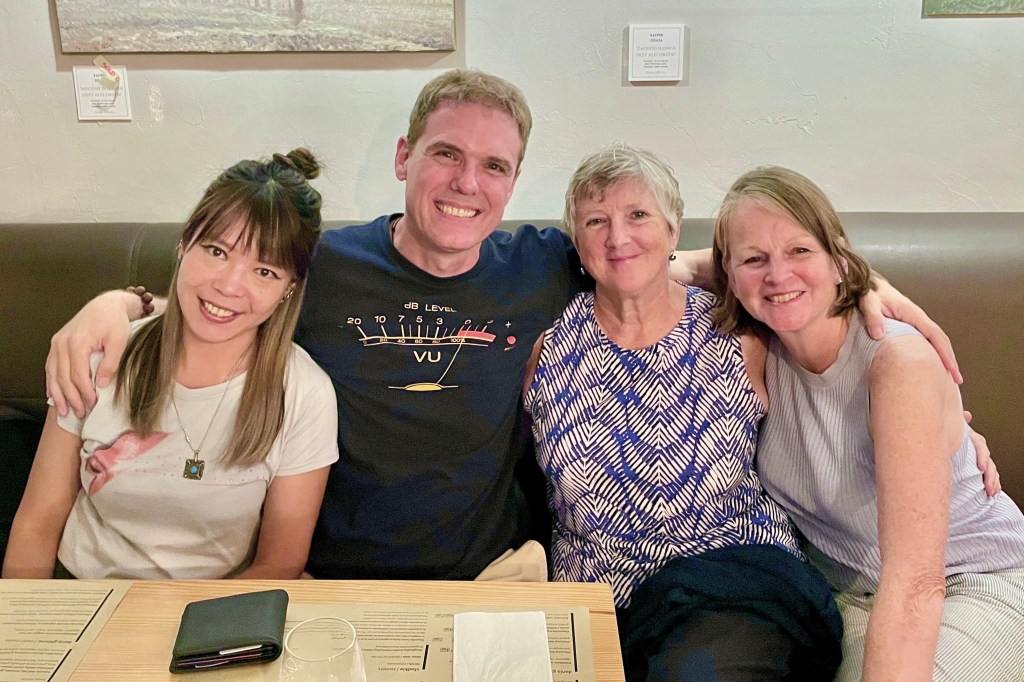
The four of us wander to an excellent restaurant in the nearby Old Town, where the conversation—and alcohol—continues to flow. We part at twilight with an invitation to visit them at home next week. Both times I’ve previously seen Rachel and Loraine since they left Hong Kong, I’ve said goodbye very reluctantly, with a sense that there’s so much more to discuss than we realistically have time for. This time, we have a second evening to catch up properly. We need it. Until next week, then…
Wednesday 2 July
The mercury nudges over 30 degrees for the first time this summer (as we’ve experienced it, at least). Our last 30-degree day in Europe was in Bulgaria last August. I’ve been concerned about this heatwave, which is drifting across Poland from western Europe. But I needn’t have been, at least not today. When we step outside after lunch to walk to a park in nearby Zoliborz, it’s a sublime summer day. The humidity is low and it isn’t uncomfortably hot. It takes us almost half and hour to reach the park, which stretches along both sides of a long, narrow lake. We amble both sides of the lake, stopping on pedestrian bridges to admire the clear water and the many fish that swim among the weeds. The whole scene reminds me vaguely of Eastrop Park in Basingstoke.

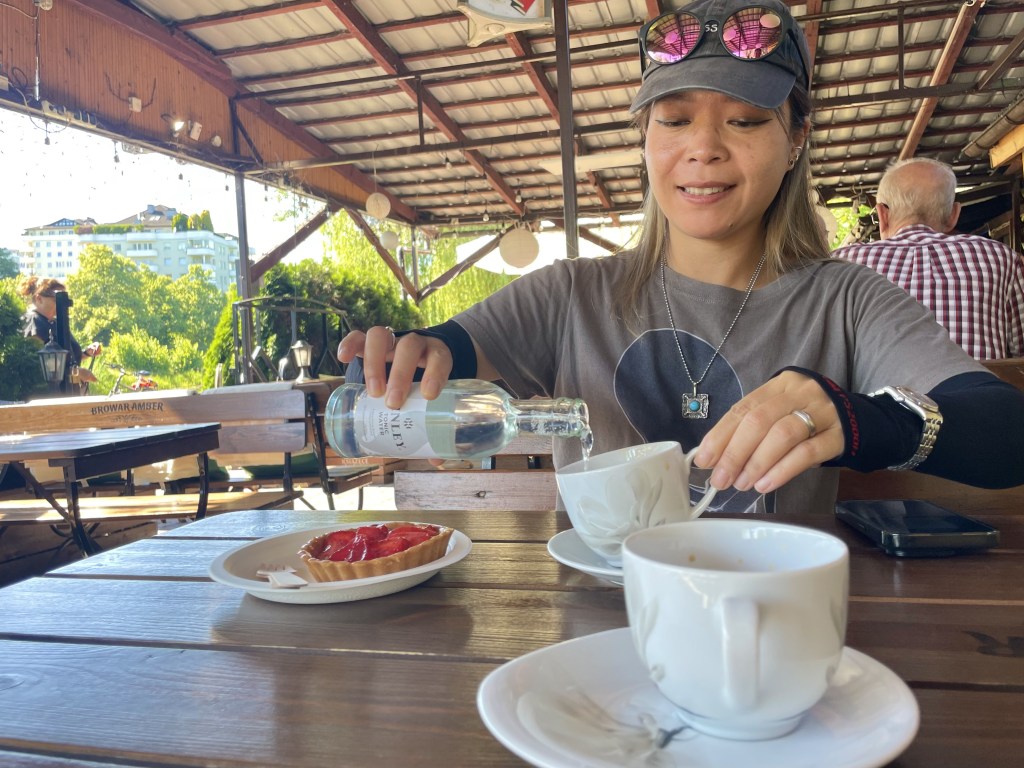
Unlike Eastrop, this park has a pub and restaurant. It’s too early for an adult refreshment, so we order expresso tonics. The barman doesn’t do expresso tonics as such, but he’s happy to give us two expressos and a bottle of tonic water. We make our own expresso tonics and wash them down with a tasty strawberry tart. I finish Brideshead Revisited. I sense a great novel, but I’ve taken too long over it and it hasn’t fully gelled with me. Wikipedia and ChatGPT help explain it to me and unpack its key themes. It seems the full 1981 TV adaptation—all 10-plus hours of it —is on YouTube. I’d like to see that.
Back at the flat, we watch ‘The Zone of Interest’. I sense this is a movie that’s going to stay with me. It’s a haunting portrayal of cognitive dissonance and the banality of evil.
Thursday 3 July
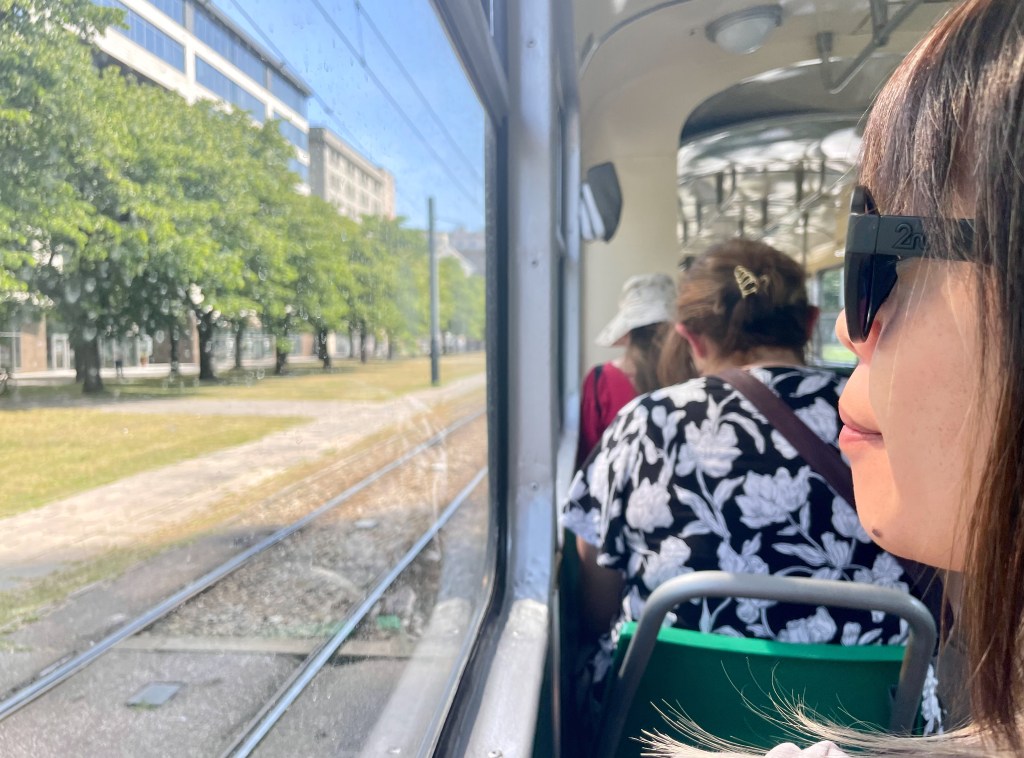
Phew! What a scorcher! The heatwave that’s been creeping over western Europe finally engulfs Warsaw. By the time we step out after lunch, it’s 35 degrees. It is HOT. The tram that trundles us downtown to visit the Warsaw Rising Museum is little more than a sweltering tin can. The metal fitings are scorching hot to touch. Even my phone feels dangerolusly hot in my hands as I navigate Google Maps.
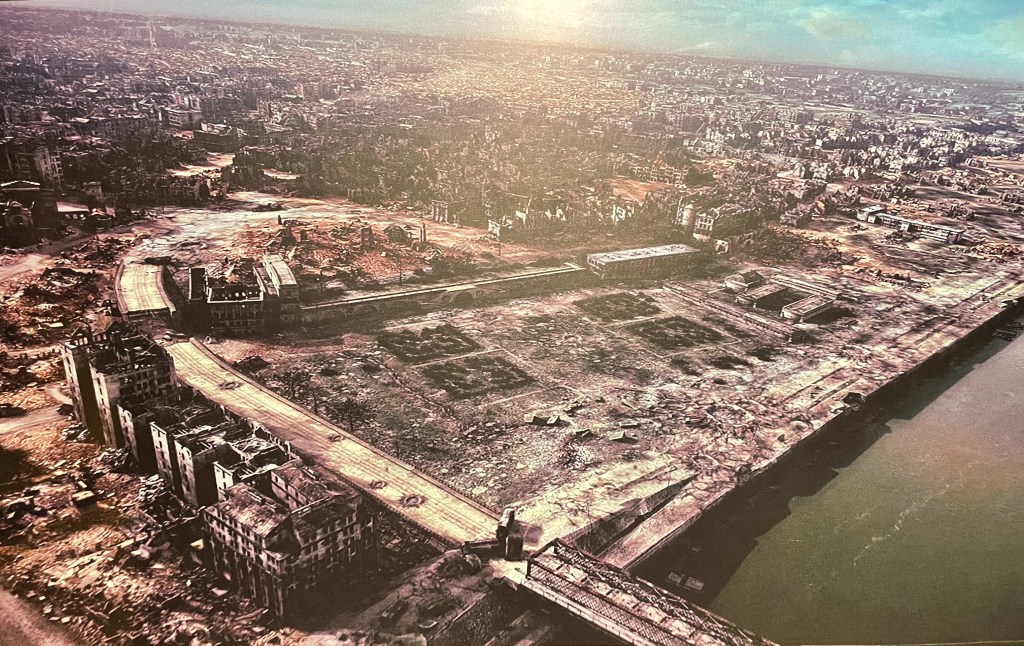
Thankfully, the museum, which traces the history of the city’s heoric but doomed uprising against the German occupation in 1944, is air-conditioned. We’ve deliberately chosen free-entry day and it’s inevitably well-attended today. It’s a rather overwhelming experience that no doubt makes more sense to Poles, for whom the uprising is an integral part of their national consciousness, than for well-intentioned but uninitiated tourists like us. Most memorable is a six-minute 3D-film that recreates the view from a flight over the city in 1945. It’s truly stunning to see how much of Warsaw was completely destroyed:
On leaving the museum, rather than retrace our steps – our journey to get there included a walk of well over a kilometre in the blasting heat – we head for the local metro station. The good news is that it’s air-conditioned. The first train that arrives appears to have some sort of mechanical problem: everyone inside is forced to disembark and wait with us on a crowded platform for the next train. This gets us as far as the interchange station, where we need to change lines. But as we step onto the platform for our second train, a member of staff is turning everyone back: it seems they’ve just closed the line in its entirity. We don’t know why. Instead, it’s another kilometre-plus walk in the heat to where we can catch a tram back to our local stop (this one is at least air-conditioned).
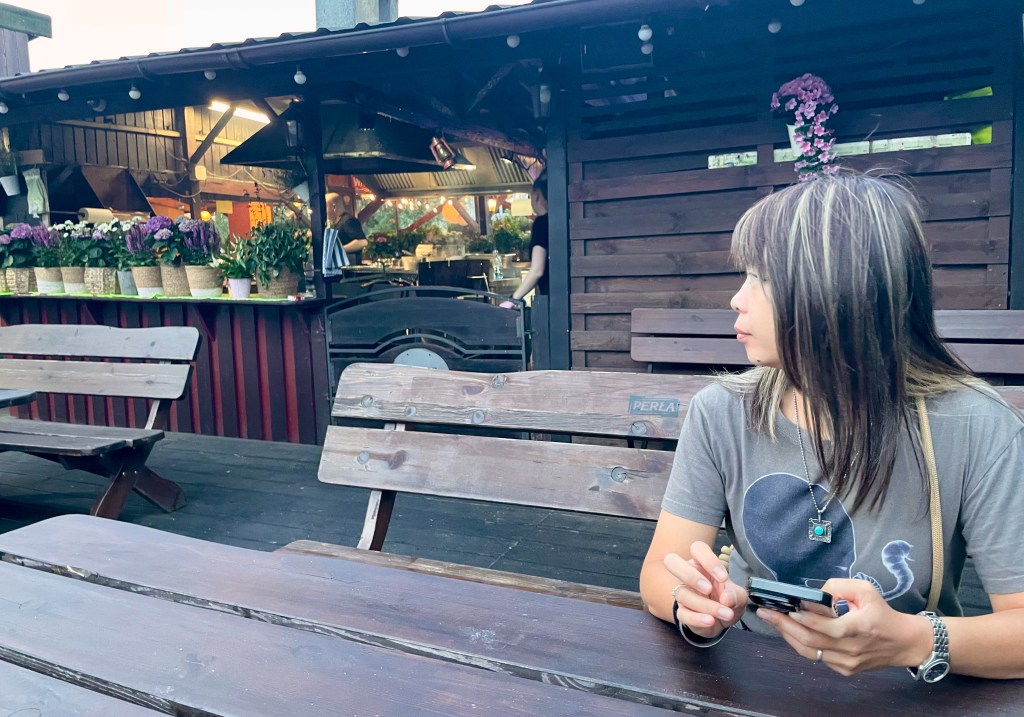
We have another social engagement tonight, so after a quick dinner we walk back to the local park, where we meet Kasia and Marianna for a drink. A cold front has just passed over Warsaw and the temperature is already ten degrees cooler than this afternoon. We were too busy talking to take a photo, but here’s one of K while we were waiting for them to arrive:
Friday 4 July
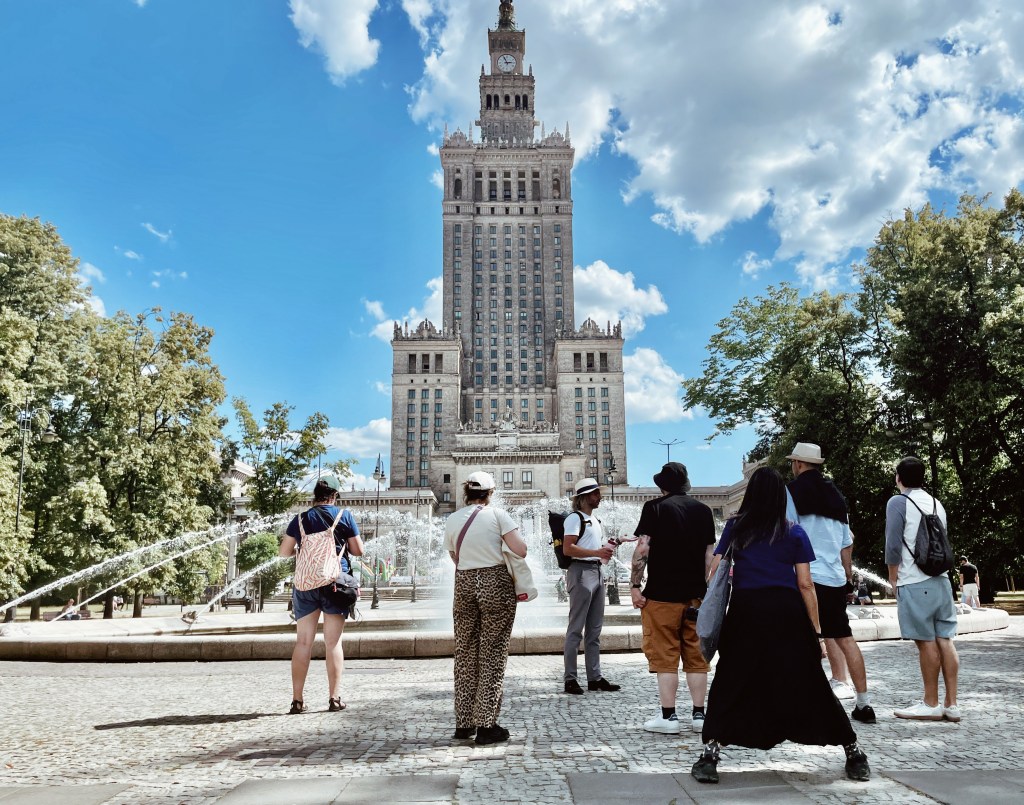
We join a walking tour, ‘Communist Warsaw’. Our tour guide, Michal, appears too young to recall more than fleeting impressions of life before 1989. But he makes up for limited personal experience with a combination of deep historical knowledge, amusing anecdotes, and, when appropriate, a measure of gravitas. Our fellow guidees include a Mancunian, who’s in Warsaw to see tonight’s AC/DC concert (half the city seeem to be wandering around in AC/DC t-shirts today); a smartly-attired Bulgarian, who’s quiet at first but warms to us when we tell him that we spent two months in Bulgaria last year; and a young American who’s off to Bosnia next week (he quietly skulks off before the end of the tour, possibly to avoid paying—not cool).
The highlight of the tour, naturally, is the iconic Palace of Culture and Science, which towers over central Warsaw like a backdrop from a Batman movie. While it’s easy enough to understand why Poles have complicated feelings about their unwanted gift from the Soviet Union, it’s quite simply one of the most magnificent twentieth-century buildings I’ve ever seen. We only get as far as the lobby, but we’ll go back next week to visit the viewing platform and stop for a coffee.
Michal recommends a three-part, English language documentary ‘The Lost World of Communism’, available on YouTube. Back at the flat, we watch the first episode, which focuses on East Germany. It’s a great recommendation that reminds me of the BBC’s peerless ‘People’s Century’. As it was made in 2009, many of the people interviewed on camera have probably since passed, making it a priceless historical document. Documentary making doesn’t get much better.
Saturday 5 July
I have a big editing job this weekend for AE. I rather resent these AE editing jobs nowadays—they tend to eat up entire weekends for limited remuneration. Still, it’s useful to keep my academic editing skills honed.
When I finally knock off work, we grab a tram to the Old Town Square to catch a one-night-only festival of Polish jazz (it’s a thing, apprarently). The square is very different to our previous visit on a Monday afternoon. This evening it’s near capacity for the festival, and the evening sunshine catches the upper floors of the handsome buildings lining the square.
Unless they’re soloing, the jazz musicians are seated on the stage, hardly making for a gripping visual spectacle:
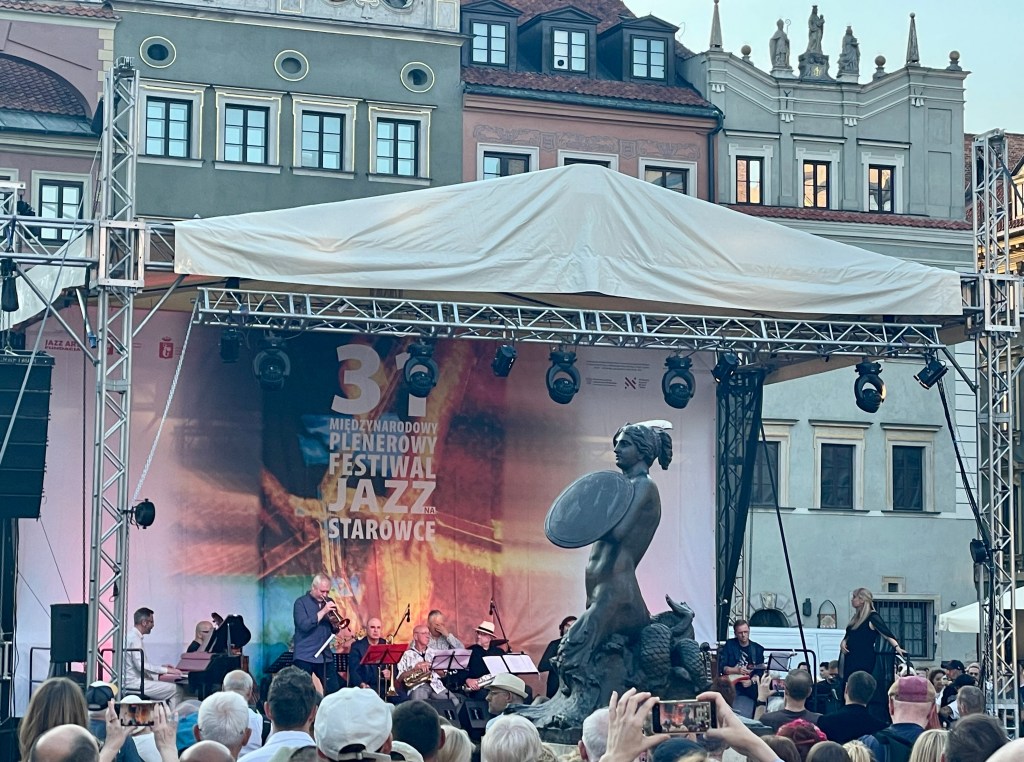
After each piece, two rappers swagger onto the stage and do a short piece, each of which clearly ends with the English words ‘Polish jazz’. The best that can be said for them is that they do at least wear their baseball caps the correct way round (and they admittedly provide all of us with a bit of stage action). The music, at least while we’re watching, is fifties cool jazz. The trumpet and trombone soloists are excellent, even if—like most jazz musicians—they would be better suited to a dark cosy bar than a town square. The keyboard soloist starts promisingly like Booker T, but unfortunately veers dangerously close to a pastiche of a cheesy game show pianist by the time he’s into his home straight.
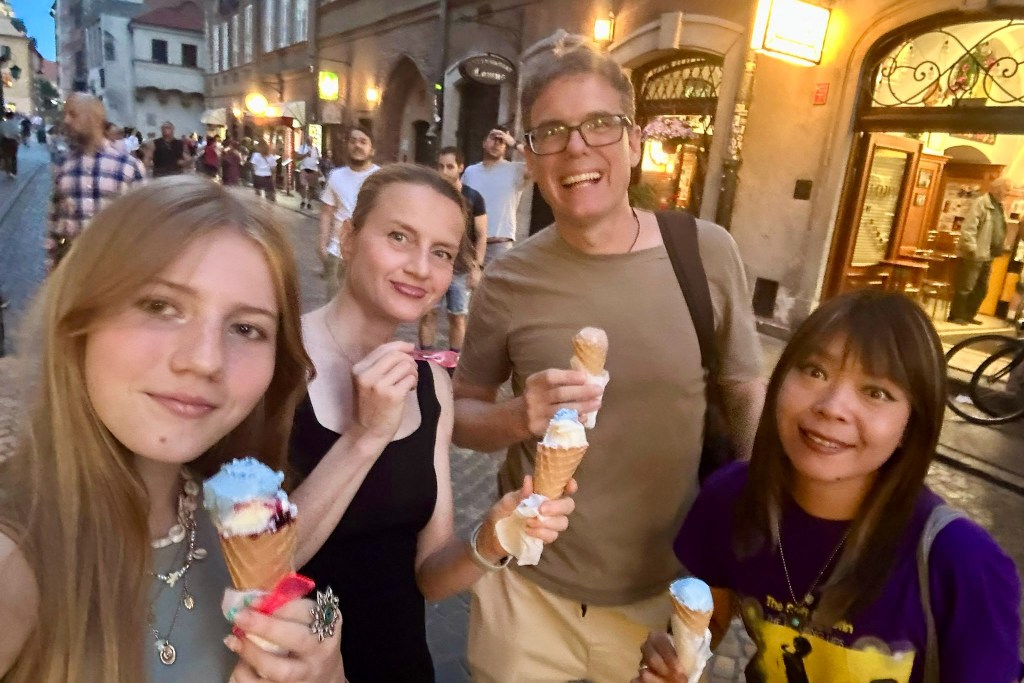
We were supposed to meet Kasia and Marianna in the town square, but it’s too full to make this possible. We eventually skulk off to find some food, settling on an unadventurous but afforable al fresco Italian restaurant opposite the Royal Castle. Kasia and Marianna eventually join us when the festival ends; together we walk back to the flat, stopping for an excellent ice cream on the way. Kasia’s off to Italy on Tuesday, so it’s probbaly the last time we’ll see her.
Sunday 6 July
Another full day of work for me. When I finally finish editing the paper for AE, I head out for a late afternoon stroll around the neighbourhood. No more than five minutes from the flat, I stumble across what appears to be a former military barracks surrounded by a red brick wall. Families are wandering through an low arch into the compound. I decide to follow.
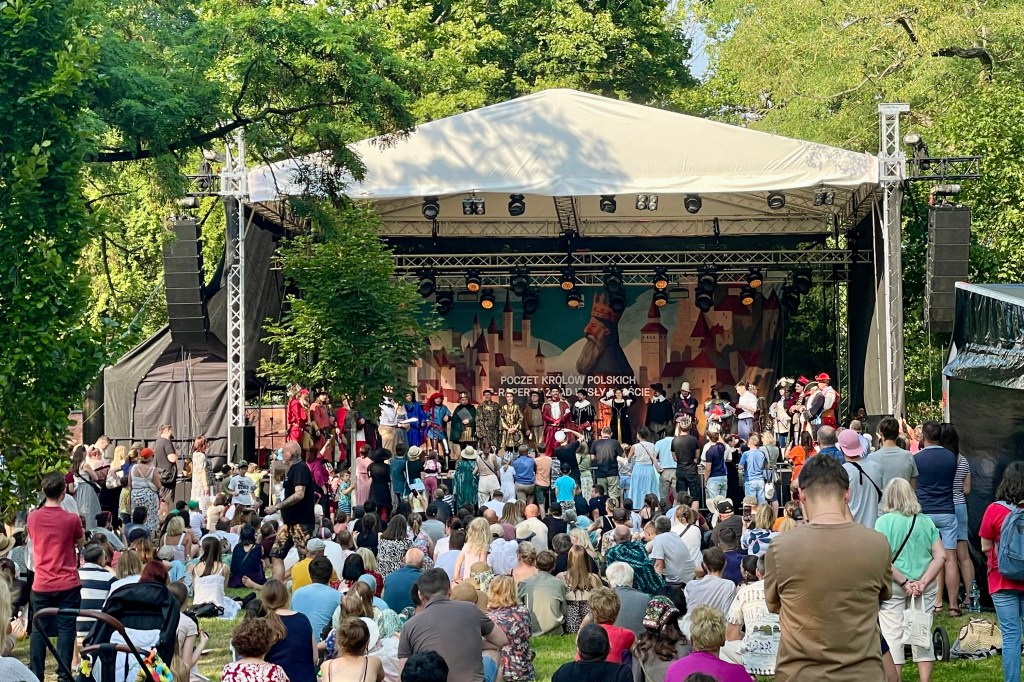
Inside, I find a combination of attractive parkland and a couple of musuems. But on this high summer afternoon, the main attraction is a temporary stage on which I can see several people lined up dressed as…medieval royalty? A compere is introducing them one by one as they step forward in their robes to take a bow. I have no idea what it’s all about, but Google Translate informs me that the banner behind the stage reads something like ‘Procession of Polish Kings’. The locals at least seem to be enjoying it. I linger at the back for a few minutes before retracing my steps back to the flat to tackle some admin.
This is when I learn that our upcoming two-day housesit in Haywards Heath has fallen through. Ostensibly, the explanation is that one of the cats needs some (presumably ongoing) treatment. The more likely explanation is that a neighbour or family member has offered to look after the cats for them—arguably fair enough given that K and I currently have no track record on Trusted Housesitters.
In fact, this blot on our UK itiniery seems to work well for us. It was already looking like a very crammed week in Birmingham and Nottingham at the end of August. Now, we have two addditional days to play with. And we still have the longer ten-day housesit in Macclesfield to get us onto the bottom rung of the ladder. We’ll turn this minor setback into an opportunity.
Monday 7 July
Today would have been Dave’s 90th birthday. Hard to imagine.
We’re focused on tweaking our UK itiniery. It’s all very well having the additional two days to play with, but of course it’s bank holiday weekend and we’ll hardly be the only ones travelling…
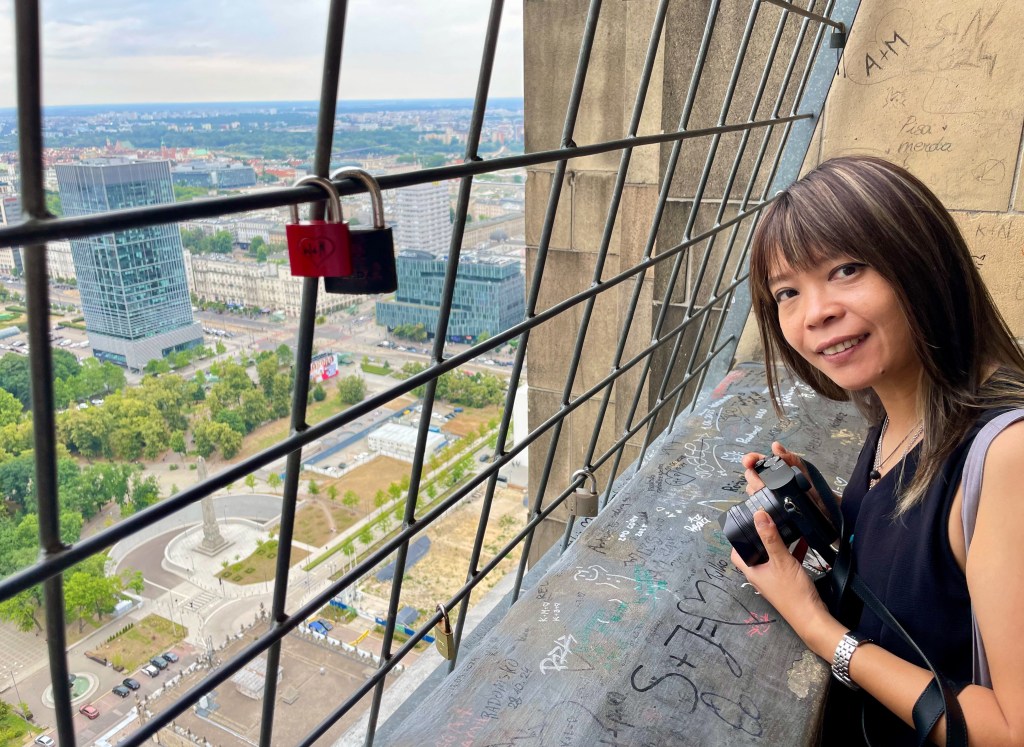
In the afternoon, we’re whisked 30 floors above Warsaw to the viewing platform of the Palace of Culture and Science. (The old joke goes that the best views of Warsaw are from the viewing platform—because you can’t see the Palace of Culture of Science.) The view is indeed grand. From 30 floors up, the flatness of this part of Poland is clear to see. The distant horizon is an unrelentingly flat line in every direction:

The platform is a good place to get our bearings now that we’ve explored a bit of Warsaw: there’s the handsome old city near the river; there’s the railway station; there’s our neighbourhood. Back on the ground floor, we stop for a lemonade/coffee before grabbing some groceries and taking the metro back to the flat.
Tuesday 8 July
The rain starts in spots as we step out of the flat. By the time we reach our local metro station, it’s steady. By the time we emerge back overground in downtown Warsaw, it’s coming down in sheets. We have one small umbrella between us (I left my treasured patterned Kyoto umbrella on a bench in the Tatras). No matter how much we huddle together under it, our one exposed arm each, our lower legs and, most of all, our shoes are soaked by the time we arrive at the National Museum despite riding one stop on the tram.
The museum—actually the national art gallery—is a diverting enough refuge from the weather for a couple of hours. (In truth, K finds it more diverting, but there are plenty of soft seats where I can perch and read up on art history on Wikipedia—I still have so much to learn.) Of the three floors, by far the most appealing for me is the one devoted to nineteeth-century art (the most modern in their collection). There are some stirring bucolic works, but most stirring of all is arguably this 1862 work by Jan Metejo of Stancznk, a historical late medieval Polish court jester, musing on the fate of his homeland while a ball is in full swing in an adjacent room:
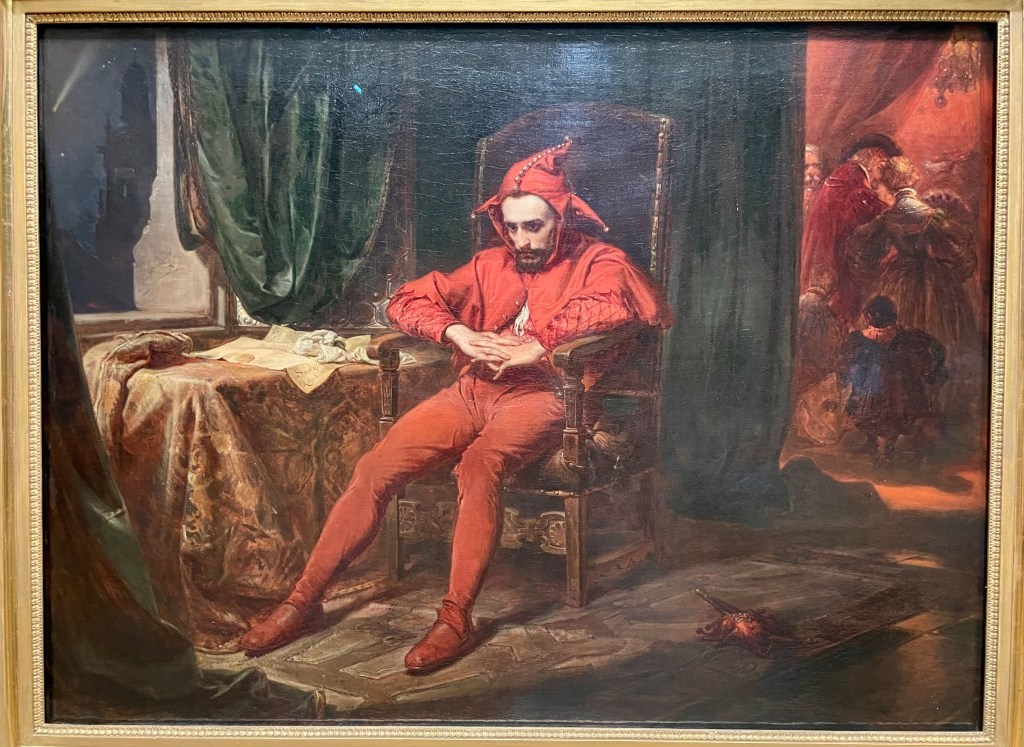
Back outside, it’s still raining heavily. I manage to dart into a nearby Rossman’s to buy a boring-but-much-needed plain black umbrella. With one umbrella each, we manage to arrive back at the flat wet, but not completely soaked.
Wednesday 9 July
Grey skies again. And cool. Hard to believe it was 35 degrees a few days ago. Today, we both venture out in long sleeves. Still, for the time being, I’ll take it over an oppressive July day in Hong Kong.
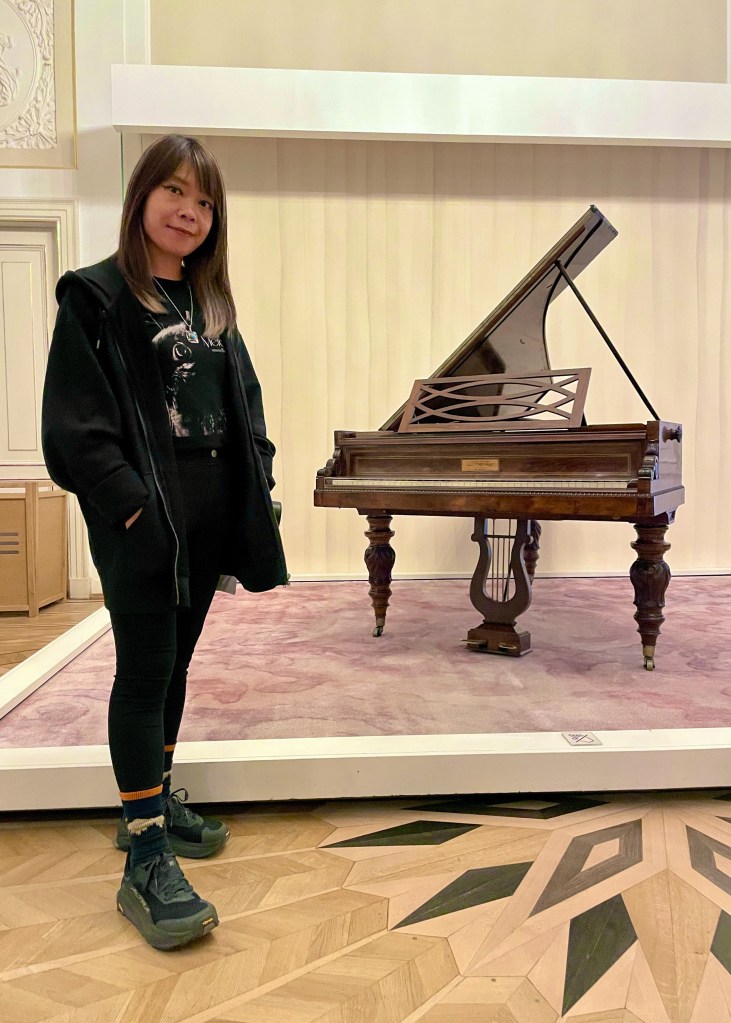
Today’s cultural box to tick is the Fryderyk Chopin Museum. The building itself, a rebuilt 18th century fortified mansion, appears to have no specific link to Mr Chopin. But it makes for a suitably grand setting for the exhibits, the most affecting of which are various original hand-written manuscripts and letters, along with the final piano Chopin owned, shipped back from Paris after his death at the age of 39. There’s also a room where we can sit down, each slip on a pair of headphones and browse through the history and development of the various musical forms that Mr Chopin worked in: mazurkas, waltzes, noctures, polonaises etc. (I even begin to hear the differences between them—this is a work in progress…) We also spot many more east Asian visitors in the museum than we’ve seen in ten days in Warsaw. It’s certainly worth visiting.
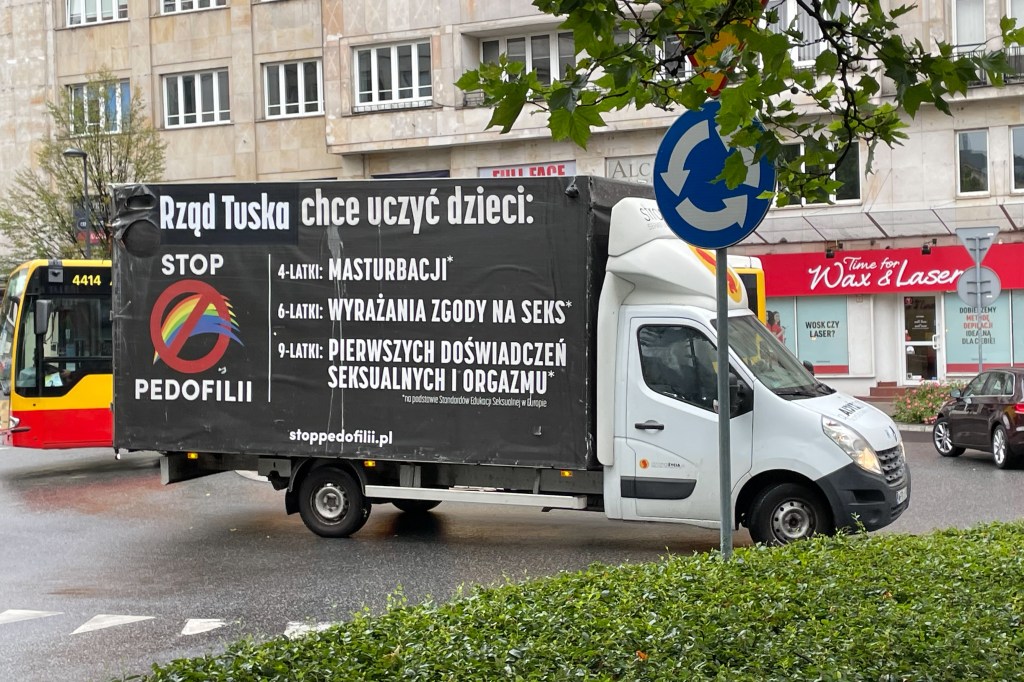
Walking back to the Metro, we spot a white van driving around with a banner accusing Donald Tusk’s government of promoting pedophilia. Back home, I run this through Copilot, which unsurprisingly reports no credible evidence of this whatsover. Just the culture wars raging here in Poland much as they are everywhere else.
Thursday 10 July
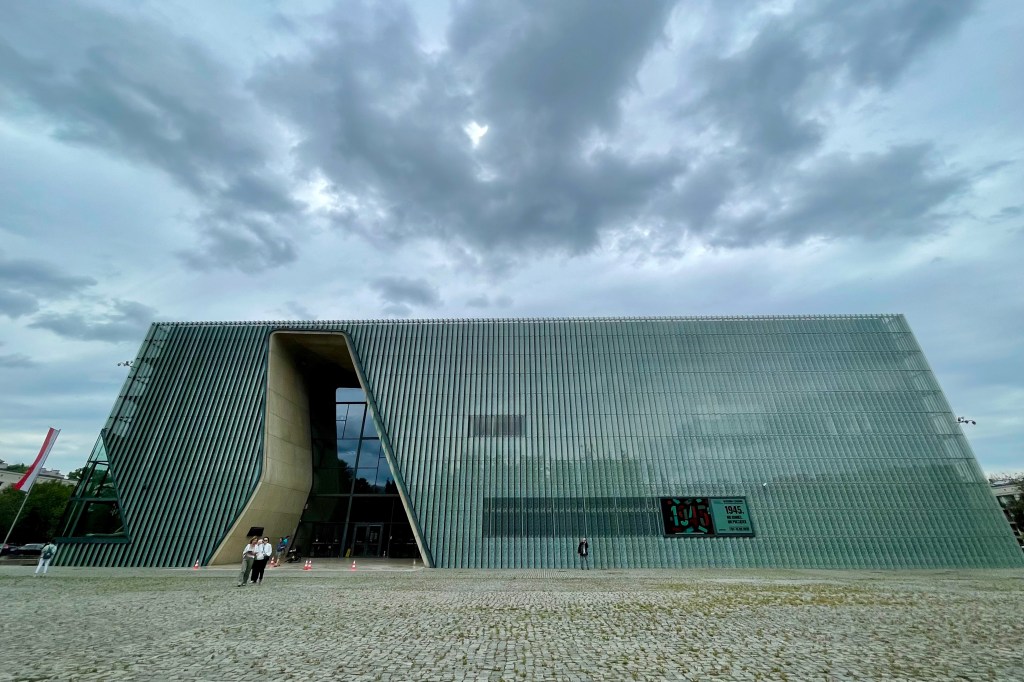
We’ve been ploughing through Warsaw’s museums these past two weeks. Today is our final stop, at the POLIN Museum of the History of the Polish Jews, housed in a striking purpose-built structure in the heart of what was the Warsaw ghetto during WWII. There’s too much to absorb in the three hours that we’ve allowed ourselves and we inevitably have to quicken our pace towards the end. Still, it’s clearly an exceptional museum, spanning the first recorded presence of Jews in Poland around a thousand years ago, through the holocaust, and onto antisemitic scapegoating of the tiny remaining Jesish community by the Polish Communist Party during the protests against communist rule in 1968.
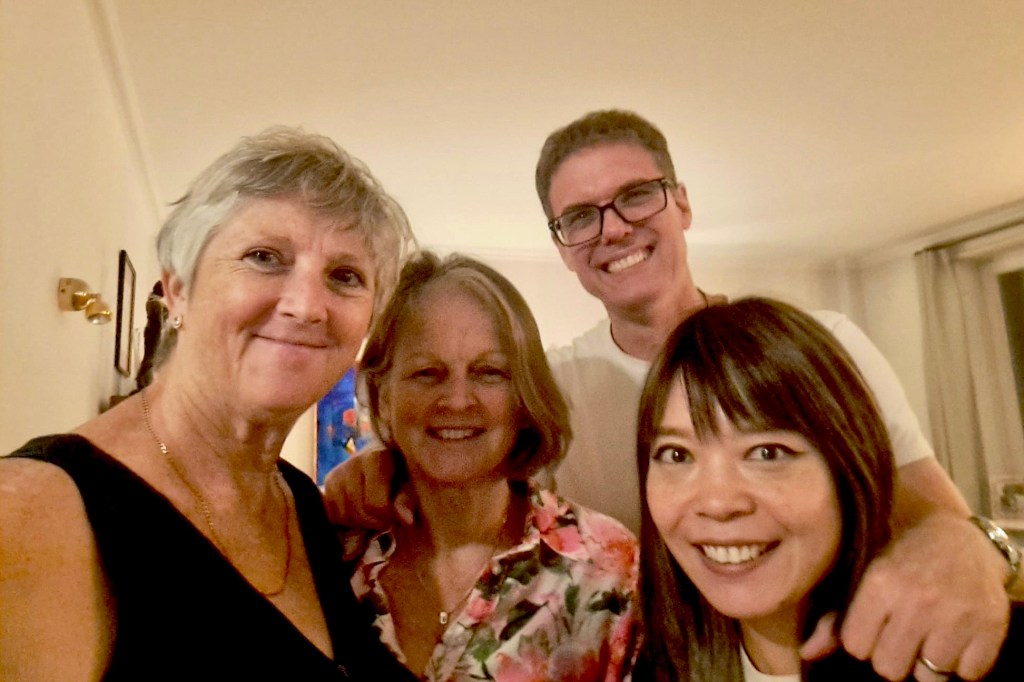
From the museum, it’s a short walk to Rachel and Loraine’s flat, where we’re invited to dinner. Rachel’s just this week been diagnosed with a chronic gut condition and looks tired when she comes to the door to greet us. We inevitably spend the first hour discussing our various middle-age ailments and past accidents. (In her 20s, Loraine fractured her arm in an accident that, other than not involving a bike, was very similiar to my misadventure last year in Bulgaria.) We eventually move on to brighter topics and have a truly lovely evening with them. They’re special friends and it’s wonderful to find that the three of us have a tight connection that now stretches back half a lifetime—even if we’ve only seen each other three times in the last 23 years. They get on fabulously with K too. We eventually take our leave late into the evening, promising to visit them once they’ve moved back to Enfield in the not-too distant future.
Friday 11 July
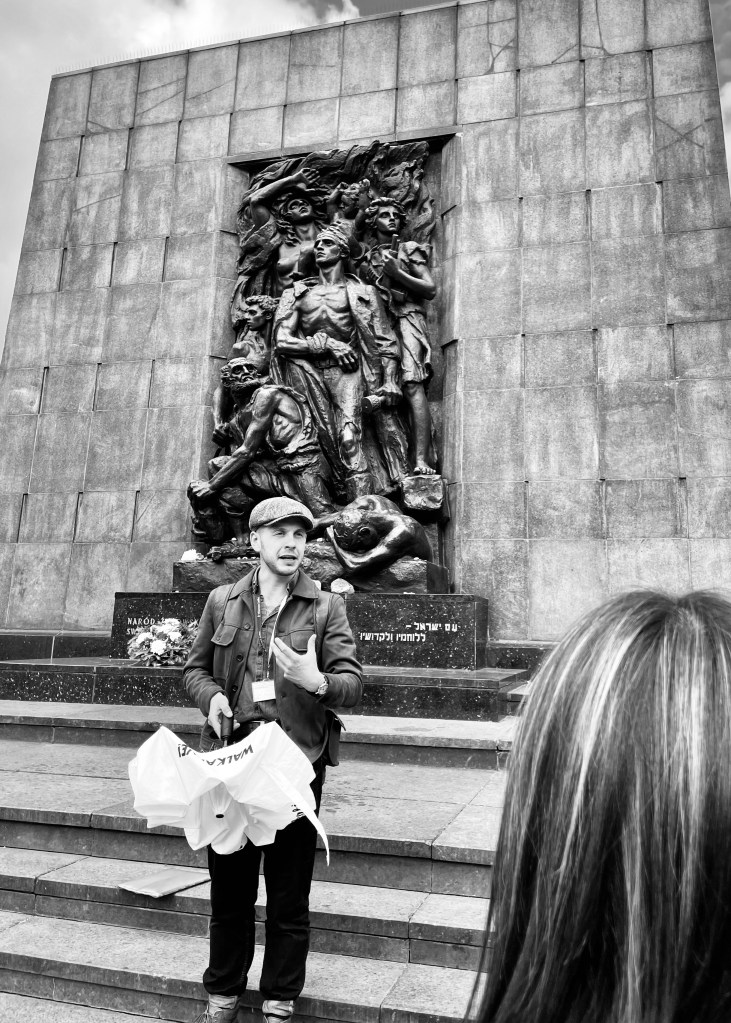
Our final day in Warsaw is decidedly chilly for mid July—we join another walking tour, of Jewish Warsaw, wearing our hoodies. Today’s tour attracts more people than our recent tour of communist Warsaw. Perhaps this is why it doesn’t gel in the way that our previous walking tour did. Or perhaps the reason is our guide. He’s professional: well-prepared, full of stories, and he has excellent ‘classroom management’ skills, for want of a better phrase. Yet he somehow struggles to make us feel like a cohesive group despite expending considerable effort.
Still, I have to admire him. Challenge number one for a conducting a walking tour of Jewish Warsaw is, of course, that Jewish Warsaw no longer exists. We meander through the area that was once home to 380,000 Jews, but there’s almost nothing to see to directly connect us to them. Like the empty chair sculptures in the centre of the former ghetto in Krakow, only ghosts remain. We see Warsaw’s single synagogue (of over 400) that survived the war (the Germans used it as a stable) and a small preserved section of the ghetto wall (now the first two floors of an otherwise modern block of flats). But otherwise our guide has to rely almost entirely on his own storytelling skills to fill the physical void. Naturally, we finish at the monument in front of the Museum of the History of the Polish Jews, where we learn that Willy Brandt knelt in apology in 1970—a symbolic act that Germany marked 50 years later by a minting a two-euro coin engraved with this act of contrition.
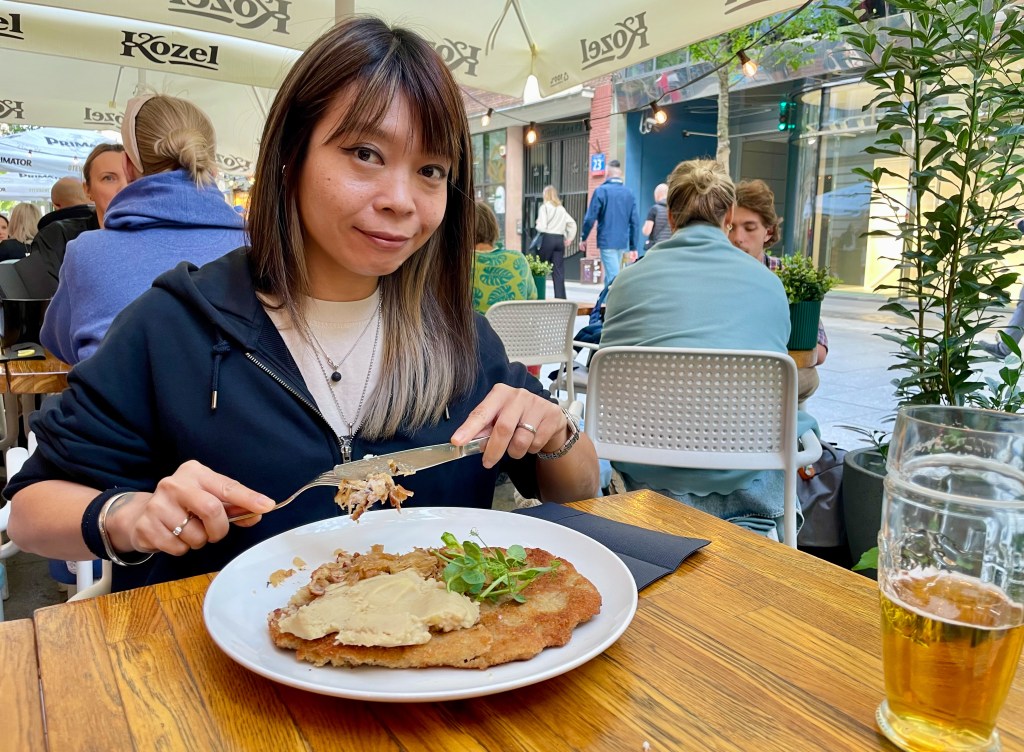
We wander back to a cafe outside the Palace of Culture and read our books until it’s late enough to find somewhere to eat. On this mid-July evening, it’s just about warm enough to sit outside, although I’m now wearing three layers. Our food isn’t cheap, but it’s delicious: halibut for me, a pork fillet for K. It’s one of the best restaurant meals we’ve eaten in what’s now approaching two months in Poland.
We’re done. Warsaw’s deeply troubled history has loomed large over our visit, as it should. But its phoenix-like reconstruction from the rubble and ashes of WWII is remarkable. We’ve learned much, and caught up with treasured friends. It’s time to move on to Torun.
 Two On Tour
Leave a comment