The last time I was roaming Poland’s erstwhile capital, I was a callow 27-year-old.
Monday 19 May
The bus journey from Budapest to Krakow is often beautiful, especially as we cross Slovakia from south to north. It’s my first glimpse of the Carpathians. Although modest, they’re truly pretty. We pass through a string of small towns, including at least one ski resort, where snow still lingers high on the surrounding mountains. The countryside is lush and green, and the road – which varies between modern and smooth, and a boneshaking patchwork of sloppily repaired surfaces – is rarely busy.
It would be a lovely journey if I didn’t appear to have a urinary infection. I have a burning sensation in my bladder that feels like I need to urinate from an hour into the journey until after we reach Krakow. I try urinating, but pass little. As soon as I retake my seat, the sensation returns. It’s torture. Deep breathing and listening to podcasts marginally eases the intense discomfort, but it’s still deeply unpleasant. Thankfully, it eases considerably once we’re off the bus. My best guess is that dehydration (I was careful to drink as little as possible before boarding as I didn’t know if there would be a toilet on board) and engine vibrations combined to aggravate what might be a mild infection.
Arriving back in Krakow for the first time in 29 years has already got off to a bad start. This immediately gets worse when we’re unable to buy SIM cards at the place Lena has recommended because…you can’t make this up…they’ve run out of SIM cards. Tired and grouchy, and with me still in considerable if receding discomfort, we search in vain for a convenience store selling similar cards. But the directions we receive from well-intentioned passers-by never seem to help and we instead turn our attention to finding the nearest taxi rank – also not easy. Finally, after nearly an hour of post-arrival faffing, we climb into a taxi and drive out to our home for the next month deep in the southeast suburbs of Krakow.
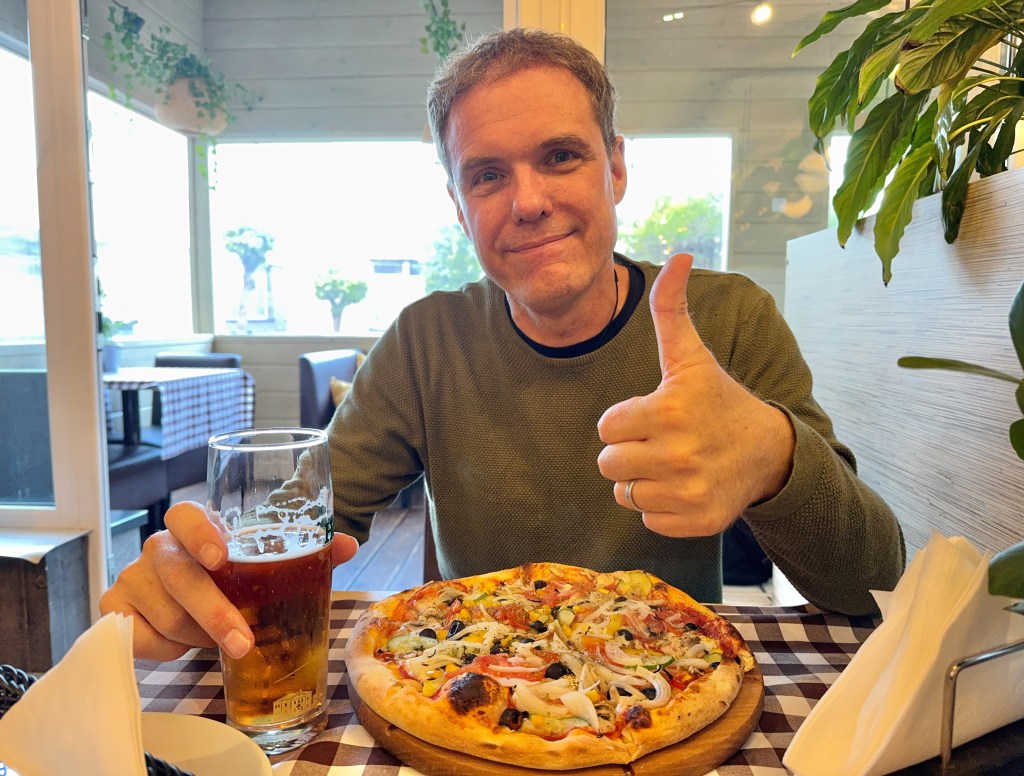
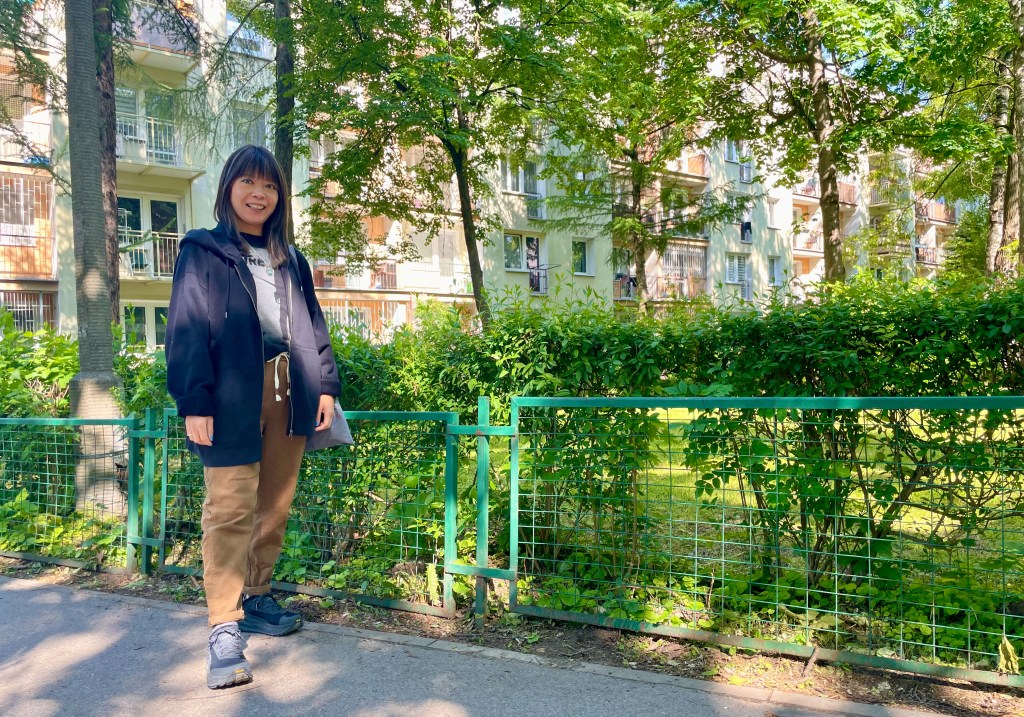
Lena and Michael’s place is in an old communist-era low-rise block surrounded by shady trees and grass. It’s more spacious than I’d expected, and has been thoroughly modernised. Every drawer and every cupboard is full of their belongings and my initial concern is that we’ll struggle to find space for our own modest belongings. Eventually, with a bit of fancy footwork, we make it work. It’s already gone 7pm, so we head for the small parade of shops and restaurants serving the estate. We have excellent pizza and pasta and I begin to relax. I’m feeling a lot better. With help from Google Translate, we manage to buy and register SIM cards at a convenience store on the estate. The nearby supermarket has most of what we need, so we stock up, head back, and call it a day.
Tuesday 20 May
Our first full day in Krakow starts with a couple of hours of pre-breakfast work: typically, while I was without a SIM card yesterday, an urgent request came in. Lena has left me several voice messages overnight, including one with valuable advice about UTIs. She’s sent photos of over-the-counter medication that I can buy, but tells me to see a doctor if it doesn’t clear up in a couple of days. Thankfully, it already seems to cleared up, but I’ll get the medication.
By the time we’ve freshened up, done more grocery shopping, had lunch, and caught up with what’s been happening in the world, it’s already three o’clock. The city centre is a good five kilometres away and after boarding the wrong tram and having to walk the last stretch, it’s four o’clock before we arrive.
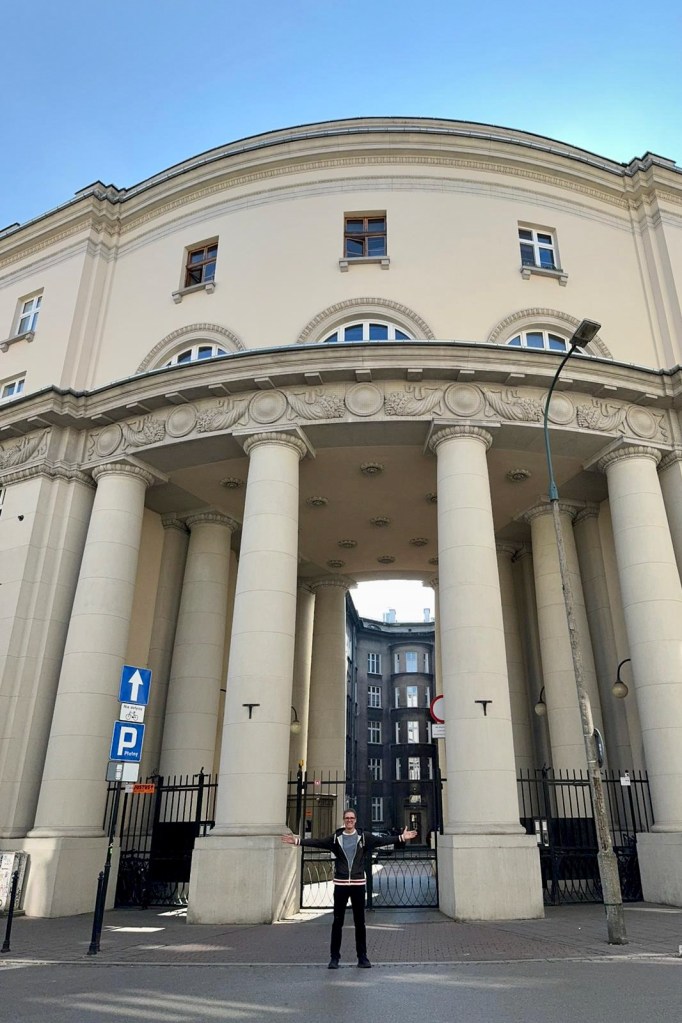
Our first stop is the rather splendid building where I lived in the spring of 1996. The outside has been cleaned up and it looks far grander than I recall it:
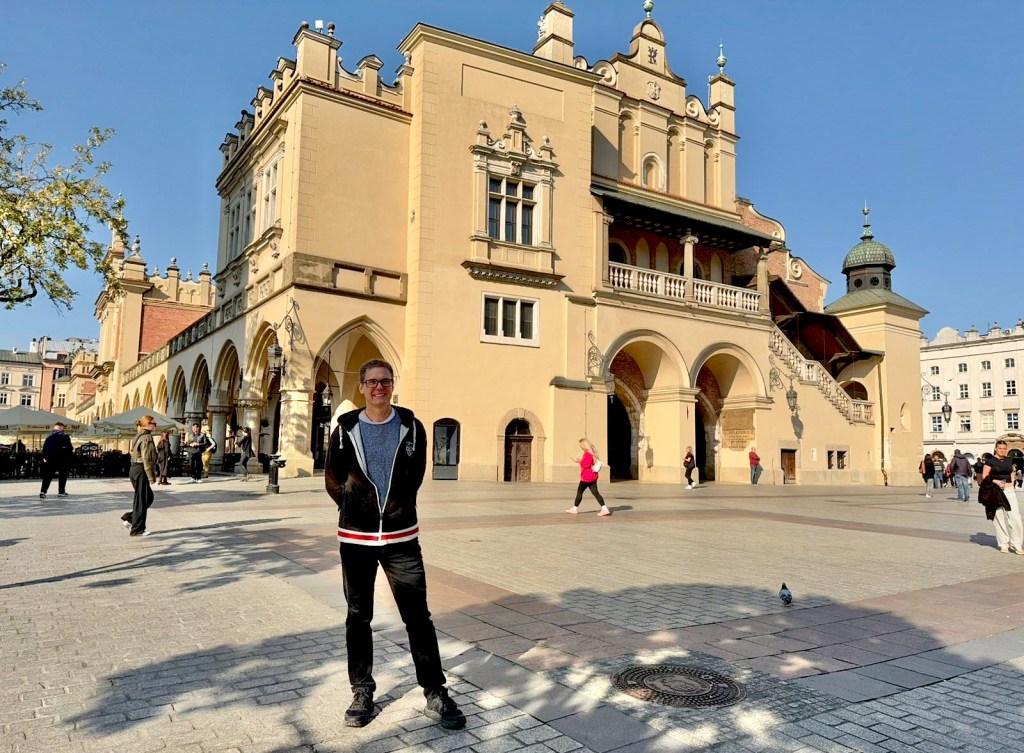
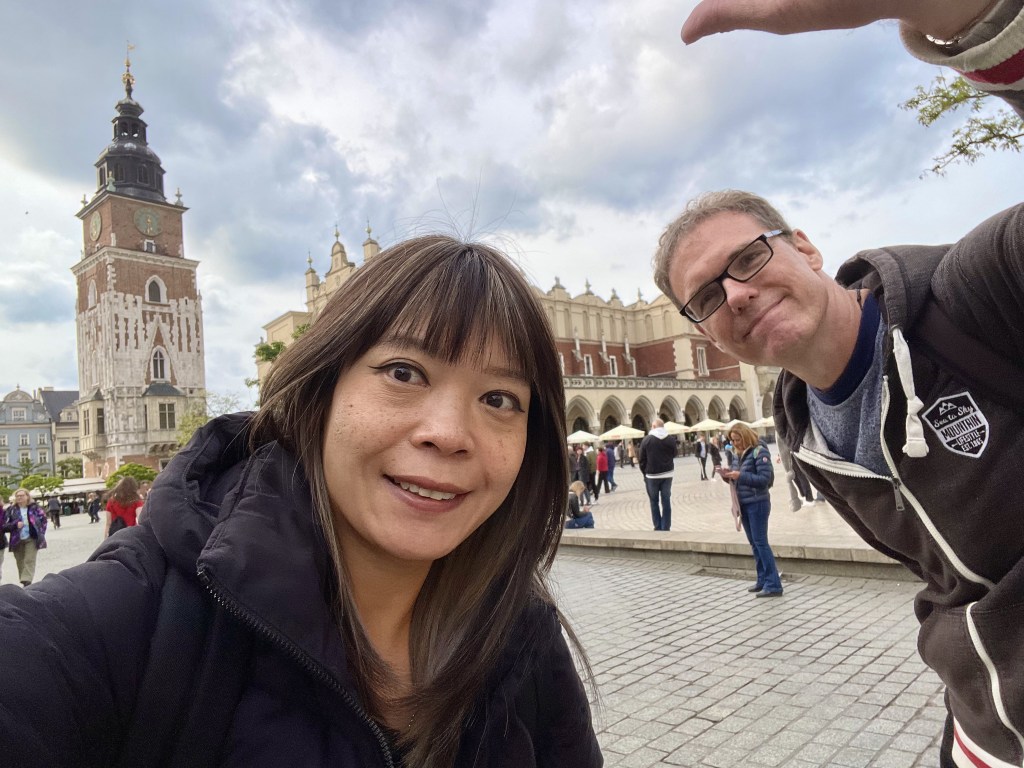
We wander across to the nearby Old Town and into the Rynek. It’s as beautiful and graceful as I recall it. Yet I don’t feel overwhelmed with nostalgia being back here. I wasn’t in Krakow long enough to put down roots. I have fond memories of that far-off spring. But I also know that I was still deeply homesick for Istanbul.
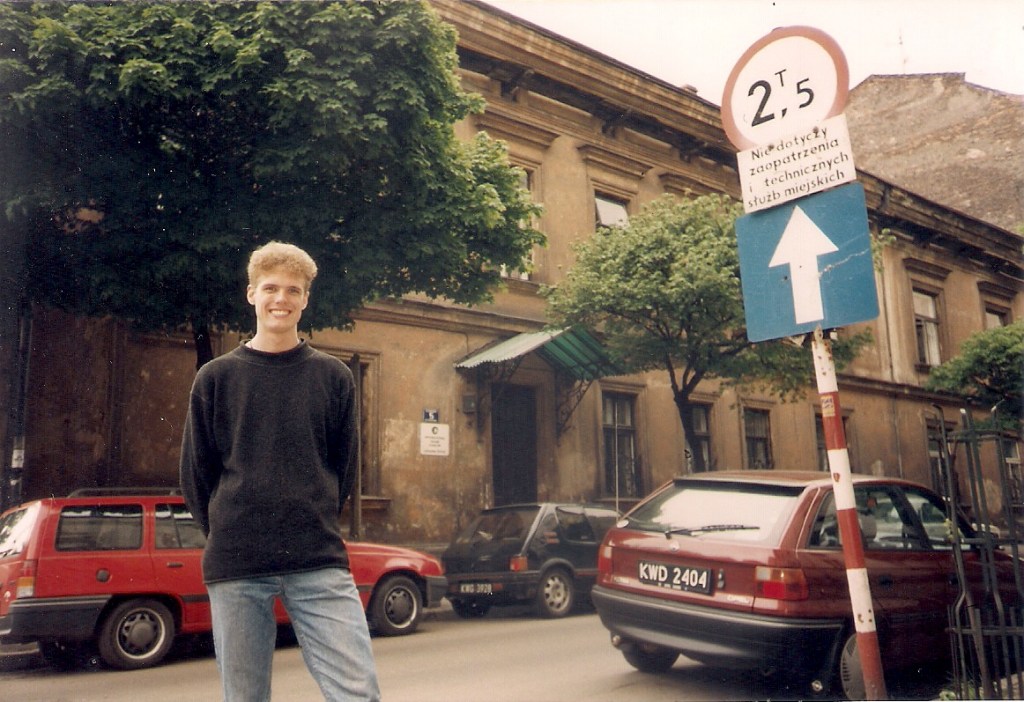
I’m keen to continue on foot out the other side of the Old Town to find the building that used to house International House. It’s not hard to find, but, again, there’s no powerful wave of nostalgia. I realise that I don’t even have a clear memory of walking in and out of the front door, something I must have done many dozens of times. Here’s me outside in 1996. I’ll get an updated photo in the same spot in the next few days.
We were going to stop for a coffee on the Rynek, but it’s already five o’clock and we’re staying way out in the suburbs. It’s time to head back. Lacking enough small change for a coins-only tram, we figure out how to buy tickets on the local transport app, Jakdojade. This time, we board the right tram and make our way back to the suburbs.
Wednesday 21 May
After gawping at the finery of the Old City yesterday, today is much more functional. Getting a new course of Finasteride for my hair growth is top priority. Once again, I run into the same problem: Finasteride is only available in 5mg doses in Poland. Fortunately, the pharmacist I speak to speaks fluent English. She explains that if I go to a doctor, explain the situation, and get a new prescription for 5mg tablets, she can grind them into 1mg tablets for me. Excellent advice. I call a private clinic but their phone tree only seems to function in Polish even when I press ‘2’ for English.
Instead, we board a bus – we’ve nailed the public transport system in our first 48 hours in Krakow – and head directly to the clinic a couple of kilometres away. It’s a friendly place in a business park, opposite a big modern mall. I expect to be given an appointment for tomorrow, which would be absolutely fair given that it’s already 4.30 in the afternoon. Instead, I’m asked to come back in an hour. We head to the adjacent mall for afternoon tea to while away the time. The doctor sees me on time, understands my predicament, and agrees to do what the pharmacist suggested. We clamber back on the bus, explore another supermarket not far from the flat (we’ll make this one our regular) and walk back to the flat with a new, completely unplanned, adventure behind us.
In the evening, Spurs beat Man Utd 1-0 to bag the Europa League cup. It’s been a good few days for football: at the weekend, Crystal Palace beat Man City in the FA Cup Final, Everton won their final match at Goodison Park, and Jamie Vardy scored his 200th goal for Leicester in his 500th and final match. It could all have been so different: City could have won the cup, Everton could have lost their final match at their historic home, and Jamie Vardy could have hit the post. For once, however, the gods of good fortune are smiling on football.
Thursday 22 May
With a spring in my step, I return to the local pharmacy and present my new Finasteride prescription. But the doctor I saw yesterday has written the prescription incorrectly and Anna, my friendly local pharmacist, says she simply can’t honour an incorrect prescription. She helpfully offers to call the clinic to try and sort things out. But while waiting for someone to answer the phone, she discovers that she actually has 1mg Finasteride in stock despite her certainty yesterday that it’s only available as 5mg tablets in Poland. Much hassle averted, but if she’d been a little less certain yesterday and looked it up, she would have saved me HKD500. Never mind. Bless her. We had an adventure.
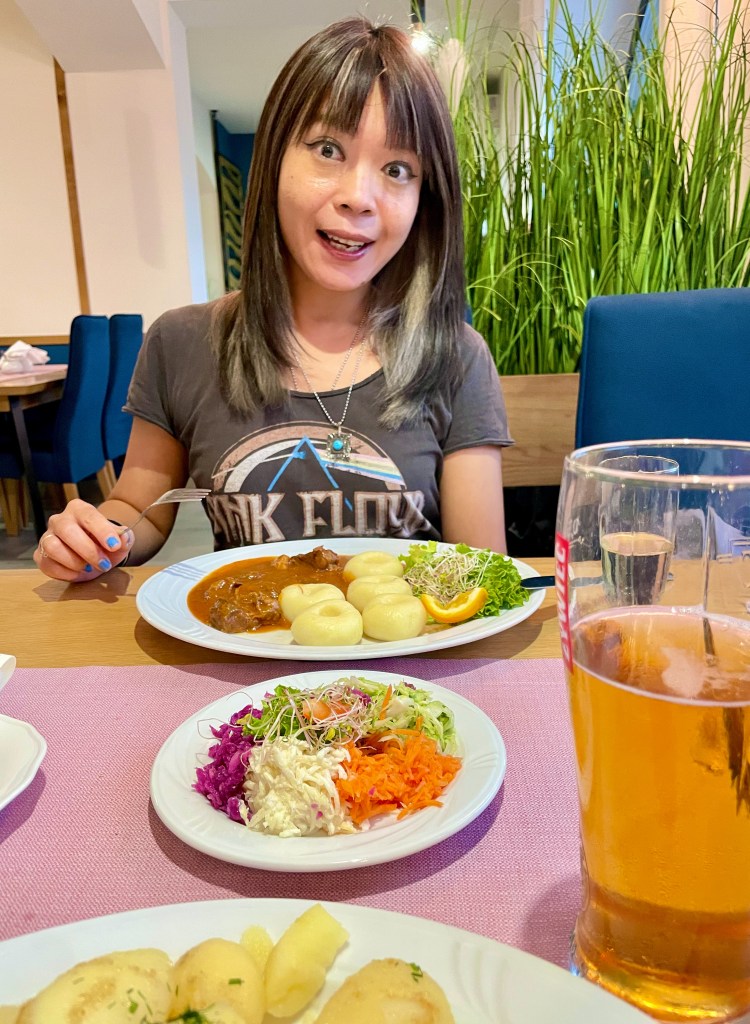
After bright sunshine since we arrived on Monday, after lunch it turns wet. We abandon plans to walk the Planty and nest at home for the afternoon: I work on some very rudimentary Polish while K draws. But rain notwithstanding, we’ve pencilled tonight as an eating out night. Lena has recommended a local place, Restauracja Wodnik, that turns out to be just a couple of tram stops from us. Its decor resembles the restaurant of a functional business hotel, but the food is good and reasonably priced (as it probably should be this far from the city centre). It’s also next door to a big Lidl, which gives us a fourth choice of supermarket in the neighbourhood.
Friday 23 May
After a soggy washout of a Thursday, today is cool and overcast, but dry. Good enough to get outside and explore. We boarded the wrong tram into town on Tuesday, but this time we nail it and step off right on the Planty. Our objective today: stroll the Planty in full. This is one of many things that I don’t believe I did in 1996. It’s easy to overlook how busy I was with studying when I was here before.
As we make our way around, we make a small detour to get a photo outside the old International House building, most recently a hotel, but currently empty.
At Wawel Castle, we use a bit of initiative to see how far we can get before we have to buy tickets. It turns out that we can wander the entire outdoor area, take in views across the River Vistula, and park ourselves at a cafe for a coffee and a sticky bun. It will be June in just over a week, yet the cafe still has outdoor heating this afternoon. K’s still in her puffer jacket:

We cut out a small section of the Planty to wander into the Old Town and simply soak up the Friday afternoon atmosphere.
Saturday 24 May
We spend the afternoon at (one branch of) the National Museum. Although it’s barely five minutes down the road from the old International House school, I never visited back in 1996. One floor is dedicated to the decorative arts and I find myself paying attention for perhaps the first time to the sort of elaborately decorated furniture and trinkets that I would usually take for granted without stopping to consider the craftsmanship that went into making them regardless of my own tastes in home decor.
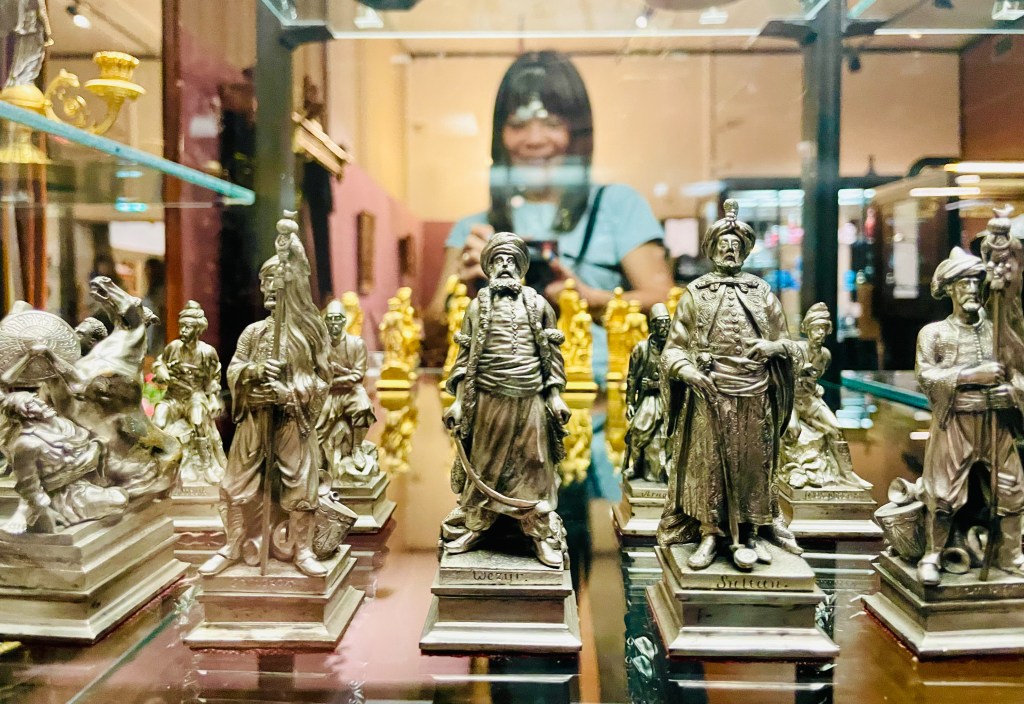
Alongside the expected porcelain and glassware, there are also wooden cabinets, silk-covered sofas, stringed instruments, and – most spectacular of all – a chess set depicting the Polish and Ottoman armies at the Battle of Vienna in 1683:
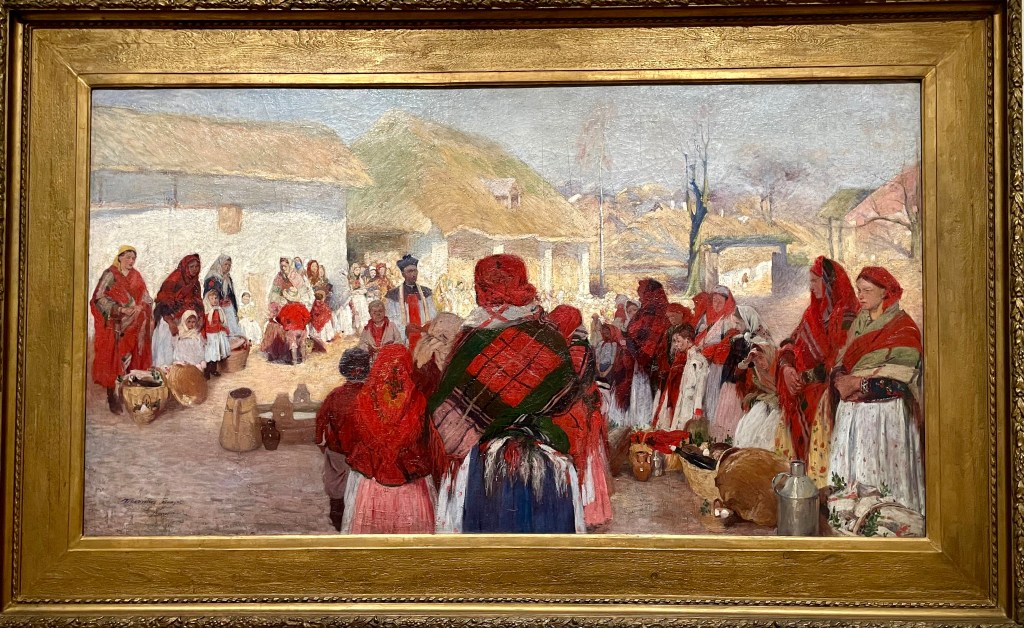
The other floor covers Polish art, and there’s much to enjoy. I’m especially taken by the spatial use of red in this painting:
All of a sudden, I can see how art got from that to, for example, this:
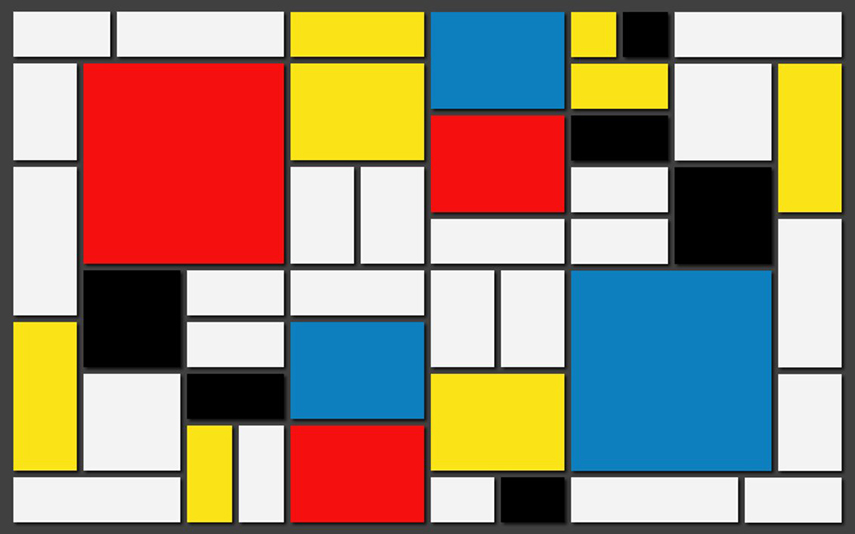
I’ll probably never be a committed fan of abstract expressionism, but I can at least begin to see where it came from…
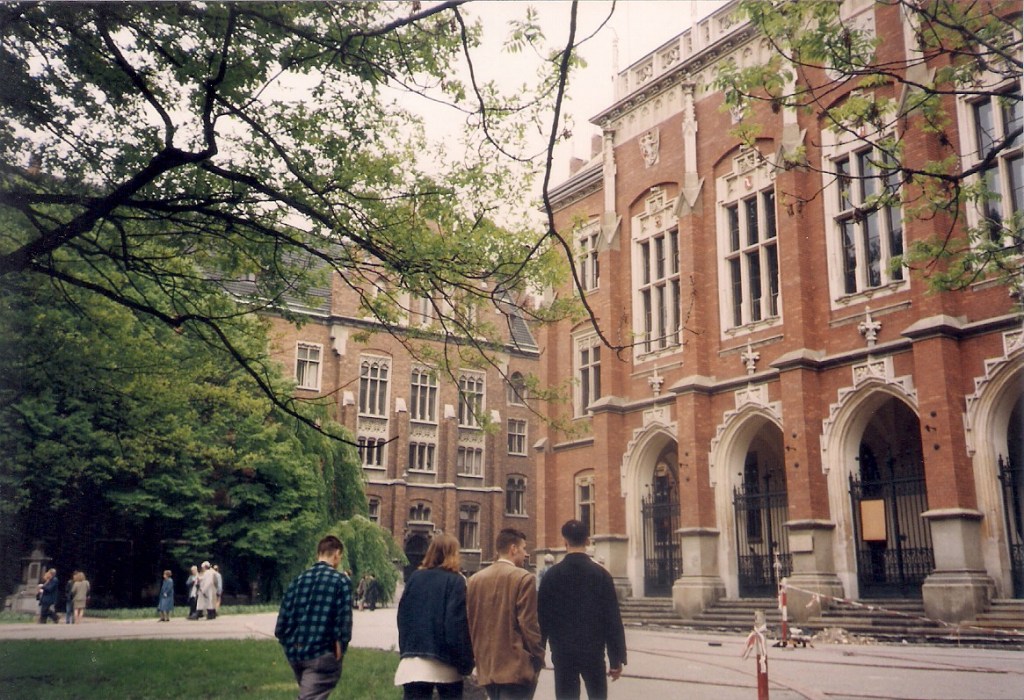
Walking back into town, we pass a spot where I recall taking a photo back in ’96:
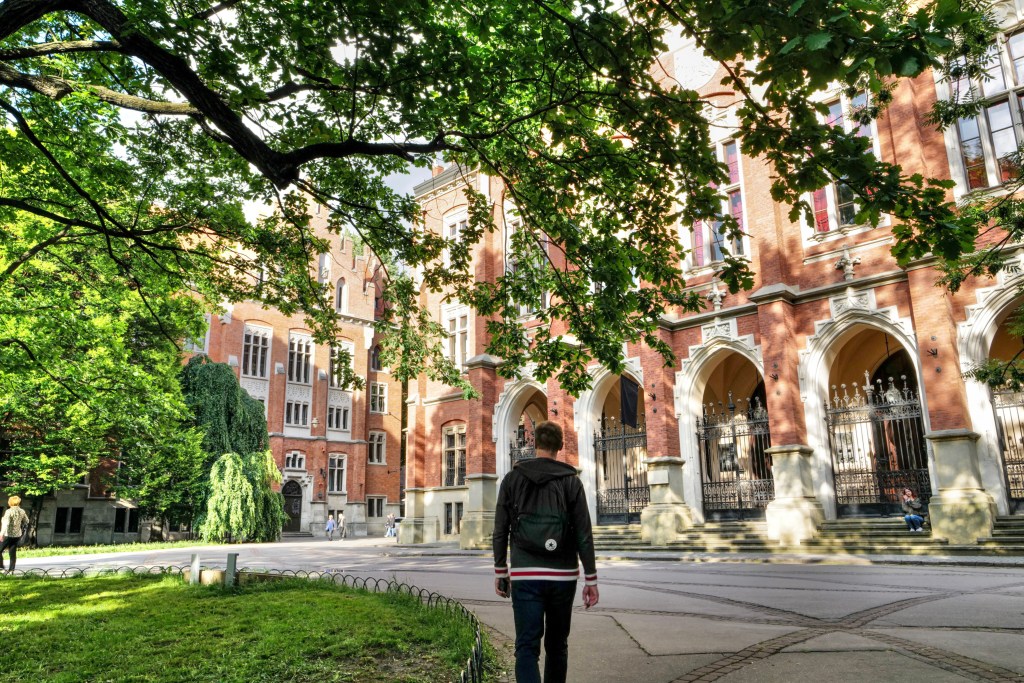
K gets an updated one:
On the Rynek, we wander the craft fair for a while before deciding it’s late enough to eat and choose a place on the Rynek that suits our budget. Our waitress is untypically smiley and friendly. When we’re offfered a choice of zloty or Hong Kong dollars to settle the bill, she notices the little-recognised Hong Kong flag on the card reader and asks us where we’re from. She’s the first to ask, and – with no disrespect to the many other Poles who have held out a card reader for me this week – I realise how pleasant it is to be on the receiving end of another person’s curiosity.
Sunday 25 May
It’s another bright but plesantly cool day. I while away half the morning on the balcony finally digging into the Lonely Planet guide to Poland. There’s so much to learn. I’d almost forgotten how useful a physical guidebook of Lonely Planet quality can be and resolve to carry hard copies of the guides to Morocco, Spain and Mexico in the coming months. (Is there a Lonely Planet guide to Costa Rica? I’ll find out.)
It’s Krakow’s day off, so we spend the afternoon at the Bagry Lagoon – a pleasant suburban lake park a few stops away by tram. It’s a perfect place to stroll on a Sunday afternoon when it’s full of couples and families. Some play beach volleyball; others lounge in hammocks. I manage to order ice creams for both of us in the most basic Polish any human being has been known to grunt, but it’s a small accomplishment.

Back on the estate, we discover that all the local supermarkets are closed on Sundays (despite a sign in the window of our nearest supermarket stating that it’s open until 8pm). Fortunately, we’re fully stocked for tonight’s spicy tofu stew.
Monday 26 May
K’s resistance band snapped on Sunday night. Whatever we do today needs to include a visit to Decathlon. We conveniently find one out on the east of the city not far from an interactive outdoor science park that’s already on our radar. With rain forecast, we opt to visit the science park first. En route, K realises that she’s been buying student tickets for public transport for the past week: this explains why I had to top up my digital wallet before she did!
At the science park, we can run in a giant hamster wheel, hand-crank a whirlpool, and be air-blasted by a cannon. It’s primarily aimed at kids, but it’s a great hands-on way to explore optical illusions, acoustics, and gravity for anyone with sufficient curiosity. Fortified with coffee and a nutella-smeared waffle, we stroll past Krakow’s equivalent of the O2 Arena to the nearby Decathon box store. Outside the store, we spot a couple of dozen tents pitched on a small grassy area. Temporary housing for the homeless? Nope, it’s simply a display of Decathon’s fine range of affordable tents. This, of course, would be impossible in Hong Kong, and many other cities. The space available in Krakow continues to amaze me.
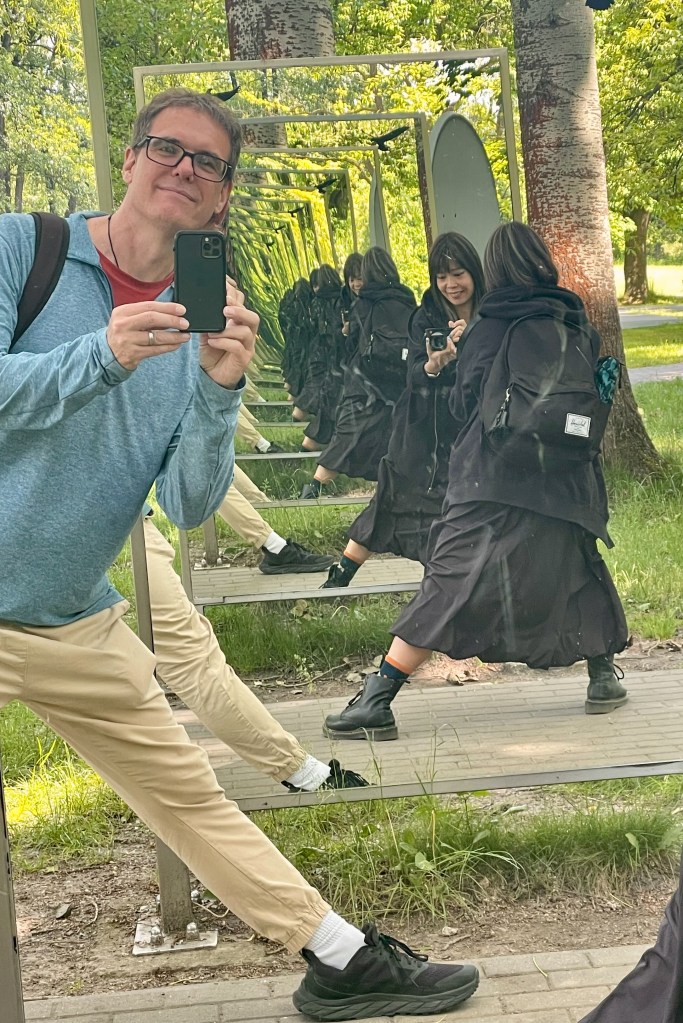
At Decathlon, we pick up a new resistance band for K while I pick up a tougher ‘doughnut’ for strengthening my forearm. Nine months after my accident, my left arm is pretty much back to full strength. It’s time to push my exercise regime a bit further. To prevent my arm from seizing up again, I’m still holding it straight for several minutes every night with a bottle of water in my hand. But it’s now barely perceptibly out of shape.
Tonight is Gary Lineker’s final Match of the Day. I’m sad to see him go. Gary’s been a small but positive presence in my life for forty years. It’s like saying goodbye to an old friend. I immediately subscribe to his The Rest is Football podcast.
Tuesday 27 May
We spend the afternoon exploring Kazimierz, Krakow’s old Jewish quarter. I’ve forgotten to pack the Lonely Planet guide, which included the route for a suggested walking tour. Instead, we make it up as we go, which turns out extremely well. Kazimierz remains more grubby than the Old Town, and the Europe-wide curse of ugly graffiti has found its way here. But the cobbled streets, courtyard cafes and restaurants, and the bohemian vibe suggests a neighbourhood on its way up. Perhaps it’s good to see it before it’s fully scrubbed up and gentrified.
Quite by chance, we follow our noses into one courtyard that turns out to be the place where the liquidation of the Podgorze ghetto was filmed for Schindler’s List. The courtyard is filled with information boards explaining the creation and subsequent liquidation of the ghetto. There’s so much to absorb that by the time we’ve finished, it’s time for an afternoon coffee. There’s a cafe right in the courtyard, so we sit down and read, occasionally looking up to cast a glance at the tour groups – mostly teenagers – being herded through.
We’d planned to visit a Jewish museum in Kazimierz, but it’s too late in the day now. Instead, we find our way to the river, wander back to the tram stop, and come home.

Wednesday 28 May
Today’s injection of culture comes from the Czartoryski Museum, the premier branch of the Krakow National Museum. I find it strangely underwhelming. There’s a lot of armour and weaponry on display, which despite unquestionable craftsmanship holds very little interest for me. The museum’s centrepiece is one of Poland’s national treasures: a small Leonardo da Vinci painting, Lady with an Ermine. I don’t know or understand enough art history to make much of it, and too many other visitors are jostling for position for me to feel any personal connection to it. Reading up on Wikipedia the following morning, I can perhaps appreciate it a little more. But overall, it’s a rather disappointing afternoon.
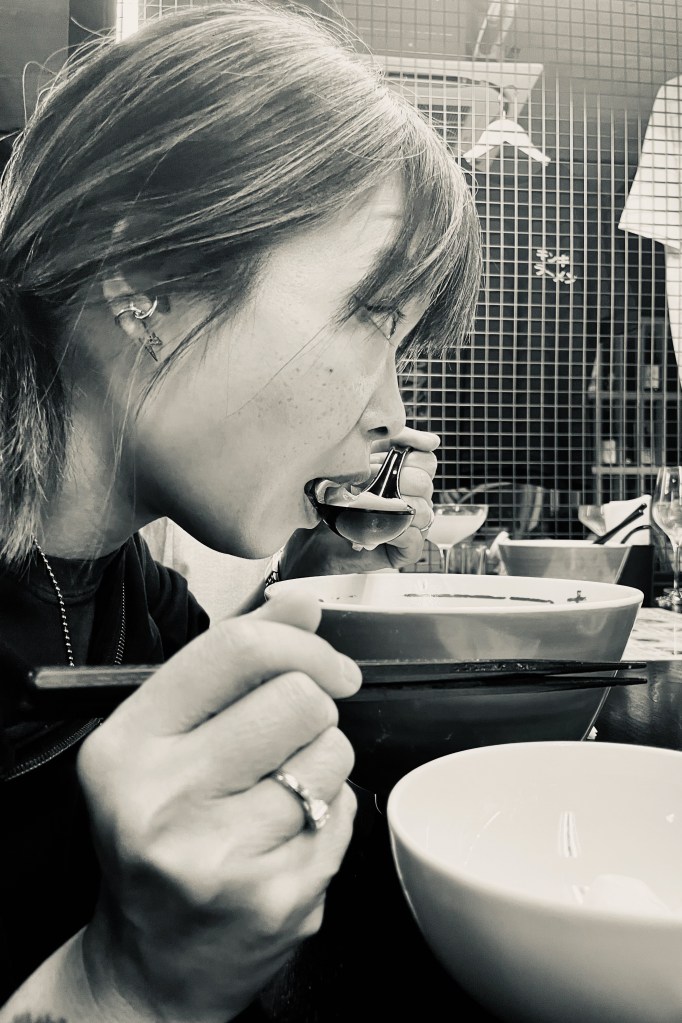
The capstone to the day turns out not to be art history but rather an excellent ramen shop not far from the old IH school. There’s been a queue outside every time we’ve passed it and today is no exception. But the 20-minute wait is worth it: the ramen is delicious, and the restaurant has an equally excellent vibe.
It’s raining when we leave. We haven’t packed umbrellas and both have to suck it up as we cross the Old Town on foot to our tram stop.
Thursday 29 May
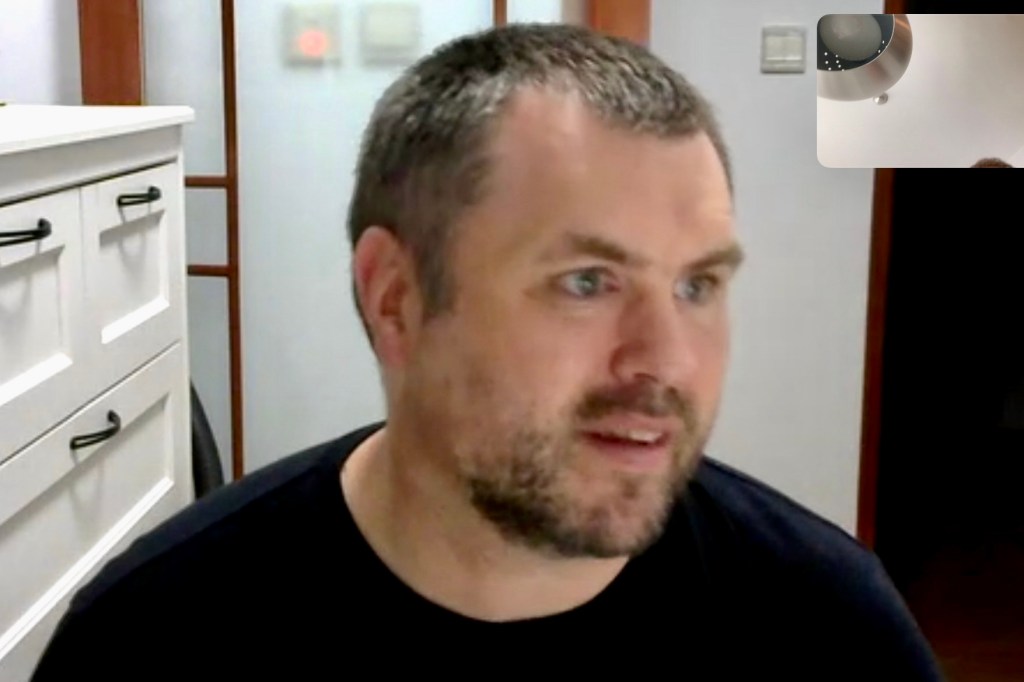
We’ve already marked today as a rest day. The rain that caught us unawares in the Old Town yesterday evening continues for much of the day, so it’s a good day to just sit tight. After clearing some work in the morning, Oli and I convene in the afternoon for a video chat. It’s excellent to catch up. Oli has a final working day – 16 July 2026 – marked on his calender. After that, he and Maria are looking to take off and do something similiar to us. I remain astounded that they’ve raised two children and are still planning to semi-retire, or more, at a combined age of around 90 – a full ten combined years younger than we were, even without raising children. Good for them. It will also be good for us to have friends potentially living a similar lifestyle.
We’ve got ourselves in a bit of a funk with our uncharacteristically slapdash approach to Costa Rica, which involved buying tickets to San Jose with only the most rudimentary research into the country. We’ve since researched it further, only to discover that these days it’s not necessarily much safer than other parts of Central America, but it’s a lot more expensive and seems to lack a good transport infrastructure. This evening, we put Costa Rica on the back burner and instead revisit Brian and Carrie’s videos from central Mexico. By the end of the evening, we have a fairly good idea what we want to see in Mexico, and we’re beginning to research Lake Atitlan in Guatemala.
I didn’t take any photos today, but I did – without even knowing – end up with this screenshot of Oli during our chat!
Friday 30 May
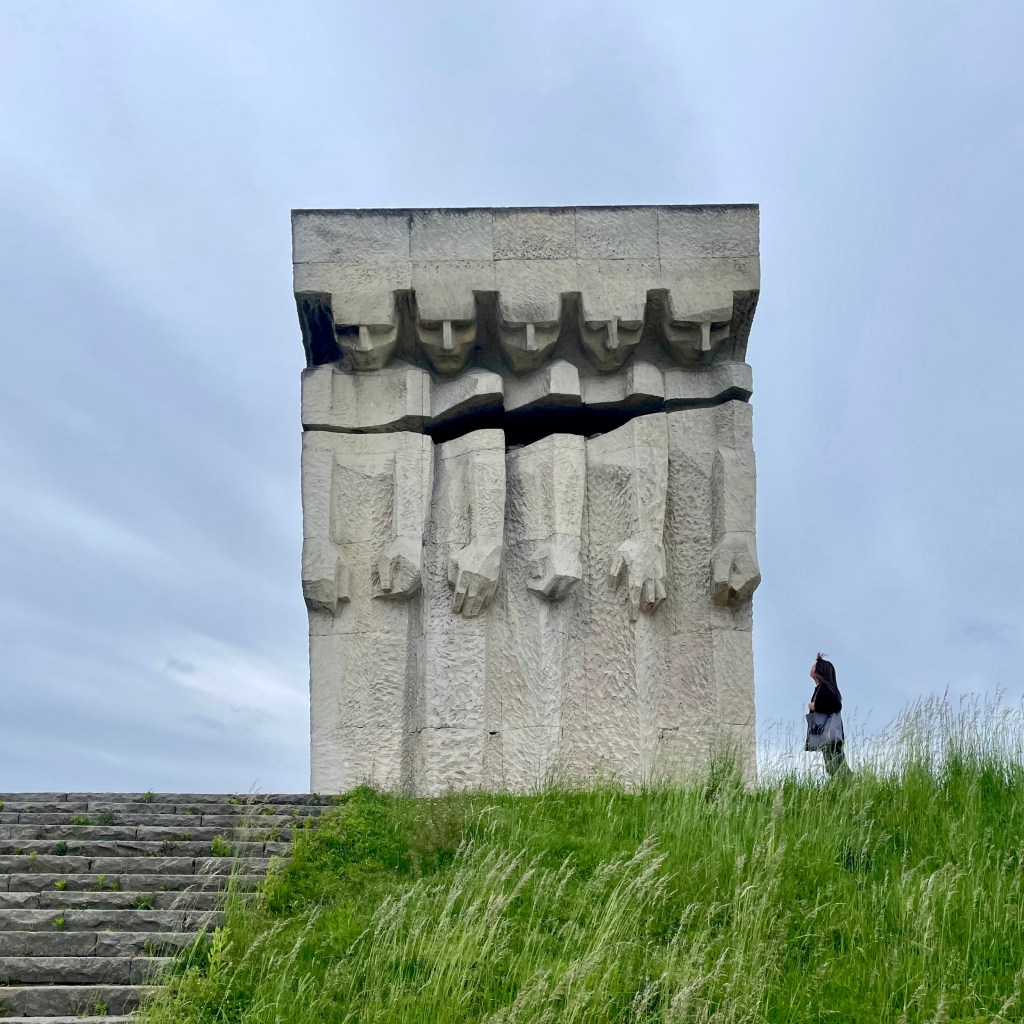
We spend the afternoon wandering the green expanse that covers the former Plaszow forced labour camp. Some 150,000 prisoners passed through here; only around 2000 survived. There’s not much to see as the Germans erased all traces of the camp towards the end of the war when defeat was inevitable. A simple cross memorial facing a bench, where we sit a few minutes, and a monolithic Communist-era official memorial, which the modern city has almost encroached on, mark former execution sites. We also skirt the now overgrown limestone quarry (complete with former props used in Schlindler’s List) where the average survival rate was measured in weeks. It’s a place of desolate contemplation, both one of Krakow’s most peaceful corners and one of its most blood-soaked.
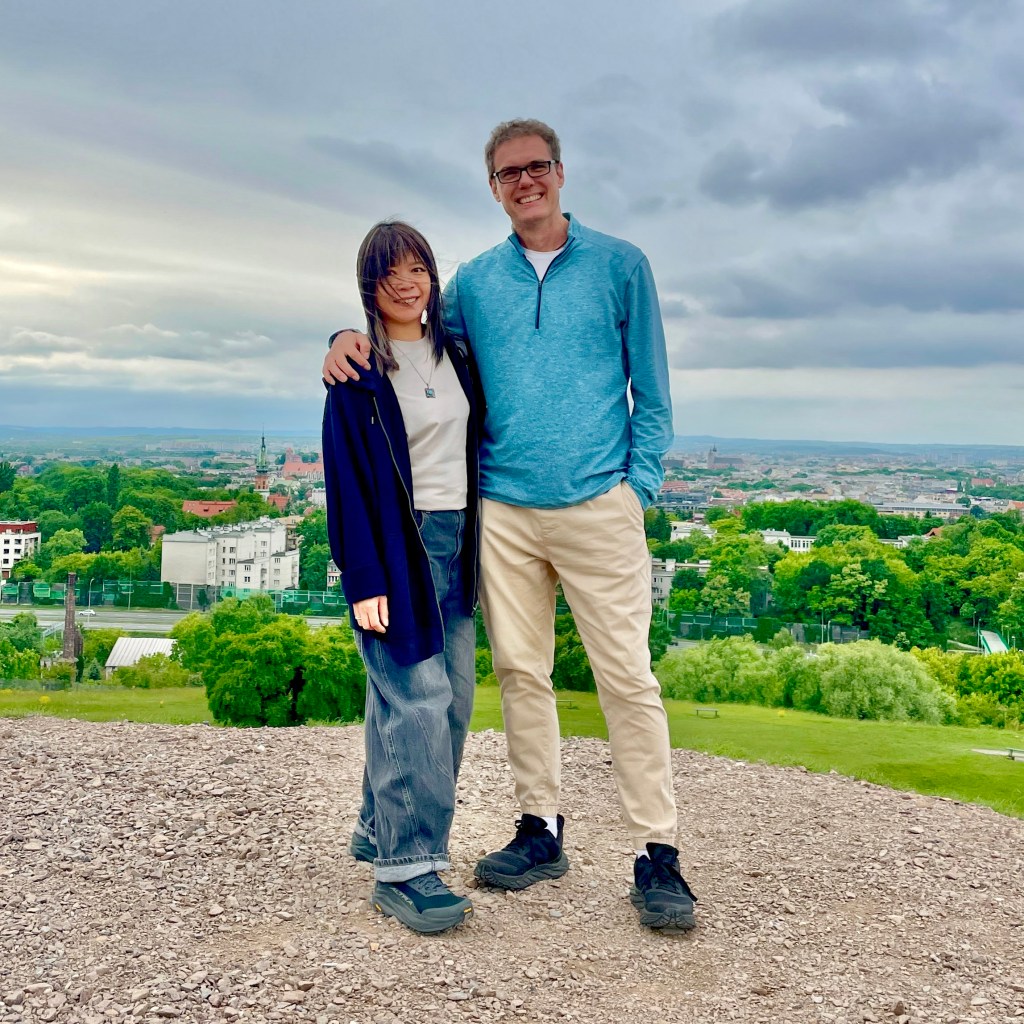
Plaszow is close to the Krakus Mound, the presumed burial site of Krakow’s founder. It shouldn’t be hard to find an 18-metre high pile of earth, but we somehow make it a challenge. We do eventually find it and wind our way around the mound to the top for 360-degree views over the city:
We use the evening to research Guatemala. Our Central America odyssey is gradually taking shape.
Saturday 31 May
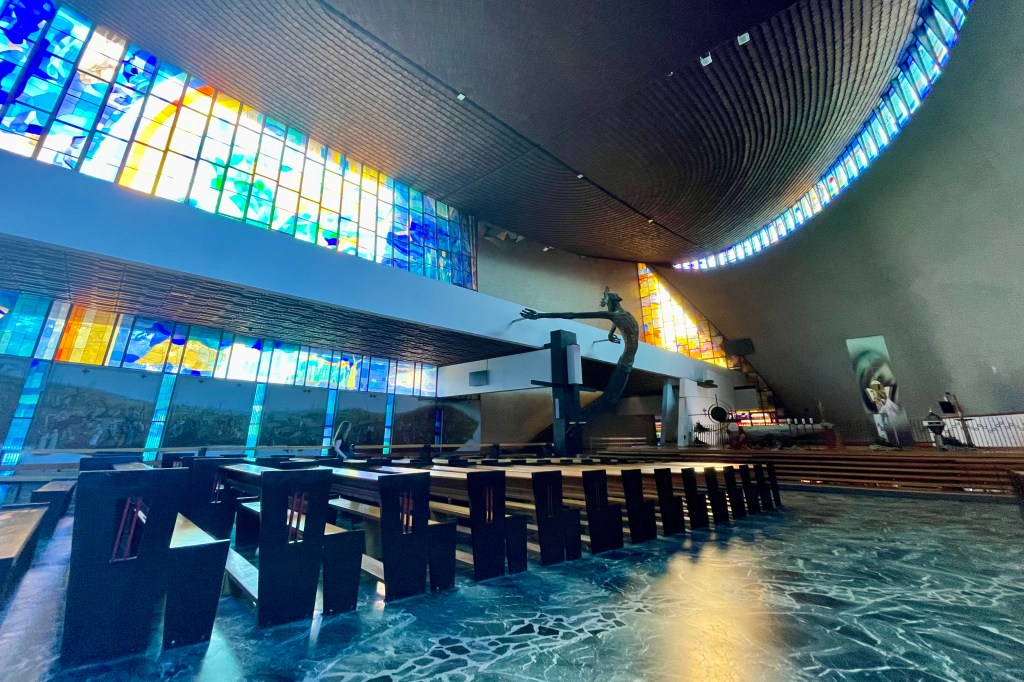
Today feels like the first day of summer. Finally, it’s t-shirt weather in Poland. We take a day trip to Nowa Huta, Krakow’s post-WWII industial ‘hood, an antithesis to the Old Town’s medieval magic. It’s a wonderfully preserved example of 1950s socialist realist architecture and grand communist dreams, with broad boulevards, retro apartment buildings, and a brutalist church, the Arka Pana, built in the shape of an ark. I visited before with Ian Bowman, but have no clear memories, just two photos: one of me outside the Arka Pana, and one of its stunning interior.
We start with a mouthwatering lunch of smoked polish sausage and fried onions at a small but popular barbecue restaurant next to the tram stop. The portions are huge: we’ll need the whole afternoon to walk it all off. There’s plenty of opportunity for this: it’s a good half-hour walk to the Arka Pana. The thousands of trees planted back in the 1950s have grown to the height of the five-storey apartment blocks, giving this once austere industrial suburb a garden city vibe.
The Arka Paka is even more impressive than my thirty-year-old photos of it suggest. The modernist stained glass is stunning on this sunny day, and the sculpture of Christ remains as disturbing as the first time I saw it. Except for one other tourist taking photos, we have the entire space to ourselves. Quite a privilege.
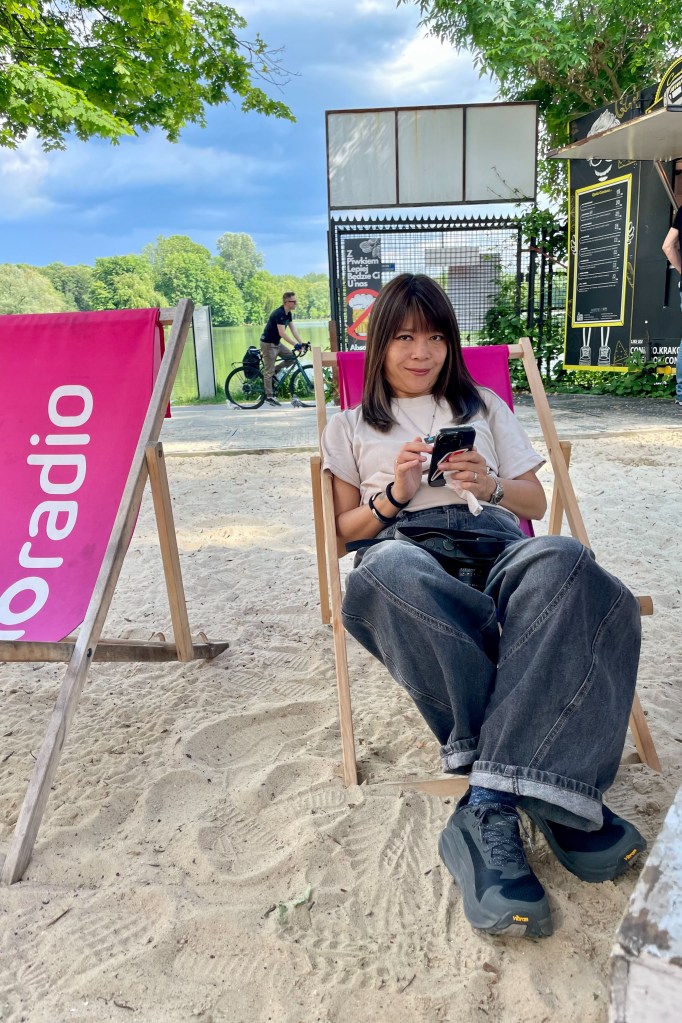
Back outside, we weave in and out of the coutyards of the apartment blocks and try in vain to locate a small museum, which no longer seems to be there. Instead, we cross the road to arrive at a lake surrounded by a walking path and dotted with cafes. We deserve an afternoon coffee, so we ease ourselves into a couple of deckchairs and sip on expresso tonics, a recent discovery. I start reading Brideshead Revisited, which I found lying around the flat. Revitalised, we head off to find another museum that our Lonely Planet guide recommends as a thunderstorm threatens but never quite breaks. This time we find the museum, but it’s closed for renovation. Time to head back to Krakow.
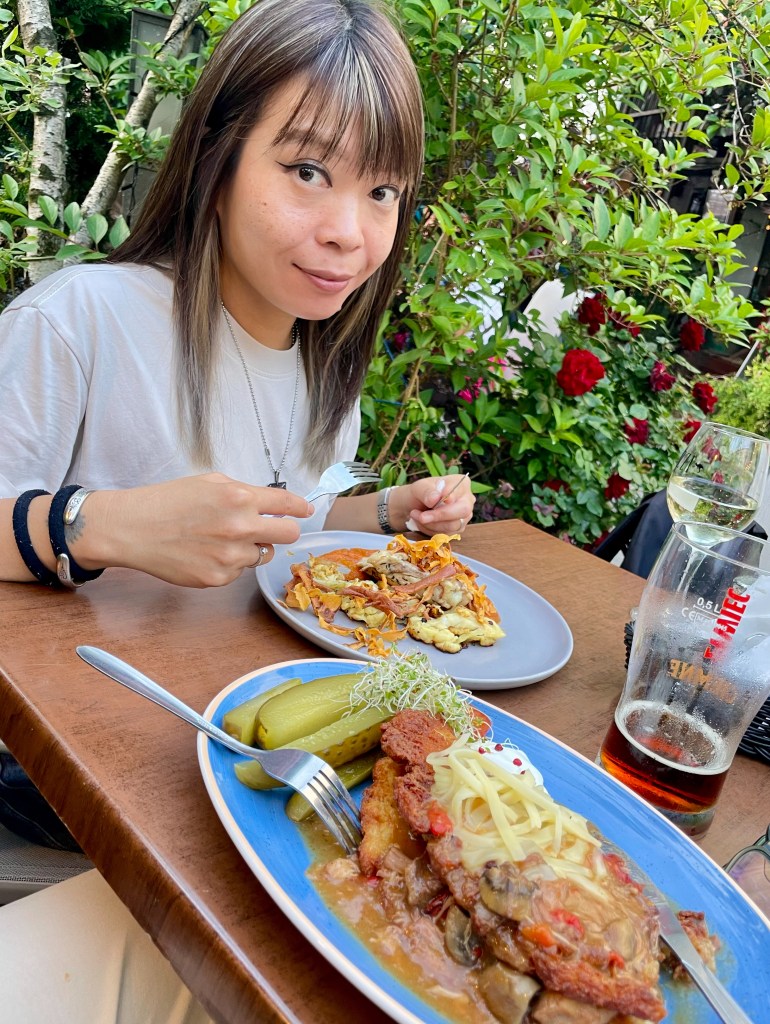
Back in Krakow, we do some reconnaisance for mum, Ian and Rose’s arrival next Friday, locating the route from the railway station, through the shopping mall, and over to the Old Town. The Rynek is heaving tonight and in perfect pre-sunset light, it’s full of atmosphere. But we don’t linger: we’ve earmarked a courtyard restaurant in Kazimierz to eat at tonight. The atmosphere is excellent here too: one to bring the family to. For the second time in Krakow, our waiter spots the unfamiliar Hong Kong flag when I’m offered a choice of currencies to pay with and swears he’s never seen it in seven years of waiting tables. We’re both enjoying the attention, besides which I get to claim I’m from Hong Kong. 🙂
Sunday 1 June
After our day out at Nowa Huta yesterday, today is a rest day. I divide my time between sorting music, studying Spanish, reading Brideshead Revisited and researching the best area to stay in San Jose, Costa Rica.
Monday 2 June
Mondays aren’t tourist-friendly in Krakow. Almost everything that we still want to see is closed.
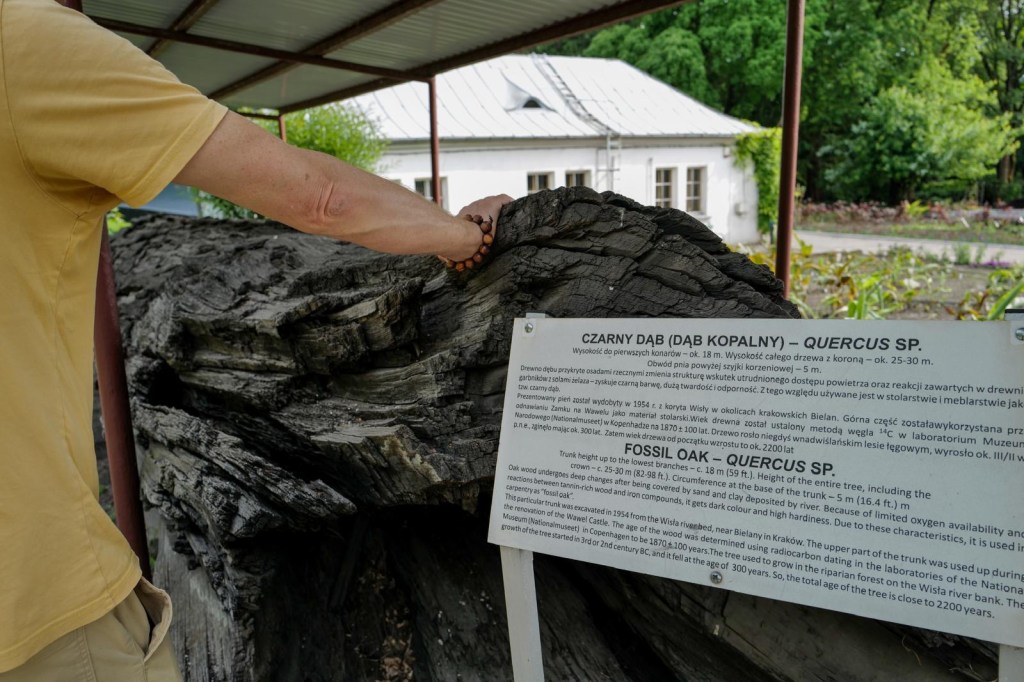
One place that is open today is the Botanical Gardens. It’s not a destination that would typically feature at the top of my to-do list, but it turns out to be well worth our time, even if the greenhouses – advertised as open – are locked. Flowers in every shade are in bloom, bees hover, and there’s even a 2000+-year-old ‘fossilised’ ‘trunk of an oak tree. Touching the ancient wood is poignant: it could tell stories of a pre-industrial world. It’s seen empires rise and fall. I see ancient artefacts in museums all the time, but none that I can reach out and touch:
We stop for coffee and cheesecake at the attached cafe, and skulk into the nearby Basilica of the Sacred Heart of Jesus, which we pass on our way back to the tramline. It doesn’t even warrant a mention in our guidebook. If it were in Hampshire, it would be of course the biggest tourist draw in the county.
Tuesday 3 June
We’re really just biding our time this week, waiting for mum, Ian and Rose to arrive so that we can embark on the major sights of Krakow and its hinterland. But this is fine. We’re always busy with projects. Today, we get off the tram at Podgorze, the old Jewish ghetto neighbourhood. Perhaps not unsurprisingly, there’s little to see – at least to the untrained eye. Sculptures of empty chairs representing the missing Jewish population are scattered across the main square. Photos of some of the still unaccounted-for Israeli hostages being held by Hamas have been attached to some of the chairs. Pebbles of remembrance have been left on others.
We wander to the nearby Museum of Contemporary Art, housed in the cavernous interior of Oscar Schindler’s former enamel factory. This historical fact is considerably more interesting than the museum itself, although the temporary exhibitions – which feature actual paintings and a multimedia installation commemorating the Katyn massacre – are mildly diverting. The permanent collection is a predictable self-important waste of space featuring a mock-up of Andy Warhol’s Manhattan studio, some very thick rope, and a pile of bricks that some ‘artist’ has brought back from Ukraine. Pointless.

We spend the evening digging down on our research for Costa Rica. I’ve just bought the Lonely Planet guide, which immediately makes the country seem a little less daunting. It’s going to be expensive, but if we count Costa Rica as part of our two months in 2026 staying in destinations beyond our regular budget, we’ll be fine.
Wednesday 4 June
Or 35th May. This is our second Tiananmen anniversary outside Hong Kong. In Hong Kong, the regime once again taps into the Streisand Effect with a comically large police presence in Causeway Bay, and harassing/arresting a handful of people carrying flowers, holding candles, or in one case eating a banana. Customs officers inspect ex-district councillor Katrina Chan’s incense shop for more than four hours, accusing her of violating the Consumer Goods Safety Regulation because she had failed to include bilingual safety labels on products. More likely because she was selling tealight candles for $6.40.
Given how communities of people can just vanish, it’s somewhat apt that we spend the afternoon at the Galicia Jewish Museum. The museum is a photographic record documenting the disappearance and gradual re-emergence of the Jewish community in southern Poland over the past century. Except for the short final section documenting the slow re-emergence of the Jewish community, the photos, all taken in the 1990s and 2010s, are deliberately empty of people. It’s deeply moving and we linger until they throw us out at closing time.
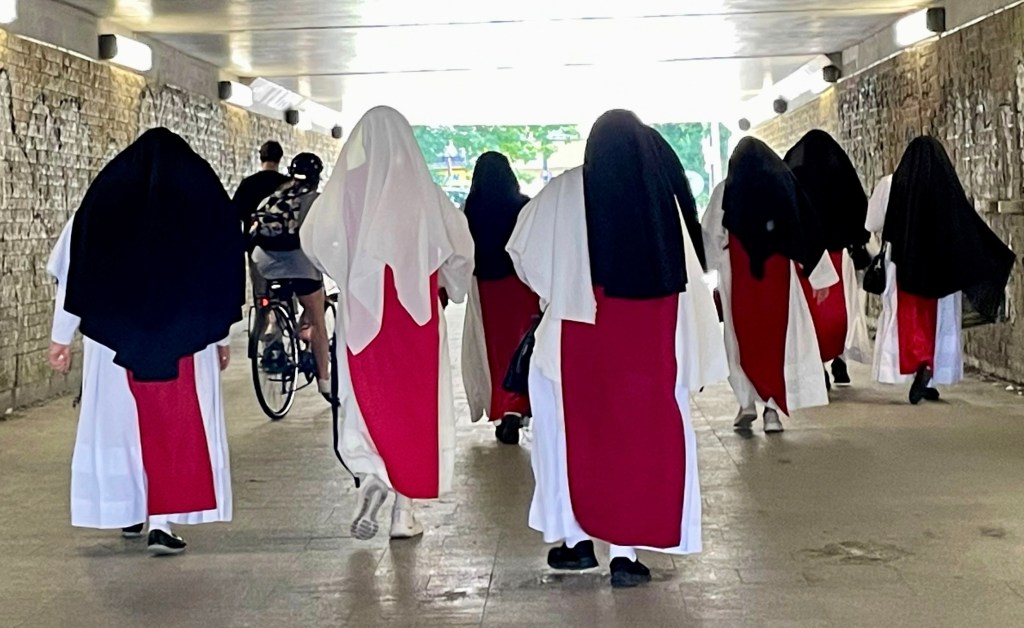
On the way to the museum, we spy a group of Spanish-speaking nuns passing through a gritty urban underpass:
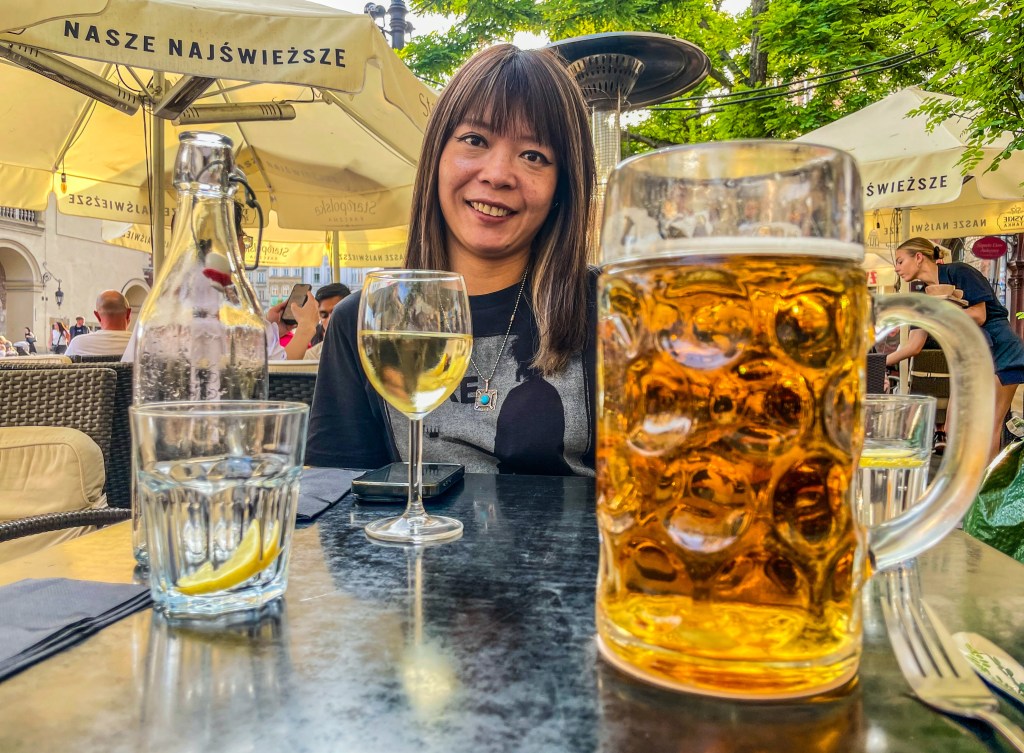
Eat-out Wednesday finds us back on the Rynek. The idea is to scout for a suitable restaurant for mum’s 80th at the weekend. We think we’ve chosen the restaurant next to the one we tried before. But when the menu is placed on our table, it’s identical to that of the establishment next door. It seems it’s all one operation trading under two names. Never mind. We’re there for the atmosphere, which is superb on this warm, sunny summer evening.
Thursday 5 June
I have an appointment with the local barber this afternoon, so today is a day to stay close to home. We get extra groceries in ahead of mum’s arrival tomorrow night and focus on booking most of our accommodation in Costa Rica next February.
Initially, I had some concerns about Costa Rica: San Jose by all accounts is a tough place to love and I simply didn’t know about anywhere else in the country. We’ve since done our homework and identified two areas to focus on: the area around Arenal Volcano (we’ll be staying in a small town called La Fortuna) and Manuel Antonio National Park (we’ll be staying in the nearby village). Both places are clearly well set up for tourism and appear to be safe and friendly.
Despite a steep language barrier, I come out of the local barber with a decent haircut:

Friday 6 June
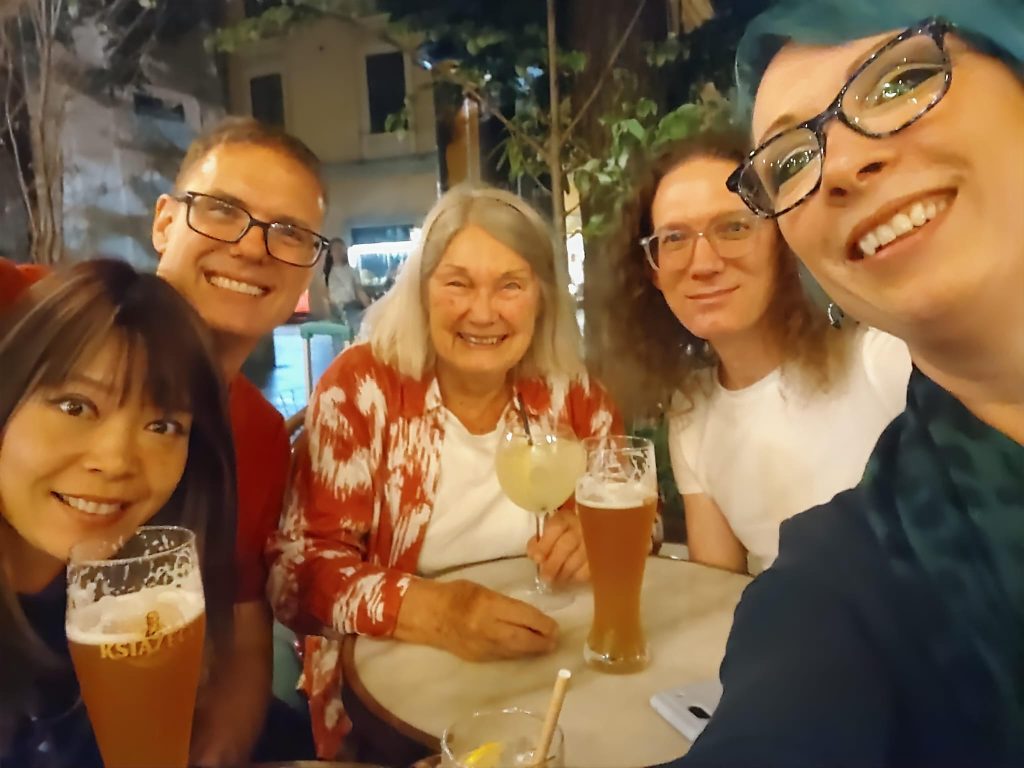
Mum, Ian and Rose fly in to join us in Krakow. By the time everyone’s together in the arrival hall, it’s already pushing ten o’clock. Ian and Rose are (understandably) keen to drop off their cases before we go for a welcome drink, so by the time we reach the Rynek, it’s already pushing eleven. Still, it’s the right call. After all, I haven’t been in downtown Krakow at night since we arrived.
It’s still thronging. I have vague memories of walking across an icy cold, almost deserted Rynek late at night back in 1996. It couldn’t be more different tonight. It’s almost a carnival atmosphere. By the time we’ve finished our drinks, the last number 24 tram has long since departed. We hail a taxi, and a driver who – when we tell him we’re English – is keen to tell us (in the friendliest possible way) via Google Translate how Churchill sold Poland down the river at Yalta and Poland subsequently suffered under the Russians for two generations. He’s right, of course. Thankfully, he doesn’t seem to hold us personally responsible for the travails of twentieth century Poland.
Saturday 7 June
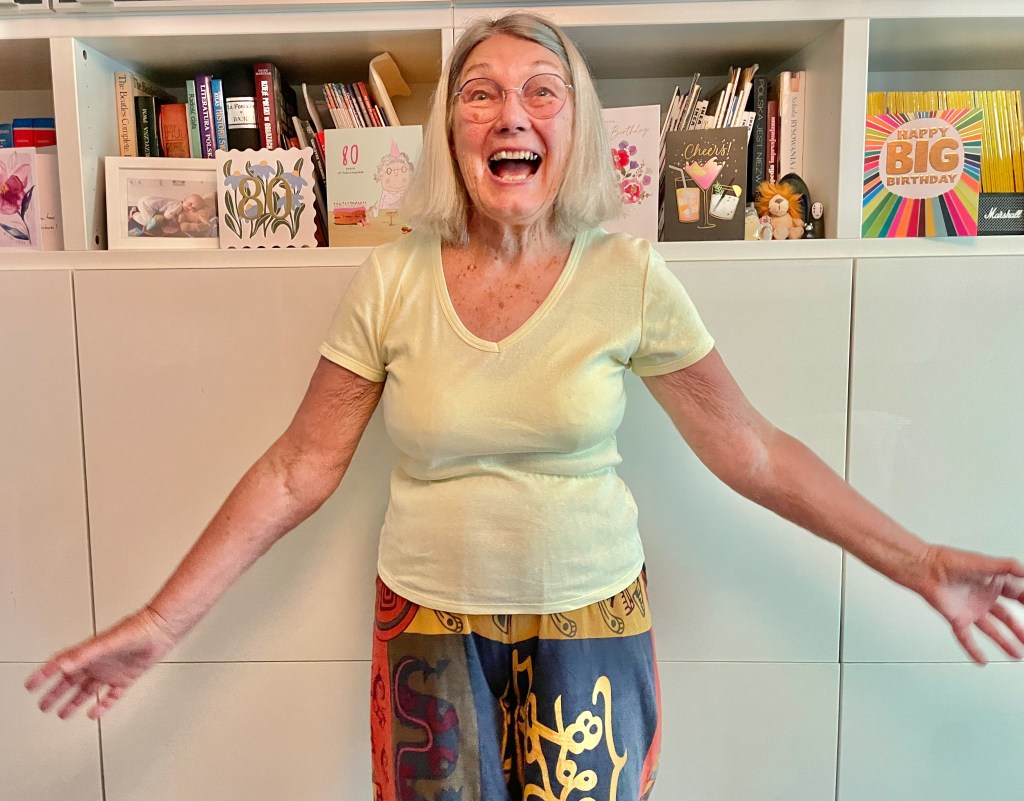
Today is mum’s 80th birthday – and it goes well. We arrive on the Rynek mid-morning just as a marching band lead a group of baton twirlers and local dignitaries into St Mary’s Basilica. We find a quiet coffee shop just off the Rynek where mum can open her presents, then hop in a horse-drawn carriage for a trot around the Old Town. For lunch, we find a quiet cafe serving pierogi, which some of us wash down with a non-alcohol beer. We briefly drop into the Professors’ Garden, a memorial garden dedicated to the professors of Jagiellonian University who were arrested in WW2, then we’re off to the Rynek Underground Museum, where we can escape the heat for an hour or two. We’re beginning to flag at this point. Ian and Rose suggest mooching at their Airbnb for a while, which we do. Finally, it’s late enough to wander down to Kazimierz for dinner.
Rain has been forecast all day. It finally arrives just as we leave the restaurant and say goodnight to Ian and Rose. By the time we reach the the tram stop it’s coming down like machine gun fire. A memorable day for all.
Sunday 8 June
Today’s agenda is a trip to the salt mines in nearby Wieliczka. Everything is going fine until, standing in a long queue in the rain to get in, Ian realises that he’s only bought four tickets for five people. K and I volunteer to sit out the afternoon in a nearby cafe while the others head underground. This suits us just fine: we’ve had almost no time to read these past two days. Mum, Ian and Rose finally emerge two and a half hours later with sore legs and parched throats. After a swift pick-me-up in a restaurant over the road from the salt mines, we jump on a train back to Krakow, where we find a cosy Indian restaurant.

Monday 9 June
We say goodbye to Ian and Rose, who take their leave outside a coffee shop and hop on a train to John Paul II airport. K, mum and I decide on a quiet Thai place for lunch when the milk bar Lena has recommended to us is packed. From there, we head to the Rynek to climb the medieval clock tower for a bird’s eye view of Krakow. Among our fellow climbers is a middle aged chap with a northern accent in a The Queen is Dead t-shirt. I want to tell him that I feel fenced in like a bull between arches in this clock tower, but every time I’m about to pitch my quip he’s always chatting to his two mates.
We’ve all been tearing around for three days now and just want to go back to the flat and put our feet up for the afternoon. But halfway home, the unusually crowded tram comes to a halt and the driver makes an announcement in Polish, cueing much sighing among our fellow passengers. A girl standing next to us translates: the tram in front of us has derailed. There’s nothing to do but disembark and walk the remaining three kilometres. After a few minutes, we pass the derailed tram: it’s derailed exactly where the tram tracks cross the main road, causing an almighty traffic jam. It seems to have torn up the track, which looks like it could take some time to repair.
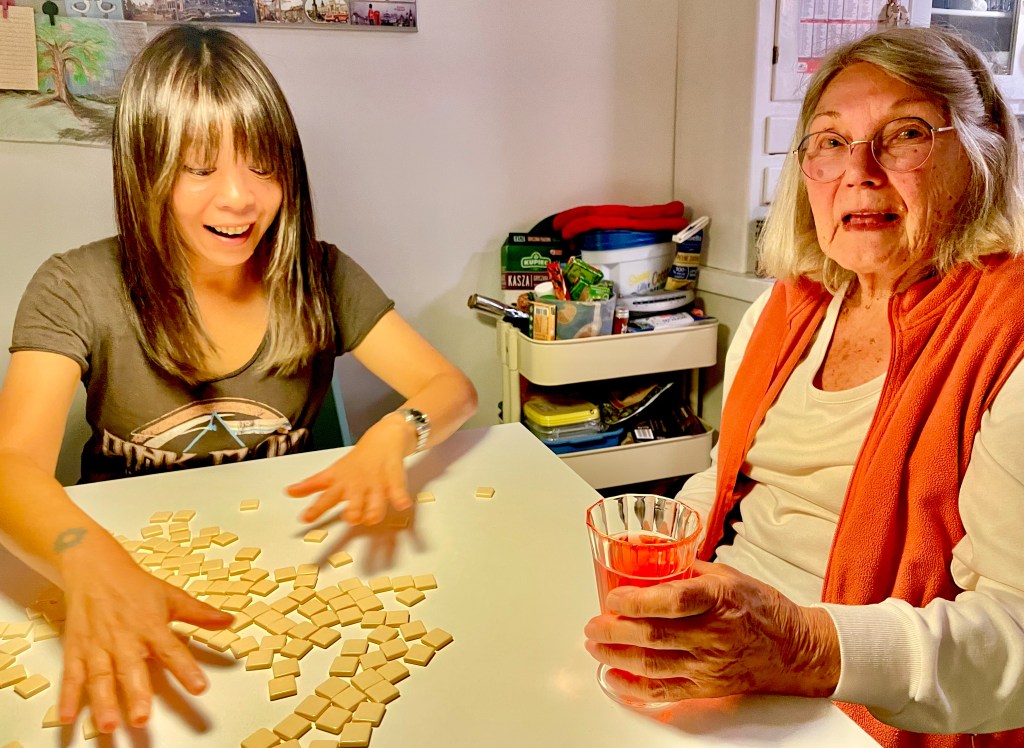
It’s a long, charmless, and monotonous walk back to Lena and Michael’s flat, where we spend the evening playing Bananagrams and sipping Campari and sodas in the kitchen.
Tuesday 10 June
We’ve lined up one of Krakow’s major tourist draws for this afternoon: Wawel Royal Castle. The fact that I have almost exactly zero memory of visiting the castle in 1996 should be a warning to manage my expectations. You probably need to be Polish to extract a wow factor out of the castle and its grounds. It’s all historically relevant and pleasant enough, but to a casual foreign tourist with a woefully limited grasp of early-modern period Polish history – and let’s face it, that’s probably most of us non-Poles here today – it struggles to get beyond mildly diverting. The elaborately carved original wooden ceilings are probably the most impressive draw. And it’s interesting to learn that Wawel was used as a hospital and military barracks for over a hundred years after the darstadly Austrians took control of this part of Poland.
Leaving the castle, we dawdle to a nearby coffee shop before coming back to the flat for K’s lemon chicken special, and a couple of rounds of Damn It!

Wednesday 11 June
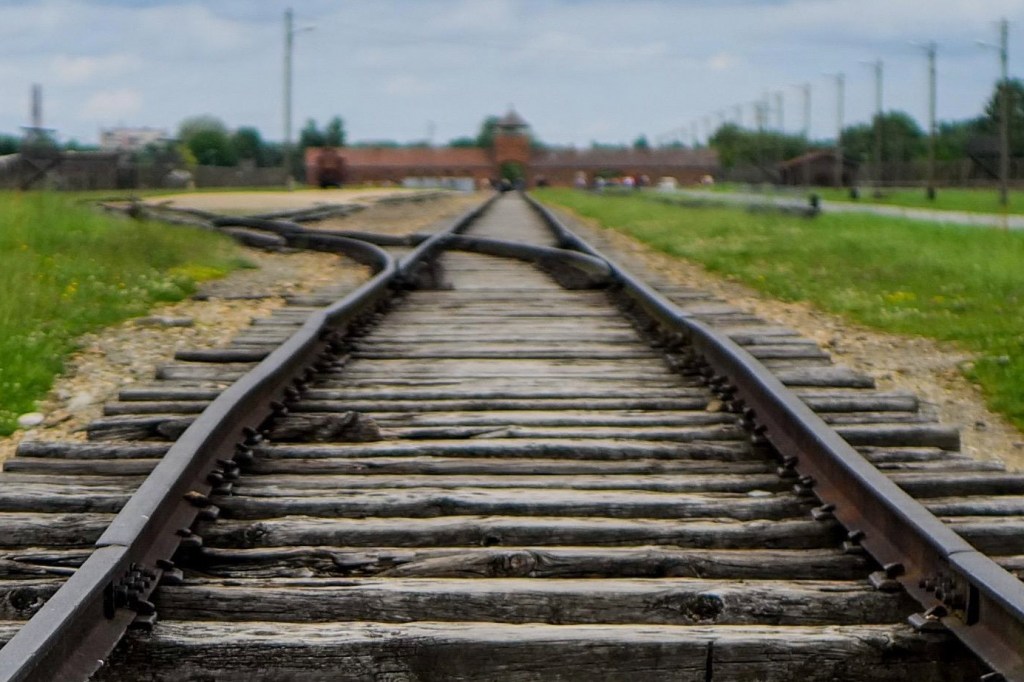
We spend today at Auschwitz-Birkenau. I have some powerful memories of visiting in 1996 but what I’m unable to recall was how many others were there that day. I seem to reacll it busy, but hardly swarming. What’s certain is that in 2025, people come in vast numbers to pay their respects. Our group consists of about twenty people, and we have the perfect guide. She’s about my age and looks like how I imagine a middle-aged Gran Roche might have looked. She’s been leading guided tours of Auschwitz-Birkenau for over thirty years and understands how to strike an appropriate tone of seriousness without sounding bored or robotic.
After weaving through the old brick Polish military barracks of Auschwitz I, we cram into an easy-to-spot but oddly incongruous double-length yellow bus for the short ride to Auschwitz II (Birkenau) a couple of kilometres out of town. Although there are fewer specific things to see at Birkenau, the famous guard tower over the entrance, the railway siding, the sight of the half-demolished gas chambers, and the sheer horrific scale of the site are all harrowing.
It’s been a long day. We board a train back to Krakow, where we scuttle round the corner from the train station to the same Indian restaurant that we visited on Sunday night with Ian and Rose. We don’t want to think too much tonight.
Thursday 12 June
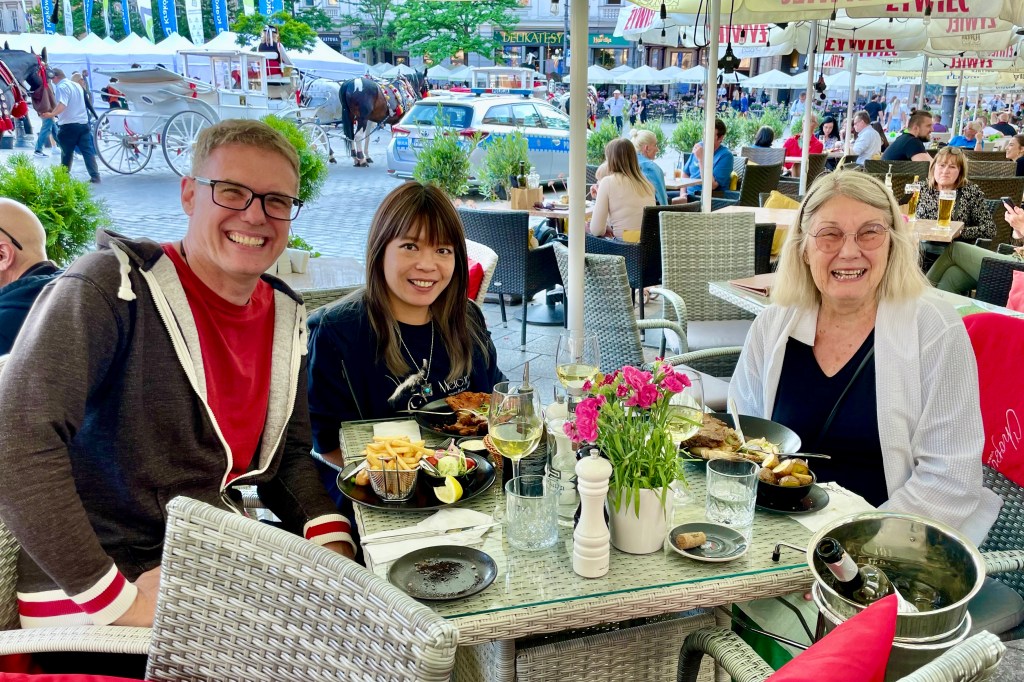
A quieter day today. I work on the Faculty of Business magazine for much of the day before we head into town to eat on the Rynek…
…and attend a Chopin concert:

Friday 13 June
We’ve now taken mum to the major sites in and around Krakow, and all of us are beginning to wind down. In the mornings, I’m busy with the FB magazine, so we’re back to a more regular pace of life of going out only after lunch. Today, we return to the Galicia Jewish Museum so that mum can see it. For us too, it’s well worth returning after visiting Auschwitz earlier this week – most of all to see the bleak winter photos of Birkenau:
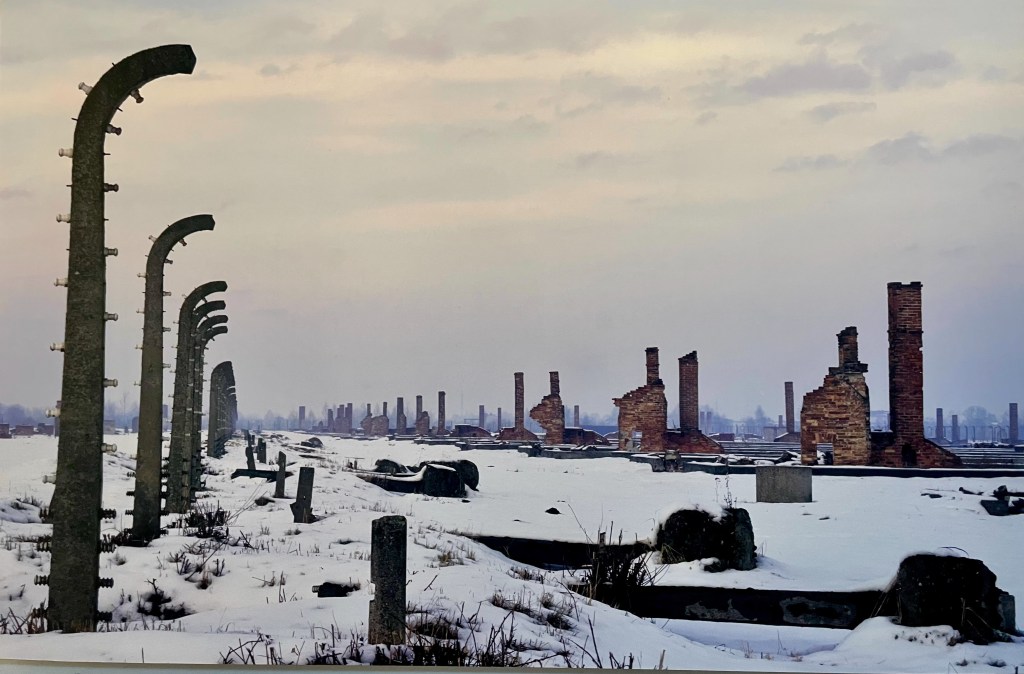
From Kazimierz, we walk over the river to Podgorze for a late afternoon coffee, then come home and watch Love and Mercy, the 2014 biopic of Brian Wilson, who sadly died earlier this week:

Saturday 14 June
Mum’s final day in Krakow finds us in the gallery of Polish C19 art above the Sukiennice (rather underwhelming given the entrance fee), returning to her – and our – favourite coffee shop, BoHo (the soft seats are there for the taking again), and returning to everyone’s favourite restaurant, Wrega, in Kazimierz (it’s back to potato pancakes with beef goulash for me). It’s a bright blue day, warm but not hot, and a more-or-less ideal way to wrap up mum’s week in Krakow. Back home, we clatter through a few rounds of Bananagrams and call it a night when we’ve sipped our Campari and sodas to the bottom of our glasses.

Sunday 15 June
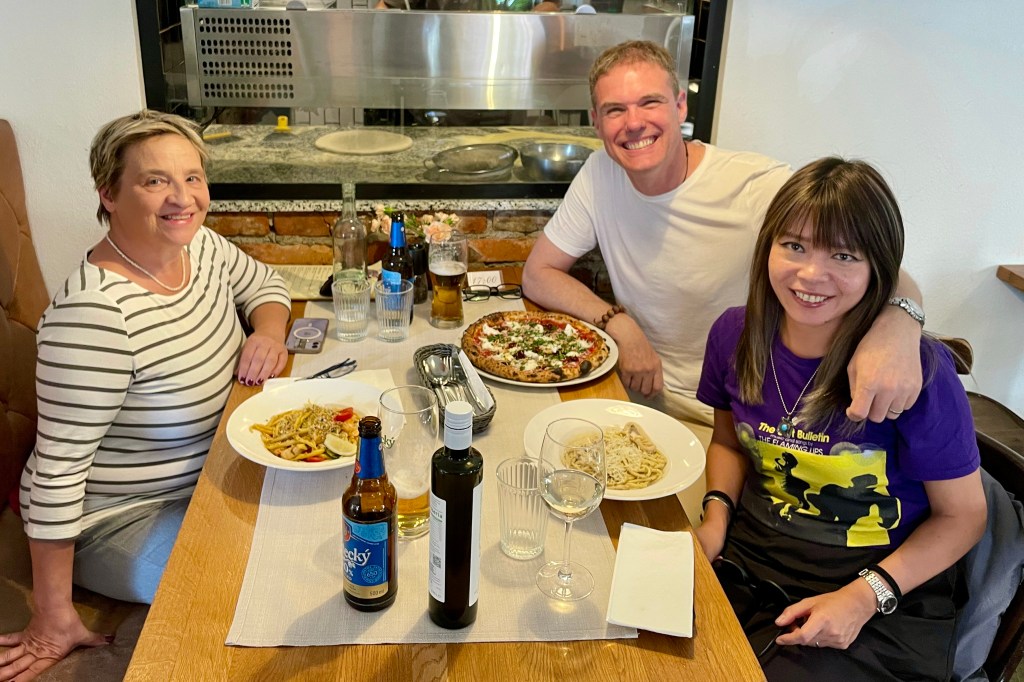
I ride with mum as far as Krakow Glowny station and see her off to the airport. Later in the day, we meet up with Magda Markiewicz, one of my DTEFLA tutors back in 1996. Magda’s still running CELTA and DELTA for the BC, all online these days. I don’t ask her how old she is, but I imagine she’s in her early-to-mid 60s now, and gradually winding down her working life. She has to check on a map where Hong Kong is, and Thailand too, firmly putting our east-Asian-centred wordview into perspective. It’s lovely to see her. I doubt if our paths will cross again.
Monday 16 June
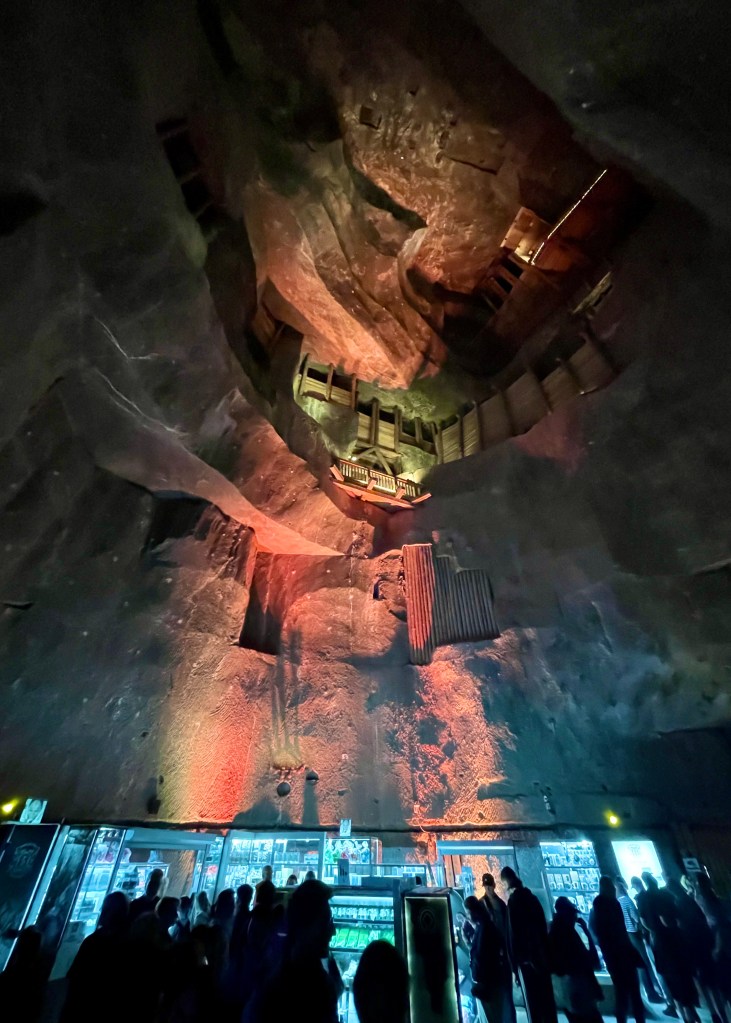
We finally get to see the Wieliczka Salt Mine after our recent abandoned attempt with mum, Ian and Rose. I have next to no memory of my visit in 1996 except for a vague impression of one of the underground churches that long-forgotten miners had carved out of rock salt. The mine is impressive to see, but demand means that nowadays this is industrial-scale tourism as our (excellent) guide frog-marches us from one underground chamber to another. He eventually takes his leave of us deep underground and points us in the direction of the exit. We know from mum, who was understandably grumbling about it last week, that this is the best part of a kilometre away through a warren of (well-signposted) tunnels. We eventually emerge, blinking, somewhere in the middle of Wieliczka town and make our way back to the railway station.
Tuesday 17 June
It’s our last day in Krakow. I spend the morning finishing some work, fine-tuning some pieces for the latest FB Magazine and doing a private job for Edna. I’ve been working at least part of the day for the past eleven days and it feels good to have wrapped everything up before we move on to our next adventure.
K wants to visit the Japanese Art and Technology Museum, so we make this our destination for our final afternoon. It’s a bit out of the way from where we jump off the number 24 tram: the walk to the museum takes us through parkland on the north bank of the Vistula from Kazimierz to Wawel Castle and across a bridge that’s being noisily renovated. I find the museum rather underwhelming, but Tuesdays are free entry day so I can’t complain. K meanwhile is more appreciative than I am of the craft that went into creating a fine set of C19 woodblock prints.
The museum is on the south bank of the Vistula, so we return across the bridge to the north side, where we step onto a boat that’s been converted into a floating bar and restaurant. We sit on the deck terrace sipping a final espresso tonic, reading and occasionally looking up to watch the river tours glide by.
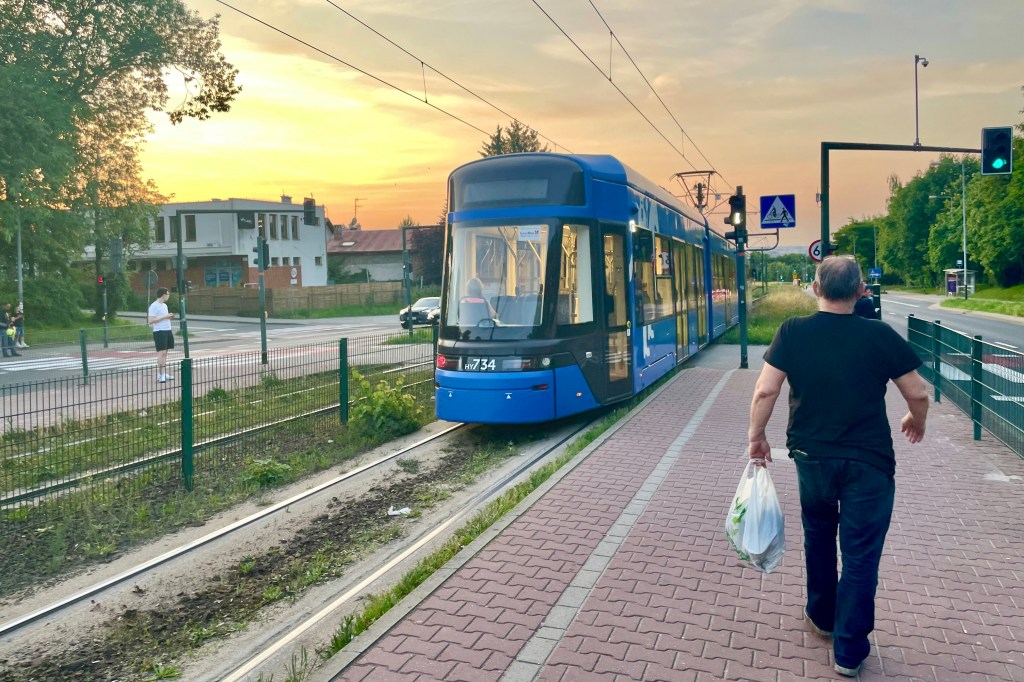
We head back to our own neighbourhood via Restauracja Wodnik, the local place recommended by Lena that we first visited back on 22 May according to this blog. It’s a fine summer evening in Krakow. I’m caught perfectly between being ready to move on and feeling a little sad to leave, knowing that this time I’m unlikely to return.
 Two On Tour
Leave a comment