Two weeks in Bulgaria’s medieval capital
Saturday 24 August
We’ve been in Bulgaria one month now, and it’s time to move on.
Things don’t get off to a good start when K’s taxi app crashes. Unable to call a taxi, we switch to Plan B: walk nearly 2km to the bus station, with my arm still in a splint. We eventually flag down a taxi when we would otherwise have had 10 more minutes to walk, and arrive at the bus station just in time to get the penultimate tickets for the ride to Veliko Tarnovo.
Our transport turns out to be a minibus rather than a full-size coach. It’s cosy. And not a little bumpy. Stuck at the back, we can only catch passing glimpses of central Bulgaria as it rolls by. Eventually, I doze and listen to Joni Mitchell’s Turbulent Indigo.
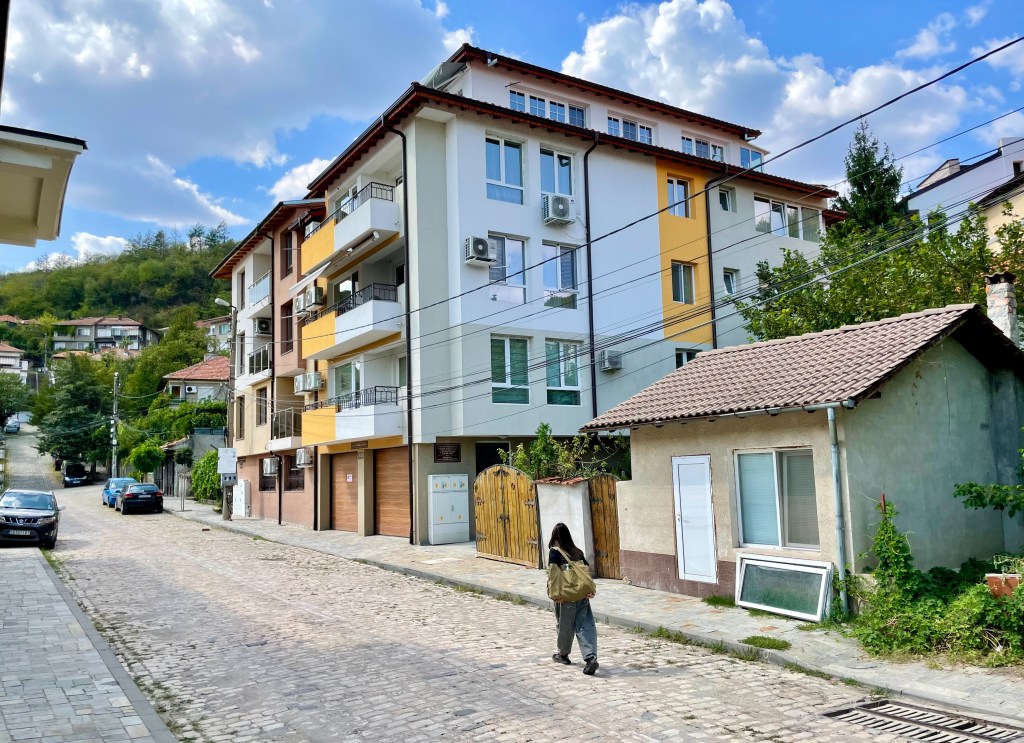
We arrive in Veliko Tarnovo at midday. The modern town is non-descript, but we’re soon in a taxi heading to our Airbnb above the old town. The flat is excellent. Initial impressions: this is the most modern, comfortable place we’ve stayed in a year of travelling. After a cheap and cheerful burger for lunch and a trip to the supermarket to stock up, we both doze off in the late afternoon. Actual travel is hard work, I guess.
As the sun sinks low and less fierce, we head out to explore the old town. As expected, it’s charming. But we’re hungry and thirsty, so proper exploration can wait until another day. We’ve already identified a restaurant serving ramen and other east Asian dishes, so we head there. The three people at the table next to us are English and, from what I catch of their conversation, appear to live here, or are planning to. Then, one of the staff turns out to not be Bulgarian at all, but from Southampton. We have a good chat with her and promise to return.
Back at the flat, I sleep in a bed for the first time in two weeks.
Sunday 25 August
Not a lot to report today. Early last week in Plovdiv, the door to autumn felt just slightly ajar. Well, it’s firmly locked again now. It’s hot. Despite being in Bulgaria’s most picturesque town, today is a day of admin and reading. We only leave the flat to head to the supermarket – this time finding our way through the shady backstreets instead of the glare of the main road. The temperature is forecast to start nudging down over the next few days. We have plenty of time to explore.
Monday 26 August
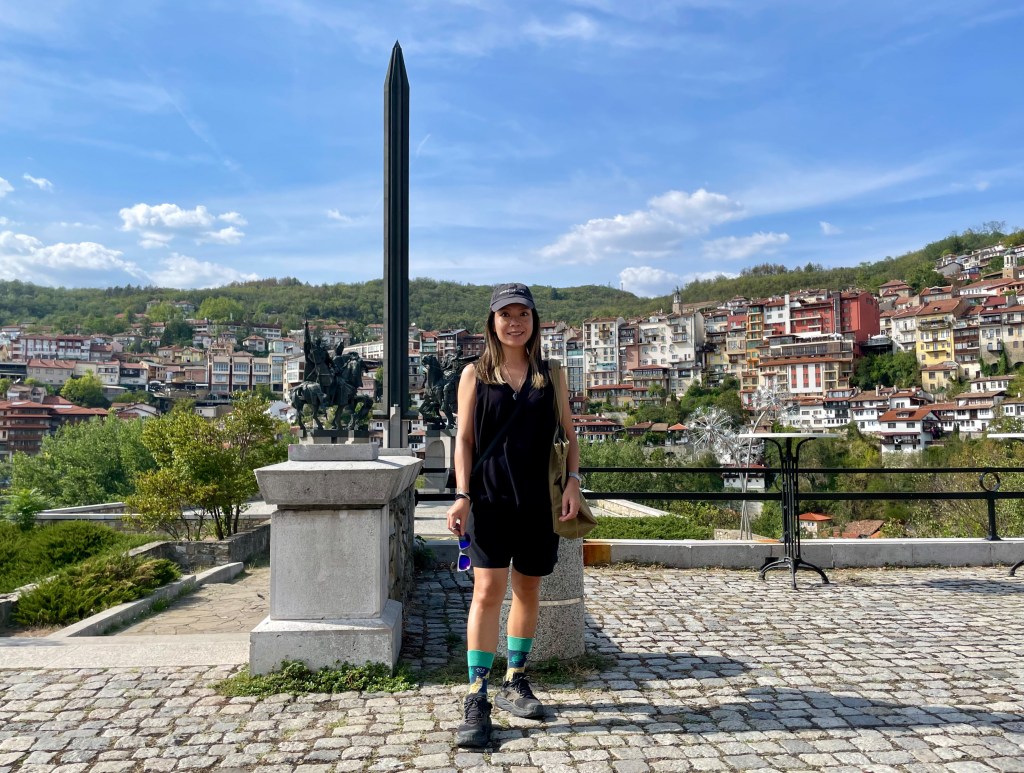
It’s still hot and we’re not in a rush. I’m enjoying a few work-free days and taking some time to tidy music and photos. Late afternoon, we wander down to the ludicrously large Monument to the Assen Dynasty, which sits on a spit of land where the Yantra River performs a 180-degree hairpin turn.
A minor inconvenience in Veliko Tarnovo is that our nearest supermarket is in the opposite direction to the old town, and it’s too hot to comfortably walk both directions in one outing. We need to shop smarter. Still, there’s cooler weather on the way.
Tuesday 27 August
I have a video chat with Simon Miles, currently in Bali, about some possible coaching work for him later this year. I don’t especially want to do coaching work, but I figure it’s worth a go, depending on what he’s offering in remuneration. (Simon’s in the process of significantly raising his fees and says he’s still figuring out what he can offer writing coaches.)
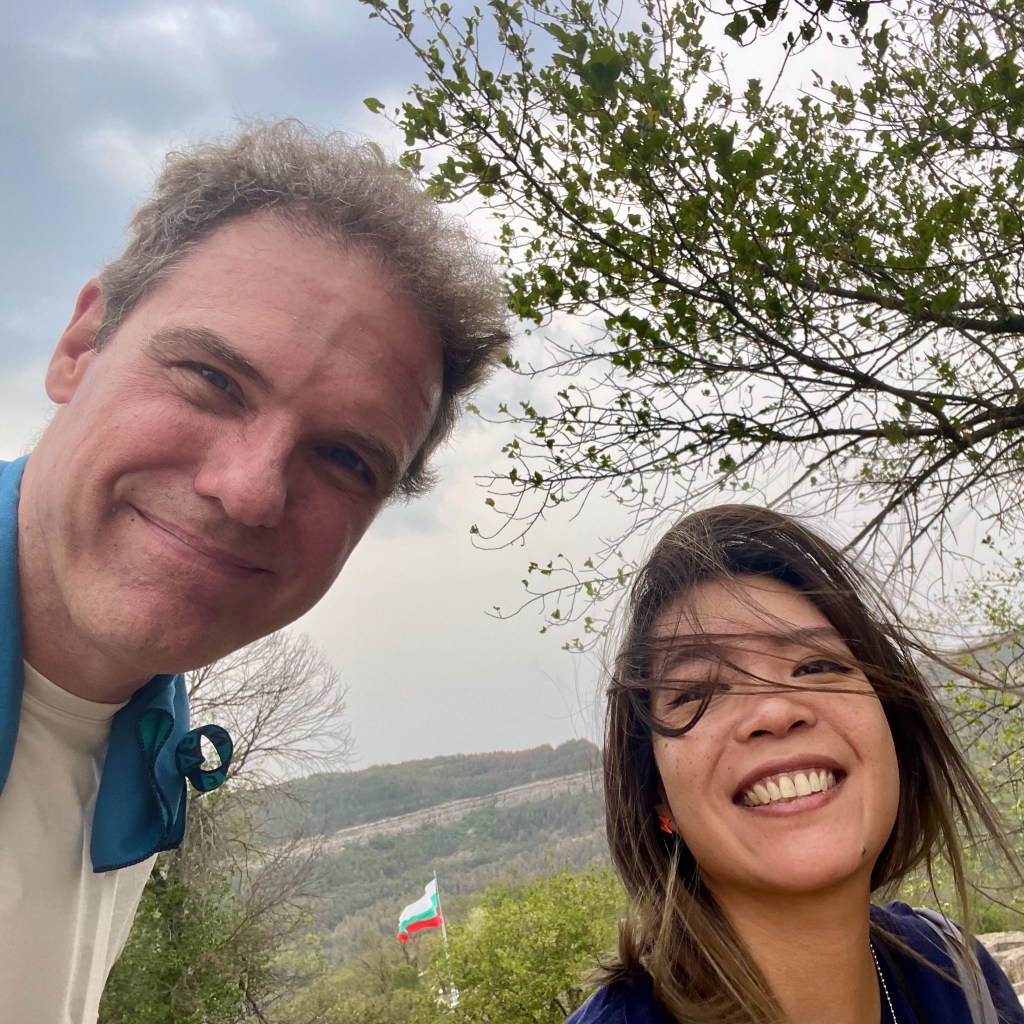
Late afternoon, we head out to the Tsarevets Fortress, the centre of medieval Bulgaria. It’s an arresting location, even if the most attractive part of Veliko Tarnovo – the C19 houses tumbling down to the river – are invisible from the fortress, while the prosaic modern city behind them is all too visible.
While we’re rambling around the fortress, it clouds over and the temperature drops a pleasing few degrees. We may just have witnessed the first stirrings of autumn.
At Tim Pile’s suggestion, we watch a BBC documentary, part of the Corridors of Power series, about the Bosnian war, and the US and Europe’s reluctance to get involved – at least until the Srebrinca massacre left no choice. It’s grim, but gives us some context for our upcoming visit to Bosnia.
Wednesday 28 August
I’ve worked out how to get an x-ray next Wednesday, when my splint is scheduled to come off. Confusingly, the private clinic that I aim to use is just a wing of the local public medical centre, a rather grim, dingy four-storey building overlooking the main park in Veliko Tarnovo.
Thursday 29 August
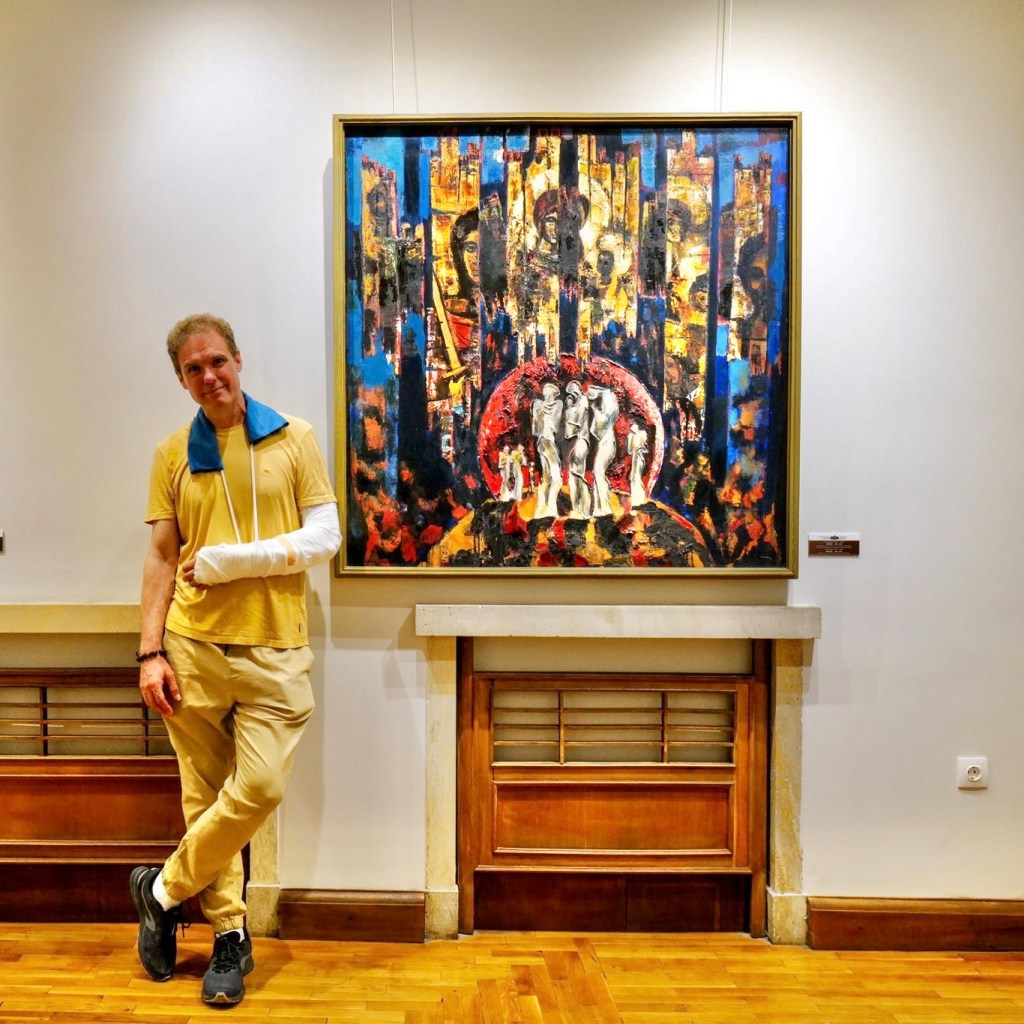
Today is cooler, and occasionally wet. Summer finally seems to be retreating. After ambling to the bus station to buy our tickets to Sofia next week, we head to the State Art Gallery. It sits on the same spit of land as the Monument to the Assen Dynasty, on a hairpin loop in the Yantra River facing the chocolate-box houses of old Veliko Tarnovo. It’s completely free.
The ground floor is a bit nationalistic and militaristic for my tastes. But this is the centre of the medieval Second Bulgarian Kingdom. They still seem rather proud of kicking the Byzantines out, even if it was 800 years ago.
The second floor is more my bag: landscapes and scenes of rural life.
I guess my taste in art has always been rather conservative.
It’s cool enough to take a detour to walk back to the flat, so we follow the quiet road above the south side of the river until we can cross back to the north bank below the Tsarevets fortress.
Tonight’s entertainment is a classic 1961 neo-realist film, Il Posto. It’s wonderful, even if its languid pace leaves me struggling to fight off a deep slumber.
Friday 30 August / Saturday 31 August
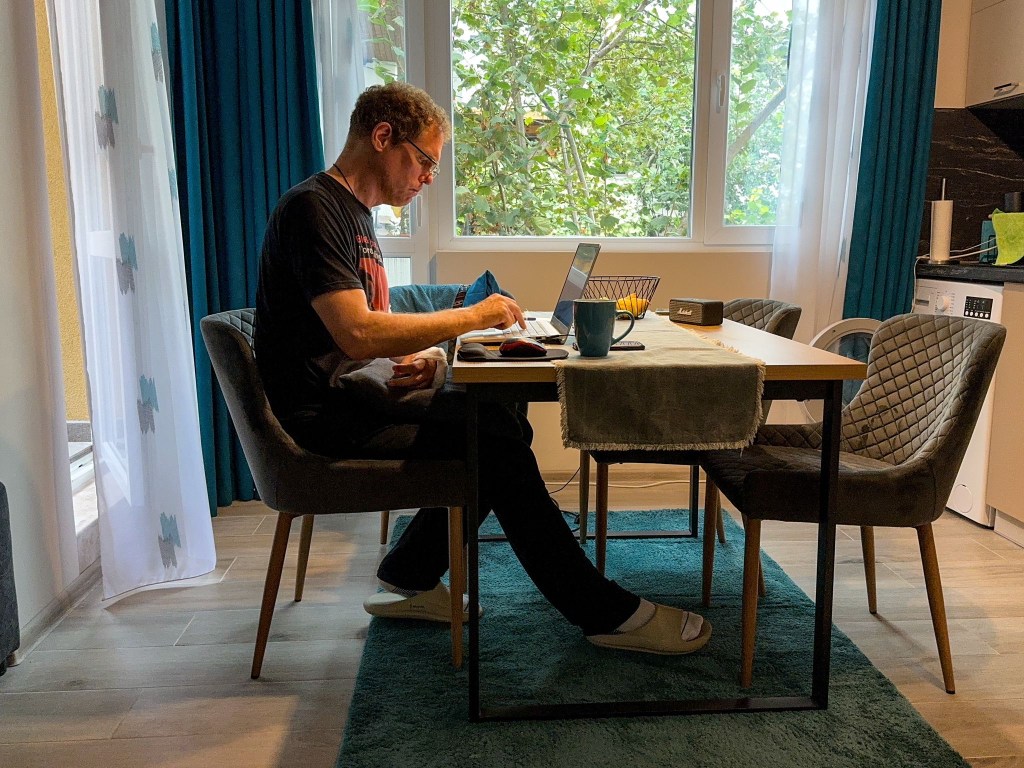
A quiet couple of days. Grey skies and occasional rain: the first time I can recall having an extended rough patch of weather since we started travelling a year ago. On Friday, we amble out to Lidl, a couple of kilometres away, to see if we can find frozen fish fillets, something lacking at our local supermarket. We can. Lidl turns out to be a big modern box store towards the edge of town, the only thing brightening up Veliko Tarnovo’s relentlessly drab, ageing suburbs. Unlike Plovdiv, Veliko Tarnovo appears to have almost no post-Communist housing stock. Despite Bulgaria’s generally more civil, urbane feel, Turkey’s physical infrastructure is far more developed. Demographic collapse in Bulgaria is presumably doing no favours for replacing its ageing built environment. By contrast, half of everything in Turkey – from humble apartment blocks to mega suspension bridges – simply wasn’t there 30 years ago.
Sunday 1 September
And so into September. It’s been a full year – or it will be a couple of days from now – since that first drizzly but utterly thrilling day in a drab, graffiti-ridden suburb of Athens (below):

We’ve come a long way since then. In terms of the challenges of long-term travel, we’ve successfully overcome our number one concern: money. Despite giving up two full-time salaries, today we have a few thousand pounds more than we started our travels with. That’s given us some real peace of mind, especially given the anxious autumn of 2023 when markets were tumbling. Markets will tumble again, of course. But we’ve clawed our way back from that first financial fright despite no longer having a full-time job between us.
We’ve figured out our red lines for accommodation. Looking back on our first months of travel, it’s a wonder we enjoyed ourselves so much. Not only were our finances in freefall, we made several accommodation blunders: the lack of a separate living room in Nafplio, Naxos, and Paros; and leaving it late to book decent accommodation in Chiang Mai, resigning us over the course of a month to a ramshackle wooden bungalow, a flat above a noisy bar, and a hotel room. None of those really worked for us, but we learned a lot.
One thing I can improve is my packing (K’s better at this). I’m carrying more than I need. I have too many clothes. I’ve had too many books (I’m working on this.) I’ll need a new suitcase soon: the wheels of my current juggernaut are gnarled and mangled. This time, I’ll get a slightly smaller one.
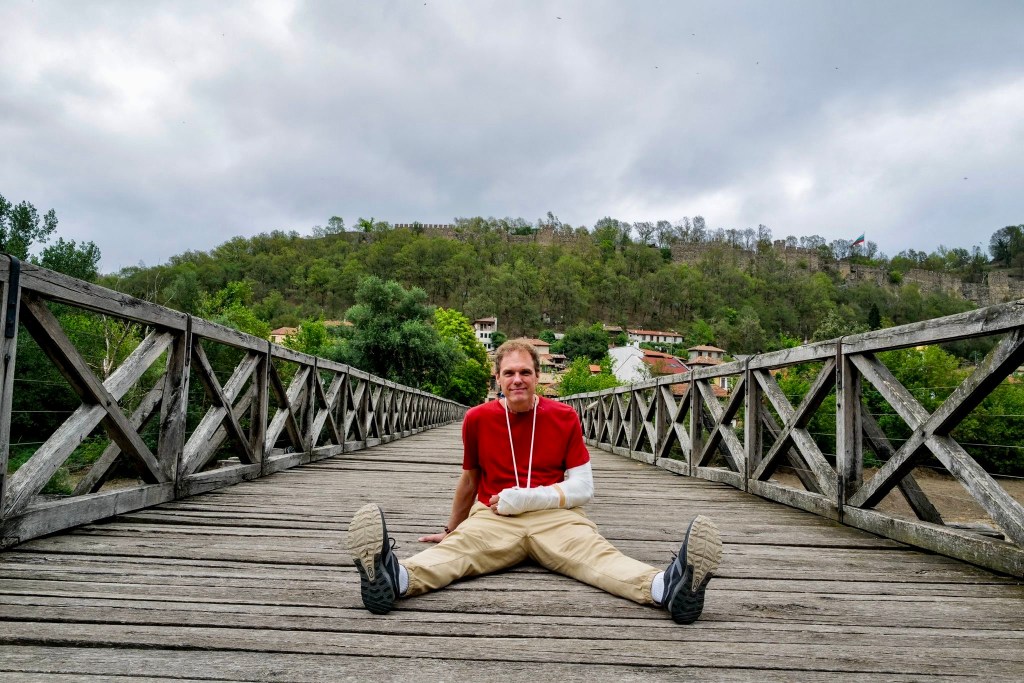
Sunday September 1st is overcast and grey, but pleasantly cool: perfect for walking down to the Yantra River below the fortress to cross the wooden bridge and explore the Holy Forty Martyrs Church, where Bulgaria declared its independence from the Ottoman Empire. We’re the only ones there.
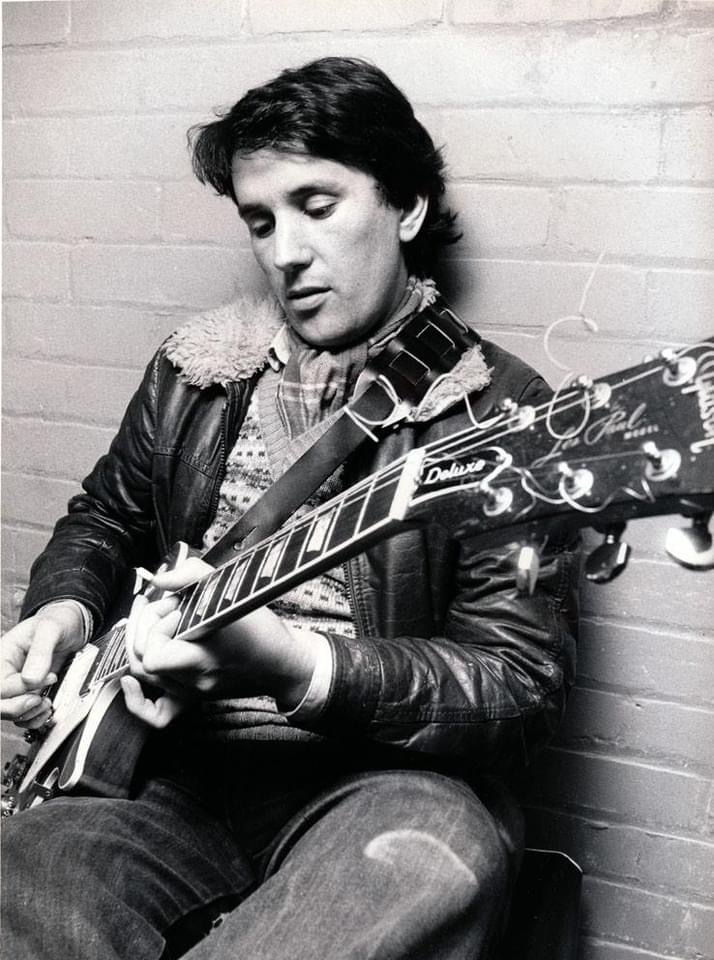
I also learn that Steve Cray has died. Poor chap. No one on the Lamma Facebook group seems to know what happened, but for some time he’d sadly been a barely-functioning alcoholic and a diabetic. Steve never seemed able to get his life back on track after the SCMP discontinued the Education Post section. A highly intelligent man, a decent writer, an even better photographer, and an astonishingly nimble guitarist, even if his style involved too many notes for my liking. Rest in peace, Steve.

Monday 2 September
A quiet day. After lunch, we stroll down to the local archeological museum. It’s housed in a rather drab Communist-era building, but it does have a lovely courtyard. We’re the only visitors. There’s little of genuine interest, but we do see some beautiful 3000-year-old bronze vessels, one with an ornate spout in the shape of a lion’s mouth. I marvel, as I always do at museums full of genuinely ancient stuff, at how some design classics – the pitcher and the bowl, for example – were essentially perfected 100 generations ago.

Tuesday 3 September
Another quiet day: in the afternoon, we burrow deeper into our immediate neighbourhood – the sort of thing I would have done on pre-breakfast rambles if I wasn’t wearing a splint. I’m taking no chances at the moment. I’m looking forward to getting my arm back tomorrow.

Wednesday 4 September
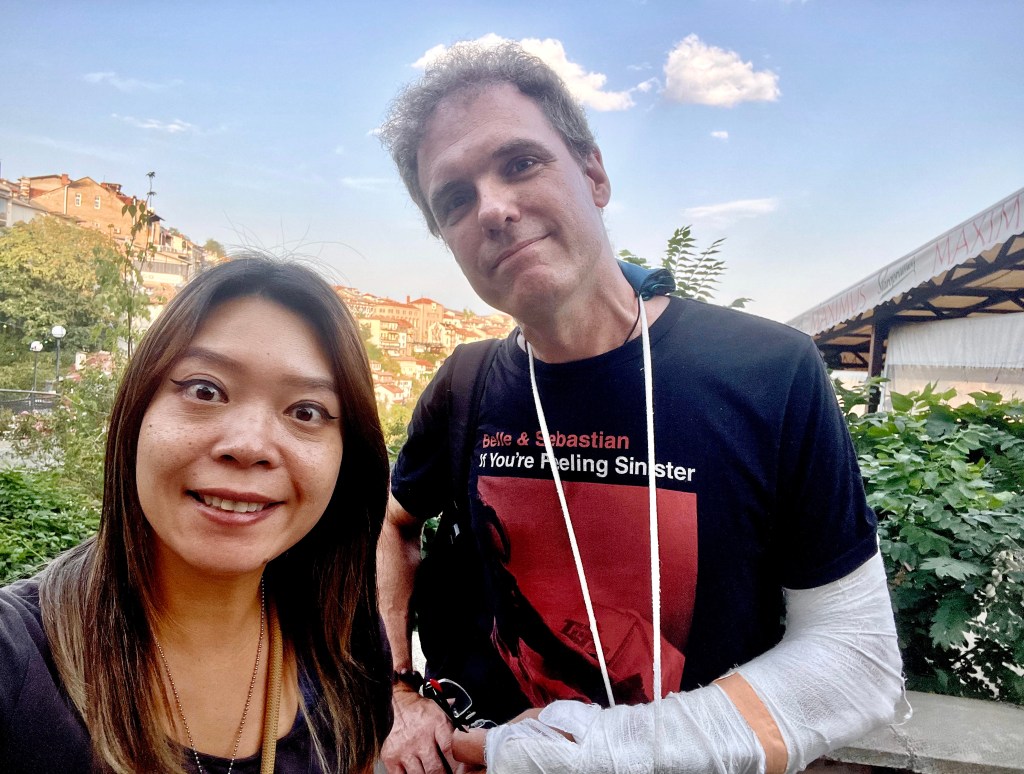
Today was the going to be the day I got my arm back. Instead, the orthapedic doctor suggests wearing the splint for one more week, then wear a sling for a further week. I’m OK with that. It’s good to have a clear exit plan – something I was lacking before. Our Airbnb host, Nikolai – a young, gentle, rapidly-balding lawyer – very kindly picks us up from the flat and drives us to the medical centre. He’s very quiet at first as he gets used to speaking English, but he soon relaxes and we’re able to chat more about his trips abroad to see the Bulgarian national team play.
We have to wait an hour and a half to see the doctor, part of which I spend sitting quietly mentally replaying the past year of our lives. I’ve reached KL when my turn arrives. Doc speaks good English and is politely adamant that 25-day recoveries are for 15 year-olds, not for 55-year olds. Fair enough.
Nikolai insists on driving us back to the flat, and also to the bus station tomorrow morning. Lovely chap. We’ll buy him a bottle of good rakia in return.
It’s our final evening in Veliko Tarnovo, so we return to the mehana we visited the previous Wednesday and tuck in.
Thursday 5 September
Nikolai arrives on time to drive us to Veliko Tarnovo bus station. He seems quite touched by the bottle of rakia we present him with. He’s been very generous with his time. It’s the least we can do.
As the bus heads west towards Sofia, Bulgaria appears to be almost entirely empty. I doze a bit, but not for long. By the time we reach the outskirts of Sofia, I’m fairly certain that we’ve passed through just one small town and seen two others in the distance. The rest is forest. Endless hills of thick forest. The emptiness reminds me of British Columbia. Not a comparison I was expecting to make.
Our hotel is a five-minute walk from Sofia bus station. We check in and immediately head out to an LC Waikiki outlet store that Google Maps is pointing us to. Tomorrow, we’ll be heading into the mountains and I’m going to need a thicker pair of sweatpants. Winter is coming! Our walk to the box store takes us through Sofia’s shabby north-western residential suburbs. Mission accomplished, we stop by a neighbourhood restaurant on our way back to the hotel. It’s the first time we’ve encountered a menu printed only in Bulgarian. But with the help of photos and Google Translate, we manage just fine. The staff, of course, are lovely.
 Two On Tour
Leave a comment